Learning the Quran is not a destination that ends with memorizing a few chapters or completing a single course. Instead, it is a lifelong journey of faith, understanding, reflection, and continuous improvement.
Every stage of life offers new opportunities to deepen one’s relationship with the words of Allah, making the Quran a constant companion from childhood until old age.
Many Muslims begin learning the Quran at a young age, while others start later in life. Regardless of when the journey begins, every step taken toward the Quran brings immense spiritual rewards and personal growth.
The Prophet Muhammad (ﷺ) emphasized the importance of seeking knowledge throughout life, and the Quran remains the greatest source of guidance for every believer.
In this article, we will explore why learning the Quran is a lifelong commitment, the benefits of continuous learning, practical strategies for staying motivated, and how every Muslim can continue growing with the Book of Allah regardless of age or experience.

Table of Contents
Why Learning the Quran Never Ends?
Unlike many subjects that have a clear finish line, the Quran contains endless wisdom. Even scholars who dedicate decades to its study continue discovering new meanings, linguistic beauty, and spiritual lessons.
Allah says:
﴿وَلَقَدْ يَسَّرْنَا الْقُرْآنَ لِلذِّكْرِ فَهَلْ مِنْ مُدَّكِرٍ﴾ (سورة القمر: 17)
“And We have certainly made the Quran easy for remembrance, so is there any who will remember?” (Surah Al-Qamar 54:17)
This verse reminds believers that while the Quran is accessible, understanding its depth is an ongoing process.
Learning the Quran includes many different dimensions:
- Reading correctly (Tajweed)
- Memorization (Hifz)
- Understanding vocabulary
- Studying Tafsir
- Reflecting on meanings
- Applying teachings in daily life
- Teaching others
Each of these areas offers lifelong opportunities for growth.
Stop wasting your mental energy on temporary commitments and secure a permanent, appreciating asset for your Hereafter by locking the entire text into your mind through our high-performance Quran Memorization Course at Denk Arabisch.
The Quran Grows with You
One of the most remarkable qualities of the Quran is that its guidance remains deeply relevant throughout every stage of human life. While the text itself remains unchanged, a believer’s understanding continuously evolves as their personal experience, faith, and knowledge grow over time.
As we journey through life, different verses speak to us in unique ways. Children learn foundational values of kindness and respect, while young people find essential guidance on patience and self-control.
As adults and parents, lessons on responsibility, family, and honest living take on a much deeper meaning, eventually giving way to reflections on gratitude, repentance, and peace in later years.
This dynamic nature is why those who read the Quran throughout their entire lives never stop discovering fresh insights and new comfort. It serves as a living, lifelong companion that truly grows alongside the believer.
Spiritual Benefits of Lifelong Quran Learning
Continuous engagement with the Quran strengthens every aspect of a believer’s relationship with Allah. Every verse recited, understood, and implemented contributes to spiritual growth and helps build a life centered on faith and purpose.
1. Stronger Faith
Regular Quran study increases certainty (Yaqeen) by constantly reminding believers of Allah’s mercy, wisdom, justice, and infinite power.
Reading the stories of the prophets, reflecting on Allah’s promises, and understanding His beautiful names strengthen trust in Him during both ease and hardship.
As believers continue learning throughout life, their faith becomes more deeply rooted. Challenges that once seemed overwhelming become opportunities to rely upon Allah, knowing that every situation is under His perfect wisdom.
2. Inner Peace
Modern life often brings stress, uncertainty, anxiety, and countless distractions. Amid these pressures, the Quran offers a unique source of peace that no worldly possession can provide.
Allah says:
﴿أَلَا بِذِكْرِ اللَّهِ تَطْمَئِنُّ الْقُلُوبُ﴾
(سورة الرعد: 28)
“Indeed, in the remembrance of Allah do hearts find rest.”
(Surah Ar-Ra’d 13:28)
Reading, listening to, and reflecting upon the Quran helps calm the heart, reduce worry, and remind believers that Allah is always in control.
Even a few minutes spent reciting the Quran each day can bring clarity and emotional comfort during difficult times.
3. Better Character
The Quran teaches honesty, compassion, humility, forgiveness, patience, gratitude, generosity, and justice. These qualities are not learned overnight but develop gradually through consistent study and sincere effort.
Every time believers read verses encouraging mercy, truthfulness, or forgiveness, they are reminded to apply these values in their daily interactions. Over time, Quranic teachings begin shaping decisions, relationships, and attitudes.
The more one studies the Quran, the more one’s character begins to resemble the noble qualities that Allah loves.
4. Greater Connection with Salah
Understanding Quranic verses transforms prayer from a routine act into a deeply meaningful conversation with Allah.
When believers know the meanings of Surah Al-Fatihah and the chapters they recite in Salah, every prayer becomes more focused and heartfelt.
Instead of merely pronouncing Arabic words, they begin reflecting on Allah’s promises, warnings, mercy, and guidance during every prayer.
This deeper understanding increases concentration (Khushu’) and allows worshippers to experience greater spiritual fulfillment.
Every Stage of Learning the Quran Matters
Many people believe Quran learning only refers to memorization. While memorizing the Quran is a noble goal, lifelong Quran learning involves many interconnected areas that help believers strengthen their relationship with Allah.
1. Learning Correct Pronunciation
Improving pronunciation through Tajweed ensures that every letter is recited correctly as it was revealed.
Proper recitation preserves the beauty and accuracy of the Quran while helping readers avoid mistakes that may alter meanings.
Even experienced reciters continue reviewing Tajweed rules throughout their lives because perfection requires constant practice.
2. Memorizing New Surahs
Memorization strengthens one’s relationship with the Quran and enriches daily worship. Every new Surah memorized becomes available for recitation during Salah and remains a lifelong source of reward.
There is no age limit for memorizing the Quran. Many adults successfully begin Hifz in their thirties, forties, fifties, or even later. What matters most is consistency rather than speed.
3. Understanding Arabic
Learning Quranic Arabic opens the door to understanding Allah’s words directly without relying entirely on translations.
Even learning five to ten new Quranic words each week gradually transforms the reading experience. As vocabulary expands, familiar verses begin to reveal richer meanings, making recitation more engaging and spiritually rewarding.
Understanding Arabic also helps believers appreciate the remarkable linguistic beauty and precision of the Quran.
4. Studying Tafsir
Tafsir explains the historical background, meanings, lessons, wisdom, and practical applications of Quranic verses.
Without Tafsir, some verses may be misunderstood or taken out of context. Studying reliable explanations helps believers appreciate why verses were revealed and how they apply to modern life.
Each chapter contains timeless guidance that becomes clearer through careful study and reflection.
5. Reflecting (Tadabbur)
Reflection (Tadabbur) is one of the highest forms of Quran engagement. Rather than rushing through pages simply to finish a recitation, believers pause to think deeply about Allah’s message.
They ask themselves:
- What is Allah teaching me through this verse?
- How does this guidance relate to my current situation?
- Which habit should I improve after reading this passage?
- How can I implement these teachings today?
Reflection transforms knowledge into action and allows the Quran to shape everyday life instead of remaining only words on a page.
Eliminate the daily time-tax of stuttering and hesitation; trade your frustration for rapid, automated script-fluency with our hyper-efficient Quran Reading Course at Denk Arabisch built for immediate deployment.
Read also: Benefits of Reciting Surah Al-Kahf
Common Challenges in a Lifelong Quran Journey
Every learner faces obstacles at different stages. The key to success is not avoiding challenges but remaining consistent despite them.
1. Lack of Time
Busy schedules filled with work, studies, and family responsibilities often make Quran study difficult.
Dedicate just 10–20 minutes every day to reading or reviewing the Quran. A small but consistent daily habit is far more beneficial than studying for several hours only once every few weeks.
Even listening to Quran recitation during commuting or reviewing verses before sleeping can help maintain consistency.
2. Feeling Too Old
Some adults hesitate because they believe they should have started learning earlier.
The Quran welcomes every sincere learner regardless of age. Many successful students begin learning Arabic, Tajweed, or Hifz later in life and make remarkable progress through patience and perseverance.
Remember that Allah rewards sincere effort, not simply the age at which someone begins.
3. Slow Progress
Some learners become discouraged when reading fluency or memorization develops slowly.
Remember that every letter recited earns reward, and every sincere effort is appreciated by Allah.
The Prophet Muhammad (ﷺ) taught that the person who recites the Quran with difficulty receives a double reward—one for the recitation itself and another for the effort involved.
Slow progress is still meaningful progress. Consistency eventually produces results that occasional intense study cannot achieve.
4. Forgetting Memorized Verses
Forgetting portions of the Quran happens naturally, especially without regular revision.
Create a structured review schedule alongside memorizing new material. Revisiting previously memorized Surahs every day helps strengthen long-term retention and builds confidence.
Many Huffaz spend just as much time reviewing as they do memorizing new verses. Revision is not a sign of weakness—it is an essential part of lifelong Quran learning.
Learn the Quran with Denk Arabisch Academy
Master reading and understanding the Quran through structured and supportive learning
Try a Free TrialPractical Habits for Lifelong Quran Learning
Building sustainable habits is far more important than pursuing perfection. Lasting progress with the Quran comes from consistency, sincerity, and gradual improvement rather than occasional bursts of effort. By developing simple daily routines, every Muslim can continue strengthening their relationship with the Quran throughout life.
1. Read Every Day
Even reading one page each day creates long-term consistency and helps establish a lifelong connection with the Quran. Daily recitation improves reading fluency, strengthens familiarity with Quranic vocabulary, and keeps the heart connected to Allah.
It is better to read a small amount every day than to read many pages only once in a while. Over time, these small daily efforts add up to completing the Quran multiple times while developing a habit that becomes part of your daily routine.
If possible, choose a fixed time each day—such as after Fajr, before bedtime, or after one of the daily prayers—to make Quran reading a regular part of your schedule.
2. Set Realistic Goals
One of the biggest reasons people lose motivation is setting goals that are too ambitious. Instead of trying to memorize large portions in a short period, focus on achievable milestones that you can maintain consistently.
Examples include:
- One new verse each day
- One page every morning
- One Surah every month
- Five new Quranic Arabic words each week
- Reviewing one previously memorized Surah daily
Small, realistic goals build confidence and create steady progress. Every accomplishment, no matter how small, brings you one step closer to mastering the Quran.
3. Review Frequently
Revision should become an essential part of every Quran study session. Without regular review, memorized verses gradually fade from memory.
A balanced routine might include:
- Reading new material
- Reviewing yesterday’s lesson
- Reviewing last week’s lesson
- Revising older memorized Surahs
This layered approach strengthens long-term retention and makes memorization much more reliable. Many Huffaz spend nearly as much time reviewing as they do learning new verses because revision is the key to preserving what has already been memorized.
4. Learn with a Qualified Teacher
A knowledgeable teacher provides guidance that cannot always be gained through self-study alone. They help correct pronunciation mistakes, explain Tajweed rules, answer questions about difficult verses, and encourage students during challenging periods.
Learning with an experienced teacher also creates accountability and helps maintain consistency. Whether studying in person or online, regular feedback ensures steady improvement and prevents common mistakes from becoming permanent habits.
Having a teacher also makes the learning journey more enjoyable and motivating, especially when progress feels slow.
Read also: Benefits Of Reciting Ayatul Kursi
5. Keep a Quran Journal
Writing reflections after reading encourages deeper understanding and more meaningful engagement with the Quran.
Your journal might include:
- New vocabulary
- Personal reflections
- Inspirational verses
- Questions for future study
- Tafsir notes
- Goals for implementation
- Daily spiritual lessons
Over time, this journal becomes a personal record of your spiritual growth. Looking back at earlier entries allows you to see how your understanding of the Quran has matured over the years and reminds you of the lessons Allah has taught you along the way.
Do not risk the spiritual compounding interest of your daily prayers on phonetic guesswork when you can systematically audit and perfect your pronunciation using our rigorous Quran Tajweed Course at Denk Arabisch.
Teaching Others Strengthens Learning the Quran
One of the greatest ways to continue your Quran journey is by sharing beneficial knowledge with others. Teaching reinforces what you have learned and allows the rewards of your knowledge to continue multiplying.
Teaching does not require being a scholar. Every Muslim can share what they know with sincerity and humility.
You can:
- Help children learn correct pronunciation.
- Practice Quran recitation with family members.
- Join local or online Quran study circles.
- Encourage friends to stay consistent with daily reading.
- Share beneficial reflections from your Quran study.
- Support beginners who are just starting their learning journey.
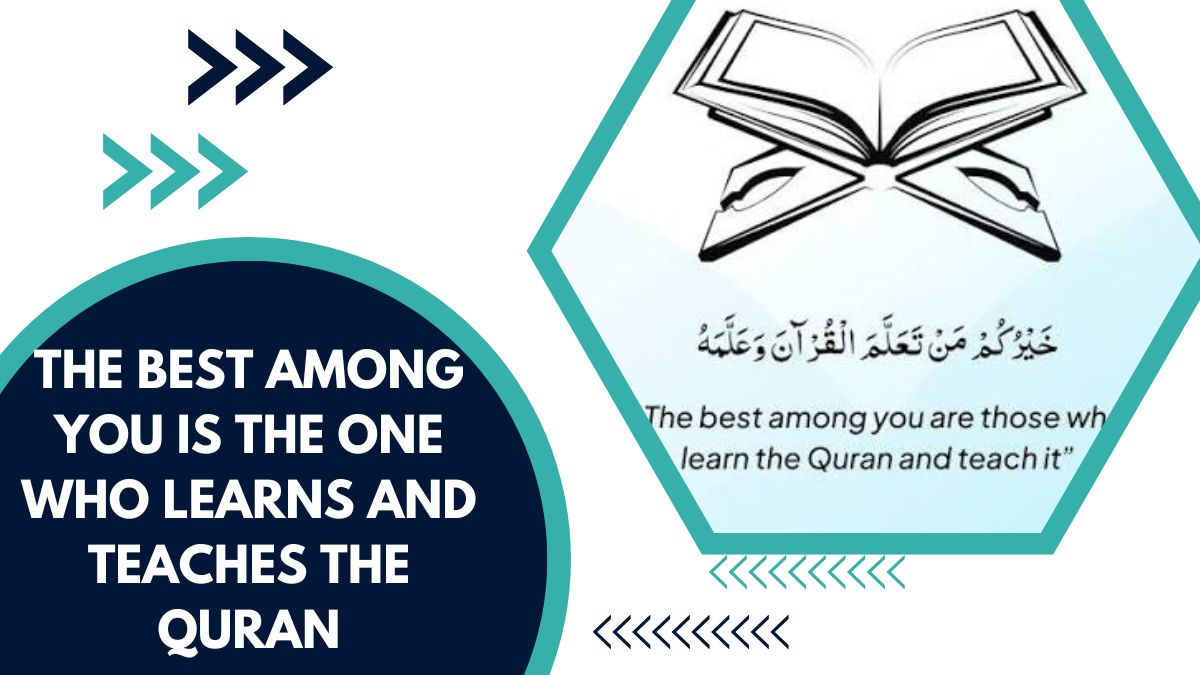
The Prophet Muhammad (ﷺ) taught that the best among Muslims are those who learn the Quran and teach it. Even explaining a simple lesson or helping someone memorize a short Surah can become a source of ongoing reward (Sadaqah Jariyah).
Teaching also deepens your own understanding because explaining Quranic concepts requires careful reflection and continuous learning.
Upgrade your worship from a low-value, mechanical obligation to a premium, deeply immersive experience by completely overhauling your vocal delivery inside our intensive Quran Recitation Course at Denk Arabisch.
Read also: Why Every Muslim Should Learn the Quran?
The Role of Consistency in Learning the Quran
The Prophet Muhammad (ﷺ) taught that the most beloved deeds to Allah are those that are consistent, even if they are small.
This principle perfectly describes successful Quran learning.
Reading five pages once a week cannot compare with reading one page every day. Consistent practice develops habits that become part of everyday life rather than temporary bursts of motivation.
Consistency builds:
- Better memory
- Stronger habits
- Greater reading fluency
- Deeper understanding
- Increased confidence
- Stronger spiritual connection
- Long-term success
There will inevitably be days when motivation is low. During these times, maintaining even a small amount of Quran study is better than stopping altogether. A few verses recited every day keep the heart connected to Allah and make it easier to continue the journey.
Remember that remarkable achievements are rarely accomplished through extraordinary effort in a single day—they are built through small actions repeated faithfully over many years.
Lifelong Quran Learning Brings Lifelong Rewards
Every interaction with the Quran carries immense reward and brings believers closer to Allah.
- Each letter recited earns blessings.
- Each verse understood increases knowledge.
- Each lesson applied improves character.
- Each moment spent reflecting strengthens the heart.
- Each effort to teach others multiplies the reward.
Because the Quran is Allah’s eternal guidance, the opportunity to learn never truly ends. There is always another verse to understand, another Surah to memorize, another lesson to apply, and another opportunity to grow spiritually.
Whether you are learning the Arabic alphabet, improving your Tajweed, memorizing your first Surah, studying advanced Tafsir, or reviewing memorization completed years ago, every sincere effort is valuable in the sight of Allah.
The beauty of lifelong Quran learning is that every stage has its own rewards. Beginners receive blessings for their determination, advanced students continue uncovering deeper meanings, and teachers earn ongoing rewards by helping others connect with the Book of Allah.
No matter where you are on your journey, every page you read and every verse you learn brings you one step closer to Allah and prepares you for success in both this life and the Hereafter.
Read also: Istikhara Dua
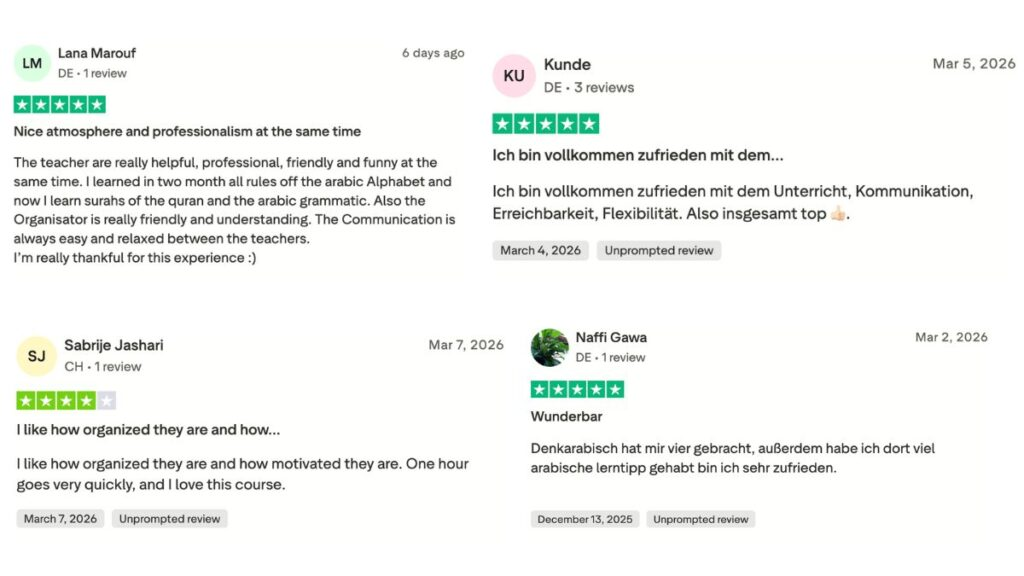
What Our Students Say About Denk Arabisch Academy
See what our students say about learning at Denk Arabisch Academy on Trustpilot. Read their experiences and check out more reviews to discover how our courses help improve Arabic.
Denk Arabisch IS Your Place For Learning The Quran.
Let’s be entirely honest: waiting for your life to magically slow down before you master the Quran is a losing strategy.
Every year you tell yourself you’ll get serious, and every year you stay exactly where you are—reciting the same short surahs, stuttering through the text, and feeling disconnected in your prayers.
Denk Arabisch is not a casual hobby class; it is an elite, high-performance training ground for serious believers who refuse to compromise on their deen.
We provide the exact, engineered systems you need to shatter your limitations and achieve absolute fluency.
Choose Your Course for Excellence:
- Quran Memorization Course: Our elite memory-mapping framework is engineered for rapid, ironclad recall, systematically locking the divine text into your heart so it stays with you for life.
- Quran Reading Course: Move aggressively from basic letter recognition to lightning-fast script navigation with a streamlined, zero-fluff system built for rapid fluency.
- Quran Tajweed Course: Eliminate hidden phonetic errors instantly by mastering the strict, classical rules of articulation, ensuring your recitation is completely flawless.
- Quran Recitation Course: Reclaim your right to a powerful, rhythmic delivery under the rigorous training of master instructors who will completely overhaul your tone and breathing.
- Islamic Studies Course: Build an ironclad intellectual shield for your family with clear, authentic, and practical mastery of Fiqh, Aqeedah, and Hadith.
We refuse to compromise on our educational standards. To ensure maximum, direct feedback, our scholars work exclusively with ultra-small, highly dedicated cohorts.
We do not mass-produce these classes. Once the remaining seats are filled, registration locks instantly.
The gap between who you are and a life of profound Quranic authority is defined entirely by your willingness to take immediate action. Secure your future right now.
👉 CLAIM YOUR SEAT NOW – DEFEAT PROCRASTINATION NOW
Learn the Quran with Denk Arabisch Academy
Master reading and understanding the Quran through structured and supportive learning
Try a Free TrialConclusion
Learning the Quran is not a short-term project but a lifelong journey filled with growth, reflection, and transformation. Every stage of life offers new opportunities to strengthen your connection with Allah’s words, improve your understanding, and apply His guidance in daily living.
The beauty of the Quran is that no matter how much you learn, there is always more wisdom waiting to be discovered.
By maintaining consistency, seeking knowledge from qualified teachers, reflecting on the meanings, and practicing what you learn, your relationship with the Quran will continue to flourish throughout your lifetime.
Start where you are, remain patient with your progress, and trust that every sincere effort is valued by Allah. The journey of learning the Quran is one of the greatest investments a believer can make—bringing peace in this life and reward in the Hereafter.
FAQs
1. Is learning the Quran a lifelong journey?
Yes. The Quran contains endless wisdom, and Muslims continue learning through reading, memorization, understanding, reflection, and application throughout their lives.
2. Can adults start learning the Quran?
Absolutely. There is no age limit for learning the Quran. Many people begin studying, improving their recitation, or memorizing verses later in life and make excellent progress with consistency.
3. How much time should I spend learning the Quran each day?
Even 15–20 minutes of focused daily study can lead to significant long-term improvement. Consistency is more important than the length of each session.
4. What is the best way to stay motivated?
Set realistic goals, establish a daily routine, learn with a qualified teacher, review regularly, and remember the spiritual rewards promised for every effort made in learning the Quran.
5. Why is understanding the Quran important?
Understanding the Quran helps Muslims strengthen their faith, improve their worship, make better life decisions, and apply Allah’s guidance in everyday situations rather than simply reciting the words.