Takeaway:
- Home is the first and most influential school; faith is shaped through daily habits and emotional connection, not just information.
- Children learn Islam best through repetition, positive experience, and seeing parents as living role models.
- Consistency matters more than intensity—short daily sessions (10–20 minutes) build stronger foundations than occasional long lessons.
- Daily Qur’an reading, even a few minutes after Fajr or before bed, creates linguistic familiarity and spiritual attachment.
- Islamic storytelling makes values like patience, courage, and mercy tangible; interactive retelling and drawing deepen understanding.
- Daily duas transform routine moments into acts of remembrance; visual charts and weekly challenges move children from memorisation to real-life use.
- Arts and crafts (mosque models, lanterns, Arabic letter art) combine creativity with Islamic identity, suiting visual and hands-on learners.
- Teaching salah step by step, with demonstration, role play, and family prayer, builds confidence and makes worship a comforting routine.
- Quiz games and team challenges reinforce Islamic knowledge playfully, strengthening memory without pressure.
- Islamic calendar activities (Ramadan countdowns, tracking fasting, learning about sacred months) give children a sense of sacred time and belonging.
- Practising Islamic manners (Salam, polite language, helping at home, sharing) daily teaches akhlaq as lived character, not theory.
- A “Good Deeds Chart” encourages self-discipline and emotional awareness through positive tracking and family recognition.
- Arabic learning sticks through games, puzzles, songs, and writing simple words—short playful sessions beat long study.
- Family Islamic circle time (short Qur’an reading, one hadith, a shared reflection, collective dua) bonds hearts and normalises faith talk at home.
- Fun and encouragement, not criticism, keep children engaged; praise effort, progress, and sincere trying over perfect performance.
- Age-appropriate adaptation is crucial—young children thrive on visuals and play, older children on structured discussions and gradual memorisation.
- You don’t need expensive resources; the most powerful tools are parental involvement, intention, and consistent loving presence.
- Home-based activities can be powerfully supplemented with structured guidance for correct Arabic pronunciation, Qur’an recitation, and deeper Islamic understanding.
In today’s busy world, many parents are searching for simple yet meaningful ways to nurture their children’s Islamic identity without relying solely on formal classes. Home is the first and most influential school, where a child’s character, beliefs, and daily habits are naturally shaped.
Because of this, home-based Islamic activities have become one of the most powerful tools for Muslim families who aim to raise confident, knowledgeable, and spiritually connected children.
By turning everyday moments into opportunities for learning, parents can help Islam become a lived experience rather than just information. Simple routines such as short Qur’an reflections, storytelling about the Prophets, or practicing daily duas together can have a lasting impact on a child’s heart and behavior.
This article explores practical, engaging, and age-appropriate Islamic activities that can easily be implemented at home. These ideas are designed to strengthen faith, deepen love for Islam, and create warm, meaningful family bonding moments—all without the need for complex materials or special environments.
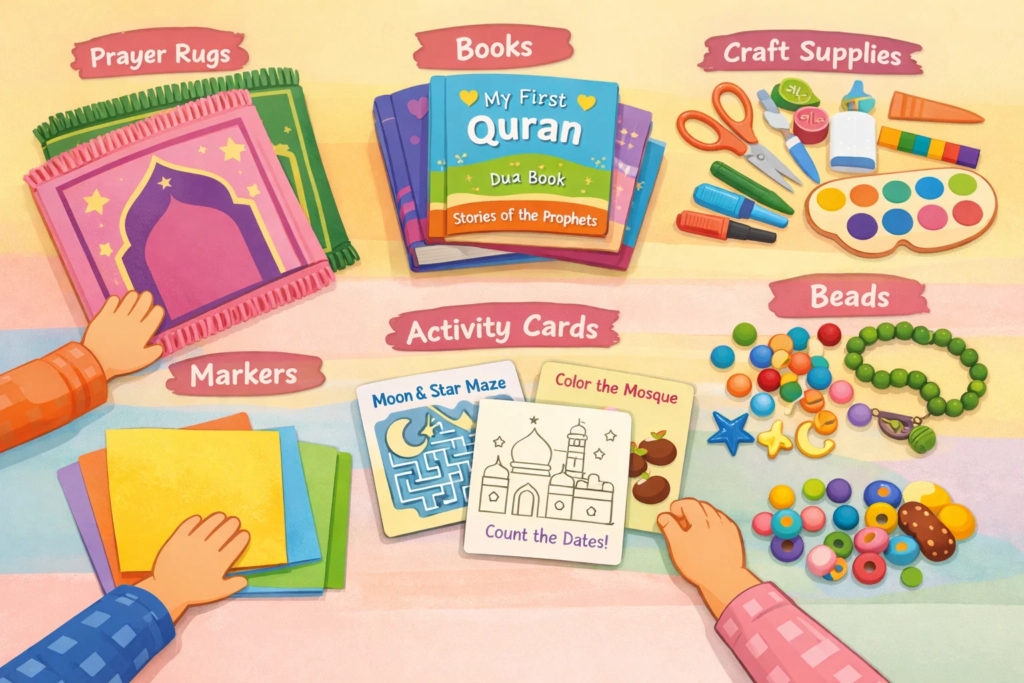
Table of Contents
Why Home-Based Islamic Activities Matter
Children learn best through repetition, experience, and emotional connection. While Islamic schools and teachers play an important role, the home environment is where beliefs are deeply rooted and consistently reinforced in everyday life.
Home-based Islamic activities help children:
- Develop a natural and lasting love for Islam
- Understand Islamic values through real-life situations
- Strengthen their connection with the Qur’an and its meanings
- Build strong character and good manners (akhlaq) in daily interactions
- Spend meaningful, screen-free quality time with parents
- Learn through fun, creativity, and positive engagement rather than pressure or memorization alone
When Islam becomes part of the family’s daily routine—through conversations, habits, and shared activities—children don’t see it as a subject to study, but as a complete way of life that guides their behavior, choices, and identity.
Over time, this consistent exposure builds confidence and familiarity, making Islamic practice feel natural rather than forced. It also helps children develop emotional attachment to their faith, which is essential for long-term commitment and understanding.
If you want your child to learn Qur’an reading correctly with proper pronunciation, structured and consistent guidance can make a significant difference in their progress and confidence.
1. Establishing a Daily Quran Reading Routine for Children
One of the most powerful Islamic habits parents can build at home is consistent Qur’an reading. Even a few minutes every day can create a deep and lasting spiritual impact on a child’s heart. Consistency is more important than quantity, especially in the early stages of learning.
How to do it at home:
- Set a fixed daily time such as after Fajr or before bedtime to build routine and discipline
- Start with short, easy Surahs that children can confidently read and repeat
- Read together as a family so children feel supported and motivated
- Let children repeat after you slowly to improve pronunciation and confidence
- Gradually introduce memorization without pressure, focusing on steady progress
Make it engaging:
- Use colorful, child-friendly Qur’an editions that attract attention
- Add short and simple explanations of verses to build understanding, not just reading
- Encourage consistency through positive reinforcement such as praise, stickers, or small rewards
- Celebrate progress, even small achievements, to keep motivation high
This daily practice helps children develop both linguistic familiarity with Arabic sounds and a strong emotional connection with the Qur’an. Over time, it becomes a natural part of their life rather than just a learning activity.
Master the art of recitation from home with the Tajweed Course For German-Speaking Children at Denk Arabisch.
2. Teaching Islamic Values Through Engaging Storytelling
Children naturally love stories, and Islamic storytelling is one of the most effective ways to teach values, faith, and moral lessons. The Qur’an itself uses storytelling as a powerful teaching method, which makes this activity both educational and spiritually meaningful.
Ideas for storytelling:
- The story of Prophet Nuh (AS) and the Ark, teaching patience and obedience
- Prophet Ibrahim (AS) and his trust in Allah, showing strong faith and submission
- Prophet Musa (AS) and Pharaoh, highlighting courage and standing for truth
- Prophet Muhammad (PBUH) and his kindness, mercy, and leadership
How to make it interactive:
- Use different tones and voices for each character to make the story more engaging
- Pause during storytelling to ask simple questions and check understanding
- Let children retell the story in their own words to improve memory and confidence
- Encourage drawing scenes or acting out parts of the story for deeper engagement
Storytelling helps children develop imagination while also internalizing important moral lessons in a natural and enjoyable way. When done regularly, it becomes a powerful tool for shaping character and understanding Islamic values.
These stories become even more impactful when children understand some of the original Arabic words and expressions used in the Qur’an.
Deepen your child’s spiritual connection with our comprehensive Islamic Studies For German Speakers at Denk Arabisch.
3. Building a Strong Habit of Daily Duas in Children’s Lives
Teaching daily Duas helps children connect Islam with their everyday routines and experiences. It transforms simple moments in life into acts of remembrance of Allah, building spiritual awareness from a young age.
Examples of simple daily duas:
- Before eating and after eating
- Before sleeping and after waking up
- Leaving the house and entering the home
- Starting any task or journey
- Asking for protection and guidance throughout the day
Activity idea:
Create a “Dua Chart” or “Dua Wall” at home where children can visually see and interact with what they are learning. Add one new dua every week and let children decorate it with colors, stickers, or drawings. This makes learning more personal and enjoyable.
You can also turn it into a weekly challenge where children try to use the new dua in real-life situations. This helps them move from memorization to practical application.
Over time, children naturally begin to remember and use duas without reminders, which strengthens their connection to Allah in everyday life.
4. Developing Creativity Through Islamic Arts and Crafts
Creative activities are one of the most effective ways to teach Islamic concepts to children, especially for visual and hands-on learners. Islamic crafts combine learning with fun, making the experience memorable and enjoyable.
Craft ideas:
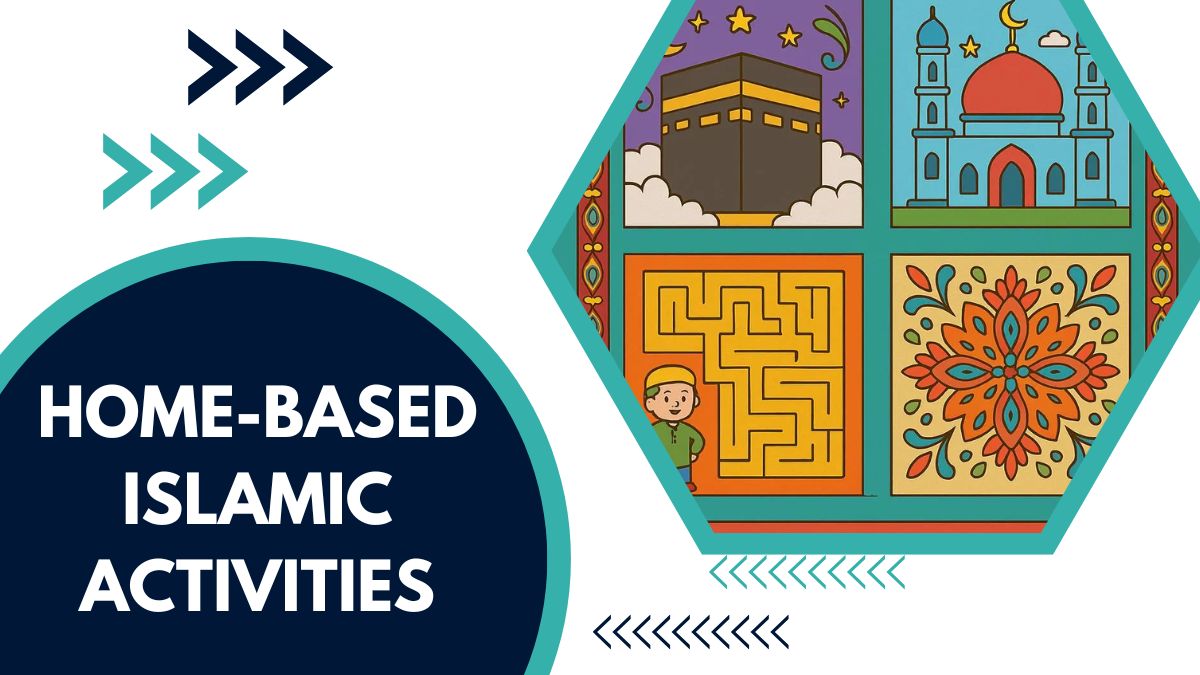
- Build simple paper mosques or 3D Kaaba models
- Design Islamic geometric patterns and coloring projects
- Create Ramadan lanterns, Eid cards, or decorative banners
- Practice writing Arabic letters in artistic and creative styles
- Make posters with Islamic values such as honesty, patience, and kindness
Benefits:
- Enhances creativity and imagination
- Strengthens emotional connection to Islamic identity
- Improves focus and fine motor skills
- Helps children understand abstract concepts in a visual way
You can also set a weekly “Islamic craft day” where the entire family participates. This builds bonding and makes learning something children look forward to rather than see as a task.
Read also: What Muslim Children Should Learn About Islam? – A Complete Guide For Muslims
5. Teaching Children Salah Step by Step at Home
Teaching children how to pray is one of the most important responsibilities in Islamic upbringing. Salah is not just a ritual; it is a daily connection between the child and Allah, and it should be taught with patience, consistency, and encouragement.
How to teach Salah at home:
- Start by demonstrating each movement slowly and clearly
- Break the prayer into small steps so it is easier to learn
- Practice one part at a time until the child becomes confident
- Pray together as a family to create a strong role-model effect
- Use simple visual charts or posters to support learning
Make it engaging:
- Turn practice into a gentle role-play activity to make it less intimidating
- Allow children to lead parts of the prayer when they are ready
- Encourage effort and consistency rather than perfection in performance
- Praise improvement to build confidence and motivation
Children learn best through observation and repetition. When they see their parents praying regularly and lovingly, they naturally develop attachment and respect for Salah.
Over time, it becomes a comforting and essential part of their daily routine, shaping discipline, spirituality, and identity.
Give your child the confidence to lead—enroll them in the Quran Course For German-Speaking Children for perfect recitation.
6. Reinforcing Islamic Knowledge Through Quiz Games
Games are one of the most effective ways to reinforce Islamic knowledge in a relaxed and enjoyable environment. When learning feels like play, children absorb information more naturally and retain it for longer periods without feeling pressured or overwhelmed.
Quiz topics can include:
- Names and stories of the Prophets
- The Five Pillars of Islam
- Basic Islamic manners and daily etiquette
- Simple facts from the Qur’an
- Key events from Islamic history
How to play:
- Ask questions verbally or use colorful flashcards for younger children
- Divide the family into teams to encourage participation and excitement
- Offer small rewards such as stickers, points, or praise for correct answers
- Rotate roles so children can also ask questions, not just answer them
This activity strengthens memory, improves attention, and encourages healthy competition among siblings in a positive Islamic environment. It also helps children feel excited about learning instead of seeing it as a task.
Gamified learning becomes even more powerful when it is supported by structured guidance and consistent teaching methods.
The Platform Denk Arabisch uses interactive approaches that combine play with learning, helping children stay motivated while developing Arabic language skills and Islamic knowledge in a balanced and enjoyable way.
Study Islamic knowledge with Denk Arabisch Academy
Deepen your understanding of Islam through authentic and structured learning
Try a Free Trial7. Introducing Islamic Calendar Awareness Through Fun Activities
Understanding Islamic months and special occasions helps children develop awareness of time in Islam and the importance of worship throughout the year, not just in daily routines.
Activities include:
- Creating a Ramadan countdown calendar to build excitement and anticipation
- Tracking fasting days for older children in a fun and educational way
- Celebrating Islamic events such as Eid al-Fitr, Eid al-Adha, and the Islamic New Year
- Learning about important months like Muharram, Rajab, Ramadan, and Dhul Hijjah
You can also explain the spiritual significance of each month in simple language so children understand why these times are special in Islam.
These activities help children develop a sense of Islamic identity connected to time, seasons, and spiritual milestones. Over time, they begin to look forward to Islamic occasions and understand their meaning beyond celebration.
8. Teaching Islamic Manners (Akhlaq) Through Daily Practice
Good manners are a central part of Islamic teachings, and they should be practiced daily at home. True Islamic education is reflected in behavior, kindness, and character, not just knowledge.
Daily practice ideas:
- Greeting family members with “Salam” warmly and consistently
- Using polite language such as “please” and “thank you” in a respectful Islamic manner
- Helping parents with small tasks around the house
- Sharing toys and belongings with siblings
- Speaking gently and avoiding harsh or hurtful words
Activity idea:
Create a “Good Deeds Chart” where children can track their daily positive behaviors. Let them tick or color a box every time they perform a good action. At the end of the week, review it together and celebrate their effort.
This system builds responsibility, emotional awareness, and self-discipline. Over time, children begin to internalize good manners naturally, without constant reminders.
Denk Arabisch supports this approach by helping children understand Islamic values through both language and practical application, allowing them to connect Arabic learning with real-life behavior and moral development rather than memorization alone.
9. Making Arabic Learning Fun with Interactive Language Games
Learning Arabic is essential for children because it connects them directly to the Qur’an, prayer, and Islamic understanding. When Arabic is taught in a fun and engaging way, children develop a stronger connection to the language.
Fun learning methods:
- Arabic alphabet puzzles and matching cards
- Memory games that connect letters with simple words
- Singing Arabic letter songs to improve recall
- Writing basic words like “Allah”, “Bismillah”, and “Qur’an”
Even short daily sessions of 10–15 minutes can make a significant difference over time. Consistency is more important than long study sessions.
When Arabic learning is combined with interactive methods, children begin to enjoy the language instead of finding it difficult. This builds confidence and curiosity, which are essential for long-term success in Islamic learning.
Boost your home learning with professional support: Explore our Arabic Lessons For German-Speaking Children at Denk Arabisch for a structured start!
10. Strengthening Family Bonds Through Islamic Circle Time
One of the most powerful habits a family can build is sitting together regularly for short Islamic discussions. This creates emotional bonding while also strengthening faith and knowledge.
What to include:
- A short Qur’an reading with simple explanation
- Discussion of one hadith and its meaning in daily life
- Sharing one lesson or reflection from the week
- Making collective dua as a family
This activity does not need to be long; even 15–20 minutes once or twice a week can have a lasting impact. The goal is consistency and connection, not formality.
Family circle time helps children see Islam as part of daily family identity, not just school learning. It also encourages open communication, curiosity, and emotional closeness between parents and children.
Denk Arabisch encourages this type of family-based learning environment, where parents are active participants in their children’s Islamic and Arabic education.
This combined approach helps children grow with faith, language, and identity all developed together in a natural and supportive home environment.
Read also: Quranic Stories For Kids – A Complete Guide To Teaching Faith Through Storytelling
Tips for Successful Home-Based Islamic Learning
To make all these activities truly effective, it is important to follow some key principles that ensure long-term success, consistency, and a positive learning experience for children. The goal is not just to teach information, but to build a lasting Islamic identity in a natural and loving way.
1. Consistency is more important than intensity
One of the most important principles in Islamic home education is consistency. Children do not need long or complicated lessons to benefit—they need regular exposure over time.
Short daily or weekly activities are far more effective than occasional long sessions that are difficult to maintain. Even 10–15 minutes a day can have a powerful impact if done consistently.
Small habits such as reading a short Surah, practicing a dua, or discussing one Islamic value each day gradually build strong foundations. Over time, these small actions become part of the child’s routine and identity without feeling forced or overwhelming.
2. Keep it fun and pressure-free
Children learn best in an environment where they feel safe, happy, and encouraged. If learning becomes stressful or overly strict, children may lose interest or associate Islam with pressure rather than love.
The key is to make Islamic learning enjoyable through games, stories, creativity, and interaction. Smiles, laughter, and positive experiences help children connect emotionally with what they are learning.
When Islam is presented as a source of joy, comfort, and guidance, children naturally develop a strong and loving relationship with it. This emotional connection is more powerful than memorization alone and stays with them throughout their lives.
3. Be a role model
Children are highly observant and learn more from what they see than what they are told. Parents are the first and most influential teachers in a child’s life.
When parents pray regularly, speak kindly, show patience, and practice Islamic manners in daily life, children naturally imitate these behaviors. On the other hand, inconsistency between words and actions can create confusion.
Being a role model does not mean being perfect—it means being sincere, consistent, and visibly trying to live by Islamic values. Even small actions, like saying Bismillah, giving Salam, or showing kindness, leave a strong impression on children.
4. Use encouragement, not criticism
Positive reinforcement plays a major role in building a child’s confidence and motivation. Encouragement helps children feel capable and eager to learn, while criticism can sometimes discourage them or make them afraid of making mistakes.
It is important to praise effort, not just results. For example, appreciating a child for trying to recite a Surah, even if they make mistakes, builds confidence and willingness to improve.
Simple words of encouragement, rewards, or acknowledgment can make a big difference in a child’s attitude toward learning. When children feel supported, they become more open, motivated, and consistent in their Islamic education.
5. Adapt to age level
Every child learns differently, and age plays a major role in how they understand and respond to Islamic education. Activities should always match the child’s developmental stage and attention span.
Younger children need simple, visual, and playful activities such as coloring, storytelling, songs, and short duas. These help them stay engaged without feeling overwhelmed.
Older children, on the other hand, can handle more structured learning, deeper discussions, and gradual memorization. They can also begin understanding meanings, reflecting on lessons, and applying Islamic values more consciously.
Adapting learning methods ensures that every child feels successful at their own level, which builds confidence and long-term interest.
Exercises on Home-Based Islamic Activities
Interactive Home-Based Learning Assessment
Evaluate your mastery of consistency parameters, storytelling implementations, and pedagogical principles detailed in the guide below:
1. Routine Frequency & Duration Allocation
Assign the ideal operational duration/frequency specified in the guide to achieve long-term consistency over intensity:
A. Recommended duration for young beginners’ daily Islamic activities:
B. Ideal commitment timeframe for Family Islamic Circle Time:
C. Highly effective capsule span for home Arabic language games:
2. Behavioral Intervention Scenarios
Analyze the parenting dilemma below and select the pathway that aligns with the guide’s psychological criteria:
“Your child is enthusiastically attempting to read a short Surah during your evening routine, but makes multiple recurring pronunciation errors and struggles with memory retrieval.”
Pathway A: Stop the session immediately and enforce strict, isolated memorization drill repetitions until performance reaches structural perfection.
Pathway B: Maintain a pressure-free environment by praising their sincere trying and effort, prioritizing a loving emotional connection with the text over immediate perfection.
Pathway C: Ignore the mistakes entirely without giving any positive reinforcement, leaving them to self-correct via digital application monitoring.
3. Home Action Curricular Categorizer
Sort the following home actions into their respective operational target areas using the toggle switches below:
A. Identity, Creativity & Foundation
B. Practical Akhlaq & Manners
4. Home Learning Strategic Principles Audit
Identify and check all statements that accurately represent authentic instructional principles outlined in the text:
Children absorb faith values best when parents act as active, visible living role models.
Purchasing complex, expensive professional resources is mandatory to achieve an authentic connection.
Short, high-frequency daily routines generate superior long-term results compared to occasional long sessions.
Older children should be kept strictly on sensory coloring books rather than transitioning to structured discussions.
5. Educational Paradigm Verification Quadrant
Examine each claim and classify it as either an authentic “Verified Habit” or an incorrect “Misconception”:
“Daily duas convert standard, repetitive domestic routines directly into dynamic actions of spiritual mindfulness.”
“Home-based gamified activities mean a family completely outgrows the requirement for professional structural Arabic tutoring.”
“A Good Deeds Chart builds self-discipline and emotional awareness when focused on positive tracking and family reinforcement.”
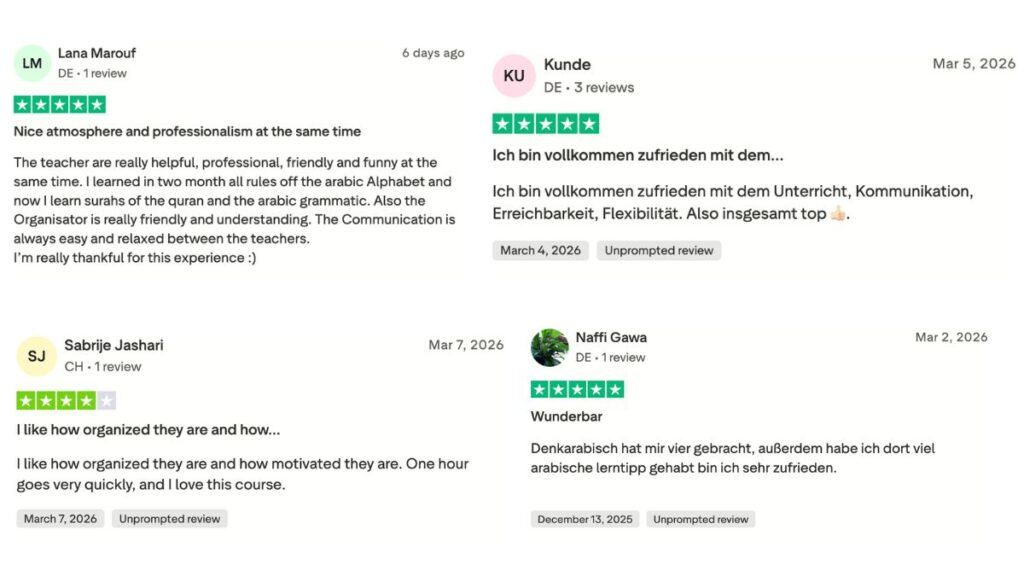
What Our Students Say About Denk Arabisch Academy
See what our students say about learning at Denk Arabisch Academy on Trustpilot. Read their experiences and check out more reviews to discover how our courses help improve Arabic.
Join Denk Arabisch Now
If you are serious about giving your child a strong Islamic identity, correct Arabic pronunciation, and a deep understanding of the Qur’an, then home activities alone may not be enough without structured guidance.
That is exactly where Denk Arabisch makes the difference.
We provide:
- Professional online Arabic tutors
- Structured Quran Courses for Children
- Interactive Islamic Studies for children
- Step-by-step Arabic Lessons for Children
- Flexible schedules for families in Europe and worldwide
Your child doesn’t just memorize—they understand, speak, and live the language of the Quran.
Don’t wait for your child to struggle later.
Our Courses Include:
- Arabic Courses for German Speakers
- Arabic Levels for German Speakers
- Arabic Dialect Courses for German Speakers
- Qur’an Learning Courses for German Speakers
- Islamic Studies Courses for German Speakers
- Courses for Muslim Kids for German Speakers
Start building their Islamic foundation today with a proven learning system designed specifically for Muslim children and beginners.
👉 Enroll now with Denk Arabisch and transform your child’s learning journey into a lifelong connection with Islam and the Arabic language.
Study Islamic knowledge with Denk Arabisch Academy
Deepen your understanding of Islam through authentic and structured learning
Try a Free TrialConclusion
Home-based Islamic activities are a powerful way to raise children who love their faith, understand its teachings, and live by its values. With simple daily routines like Qur’an reading, storytelling, dua practice, crafts, and family discussions, parents can create a rich Islamic environment at home.
You don’t need expensive materials or complex systems—just consistency, love, and intention. When Islam becomes part of everyday life at home, children grow up with strong identity, good character, and a lasting connection to their Creator.
FAQs
1. What are home-based Islamic activities?
Home-based Islamic activities are simple learning and practice exercises done at home to help children and families strengthen their understanding of Islam. They include Qur’an reading, storytelling, dua practice, Islamic crafts, and daily manners training.
2. At what age can children start Islamic activities at home?
Children can start as early as 3–5 years old with very simple activities such as listening to short Surahs, learning basic duas, and Islamic storytelling. As they grow older, activities can become more structured and detailed.
3. How much time should be spent on Islamic activities daily?
For young children, 10–20 minutes a day is usually enough. The key is consistency rather than duration. Even short daily sessions can build strong long-term habits.
4. What are the best Islamic activities for beginners?
Some of the best beginner-friendly activities include:
Learning short Surahs from the Qur’an
Practicing daily duas
Listening to Prophet stories
Learning Arabic letters
Simple Islamic manners practice
5. How can I make Islamic learning fun for my child?
You can make it fun by using games, storytelling, drawing, crafts, and rewards. Children learn better when activities feel like play rather than formal lessons.
6. Do I need special materials for home Islamic activities?
No, most activities require very simple materials like paper, colors, flashcards, or just conversation. The most important element is parental involvement and consistency.
7. How can I help my child memorize the Qur’an at home?
Start with short Surahs, repeat them daily, and use listening and repetition methods. Keep sessions short and encourage memorization step by step rather than rushing.