Have you ever wondered how to say “hello” in Arabic?
Whether you’re planning a trip to an Arabic-speaking country, learning Arabic for work, studying the Quran, or simply curious about the language, learning Arabic greetings is one of the easiest ways to start speaking confidently.
Arabic greetings are more than simple words. They reflect respect, hospitality, kindness, and cultural traditions that are deeply rooted throughout the Arab world.
In this guide, you’ll learn more than 10 different ways to say hello in Arabic, when to use them, and how native speakers respond.
Table of Contents
1. As-salamu Alaikum (السلام عليكم) – “Peace Be Upon You”
This is the most common and respected Arabic greeting.
It literally means:
“Peace be upon you.”
People use it in:
- Homes
- Mosques
- Schools
- Workplaces
- Social gatherings
Response
Wa Alaikum As-salam (وعليكم السلام)
Meaning:
“And peace be upon you too.”
Because this greeting is understood throughout the entire Arab world, it’s often the first greeting Arabic learners should memorize.
Learn Arabic Beyond Greetings
If your goal is to understand everyday Arabic conversations, the Arabic for Beginners Course at Denk Arabisch helps students build vocabulary, pronunciation, and speaking confidence from day one.
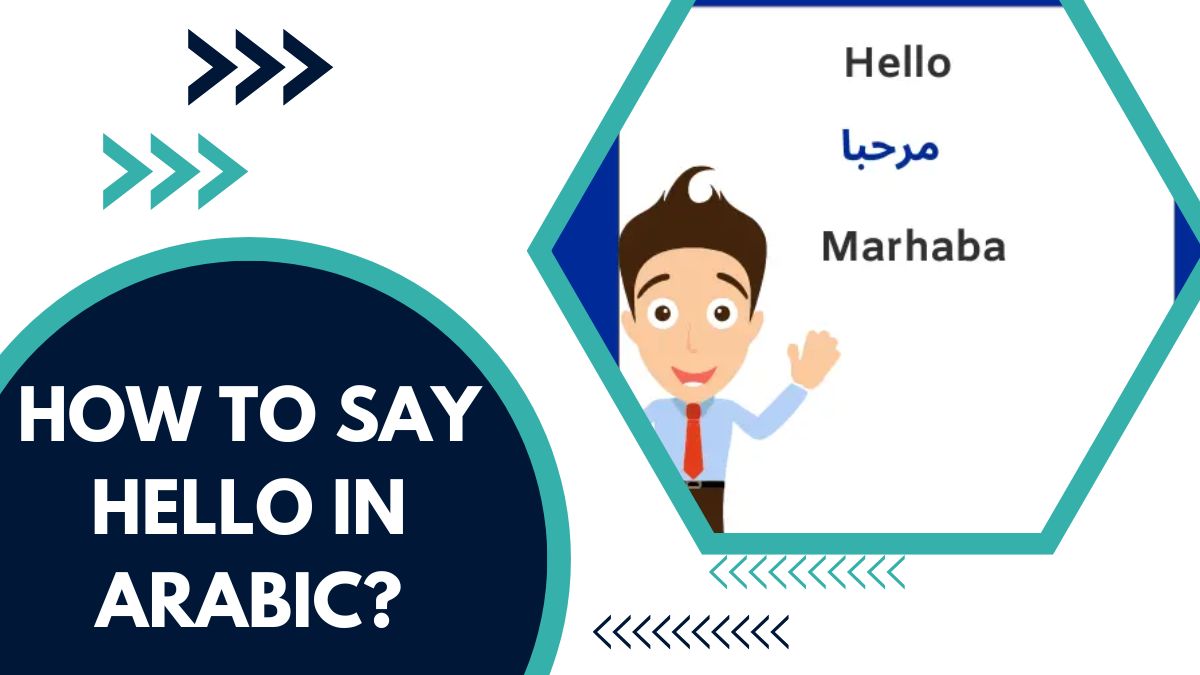
2. Marhaba (مرحبا) – “Hello”
Marhaba is the easiest Arabic greeting to learn.
It simply means:
Hello
It’s friendly, polite, and suitable for almost every situation.
You can use Marhaba when:
- Meeting new people
- Greeting friends
- Entering a shop
- Starting a conversation
Many beginners prefer Marhaba because it’s easy to pronounce.
3. Ahlan (أهلاً) – “Hi” or “Welcome”
Ahlan is another extremely common greeting.
It can mean:
- Hi
- Hello
- Welcome
Arabic speakers often use it when welcoming someone into their home or workplace.
Example:
Ahlan! Kayfa Haluk?
“Hi! How are you?”
4. Ahlan wa Sahlan (أهلاً وسهلاً) – “A Warm Welcome”
This expression is famous throughout the Arab world.
While it is often translated as “welcome,” it carries a stronger feeling of hospitality.
You’ll hear it:
- When visiting someone’s house
- At hotels
- In restaurants
- During special occasions
Hospitality is a major part of Arab culture, which is why this phrase is so popular.
Interested in Quranic Arabic?
Many Arabic greetings appear in Islamic texts and daily Muslim life. The Quran Arabic Course at Denk Arabisch helps students understand Quranic vocabulary while improving their overall Arabic skills.
5. Salam (سلام) – “Peace”
Salam is a shorter version of the greeting.
It simply means:
Peace
Many Arabic speakers use Salam casually among friends and family.
It’s short, friendly, and easy for beginners to remember.
6. Sabah Al-Khair (صباح الخير) – “Good Morning”
When greeting someone in the morning, Arabs often say:
Sabah Al-Khair
Meaning:
Good Morning
Common Response
Sabah Al-Noor
Meaning:
Morning of Light
This beautiful exchange is common in nearly every Arabic-speaking country.
Example:
Person 1: Sabah Al-Khair
Person 2: Sabah Al-Noor
Read also: Arabic Sentences
7. Masa Al-Khair (مساء الخير) – “Good Evening”
In the evening, people commonly say:
Masa Al-Khair
Meaning:
Good Evening
Response
Masa Al-Noor
Meaning:
Evening of Light
This greeting is used in both professional and casual situations.
8. Kayfa Haluk? (كيف حالك؟) – “How Are You?”
After saying hello, Arabs often ask:
Kayfa Haluk?
Meaning:
How are you?
Common Responses
Bikhair, Alhamdulillah
“I’m fine, praise be to God.”
Other answers include:
- Mumtaz (Excellent)
- Jayyid (Good)
- Bikhair (Fine)
9. Naharak Saeed (نهارك سعيد) – “Have a Nice Day”
Literally, this phrase means:
“May your day be happy.”
It’s a warm and positive greeting often used in Modern Standard Arabic.
You may hear it:
- At work
- In customer service
- In formal conversations
Improve Your Arabic Reading Skills
Want to understand Modern Standard Arabic more easily?
The Arabic Course based on Levels at Denk Arabisch teaches grammar, reading, and communication skills used throughout the Arabic-speaking world.
Learn Arabic with Denk Arabisch Academy
Speak and understand Arabic through a clear and effective learning system
Try a Free Trial10. Shoo Al-Akhbar? (شو الأخبار؟) – “What’s New?”
This greeting is especially common in Levantine Arabic.
It literally means:
“What are the news?”
A more natural English translation would be:
- What’s new?
- What’s going on?
This greeting is usually used among friends and family rather than in formal situations.
11. Hala (هلا) – “Hi There”
Hala is especially popular in Gulf countries.
It’s casual, friendly, and often used between people who know each other well.
You may hear:
- Hala
- Hala wallah
Both express friendliness and welcome.
12. Ya’teek Al-Afiyah (يعطيك العافية) – “May God Give You Health”
This greeting is widely used in Levantine Arabic.
People often say it to someone who is:
- Working hard
- Cooking
- Studying
- Cleaning
- Completing a task
It shows appreciation and respect.
The closest English equivalent might be:
“Good job” or “More power to you.”
Bonus: Arabic Greetings by Country
Arabic dialects vary from country to country.
Egypt
Common greetings include:
- السلام عليكم (Salam Alaikum)
- مرحبًا (Marhaba)
- إزيك؟ (Izzayak?) (How are you?)
Saudi Arabia
Popular greetings include:
- السلام عليكم (Salam Alaikum)
- هلا (Hala)
- حياك الله (Hayyak Allah)
Morocco
People often say:
- سلام (Salam)
- لاباس؟ (Labas?)
Lebanon & Syria
Common greetings include:
- مرحبا (Marhaba)
- كيفك (Kifak?)
- شو الأخبار؟ (Shoo Al-Akhbar?)
Despite these regional differences, most greetings are understood throughout the Arab world.
Speak naturally with native speakers by learning the dialect used in everyday life. Master authentic expressions, pronunciation, and real-life conversations in popular Arabic dialects. Arabic Dialect Courses at Denk Arabisch.
Why Learning Arabic Greetings Matters?
Arabic greetings help you:
- Start conversations confidently
- Build relationships with native speakers
- Show cultural respect
- Improve pronunciation
- Learn everyday vocabulary naturally
Even mastering a few greetings can make your Arabic sound much more natural.
Read also: Shahadah In Arabic
Cultural Tips for Greeting Arabic Speakers
Arabic greetings are often more than a simple “hello.” They are a way of showing respect, warmth, and genuine interest in the other person. Understanding these cultural habits can help your conversations feel more natural and meaningful.
1. Greetings Matter
Arabic culture places great importance on greetings.
Skipping a greeting may sometimes be considered impolite.
2. Take Time to Exchange Pleasantries
Many Arabic conversations begin with several greeting expressions before discussing the main topic.
3. Show Respect to Elders
Using formal greetings demonstrates respect, especially when speaking with older people.
4. Learn the Responses
Knowing how to answer greetings is just as important as knowing how to initiate them.
5. Use Islamic Greetings Appropriately
Even non-Muslims can politely use As-salamu Alaikum when interacting with Arabic-speaking Muslims.
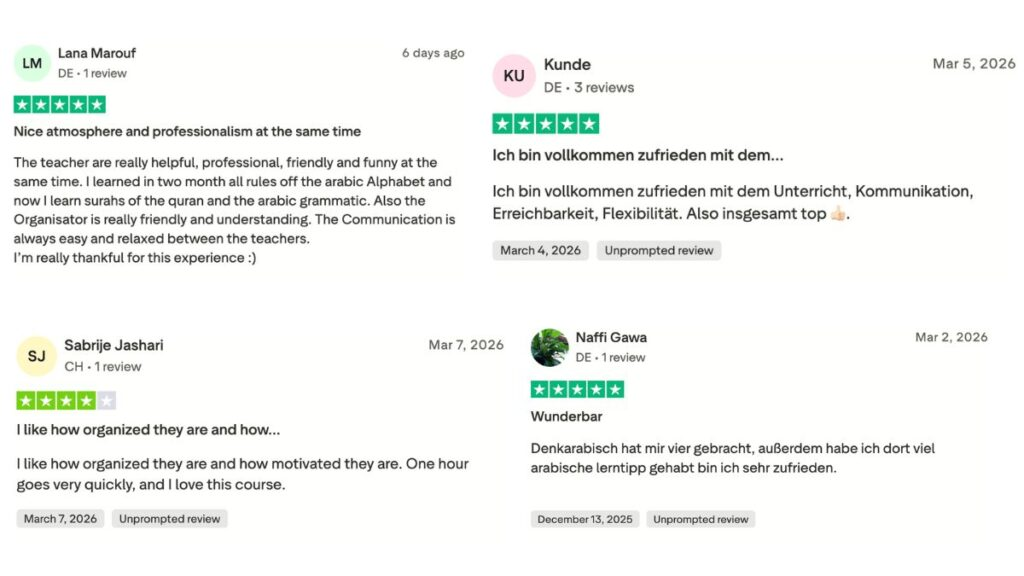
What Our Students Say About Denk Arabisch Academy
See what our students say about learning at Denk Arabisch Academy on Trustpilot. Read their experiences and check out more reviews to discover how our courses help improve Arabic.
Start Speaking Arabic Today With Denk Arabisch
Ready to move beyond basic Arabic greetings and start speaking, reading, and understanding Arabic with confidence?
At Denk Arabisch, you’ll find professionally designed courses that help you achieve your language goals faster through structured lessons, experienced teachers, and practical learning methods. Whether you’re learning Arabic for travel, work, daily communication, or Islamic studies, there’s a course tailored to your needs.
Denk Arabisch offers:
- Arabic Course For Beginners – Perfect for complete beginners who want to build a strong foundation in Arabic from the ground up.
- Quranic Arabic Course for German Speakers – Learn to understand the language of the Quran and connect more deeply with its meanings.
- Arabic Courses Based On Skills & Topics – Focus on specific skills such as speaking, listening, reading, writing, or specialized Arabic topics.
- Arabic Dialect Courses – Master real-life conversations and communicate naturally with native speakers using popular Arabic dialects.
- Arabic Courses Based On Levels – Progress step by step with courses designed for beginner, intermediate, and advanced learners.
Thousands of students have already started their Arabic learning journey. Don’t let another day pass without making progress toward your goals. Enroll in a Denk Arabisch course today and discover how enjoyable and effective learning Arabic can be.
Learn Arabic with Denk Arabisch Academy
Speak and understand Arabic through a clear and effective learning system
Try a Free TrialConclusion
Learning how to say hello in Arabic is the perfect first step toward mastering one of the world’s most influential languages. While As-salamu Alaikum remains the most common and respected greeting, expressions such as Marhaba, Ahlan, Sabah Al-Khair, and Masa Al-Khair are equally useful in everyday conversations.
Arabic greetings are more than simple words—they reflect respect, hospitality, and cultural traditions that have been passed down for generations. By practicing these greetings regularly, you’ll not only improve your language skills but also develop stronger connections with Arabic speakers around the world.
Start using these greetings today, and you’ll quickly discover that a simple “hello” can open the door to meaningful conversations and deeper cultural understanding.
FAQs
1. What is the most common way to say hello in Arabic?
The most common greeting is As-salamu Alaikum (السلام عليكم).
2. How do you respond to As-salamu Alaikum?
You respond with Wa Alaikum As-salam (وعليكم السلام).
3. Is Marhaba formal or informal?
Marhaba is neutral and can be used in both formal and informal situations.
4. How do Arabs say good morning?
They say Sabah Al-Khair (صباح الخير).
5. Can non-Muslims say As-salamu Alaikum?
Yes. It is a respectful greeting that is widely understood across the Arab world.
6. Which Arabic greeting should beginners learn first?
Start with:
As-salamu Alaikum
Marhaba
Kayfa Haluk?
These three greetings cover most everyday situations.