Takeaway:
- Start with simple, high-frequency words children use every day like “mama,” “water,” “hello” rather than grammar rules.
- Use the home as the first classroom by labeling objects (door, chair, table) and weaving Arabic into daily moments like waking up, eating, and bedtime.
- Turn language into a natural part of life with a fixed routine: morning greetings, meal vocabulary, playtime verbs, evening phrases.
- Teach playtime action words (eat, drink, play, read) and common toy names to learn through movement and fun.
- Build early concepts with colors and numbers in Arabic, turning walks or games into language hunts.
- Make learning playful with songs, rhyming, simple picture stories, flashcards, Arabic Bingo, or “Simon Says” in Arabic.
- Focus on functional vocabulary that children can actively use from morning to night, making Arabic a communication tool, not a subject.
- Consistency, interaction, and enjoyment matter more than perfection or memorization—kids learn best when language feels alive.
Teaching Arabic basics for children doesn’t have to be difficult or boring. In fact, the best way for kids to learn Arabic is the same way they learned their first language—through daily use, play, and interaction.
Instead of focusing on complex grammar rules, this guide focuses on “functional vocabulary“—the high-frequency words your child can use the moment they wake up until they go to sleep. By integrating these basics into your daily routine, Arabic stops being a “subject” and starts becoming a natural part of your Life.
Table of Contents
Simple Arabic Words First Suitable For Kids
Instead of starting with grammar rules, begin with basic words children use every day.
For example:
- مرحبًا (Marhaban) – Hello
- كتاب (Kitab) – Book
- ماء (Maa’) – Water
This approach makes learning easier and more enjoyable while building a strong foundation.
Our Arabic Alphabet Course for German Speakers is designed to give your child the exact words they need for real-life conversations. We turn “static words” into “active communication.
A. Everyday Arabic Words for kids
The home is the first “classroom.” Use these words during breakfast or while getting ready for the day to create an immersive environment.
| English | Arabic | Transliteration |
| Mother | أمي | Ummī |
| Father | أبي | Abī |
| House | بيت | Bayt |
| Door | باب | Bāb |
| Water | ماء | Mā’ |
| Food | طعام | Ṭaʿām |
| Bed | سرير | Sarīr |
👉 Example:
- “أين أمي؟” (Ayna ummī? – Where is my mother?)
- “أمي هنا” (Ummī hunā – My mother is here)
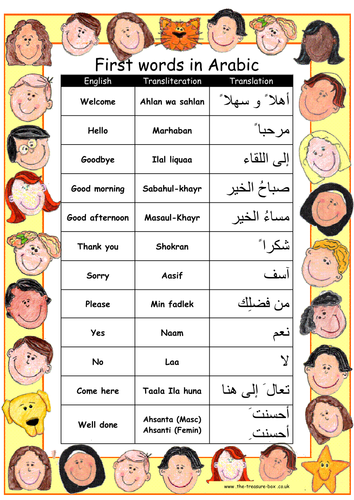
B. Arabic Greetings & Polite Phrases for kids
Teaching manners in Arabic is a wonderful way to connect language with values like respect and kindness.
| English | Arabic | Transliteration |
| Hello | مرحباً | Marḥaban |
| Good morning | صباح الخير | Ṣabāḥ al-khayr |
| Good evening | مساء الخير | Masa’ al-khayr |
| Thank you | شكراً | Shukran |
| Please | من فضلك | Min faḍlik |
| You’re Welcome | عفواً | Afwan |
| Goodbye | إلى اللقاء | Ila al-liqa |
While daily practice is key, a structured start makes all the difference. Our Arabic Lessons for German-Speaking Children at Denk Arabisch provide the perfect pedagogical framework to turn these first words into fluent sentences.
Playtime and Action Words In Arabic For kids
Movement helps solidify memory. When your child is playing, try incorporating these verbs and objects to make the learning active.
1. Common Toys
- Ball: Kura (كرة)
- Toy: Luʿba (لعبة)
- Bicycle: Darrāja (دراجة)
2. Basic Verbs (Action Words)
- Eat: Akala (أكل)
- Drink: Shariba (شرب)
- Play: Laʿiba (لعب)
- Read: Iqra’ (اقرأ)
Vocabulary is just the start. Our Arabic Speaking Course focuses on pronunciation and real-time conversation, ensuring your child sounds natural and confident from day one.
Learn Arabic with Denk Arabisch Academy
Speak and understand Arabic through a clear and effective learning system
Try a Free TrialKid’s Numbers and Colors In Arabic
Visual descriptors and counting are the building blocks of early education. You can turn a walk in the park into a “Language Hunt.”
1. Colors
- Red: Aḥmar (أحمر)
- Yellow: Aṣfar (أصفر)
- Green: Akhḍar (أخضر)
2. Numbers (1–5)
- Wahid (واحد)
- Ithnan (اثنان)
- Thalatha (ثلاثة)
- Arba’a (أربعة)
- Khamsa (خمسة)
Read also: Spiritual Benefits Of Reading The Quran – A Complete Guide For The Heart And Soul
Arabic Daily Routine for Kids
One of the best ways to teach Arabic is through a daily routine structure:
1. Morning:
- Good morning: صباح الخير
- I wake up: أستيقظ
2. At home:
- I eat breakfast: أكل الإفطار
- I drink water: أشرب ماء
3. Playtime:
- I play: ألعب
4. Evening:
- Good evening: مساء الخير
- I sleep: أنام
This method helps children naturally associate Arabic with real life.
At Denk Arabisch, we explain the cultural nuances behind these phrases, helping your child not just speak Arabic, but understand the heart of the language.
Fun Activities to Teach Arabic Basics
Teaching Arabic basics doesn’t have to feel like a formal lesson—it can be a playful, engaging experience that fits naturally into a child’s daily routine.
By combining visual aids, music, storytelling, and interactive games, children absorb vocabulary and pronunciation more easily while staying motivated and curious.
1. Labeling Objects
Place sticky notes on items like:
- باب (door)
- كرسي (chair)
- طاولة (Table)
2. Songs & Rhymes
Use melody to improve pronunciation and retention. Catchy counting songs are especially effective.
3. Storytelling
Read simple Arabic stories with pictures.
4. Games
- Flashcards matching
- Arabic Bingo
- “Simon Says” in Arabic
Learning through play keeps children engaged and motivated.
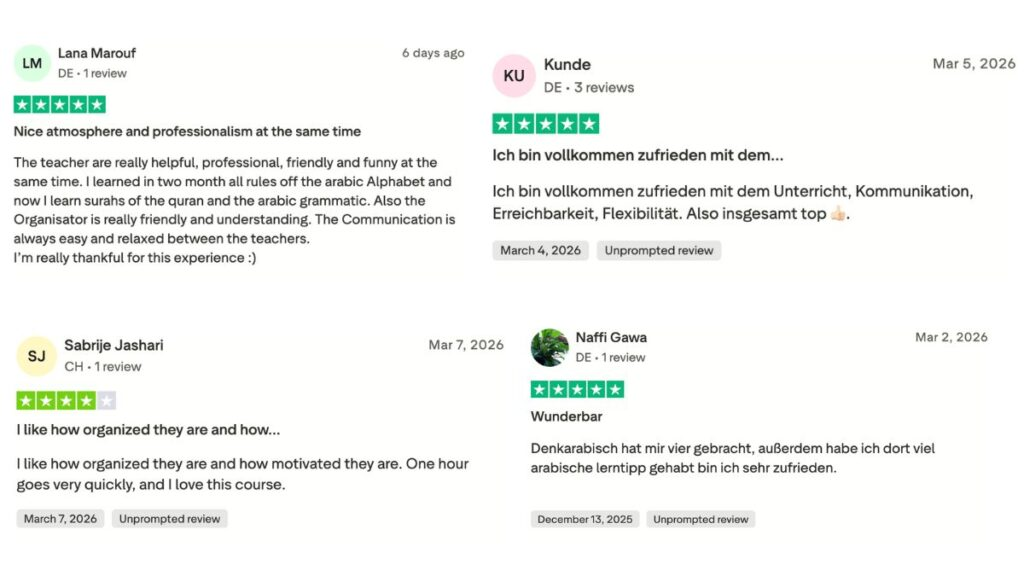
What Our Students Say About Denk Arabisch Academy
See what our students say about learning at Denk Arabisch Academy on Trustpilot. Read their experiences and check out more reviews to discover how our courses help improve Arabic.
Read also: Benefits Of Reading The Quran Daily – The Guide For Muslims
Learn Arabic Faster with Denk Arabisch
While home practice is powerful, many parents find it challenging to stay consistent or provide structured learning on their own.
This is where Denk Arabisch can make a real difference.
At Denk Arabisch, children learn Arabic in a fun, interactive, and structured way:
- Step-by-step lessons designed for beginners
- Engaging activities, games, and visual learning
- Focus on real-life speaking, not just memorization
- Support for both children and parents
Instead of guessing what to teach next, you get a clear learning path that builds your child’s confidence step by step.
Whether your goal is daily communication or understanding Arabic deeply, Denk Arabisch helps make the journey easier and more enjoyable.
Our Courses Include:
- Arabic Courses for German Speakers
- Arabic Levels for German Speakers
- Arabic Dialect Courses for German Speakers
- Qur’an Learning Courses for German Speakers
- Islamic Studies Courses for German Speakers
- Courses for Muslim Kids for German Speakers
Ready to help your child start speaking Arabic with confidence?
Join Denk Arabisch today and turn learning into a fun daily habit.
Learn Arabic with Denk Arabisch Academy
Speak and understand Arabic through a clear and effective learning system
Try a Free TrialFrequently Asked Questions About Arabic Basics for Children
1. At what age should I start teaching my child Arabic?
You can start from day one! A child’s brain is wired to absorb sounds from birth. However, the “sweet spot” for introducing structured, playful learning like songs, stories, and basic vocabulary is between the ages of 3 and 5. During this phase, children are highly receptive to new sounds and can learn naturally through play, much like they did with their first language. The key is to make it a positive, pressure-free experience.
2. Should I teach my child Modern Standard Arabic (Fus’ha) or a spoken dialect first?
Most families and educational programs begin with Modern Standard Arabic (Fus’ha). It is the formal, clear language used in books, schools, and media across the Arab world. Once a child has a foundation in Fus’ha, they can easily pick up a specific dialect later. More importantly, Fus’ha is the language of the Quran, so learning it from the start builds a direct, deep connection to Islamic teachings from a young age.
3. I don’t speak Arabic myself. How can I help my child learn?
You are not alone, and the wonderful news is that you don’t need to be fluent to be your child’s best supporter. Your role shifts from “teacher” to “learning partner.” You can use apps with audio, flashcards, simple picture books, and online courses. Learning a few words together each day—like “Marhaban” (Hello) or “Shukran” (Thank you)—can be an incredibly bonding experience. A structured program, like our courses at Denk Arabisch, provides the clear path and native-speaker support that can guide both of you step-by-step.
4. My child is learning Arabic, but how long until they can actually speak it?
Every child is unique, but with consistent, short daily practice, you will see results surprisingly fast. Think of functional vocabulary first: within just a few weeks, a child can start using basic greetings and naming familiar objects. The real breakthrough to natural communication comes when Arabic is woven into daily life—hearing it, speaking it, and playing with it regularly, rather than just in isolated lessons. Our focus at Denk Arabisch on real-life speaking and cultural nuances helps children sound natural and confident from day one.
5. What is the best method to make learning Arabic stick?
The most effective method isn’t a single secret trick; it’s a combination of simplicity, daily routine, and fun. Start with high-frequency, practical words (like “Maa’” for water and “Bayt” for house) and use them actively in your child’s day. Pair words with movement, songs, and visual labels. A daily routine where your child says “Ṣabāḥ al-khayr” (Good morning) upon waking or “Anām” (I sleep) at night creates a natural, lasting connection. The goal is not memorization—it’s making Arabic a living part of your home.
6. What if my child makes many mistakes, especially with pronunciation?
Please, let the mistakes happen and celebrate them! Just as you didn’t correct your toddler’s grammar when they were first learning your native language, the goal here is communication and connection, not perfection. Gently repeat the word correctly, smile, and move on. If your child says “Maa’” without the correct stop, simply say “Yes, Maa’!” while handing them water. Over time, and with proper modeling, their pronunciation will naturally refine. The best way to support them is to focus on the Makhraj (the point where a sound comes from) in a playful, not technical, way.
7. What are the very first words I should teach my child?
Begin with “functional vocabulary”—the high-frequency words your child can use the moment they wake up. This includes:
– Family & Home: Ummī (Mother), Abī (Father), Bayt (House), Bāb (Door)
– Greetings: Marḥaban (Hello), Ṣabāḥ al-khayr (Good morning), Shukran (Thank you)
– Daily Needs: Maa’ (Water), Ṭaʿām (Food), Kitab (Book)
– Action Words: Laʿiba (Play), Akala (Eat), Iqra’ (Read)
This approach turns static words into active communication, building a strong foundation for real-life conversations.
8. How can I balance teaching Arabic with schoolwork and other activities?
The secret is seamless integration, not addition. You don’t need a separate, stressful “Arabic hour.” Integrate the language into what you’re already doing. Play an Arabic counting song during car rides. Use Arabic words for colors during art time. Put a sticky note labeled “Bāb” (door) on the door. Short, 5–15 minute sessions of playful interaction every day are far more effective than a long, formal lesson once a week. This turns everyday moments into learning opportunities without overwhelming your child’s schedule.
9. Does my child need to learn to read and write Arabic right away?
Not necessarily. The natural order of language learning is listening, speaking, reading, and then writing. For young beginners, the priority should be on building a strong oral foundation. Focus on sounds and meaning, helping them feel comfortable hearing and saying words. Once they have a positive association with the spoken language, introducing the beautiful Arabic alphabet through tracing, songs, and games becomes an exciting next step, not a chore.
10. With so many apps and programs, how do I choose the right one?
Look for a program that moves beyond simple memorization and focuses on active communication and cultural understanding. A great program is structured yet playful, designed specifically for children, and provides a clear learning path for both the child and the parent. At Denk Arabisch, we combine step-by-step lessons, engaging activities, and a focus on real-life speaking. Our goal is to help your child not just learn words, but understand and enjoy the heart of the Arabic language.
Conclusion
Teaching Arabic basics for children is most effective when it is fun, practical, and consistent. By starting with simple words, using them in daily life, and incorporating games and activities, children can develop a natural connection with the language.
The goal is not just memorization—but helping kids speak, understand, and enjoy Arabic from an early age.