In the fast pace of modern life, real tranquility can feel out of reach. The mind is constantly pulled by notifications, responsibilities, and worries about the future. For a Muslim, finding refuge from this noise is more than a psychological need.
It is part of a living relationship with Allah. Learning and practicing Essential Adhkar can help Muslims build a daily habit of remembrance, bringing their hearts back to Allah throughout the day.
For centuries, Islam has offered a simple, accessible remedy: Adhkar (also spelled Azkkar; singular Dhikr or Zikr). The word means “remembrances.” In practice, it means intentionally repeating specific phrases, supplications, and verses taught in the Quran and the Sunnah of Prophet Muhammad ﷺ.
Adhkar are not empty ritual. They are a spiritual anchor, a source of protection, and a direct line of communication between the servant and the Creator.
Table of Contents
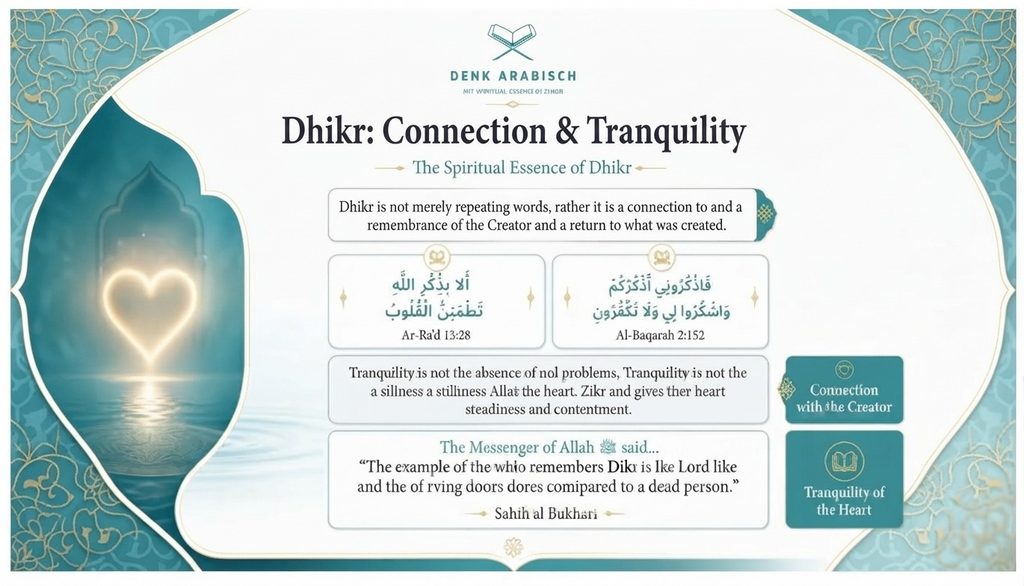
The Spiritual Essence of Dhikr
At its core, Dhikr answers a basic human need: connection with the Creator. The Quran describes this relationship as a two-way promise:
﴿فَاذْكُرُونِي أَذْكُرْكُمْ وَاشْكُرُوا لِي وَلَا تَكْفُرُونِ﴾
“So remember Me; I will remember you. And be grateful to Me and do not deny Me.” (Surah Al-Baqarah, 2:152)
When a person engages in Dhikr, they are not simply ticking off a duty. They are aligning themselves with the purpose they were created for.
The Heart’s Tranquility
People often look for peace in external things: wealth, status, entertainment, or relationships. Islam teaches that true inner peace is a state Allah places in the heart:
﴿أَلَا بِذِكْرِ اللَّهِ تَطْمَئِنُّ الْقُلُوبُ﴾
“Unquestionably, by the remembrance of Allah hearts are assured.” (Surah Ar-Ra’d, 13:28)
The Arabic word tatma’inn describes a deep, settled stillness. Just as water puts out fire, regular Dhikr calms the flames of worldly anxiety and leaves the heart grounded and content.
The Core Categories of Adhkar
A believer can remember Allah at any moment. The Sunnah also sets out specific remembrances for specific times and situations.
1. Adhkar al-Sabah wal-Masaa (Morning and Evening Adhkar)
These are the most important daily remembrances. Recited at the two transitions of the day, they act as a protective fortress (hisn) for the day and the night.
2. Adhkar After the Obligatory Prayers
After each obligatory prayer, the Prophet ﷺ taught remembrances that carry the spirit of the prayer into the rest of the day:
- Astaghfirullah: 3 times, then Allahumma Antas-Salam wa minkas-salam, tabarakta ya Dhal-Jalali wal-Ikram (Sahih Muslim, 591)
- SubhanAllah: 33 times
- Alhamdulillah: 33 times
- Allahu Akbar: 33 times
- To complete one hundred: La ilaha illallahu wahdahu la sharika lah, lahul-mulku wa lahul-hamd, wa Huwa ‘ala kulli shay’in Qadir
The Prophet ﷺ said that whoever does this after every prayer will have their sins forgiven, even if they are like the foam of the sea (Sahih Muslim, 597).
3. Situational Adhkar
There are supplications for everyday actions: waking up, sleeping, entering and leaving the home, eating, and traveling. Weaving remembrance into these moments turns ordinary habits into acts of worship.
When Should You Recite Morning and Evening Adhkar?
The Quran points to these two times: “And exalt [Allah] with praise of your Lord before the rising of the sun and before its setting” (Surah Qaf, 50:39). Scholars differ slightly on the exact limits. The most common guidance is:
| Best time | If you miss it | |
| Morning Adhkar | After Fajr until sunrise | Many scholars allow reciting them later in the morning, up to the Duha period |
| Evening Adhkar | After Asr until Maghrib | Many scholars allow reciting them after Maghrib and into the early night |
The key principle: reciting them late is far better than not reciting them at all.
The Core Morning and Evening Adhkar
Below are the core authentic morning and evening Adhkar, each with its Arabic text, transliteration, meaning, how many times to say it, and its source.
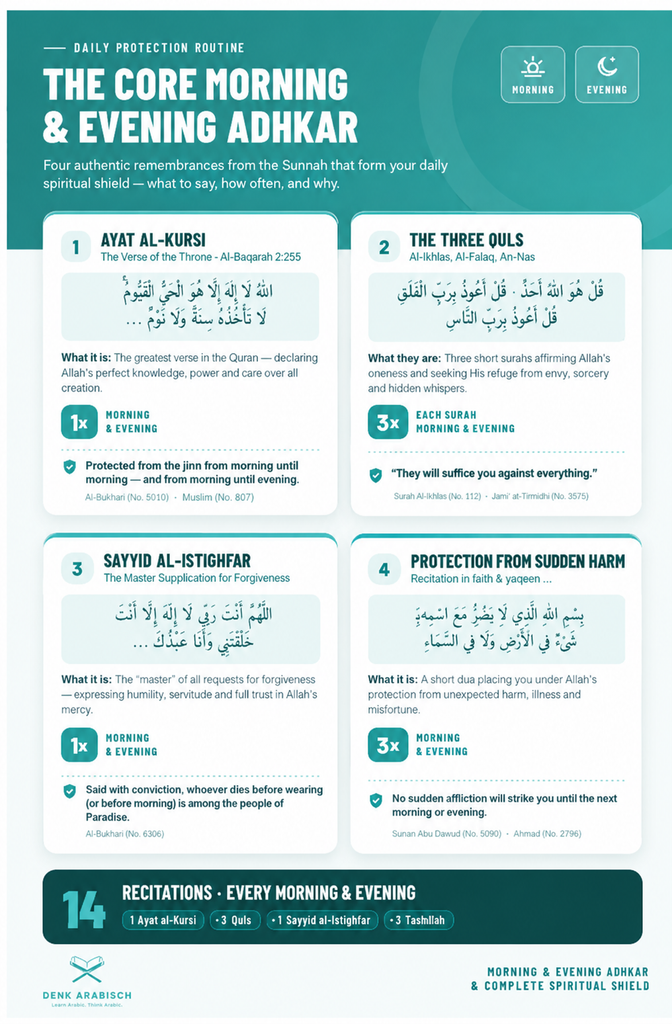
1. Ayat al-Kursi (The Verse of the Throne)
Ayat al-Kursi is the greatest verse in the Quran. It is a powerful declaration of Allah’s perfect knowledge, power, and care over all creation.
“اللَّهُ لَا إِلَٰهَ إِلَّا هُوَ الْحَيُّ الْقَيُّومُ ۚ لَا تَأْخُذُهُ سِنَةٌ وَلَا نَوْمٌ ۚ لَّهُ مَا فِي السَّمَاوَاتِ وَمَا فِي الْأَرْضِ ۗ مَن ذَا الَّذِي يَشْفَعُ عِندَهُ إِلَّا بِإِذْنِهِ ۚ يَعْلَمُ مَا بَيْنَ أَيْدِيهِمْ وَمَا خَلْفَهُمْ ۖ وَلَا يُحِيطُونَ بِشَيْءٍ مِّنْ عِلْمِهِ إِلَّا بِمَا شَاءَ ۚ وَسِعَ كُرْسِيُّهُ السَّمَاوَاتِ وَالْأَرْضَ ۖ وَلَا يَئُودُهُ حِفْظُهُمَا ۚ وَهُوَ الْعَلِيُّ الْعَظِيمُ”
“Allahu la ilaha illa Huwal-Hayyul-Qayyum. La ta’khudhuhu sinatun wa la nawm. Lahu ma fis-samawati wa ma fil-ard. Man dhal-ladhi yashfa’u ‘indahu illa bi-idhnih. Ya’lamu ma bayna aydihim wa ma khalfahum. Wa la yuhituna bishay’im-min ‘ilmihi illa bima sha’. Wasi’a Kursiyyuhus-samawati wal-ard, wa la ya’uduhu hifdhuhuma, wa Huwal-‘Aliyyul-‘Adheem.”
“Allah! There is no god ˹worthy of worship˺ except Him, the Ever-Living, All-Sustaining. Neither drowsiness nor sleep overtakes Him. To Him belongs whatever is in the heavens and whatever is on the earth. Who could possibly intercede with Him without His permission? He ˹fully˺ knows what is ahead of them and what is behind them, but no one can grasp any of His knowledge—except what He wills ˹to reveal˺. His Seat encompasses the heavens and the earth, and the preservation of both does not tire Him. For He is the Most High, the Greatest.” (Al-Baqarah, 2:255)
How many times: 1 time, morning and evening
The Prophet ﷺ said that whoever recites it in the evening is protected from the jinn until morning, and whoever recites it in the morning is protected until evening (al-Nasa’i, al-Hakim; authenticated by al-Albani). Reciting it before sleep also keeps you under Allah’s protection all night (al-Bukhari, 2311).
2. The Three Quls (Al-Ikhlas, Al-Falaq and An-Nas)
These three short surahs affirm Allah’s absolute oneness and seek His refuge from every kind of harm, including envy, sorcery, and hidden whispers.
Surah Al-Ikhlas (112)
“قُلْ هُوَ اللَّهُ أَحَدٌ اللَّهُ الصَّمَدُ لَمْ يَلِدْ وَلَمْ يُولَدْ وَلَمْ يَكُن لَّهُ كُفُوًا أَحَدٌ”
Qul Huwal-lahu Ahad. Allahus-Samad. Lam yalid wa lam yulad. Wa lam yakul-lahu kufuwan ahad.
“Say, ˹O Prophet,˺ “He is Allah—One ˹and Indivisible. Allah—the Sustainer ˹needed by all. HHe has never had offspring, nor was He born. And there is none comparable to Him.” (Al-Ikhlas, 112:1–4)
Surah Al-Falaq (113)
“قُلْ أَعُوذُ بِرَبِّ الْفَلَقِ مِن شَرِّ مَا خَلَقَ وَمِن شَرِّ غَاسِقٍ إِذَا وَقَبَ وَمِن شَرِّ النَّفَّاثَاتِ فِي الْعُقَدِ وَمِن شَرِّ حَاسِدٍ إِذَا حَسَدَ”
Qul a’udhu bi-Rabbil-falaq. Min sharri ma khalaq. Wa min sharri ghasiqin idha waqab. Wa min sharrin-naffathati fil-‘uqad. Wa min sharri hasidin idha hasad.
“Say, ˹O Prophet,˺ “I seek refuge in the Lord of the daybreak, from the evil of whatever He has created, and from the evil of the night when it grows dark, and from the evil of those ˹witches casting spells by˺ blowing onto knots, and from the evil of an envier when they envy.” (Al-Falaq, 113:1–5)
Surah An-Nas (114)
“قُلْ أَعُوذُ بِرَبِّ النَّاسِ مَلِكِ النَّاسِ إِلَٰهِ النَّاسِ مِن شَرِّ الْوَسْوَاسِ الْخَنَّاسِ الَّذِي يُوَسْوِسُ فِي صُدُورِ النَّاسِ مِنَ الْجِنَّةِ وَالنَّاسِ”
Qul a’udhu bi-Rabbin-nas. Malikin-nas. Ilahin-nas. Min sharril-waswasil-khannas. Alladhi yuwaswisu fi sudurin-nas. Minal-jinnati wan-nas.
“Say, ˹O Prophet,˺ “I seek refuge in the Lord of humankind, the Master of humankind, the God of humankind, from the evil of the lurking whisperer— who whispers into the hearts of humankind— from among jinn and humankind.” (An-Nas, 114:1–6)
How many times: 3 times each, morning and evening
The Prophet ﷺ told Abdullah ibn Khubayb: “Say Qul Huwa Allahu Ahad and the two surahs of refuge three times in the evening and in the morning; they will suffice you against everything” (Sunan Abi Dawud, 5082; Jami’ al-Tirmidhi, 3575, hasan sahih).
Ayat al-Kursi and the Three Quls are part of your recitation every morning and evening. The Quran Recitation Course at Denk Arabisch helps you recite them more smoothly and accurately, with guided practice and direct feedback from a teacher.
3. Sayyid al-Istighfar (The Master Supplication for Forgiveness)
The Prophet ﷺ called this the “master” of all supplications for forgiveness. It expresses true servitude, humility, and complete trust in Allah’s mercy.
اللَّهُمَّ أَنْتَ رَبِّي لَا إِلَهَ إِلَّا أَنْتَ، خَلَقْتَنِي وَأَنَا عَبْدُكَ، وَأَنَا عَلَى عَهْدِكَ وَوَعْدِكَ مَا اسْتَطَعْتُ، أَعُوذُ بِكَ مِنْ شَرِّ مَا صَنَعْتُ، أَبُوءُ لَكَ بِنِعْمَتِكَ عَلَيَّ، وَأَبُوءُ لَكَ بِذَنْبِي فَاغْفِرْ لِي، فَإِنَّهُ لَا يَغْفِرُ الذُّنُوبَ إِلَّا أَنْتَ
Allahumma Anta Rabbi la ilaha illa Anta, khalaqtani wa ana ‘abduka, wa ana ‘ala ‘ahdika wa wa’dika mastata’tu. A’udhu bika min sharri ma sana’tu, abu’u laka bini’matika ‘alayya, wa abu’u laka bidhanbi faghfir li, fa’innahu la yaghfirudh-dhunuba illa Anta.
“O Allah, You are my Lord; there is no deity except You. You created me and I am Your servant, and I keep Your covenant and promise as best I can. I seek refuge in You from the evil of what I have done. I acknowledge Your favor upon me, and I acknowledge my sin, so forgive me, for none forgives sins except You.” (Sahih al-Bukhari, 6306)
How many times: 1 time, morning and evening
Whoever says it during the day with firm conviction and dies before evening will be among the people of Paradise, and the same applies to whoever says it at night and dies before morning.
4. Protection from Sudden Harm
This short supplication places you under Allah’s protection from unexpected harm, illness, and sudden misfortune throughout the day or night.
بِسْمِ اللَّهِ الَّذِي لَا يَضُرُّ مَعَ اسْمِهِ شَيْءٌ فِي الْأَرْضِ وَلَا فِي السَّمَاءِ وَهُوَ السَّمِيعُ الْعَلِيمُ
Bismillahil-ladhi la yadurru ma’as-mihi shay’un fil-ardi wa la fis-sama’i wa Huwas-Sami’ul-‘Alim.
“In the Name of Allah, with whose Name nothing on earth or in the heaven can cause harm, and He is the All-Hearing, the All-Knowing.” (Sunan Abi Dawud, 5088; Jami’ al-Tirmidhi, 3388)
How many times: 3 times, morning and evening
Whoever says it three times in the evening will not be struck by sudden affliction until morning, and whoever says it in the morning will not be struck until evening.
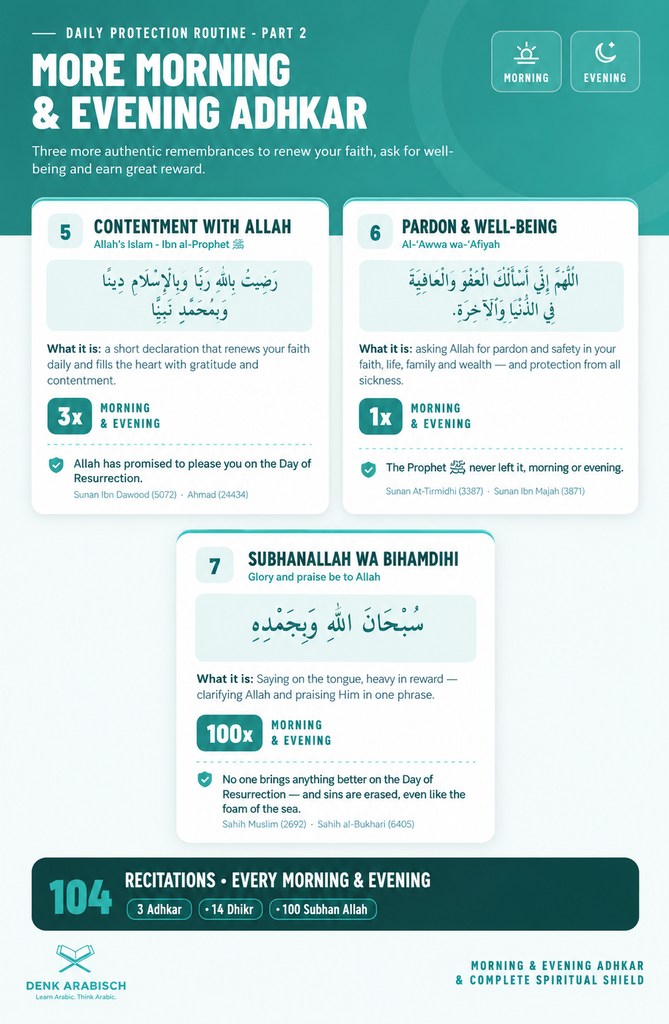
5. Contentment with Allah, Islam and the Prophet ﷺ
This short declaration renews your faith every day and fills the heart with gratitude and contentment.
رَضِيتُ بِاللَّهِ رَبًّا، وَبِالْإِسْلَامِ دِينًا، وَبِمُحَمَّدٍ صَلَّى اللَّهُ عَلَيْهِ وَسَلَّمَ نَبِيًّا
Raditu billahi Rabban, wa bil-Islami dinan, wa bi-Muhammadin sallallahu ‘alayhi wa sallama Nabiyya.
“I am pleased with Allah as my Lord, with Islam as my religion, and with Muhammad ﷺ as my Prophet.”
How many times: 3 times, morning and evening
The Prophet ﷺ said that whoever says it three times in the morning and evening, it will be Allah’s right to please him on the Day of Resurrection (Sunan Abi Dawud, 5072; Musnad Ahmad).
Discover the essentials in What Muslim Children Should Learn About Islam?.
6. Asking for Pardon and Well-being
The Prophet ﷺ never left this supplication in the morning or the evening (Sunan Abi Dawud, 5074; Sunan Ibn Majah, 3871, from Ibn Umar).
اللَّهُمَّ إِنِّي أَسْأَلُكَ الْعَفْوَ وَالْعَافِيَةَ فِي الدُّنْيَا وَالْآخِرَةِ، اللَّهُمَّ إِنِّي أَسْأَلُكَ الْعَفْوَ وَالْعَافِيَةَ فِي دِينِي وَدُنْيَايَ وَأَهْلِي وَمَالِي، اللَّهُمَّ اسْتُرْ عَوْرَاتِي، وَآمِنْ رَوْعَاتِي، اللَّهُمَّ احْفَظْنِي مِنْ بَيْنِ يَدَيَّ، وَمِنْ خَلْفِي، وَعَنْ يَمِينِي، وَعَنْ شِمَالِي، وَمِنْ فَوْقِي، وَأَعُوذُ بِعَظَمَتِكَ أَنْ أُغْتَالَ مِنْ تَحْتِي
Allahumma inni as’alukal-‘afwa wal-‘afiyata fid-dunya wal-akhirah. Allahumma inni as’alukal-‘afwa wal-‘afiyata fi dini wa dunyaya wa ahli wa mali. Allahummastur ‘awrati, wa amin raw’ati. Allahummahfadhni min bayni yadayya, wa min khalfi, wa ‘an yamini, wa ‘an shimali, wa min fawqi, wa a’udhu bi’adhamatika an ughtala min tahti.
“O Allah, I ask You for pardon and well-being in this world and the Hereafter. O Allah, I ask You for pardon and well-being in my religion, my worldly affairs, my family, and my wealth. O Allah, conceal my faults and calm my fears. O Allah, guard me from in front of me and behind me, from my right and my left, and from above me, and I seek refuge in Your Greatness from being struck down from beneath me.” (Hisn al-Muslim 84)
How many times: 1 time, morning and evening
Study Islamic knowledge with Denk Arabisch Academy
Deepen your understanding of Islam through authentic and structured learning
Try a Free Trial7. SubhanAllahi wa Bihamdihi
This phrase is light on the tongue but carries a huge reward. It combines glorifying Allah with praising Him.
سُبْحَانَ اللَّهِ وَبِحَمْدِهِ
SubhanAllahi wa bihamdihi.
“Glory be to Allah, and all praise is His.”
How many times: 100 times, morning and evening
Whoever says it 100 times in the morning and evening, no one will come on the Day of Resurrection with anything better, except someone who said the same or more (Sahih Muslim, 2692).
Saying it 100 times in a day erases sins even if they are like the foam of the sea (Sahih al-Bukhari, 6405).
A Supplication for Anxiety and Debt (Any Time)
This authentic supplication lifts the mental and practical burdens that weigh people down, from worry and laziness to financial pressure. The Prophet ﷺ said it often (Sahih al-Bukhari, 6363). It isn’t tied to the morning and evening, but it’s a great one to add to your daily routine.
اللَّهُمَّ إِنِّي أَعُوذُ بِكَ مِنَ الْهَمِّ وَالْحَزَنِ، وَالْعَجْزِ وَالْكَسَلِ، وَالْبُخْلِ وَالْجُبْنِ، وَضَلَعِ الدَّيْنِ، وَغَلَبَةِ الرِّجَالِ
Allahumma inni a’udhu bika minal-hammi wal-hazan, wal-‘ajzi wal-kasal, wal-bukhli wal-jubn, wa dala’id-dayn, wa ghalabatir-rijal.
“O Allah, I seek refuge in You from anxiety and grief, from helplessness and laziness, from miserliness and cowardice, from the burden of debt, and from being overpowered by others.” (Hisn al-Muslim 137)
Summary of Daily Morning and Evening Adhkar
A comprehensive overview of essential daily remembrances, their recommended counts, and authentic virtues to anchor your morning and evening routines.
| Supplication | Morning | Evening | Virtue | Source |
| Ayat al-Kursi | 1 | 1 | Protection from the jinn until the next evening or morning | al-Hakim, al-Nasa’i |
| The Three Quls | 3 each | 3 each | Suffice you against everything | Abu Dawud, al-Tirmidhi |
| Sayyid al-Istighfar | 1 | 1 | Paradise for whoever says it with conviction and dies that day or night | al-Bukhari |
| Bismillahil-ladhi… | 3 | 3 | Protection from sudden affliction | Abu Dawud, al-Tirmidhi |
| Raditu billahi… | 3 | 3 | Allah will please him on the Day of Resurrection | Abu Dawud, Ahmad |
| Allahumma inni as’alukal-‘afwa… | 1 | 1 | Well-being in faith, life, family, and wealth | Abu Dawud, Ibn Majah |
| SubhanAllahi wa bihamdihi | 100 | 100 | Sins erased; an unmatched deed on Judgment Day | Muslim, al-Bukhari |
Want to say these Adhkar with confidence and correct pronunciation? The Quran Tajweed Course at Denk Arabisch teaches you the articulation points and Tajweed rules step by step, so every word of your Dhikr is said the way it was revealed.
The Four Beloved Phrases
The Prophet ﷺ said: “The most beloved words to Allah are four: SubhanAllah, Alhamdulillah, La ilaha illa Allah, and Allahu Akbar.
It does not matter which you begin with” (Sahih Muslim, 2137). Many scholars also explain that these phrases are al-baqiyat al-salihat (“the enduring good deeds”) mentioned in Surah Al-Kahf (18:46).
| Phrase | Core meaning |
| SubhanAllah (سبحان الله) | Allah is perfect and free of every flaw |
| Alhamdulillah (الحمد لله) | Gratitude and praise for every blessing |
| La ilaha illa Allah (لا إله إلا الله) | Pure monotheism |
| Allahu Akbar (الله أكبر) | Allah is greater than everything |
1. Al-Tasbih: SubhanAllah (سبحان الله)
Saying SubhanAllah declares that Allah is perfect, far above any flaw or weakness. When life feels chaotic or unjust, tasbih reminds the believer that Allah’s plan is perfect, even when our understanding falls short.
2. Al-Tahmid: Alhamdulillah (الحمد لله)
Alhamdulillah expresses gratitude and contentment. It recognizes that every blessing, even the breath needed to say the word, comes from Allah’s mercy. Making tahmid a habit trains the heart to notice the good and builds lasting optimism.
3. Al-Tahlil: La ilaha illa Allah (لا إله إلا الله)
“There is no deity worthy of worship except Allah” is the foundation of Islamic monotheism. Repeating it purifies the heart of hidden dependencies, such as leaning too heavily on wealth, people, or our own abilities for security.
4. Al-Takbir: Allahu Akbar (اللَّهُ أَكْبَرُ)
Declaring that Allah is the Greatest reminds us that He is greater than any fear, hardship, or worldly worry. It humbles pride, strengthens trust, and replaces anxiety with the reassurance that nothing is beyond His power and mercy.
Want to understand the meaning behind your daily worship more deeply? The Islamic Studies Course at Denk Arabisch covers essential Islamic teachings step by step, so you can build a clearer understanding of your faith and practice.
The Benefits of Regular Adhkar
The impact of maintaining a steady routine of remembrance extends far beyond spiritual rewards. It profoundly shapes a person’s psychological well-being, physical health, and daily productivity.
1. Peace of Mind and Mental Clarity
In modern psychology, mindfulness is praised for its ability to reduce stress and improve cognitive function. Adhkar is the ultimate form of spiritual mindfulness.
- Breaking negative thought loops: When the mind is stuck in worry, turning to focused Dhikr brings attention back to the present moment and to Allah.
- Easing loneliness: Knowing that Allah is “closer to him than his jugular vein” (Surah Qaf, 50:16) brings deep comfort to anyone who feels isolated or misunderstood.
2. Spiritual Protection
The morning and evening Adhkar include verses and supplications that, as the authentic narrations above show, protect the believer from the harm of the jinn, envy (hasad), the evil eye (‘ayn), and sudden affliction, by Allah’s permission.
3. Strength and Barakah in Your Time
When Fatimah (may Allah be pleased with her) asked the Prophet ﷺ for a servant to help with her exhausting household work, he taught her and Ali to say SubhanAllah 33 times, Alhamdulillah 33 times, and Allahu Akbar 34 times before sleeping.
He said this was better for them than a servant (Sahih al-Bukhari, 3705; Sahih Muslim, 2727). Scholars such as Ibn al-Qayyim noted that regular Dhikr gives the body strength and puts barakah (blessing) into a person’s time, so they accomplish more with less.
How to Build a Consistent Adhkar Routine
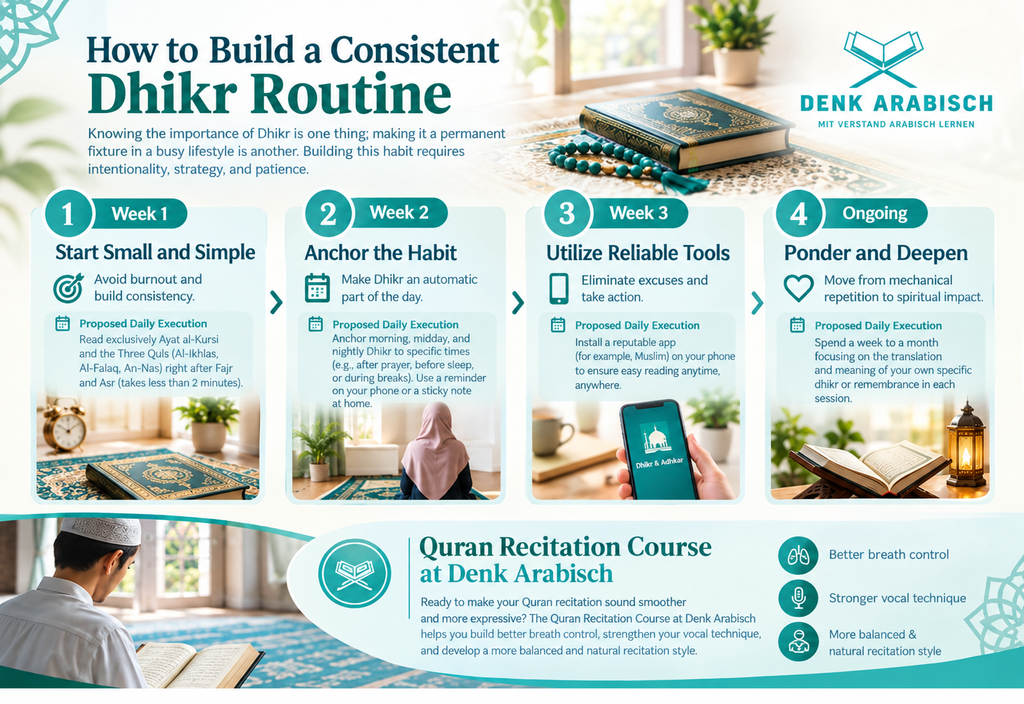
Knowing the importance of Adhkar is one thing; making it a permanent fixture in a busy lifestyle is another. Building this habit requires intentionality, strategy, and patience.
| Timeline | Action Step | Main Objective | Proposed Daily Execution |
| Week 1 | Start Small and Simple | Avoid burnout and build consistency | Read exclusively Ayat al-Kursi and the Three Quls (Al-Ikhlas, Al-Falaq, An-Nas) right after Fajr and Asr (takes less than 2 minutes). |
| Week 2 | Anchor the Habit | Make Adhkar an automatic part of the day | Anchor morning Adhkar to staying on the prayer mat after Fajr, and evening Adhkar to the start of your afternoon commute or trip back home. |
| Week 3 | Utilize Reliable Tools | Eliminate excuses and ease access | Install a reputable app (like Hisn al-Muslim) on your phone to ensure easy reading anytime, anywhere. |
| Ongoing | Ponder and Deepen | Move from mechanical repetition to spiritual impact | Spend an extra 10 seconds focusing on the translation and meaning of just one specific dua or remembrance in each session. |
The Role of the Tongue and the Heart
Scholars of spirituality often describe Dhikr in three rising levels:
- Dhikr of the tongue: The words are said correctly, aloud or in a whisper, even if the mind sometimes wanders. It keeps the tongue busy with good and away from gossip, lying, and idle talk.
- Dhikr of the heart: The mind is present and reflects on the meaning and majesty of what is said. The inner state matches the words.
- Dhikr of the whole self: The remembrance shows in a person’s actions. Someone who truly remembers Allah finds it hard to use their hands to harm, their eyes to look at what is forbidden, or their feet to walk toward injustice.
The aim of daily Adhkar is to move from the first level to the third, so that remembrance becomes a way of living.
Want to understand the words of your Dhikr without relying on a translation? The Quranic Arabic Course for German Speakers at Denk Arabisch teaches you the vocabulary and grammar of the Quran step by step, so your remembrance can move from the tongue to the heart.
What Our Students Say About Denk Arabisch Academy
See what our students say about learning at Denk Arabisch Academy on Trustpilot. Read their experiences and check out more reviews to discover how our courses help improve Arabic.

Learn to Recite Your Adhkar with Denk Arabisch
You have the intention, but classical Arabic, Tajweed rules, and memorization goals can feel overwhelming, especially with work, family, and daily responsibilities. The problem usually isn’t your schedule. It’s the lack of a clear, structured path.
At Denk Arabisch, we offer a practical learning path built around busy lives.
Why Denk Arabisch?
- One-to-one lessons: Every student receives personalized attention, direct feedback, and lessons adapted to their individual level and learning goals.
- A structured curriculum: A clear learning plan helps students progress step by step instead of relying on trial-and-error self-study.
- Ongoing mentorship: Teachers follow each student’s progress and provide continuous guidance to help them build confidence and improve consistently.
Study Islamic knowledge with Denk Arabisch Academy
Deepen your understanding of Islam through authentic and structured learning
Try a Free TrialChoose your starting point:
- Quran Memorization Course
- Quran Reading Course
- Quran Tajweed Course
- Quran Recitation Course
- Islamic Studies Course
- Quranic Arabic Course for German Speakers
Start your journey today. Book your free trial class with Denk Arabisch.

Conclusion
Adhkar are not a quick fix for a bad day. They are a lifelong companion. They need no special equipment, cost nothing, and are open to everyone, whether a scholar in the library, a parent in the kitchen, or a worker on the factory floor.
By setting aside a few moments each day for remembrance, you build an inner refuge that no outside storm can destroy. Start this evening: open your reference, sit quietly for a few minutes before sunset, and let the peace of remembrance settle over your heart.
If you want to recite your Adhkar with correct pronunciation and understand what you’re saying, book a free trial lesson with Denk Arabisch.
FAQs
1. Can I recite the morning and evening Adhkar without wudu?
Yes. Wudu is not required for Dhikr, whether you recite from memory or from a phone screen. Wudu is required for prayer (salah), and according to the majority of scholars, for touching a physical copy of the Quran (mushaf).
2. What if I miss the recommended times?
Still recite them. Many scholars allow the morning Adhkar later in the morning and the evening Adhkar after Maghrib and into the night. Late is always better than not at all.
3. Do I have to say them out loud, or can I say them in my head?
According to many scholars, including al-Nawawi, Dhikr counts when the tongue and lips move, even in a whisper only you can hear. You don’t need to raise your voice, and a soft whisper also helps you stay focused.
4. Can a woman recite Adhkar during menstruation?
Yes. A woman during menstruation or postnatal bleeding can say all the supplications and Dhikr: tasbih, tahmid, istighfar, and the prophetic duas. Scholars differ on reciting Quranic verses (such as Ayat al-Kursi and the Quls) in this state. Many allow it when the intention is Dhikr and protection rather than recitation. It is best to follow the opinion of a trusted scholar.
5. Is it better to read a few duas with focus, or the whole list quickly?
Quality matters more than quantity. If you’re short on time, reading three or four core supplications while reflecting on their meaning is more impactful than rushing through twenty without attention.