

Rules for Fasting During Ramadan
The rules for fasting during Ramadan are among the most important religious obligations in Islam. For practicing Muslims, fasting is not merely a physical abstinence from food and drink, but a comprehensive spiritual, ethical, and legal act. A clear understanding of the Ramadan fast rules helps believers observe the holy month consciously, correctly, and with inner peace.
For Muslims living in German-speaking countries, it is especially important to harmonize religious duties with local life circumstances such as work, school, university, and social responsibilities.
The rules for fasting during Ramadan are Islamic legal guidelines (Fiqh) that determine who must fast, when the fast begins and ends, what invalidates it, and which exceptions apply.
For Muslims in Germany and across Europe, understanding these rules accurately is essential, as fasting hours, work routines, and social structures can differ significantly from Muslim-majority countries.
Inhaltsverzeichnis
1. Beginning and End of the Daily Fast In Ramadan
Daily fasting in Islam begins at dawn (Fajr) and ends at sunset (Maghrib).
- The determining factor is the first horizontal light on the eastern horizon, not the visible sunrise.
- From that moment onward, eating, drinking, and marital relations are prohibited.
- In Europe, fasting times are usually determined through prayer calendars, mosque announcements, mobile apps, or local communities.
- In summer, fasting hours are longer; in winter, they are shorter — this variation is religiously permissible.
To deepen religious understanding, structured learning opportunities related to the Qur’an and Islamic terminology can be highly beneficial.
The start of Ramadan is established through two legitimate methods:
- Sighting the New Crescent Moon: Confirmed by the testimony of a trustworthy individual with reliable eyesight.
- Completion of Shaʿbān as 30 Days: Since a lunar month consists of either 29 or 30 days.
If the sky is overcast on the 30th night of Shaʿbān, it is known as the “Day of Doubt,” and the majority scholarly opinion holds that fasting should not begin on that day.
2. Who Is Obliged to Fast In Ramadan?
The Ramadan fast rules clearly define who is required to fast. The obligation applies to every Muslim who fulfills the following conditions:
- Has reached puberty (religious maturity)
- Is mentally sound
- Is physically healthy
- Is not traveling (resident status)
Children are not obligated to fast. However, it is recommended to introduce them gradually and without pressure so they can develop a positive religious understanding. Educational guidance plays an important role here.
Employment, university studies, or school attendance do not automatically exempt a person from fasting. Nevertheless, individual health strain can justify an exception.
3. Who Is Exempt from Fasting In Ramadan?
Islam acknowledges human limitations and therefore provides clear exemptions. Under certain conditions, the following individuals are exempt from fasting:
- Illness: Temporary illness requires making up the fast later. Chronic illness requires Fidya instead.
- Travel: Travelers may postpone fasting even if the journey is not physically exhausting.
- Pregnancy and Breastfeeding: Duties vary depending on risk to mother or child, ranging from making up missed days to feeding the needy.
- Old Age: Those permanently unable to fast feed the needy instead.
Anyone who interrupts fasting for legitimate reasons must make up the missed days later. If this is permanently impossible, Fidya — a compensatory feeding of the poor — is given instead. This demonstrates how Islamic law always balances obligation with human capability.
4. Intention (Niyya) in Ramadan Fasting
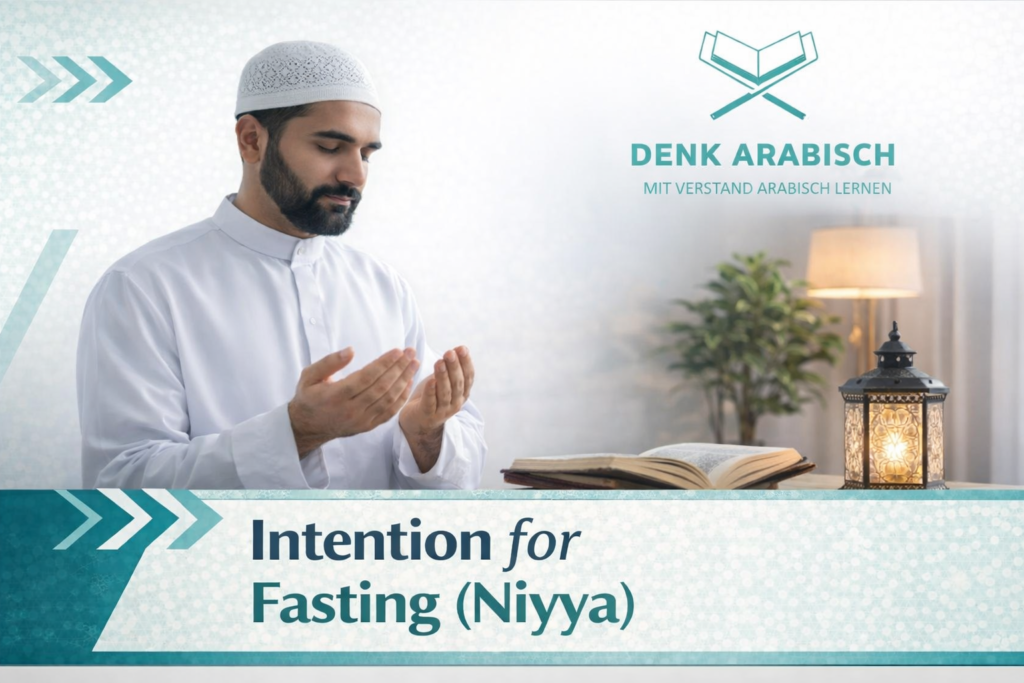
One of the most essential conditions for a valid fast is the intention (Niyya). It is not a spoken formula but a conscious decision in the heart to fast for the sake of God.
Key points about Niyya:
- It must be made before the start of the fasting day.
- Verbal expression is not required.
- It distinguishes between obligatory and voluntary fasting.
- According to the Shafi‘i and Hanbali schools, it is renewed daily.
- According to the Hanafi opinion, a single intention for the entire month is sufficient unless interrupted.
This is particularly reassuring for new Muslims, as no complicated phrases are needed — sincerity of the heart is what matters most.
5. What Breaks the Fast In Ramadan?
Among the actions that invalidate fasting are:
- Intentional eating or drinking.
- Sexual intercourse.
- Deliberate vomiting.
- Conscious intake of nutritional substances.
Many common questions among Muslims in Europe concern medications, inhalers, nasal sprays, or dental treatments, which are assessed differently depending on individual circumstances.
6. Making Up Fasts Fidya and Kaffara

The rules for fasting during Ramadan differentiate between several forms of compensation:
| Situation | Obligation |
| Forgotten fast | No make-up required |
| Illness / Travel | Make up later |
| Chronic illness | Fidya |
| Intentional sexual intercourse | Make up + Kaffara |
| Menstruation | Make up |
Kaffara means:
- Fasting two consecutive months,
or - Feeding 60 needy people if physically unable.
7. Ruling on Intentionally Abandoning the Fast In Ramadan:
Islamic jurisprudence distinguishes between two cases:
- A person who denies the obligation of fasting while identifying as Muslim is, according to scholarly consensus, considered outside the faith.
- A person who acknowledges the obligation but deliberately abandons fasting without a legitimate excuse commits a major sin, yet is not considered a disbeliever according to the stronger scholarly opinion.
This distinction highlights the elevated status of fasting among core religious duties.
8. Rules of Ramadan Fasting for Women
Fasting in Ramadan is obligatory for a Muslim woman once she has reached puberty, is of sound mind, and is physically able to fast. An essential condition for the validity of the fast is ritual purity, meaning the absence of menstrual bleeding (ḥayḍ) or postnatal bleeding (nifās). However, certain life circumstances permit breaking the fast or even make it necessary, with different forms of compensation required depending on the situation.
A. Rule of Fasting During Menstruation and Postnatal Bleeding (Ḥayḍ and Nifās)
- During menstruation or postnatal bleeding, fasting is neither permitted nor valid.
- A woman must break her fast and make up the missed days after Ramadan.
- Making up the missed fasting days is obligatory.
- Making up the missed prayers is not required.
- This ruling is established by the consensus of Islamic scholars,the evidence comes from a Hadith narrated by ʿĀʾishah (raḍiyallāhu ʿanhā), in which women were instructed to make up their fasts but not their prayers.
B. Ruling on Purification from Menstruation During Ramadan
If ritual purity occurs after the Fajr prayer, there are two well-known scholarly opinions:
- Hanafi School: Refraining from food and drink until sunset is recommended, and the day must still be made up later.
- Maliki, Shafiʿi, and Hanbali Schools: Refraining for the remainder of the day is not obligatory, but the day must still be made up.
If purity occurs before Fajr, the fast is valid even if the ritual bath (ghusl) is performed later.
C. Taking Pills to Delay Menstruation in Ramadan
Permissible under certain conditions:
- No harm to health.
- Medical consultation is recommended.
- Some scholars discourage it, as the natural cycle is considered part of divine wisdom.
If no bleeding occurs, the fast remains valid.
D. Fasting Rules for Pregnant and Breastfeeding Women During Ramadan
- Pregnant and breastfeeding women are allowed to postpone fasting if they fear harm to their own health or the well-being of their child.
- They are required to make up the missed days later.
- Some scholars also require feeding a needy person for each missed day if the concern was solely for the child on a long-term basis.
- A medical opinion is advisable.
- Islamic jurisprudence places strong emphasis on the protection of life and health.
E. Legal Ruling on Using Cosmetic Products During Ramadan
- Creams, oils, makeup, or ointments do not break the fast, as they are absorbed through the skin and are not considered nourishment.
- Perfume is permissible.
- Strong inhalation of incense smoke should be avoided.
9. Fasting Rules for Travelers During Ramadan
Travelers are allowed to break their fast even if they are physically capable of fasting; the journey must exceed a customary travel distance.
The travel must not be undertaken with the intention of avoiding fasting; the missed days must be made up later. If the traveler arrives home during the day, refraining from food and drink out of respect is commendable, but making up the day remains obligatory.
Start your Arabic journey now
Register today at the Denk Arabisch Academy and secure your place in the next course
Try your first class for free10. Rules of Fasting in Ramadan for the Sick
The ruling differs between temporary and chronic illness:
- Temporary illness: One may suspend fasting and make up the days later.
- Chronic, incurable illness: Instead of making up the fast, feeding one needy person for each missed day is required.
The assessment of trustworthy medical professionals plays an important role.
11. Rule of Fasting for Elderly and Frail People in Ramadan
Individuals who are physically unable to fast are excused; there is no obligation to make up the fast, Instead, they must feed one needy person for each missed day. If they are financially unable to do so, even this obligation is waived This ruling is based on the principle of ease and compassion in Islamic law.
12. Ruling on Using an Asthma Inhaler During Ramadan
There are differing scholarly opinions:
- Some scholars consider the inhaler to break the fast because particles enter the body.
- Others view it as a medical necessity without nutritional value and therefore not invalidating the fast.
In cases of severe asthma, fasting may be postponed and made up later.
13. Ruling on Kidney Dialysis During Ramadan Fasting
The majority of contemporary scholars consider dialysis to invalidate the fast because fluids and substances are introduced into the body. The day must be made up later. If dialysis is permanent, the ruling shifts to feeding a needy person instead of making up the fast.
14. Ruling on the Use of Suppositories During Ramadan
Two main opinions exist:
- Majority opinion: The fast becomes invalid because a substance enters the body.
- Minority opinion: The fast remains valid since there is no nutritional intake.
When in doubt, it is recommended to postpone medical applications until nighttime if possible.
15. Using the Miswak and Toothpaste During the Day in Ramadan
Using the Miswak is permitted and recommended. Some classical scholars expressed mild dislike after midday; the majority allow its use at any time of the day.
Ruling on Using Toothpaste During Ramadan Toothpaste is generally permissible as long as nothing is swallowed. Caution is necessary due to strong taste and foam. Many prefer using it after sunset.
Start your Arabic journey now
Register today at the Denk Arabisch Academy and secure your place in the next course
Try your first class for free16. Tasting Food Without Swallowing in Ramadan
- Permissible when necessary, such as while cooking.
- The taste must not be swallowed.
- The mouth should be rinsed thoroughly afterward. Without necessity, it is considered disliked.
17. Ruling on Fornication During Ramadan
Fornication is a grave sin at all times.During Ramadan, its severity increases due to the sanctity of the month.Sincere repentance is obligatory.The fast of that day becomes invalid and must be made up.
18. Fasting Rules for Married Couples in Ramadan
Marital relations are permitted at night but restricted during the daytime.
The Qurʾan states:
أُحِلَّ لَكُمْ لَيْلَةَ الصِّيَامِ الرَّفَثُ إِلَى نِسَائِكُمْ
Uḥilla lakum laylataṣ-ṣiyāmi ar-rafathu ilā nisāʾikum
“Permitted to you on the nights of fasting is intimacy with your wives.” — Al-Baqarah (2:187)
Sexual intercourse during the day invalidates the fast and requires a severe expiation.
Kissing or affectionate behavior is allowed if self-control is assured.
Ejaculation caused by deliberate stimulation invalidates the fast.
A state of ritual impurity from the night does not affect the validity of the fast.
19. The Rulings of Swallowing Saliva and Using Eye Drops During Fasting in Ramadan
Islamic law takes human necessity and ease into consideration when defining what invalidates the fast. Among the commonly asked questions during Ramadan are the rulings on swallowing saliva and using eye drops while fasting.
Swallowing saliva does not invalidate the fast according to all four major schools of Islamic jurisprudence: Hanafi, Maliki, Shafi‘i, and Hanbali. Saliva is considered a natural and unavoidable bodily substance, and swallowing it is permitted as long as it remains within the mouth and is not intentionally collected or mixed with an external substance.
Similarly, using eye drops does not break the fast according to all four schools. Although some people may notice a slight taste in the throat after applying eye drops, this does not affect the validity of the fast. Eye drops are not considered food or drink, nor do they enter the body through a recognized pathway that nullifies fasting.
These rulings reflect Islam’s principle of ease and the removal of hardship, especially in acts of worship that are repeated daily throughout the month of Ramadan.
20. The Ruling of Daily and Monthly Intention for Ramadan Fasting
Intention (niyyah) is a fundamental requirement for fasting in Ramadan, as it distinguishes worship from habit. However, scholars differ on whether a single intention for the entire month is sufficient or whether the intention must be renewed daily.
According to the Hanafi school, making one intention at the beginning of Ramadan is sufficient for the entire month, as long as the fast is not interrupted by travel, illness, or breaking the fast intentionally. This view is based on the understanding that Ramadan is a continuous act of worship.
In contrast, the Maliki, Shafi‘i, and Hanbali schools hold that a separate intention is required for each day of fasting. They consider each day of Ramadan an independent act of worship that must be preceded by its own intention, even if the person is fasting continuously.
Despite these differences, all scholars agree that intention is an act of the heart and does not require verbalization. These scholarly variations illustrate the flexibility within Islamic jurisprudence while preserving the core obligation of fasting Ramadan.
Start your Arabic journey now
Register today at the Denk Arabisch Academy and secure your place in the next course
Try your first class for free21. Fasting Times in Germany
The number of fasting days in Ramadan is either 29 or 30 days, since the Islamic calendar follows the lunar cycle. In Germany, the month’s length varies annually. The sighting of the new crescent moon determines the beginning and end of the fasting month.
Length of the Daily Fast
In Germany, fasting hours differ greatly by season:
- Summer: Up to 17 hours or more
- Winter: Sometimes less than 10 hours
These variations result from Germany’s geographical position and the changing daylight length between sunrise and sunset.
Regional Differences
There are slight variations between northern and southern Germany. Northern cities experience longer daylight hours in summer, leading to minimally longer fasting times. These differences are religiously recognized and unproblematic.
Specialized educational platforms such as Denk Arabisch also provide helpful articles and practical tips for understanding the rules for fasting during Ramadan more clearly.
Qur’an Verses About the Rules for Fasting During Ramadan
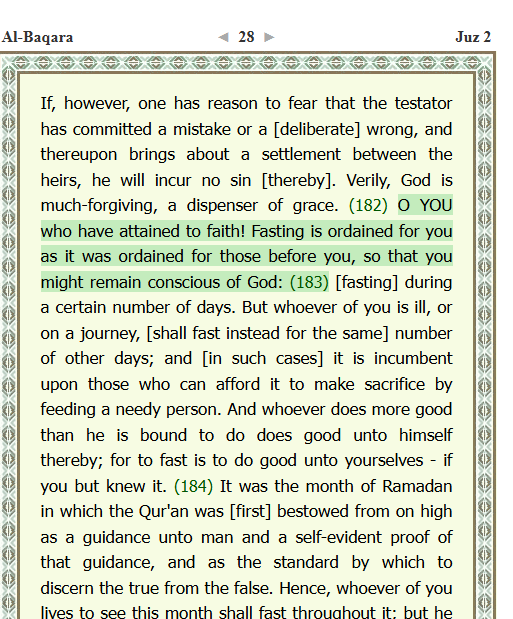
The central Qur’anic verses regarding the rules for fasting during Ramadan are found in Surah Al-Baqarah, verses 183–187. These passages establish the obligation, outline exemptions, regulate night practices, and clarify the ultimate purpose of fasting.
يَا أَيُّهَا الَّذِينَ آمَنُوا كُتِبَ عَلَيْكُمُ الصِّيَامُ كَمَا كُتِبَ عَلَى الَّذِينَ مِن قَبْلِكُمْ لَعَلَّكُمْ تَتَّقُون
“O you who believe, fasting has been prescribed for you as it was prescribed for those before you, so that you may attain God-consciousness.”
This verse makes the objective unmistakably clear: the purpose of fasting is Taqwa — living with constant awareness of God’s presence.
Structured Religious Education Support
Those who wish to deepen their religious knowledge further can find structured online programs in Islamic studies and Islamic jurisprudence for German-speaking learners at Denk Arabisch. These resources support believers in confidently integrating prayer times, fasting rules, and daily religious practice into everyday life.
Start your Arabic journey now
Register today at the Denk Arabisch Academy and secure your place in the next course
Try your first class for freeStart Your Learning Journey with Denk Arabisch
A strong religious practice does not develop by coincidence — it grows through knowledge and guidance. Denk Arabisch offers structured online courses with native-speaking teachers who understand the needs of German-speaking Muslims.
Advantages:
- Flexible Learning Times
- Personalized Learning Plans
- Cultural Understanding
- Qualified Teachers
Popular Courses:
- Tajweed Quran Learning Course
- Quran Arabic Course
- Arabic for Beginners Course
Begin today with a free trial lesson and strengthen your religious foundation sustainably.
Explore the Full Course Catalog:
- All Arabic Courses Overview
- Learn Arabic from Scratch
- Master Quran Arabic
- Start Your Free Arabic Lesson
Our Courses Include:
- Arabic Courses for German Speakers
- Arabic Levels for German Speakers
- Arabic Dialect Courses for German Speakers
- Qur’an Learning Courses for German Speakers
- Islamic Studies Courses for German Speakers
- Courses for Muslim Kids for German Speakers

Summary
The rules for fasting during Ramadan combine religious duty, ethical conduct, and spiritual growth. Fasting is not limited to the body alone — it also shapes character, speech, and behavior. Clear legal guidelines define the beginning, end, conditions, and valid exemptions of the fast. At the same time, Islamic jurisprudence demonstrates mercy and flexibility by allowing concessions in cases of illness, old age, or exceptional life circumstances.
Understanding the Ramadan fast rules therefore means balancing commitment with compassion, discipline with realism, and devotion with personal capability.
FAQ
In Which Surah Are the Rules of Fasting Mentioned?
The fasting regulations are primarily discussed in Surah Al-Baqarah.
How Many Times Is Fasting Mentioned in the Qur’an?
The word Ṣiyām (fasting) and its linguistic derivatives appear 13 times in the Qur’an in various legal and contextual forms.
Why Do Muslims Fast 29 or 30 Days?
Ramadan lasts 29 or 30 days, depending on the sighting of the new moon.
The wisdom behind this duration lies in developing spiritual consistency over a complete lunar month and nurturing long-term character discipline.