For Muslims around the world, reciting the Holy Quran is more than just a spiritual ritual—it is a direct connection with the words of Allah (SWT). To honor the text, the Quran must be read exactly as it was revealed to the Prophet Muhammad (PBUH). This is where Tajweed rules come into play.
The word Tajweed (تَجْوِيدْ) literally translates to “improvement,” “betterment,” or “to make something beautiful.” In the context of Quranic studies, Tajweed is the science of pronouncing every single Arabic letter from its correct point of articulation, applying its native characteristics, and following the rules of phonetic blending.
Whether you are a beginner looking to correct your daily prayers or an advanced student aiming for an Ijazah (certification to teach), this comprehensive guide breaks down the essential rules of Tajweed into clear, practical blocks.
Table of Contents
1. Makharij Al-Huruf (The 17 Articulation Points)
Before diving into complex blends, you must understand where each sound originates. There are 17 specific articulation points (Makharij) distributed across five major regions of the human vocal tract.
A. The Empty Space (Al-Jawf)
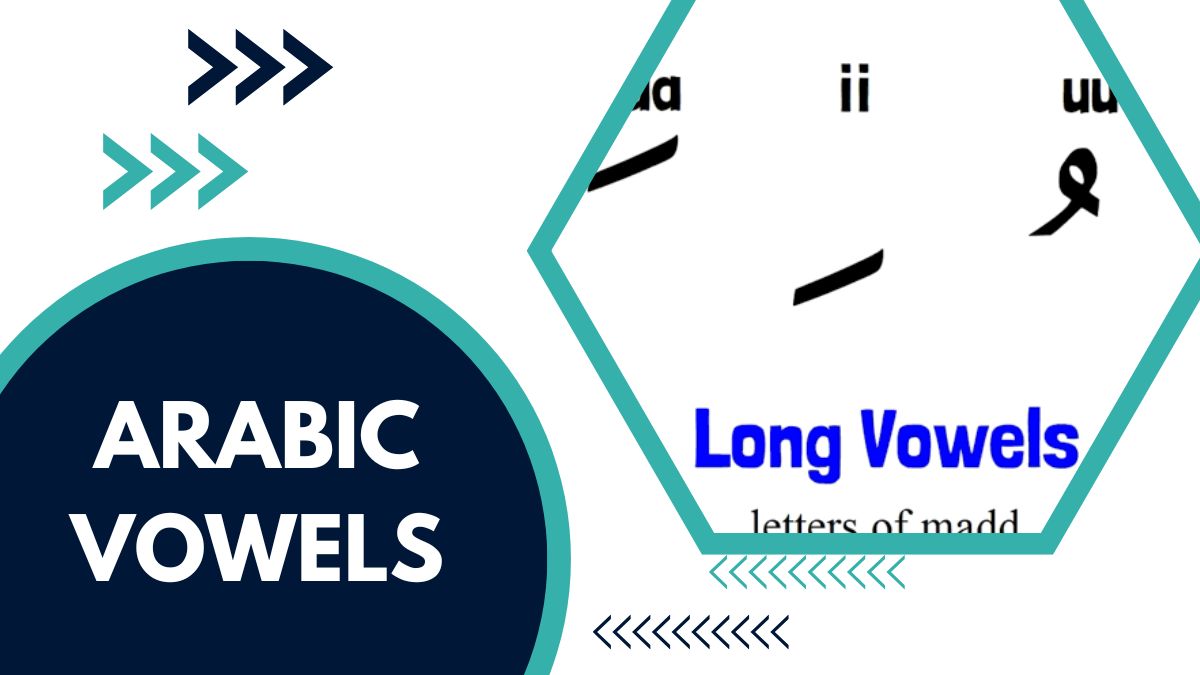
This refers to the internal vacuum or open space inside the mouth and throat. It contains 1 articulation point for the three long vowel sounds (Madd letters):
- Alif (ا) preceded by a Fatha.
- Waw (و) preceded by a Damma.
- Ya (ي) preceded by a Kasra.
The sound terminates naturally with the cessation of breath, not by hitting a structural boundary in the mouth.
B. The Throat (Al-Halq)
The throat contains 3 articulation points for 6 distinct letters, known as the Throat Letters (Al-Huruf Al-Halqiyyah):
- Deepest Throat (Aqsa Al-Halq): The area closest to the chest and vocal cords. It produces Hamzah (ء) and Haa (هـ).
- Mid-Throat (Wasat Al-Halq): The area of the epiglottis. It produces Ayn (ع) and Haa (ح).
- Closest Throat (Adna Al-Halq): The top of the throat, closest to the mouth cavity. It produces Ghayn (غ) and Khaa (خ).
C. The Tongue (Al-Lisan)
The tongue is the most complex region, containing 10 articulation points that produce 18 letters:
- Deepest Root (Aqsa Al-Lisan): The very back of the tongue hitting the soft palate produces Qaaf (ق).
- Just Forward of the Root: The back of the tongue hitting the hard palate produces Kaaf (ك).
- Middle of the Tongue (Wasat Al-Lisan): Pressed against the roof of the mouth produces Jeem (ج), Sheen (ش), and Ya (ي) (when not acting as a long vowel).
- Sides of the Tongue (Hafat Al-Lisan): The upper lateral edges pressing against the upper molars produce Dhad (ض)—considered the most linguistically unique letter in Arabic.
- Front Side Edge: The front edge of the side of the tongue touching the gums of the upper teeth produces Laam (ل).
- Tip of the Tongue (Taraf Al-Lisan): Touching the gums of the top two front teeth produces Noon (ن).
- Tip and Top of the Tongue: Dropping slightly back near the Noon point produces the vibrating Raa (ر).
- Tip against Roots of Upper Front Teeth: Produces Taa (ط), Daal (د), and Taa (ت).
- Tip resting against Lower Front Teeth: Allowing sound to whistle over the tips produces Saa’d (ص), Zeen (ز), and Seen (س).
- Tip touching the Edges of Upper Front Teeth: Produces the soft Zhaa (ظ), Thaal (ذ), and Thaa (ث).
D. The Lips (Al-Shafatayn)
The lips hold 2 articulation points for 4 letters:
- Inside of Lower Lip: Touching the tips of the upper front teeth produces Faa (ف).
- Between Both Lips: Closing tightly produces Baa (ب), closing gently produces Meem (م), and forming a circle without full closure produces Waw (و).
E. The Nasal Cavity (Al-Khayshoom)
This is the opening at the back of the nose. It contains 1 articulation point dedicated entirely to Ghunnah (the nasalized hum). No individual letters are structural here; rather, it hosts the nasalized attributes of the letters Noon and Meem.
Break the exhausting cycle of memorizing and immediately forgetting verses when you step into an elite Quran Memorization Course with Denk Arabisch engineered for ironclad, long-term cognitive retention.
2. Rules of Noon Sakinah and Tanween
One of the most frequently used rule sets in Tajweed revolves around Noon Sakinah (a static Noon letter with a Sukoon mark نْ) and Tanween (the double vowel symbols representing an “nn” sound: ً, ٍ, ٌ).
When a Noon Sakinah or Tanween meets any of the other Arabic letters, its sound undergoes one of four transformations based on the following rules.
| Noon Sakinah & Tanween | ||
| (Izhaar) Clear Sound Letters:ء هـ ع ح غ خ | (Iqlab)Flip to ‘M’ Letters: ب | (Idghaam)Merging Sound Letters: ي ر م ل و ن |
| N/A | (With Ghunnah) Letters: ي ن م و | (Without Ghunnah)Letters: ل ر |
The Rules of Izhaar (إظهار) — Clarification
If a Noon Sakinah or Tanween is followed by any of the 6 throat letters, the “N” sound must be pronounced explicitly and clearly without any extra nasal delay or dragging.
Example:
مَنْ عَمِلَ
Transliteration: Man ‘amila
The Noon is pronounced sharply before the Ayn.
The Rules of Idghaam (إدغام) — Merging / Assimilation
If one of the letters of the word Yarmaloona (يرملون) follows a Noon Sakinah or Tanween, the Noon sound is dropped completely, and the following letter is doubled with a Shaddah.
Subdivisions:
- Idghaam Bi-Ghunnah (With Nasalization): Triggered by the letters ي, ن, م, و. The letters merge while retaining a 2-count nasal echo.
Example:
مَن يَقُولُ
Transliteration: May-yaqool
- Idghaam Bila-Ghunnah (Without Nasalization): Triggered by ل and ر. The sound merges instantly and cleanly with no nasal duration.
Example:
مِن رَّبِّهِمْ
Transliteration: Mir-rabbihim
The Rules of Iqlab (إقلاب) — Conversion / Flipping
If the letter Baa (ب) follows a Noon Sakinah or Tanween, the Noon sound transitions entirely into a hidden Meem (م) sound. The reader closes their lips gently and holds a nasalized tone for 2 counts.
Example:
مِن بَعْدِ
Transliteration: Mim-ba’di
In most prints of the Quran, a tiny symbol (م) is placed above the text to indicate this flip.
The Rules of Ikhfaa (إخفاء) — Hiding / Concealment
If any of the remaining 15 Arabic letters follow the Noon Sakinah or Tanween, the sound is partially hidden. Instead of pressing the tongue against the roof of the mouth to form a hard “N,” the tongue hovers near the articulation point of the upcoming letter while holding a 2-count nasal tone.
Example:
كِتَابٌ كَرِيمٌ
Transliteration: Kitaabung-kareem
Refuse to let hidden pronunciation errors compromise your daily worship when you can master an authoritative Quran Tajweed Course with Denk Arabisch to perfect your physiological articulation mechanics.
3. The Rules of Meem Sakinah
Similar to the static Noon, the Meem Sakinah (a static Meem sound مْ) has its own set of behaviors depending on the letter that immediately succeeds it. There are three primary rules to memorize here:
Ikhfaa Shafawi (Oral Concealment)
If a Meem Sakinah (مْ) is followed immediately by the letter Baa (ب), the Meem sound is hidden with an accompanying Ghunnah held for two counts.
Application: Keep the lips touching lightly without squeezing them shut forcefully.
Example:
تَرْمِيهِم بِحِجَارَةٍ
Transliteration: Tarmeehim bi-hijarah
Idghaam Shafawi (Oral Merging)
When a Meem Sakinah meets another Meem (م), the two merge into a single, intensified Meem holding a Shaddah (w-shaped double-letter mark). This requires a clear 2-count nasalization.
Example:
فِي قُلُوبِهِم مَّرَضٌ
Transliteration: Fee quloobihim-marad
Izhaar Shafawi (Oral Clarification)
If the static Meem is followed by any letter other than Baa or Meem, it must be pronounced cleanly, sharply, and without any lingering nasalization.
Be extra careful not to accidentally hide or drop the Meem when it appears before a Waw (و) or a Faa (ف) because their articulation points are very close to the lips.
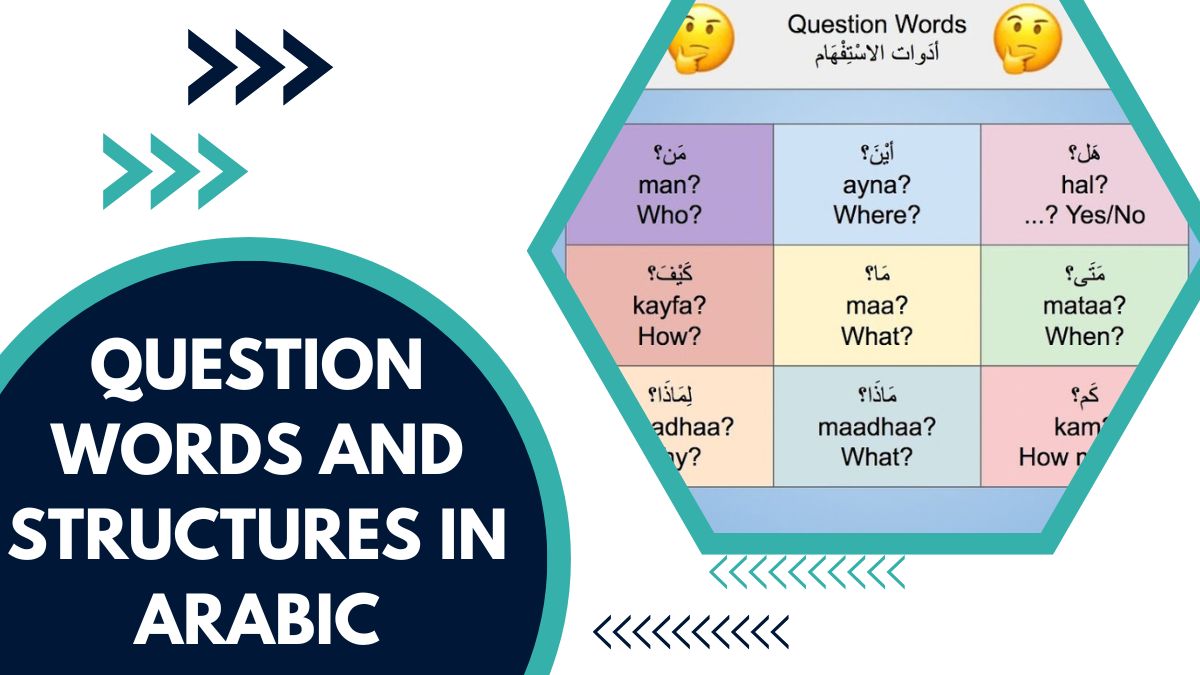
Read also: Question Words And Structures In Arabic
4. Sifaat Al-Huruf (The Characteristics of Letters)
While the Makhraj tells you where a letter originates, the Sifah (Characteristic) dictates how it behaves dynamically as it leaves the mouth. Letters can share the same articulation point but sound distinctly different due to opposing characteristics.
Characteristics with Opposites
These three pairs represent the foundational opposing characteristics (Sifaat Mutadaaddah) of Arabic letters in Tajweed:
The first controls the flow and restriction of breath, the second governs the running and trapping of sound, while the third dictates the elevation or lowering of the tongue to determine the letter’s heaviness.
Hams (Whispering) vs. Jahr (Vocalization)
- Hams: Air flows freely when pronouncing the letter. The letters are collected in the phrase: Fahathahu Shakhsun Sakat (فَحَثَّهُ شَخْصٌ سَكَتَ) — ف, ح, ث, هـ, ش, خ, ص, س, ك, ت.
- Jahr: The flow of breath is trapped or restricted, causing a stronger vocal chord vibration for all other letters.
Shiddah (Strength) vs. Rakhawa (Softness) vs. Tawassut (In-Between)
- Shiddah: Sound is completely blocked at the articulation point upon pronunciation. Letters: Ajidu Qatin Bakat (أَجِدُ قَطٍّ بَكَتْ).
- Tawassut: Sound is neither fully blocked nor completely fluid. Letters: Lin ‘Umar (لِنْ عُمَرْ).
- Rakhawa: Sound flows smoothly and continuously through the articulation point for all remaining letters.
Isti’laa (Elevation/Heavy) vs. Istifaal (Depression/Light)
- Isti’laa (Tafkheem): The back of the tongue elevates to the roof of the mouth, causing the letter to sound thick, booming, and heavy. The 7 heavy letters are: Khussa Daghtin Qizh (خُصَّ ضَغْطٍ قِظْ) — خ, ص, ض, غ, ط, ق, ظ.
- Istifaal (Tarqeeq): The tongue rests low, causing the letters to sound flat, thin, and light (all remaining letters).
Shatter the mental blocks and private anxiety that keep you disconnected from the text by utilizing a high-speed Quran Reading Course with Denk Arabisch to achieve rapid, independent script navigation.
Learn the Quran with Denk Arabisch Academy
Master reading and understanding the Quran through structured and supportive learning
Try a Free Trial5. The Deep Mechanics of Madd (Prolongation)
Madd means lengthening or stretching the sound of a long vowel. The foundational Madd letters are Alif (ا), Waw (و), and Ya (ي). Without any external trigger, these letters naturally stretch the vowel for 2 counts (known as Madd Al-Asli or Natural Prolongation).
However, if a Madd letter is followed by a Hamzah (ء) or a Sukoon (ْ), the stretching duration expands significantly.
Secondary Prolongations (Madd Al-Far’ee)
These categories outline the secondary prolongations (Madd Al-Far’ee) in Tajweed, which extend the natural vowel length due to either a succeeding glottal stop (Hamzah) or a resting sign (Sukoon).
A. Caused by a Hamzah
- Madd Muttasil (Connected Prolongation): Occurs when the Madd letter and the Hamzah are in the exact same word (e.g., جَاءَ / السَّمَاء). It is mandatory to stretch it for 4 to 5 counts.
- Madd Munfasil (Disconnected Prolongation): Occurs when the Madd letter sits at the end of one word and the Hamzah starts the next word (e.g., إِنَّا أَعْطَيْنَاكَ). This is typically stretched for 4 to 5 counts, though some traditional recitation paths allow a fast-paced 2 counts.
- Madd Badal (Exchange Prolongation): Occurs when a Hamzah precedes a Madd letter (e.g., آمَنُوا). It is simply held for 2 counts.
B. Caused by a Sukoon
- Madd ‘Aarid Lis-Sukoon (Temporary Prolongation for Stopping): Occurs when a natural 2-count Madd letter appears right before the final letter of a verse. If you choose to stop reading at that verse, you temporarily turn that final letter’s vowel into a Sukoon. This allows you to extend the preceding Madd letter to 2, 4, or 6 counts.
Example:
الْعَالَمِينَ
Transliteration: Al-‘Alameen becomes Al-‘Alameeeen upon pausing
- Madd Lazim (Compulsory Prolongation): Occurs when a Madd letter is followed by a permanent, structural Sukoon or a doubled letter (Shaddah) within the same word. It must be held strictly for 6 counts.
Example:
الضَّالِّينَ
Transliteration: Ad-Daallieen
6. The Rules of Qalqalah (The Echoing or Bouncing Sound)
When certain Arabic letters carry a Sukoon (stopping mark), they cannot be pronounced smoothly without trapping the air and releasing it abruptly. This mechanical release creates a distinct echoing or bouncing sound known as Qalqalah.
The five Qalqalah letters are summarized in the famous mnemonic phrase “Qutb Jadd” (قُطْبُ جَدٍّ):
- Letters: ق \ ط \ ب \ ج \ د
Levels of Qalqalah Intensity
The bouncing effect changes depending on where the letter is positioned:
- Kubra (Strongest): Happens when you stop your recitation on a Qalqalah letter at the end of a verse, especially if it has a Shaddah (e.g., تَبَّتْ يَدَا أَبِي لَهَبٍ وَتَبَّ).
- Wusta (Medium): Happens when you stop on a Qalqalah letter at the end of a verse that does not have a Shaddah (e.g., قُلْ أَعُوذُ بِرَبِّ الْفَلَقِ).
- Sughra (Smallest): Happens when the Qalqalah letter is positioned right in the middle of a word or phrase, and you continue reading through it without stopping (e.g., يَقْطَعُونَ).
Breathe deep, transformative peace back into your distracted daily prayer routine by choosing a premium Quran Recitation Course with Denk Arabisch designed to unlock the natural beauty of your unique voice.
Read also: Learning The Quran For Children In Augsburg
7. The Two Types of Mistakes (Lahn)
Scholars divide recitation errors into two main categories:
Lahn Jalee (Clear/Major Mistakes):
These are obvious grammatical errors, such as swapping one letter for another (e.g., pronouncing Saa’d ص as Seen س, or Taa ط as Taa ت) or changing a vowel marker (Harakah) like turning a Fatha into a Damma. These mistakes can completely invert the theological meaning of a verse and are strictly forbidden (Haram).
Lahn Khafee (Hidden/Minor Mistakes):
These are technical errors that do not necessarily change the core meaning but violate the beauty and grammar of recitation, such as missing a prolongation (Madd) or neglecting a nasalization rule (Ghunnah). While they don’t invalidate prayers, avoiding them is part of perfecting one’s relationship with the Quran.
Practical Blueprint for Retaining and Perfecting Tajweed
Transitioning from theoretical knowledge to perfect vocal application takes a strategic path. If you want to refine your tongue and prevent common mistakes, follow these step-by-step methods.
1. Listen to Qualified Qaris: Daily Routine.
Spend 15 minutes a day listening to master reciters like Sheikh Al-Husary, Sheikh Minshawi, or Sheikh Mishary Rashid Alafasy. Focus intensely on how they space their breaths, hold nasalized tones, and project heavy throat letters.
2. Master Single Letters First: Pronunciation Check.
Do not rush into sentences. Sit down with a teacher or an interactive app and isolate tricky letters like Ayn (ع), Haa (ح), and Dhad (ض) until your muscle memory snaps to the correct articulation point instantly.
3. Color-Coded Quran Training: Visual Aids.
Utilize a physical or digital color-coded Tajweed Quran. These editions use explicit colors (e.g., red for extensions, green for nasalization, blue for bouncing sounds) to visually flag active rules while you read.
4. Live Feedback Loop: The Final Step.
The human ear cannot easily detect its own micro-mistakes. Read out loud to an authentic Quran teacher who holds an Ijazah. They will catch subtle errors in your Ghunnah length or tongue placement before they become bad habits.
What Our Students Say About Denk Arabisch Academy
See what our students say about learning at Denk Arabisch Academy on Trustpilot. Read their experiences and check out more reviews to discover how our courses help improve Arabic.

Read also: Learning The Quran For Children In Ulm
Command Absolute Quranic Proficiency With Denk Arabisch!
Let’s speak without filters: you are treating your career, your finances, and your fitness with elite standards, but settling for the bare minimum when it comes to your relationship with the Quran.
Relying on disorganized internet searches, fragmented apps, or passive video streams is an approach that guarantees slow progress and eventual stagnation.
Denk Arabisch is a premier educational ecosystem built exclusively for serious believers who demand academic rigor, absolute structural clarity, and elite execution in their daily worship. We have completely eliminated the fluff to give you a definitive, uncompromising path to textual mastery. The line has been drawn: will you continue settling for an incomplete spiritual life, or will you step up to an unshakeable standard today?
Select Your Area of Impact:
- Quran Memorization Course: Break free from the frustrating cycle of temporary learning and constant forgetting.
- Quran Reading Course: Obliterate the invisible barrier of slow, hesitant, and stressful syllable-decoding.
- Quran Tajweed Course: Eliminate the dangerous liability of phonetic guesswork in your prayers.
- Quran Recitation Course: Stop rushing through your prayers as a dry, mechanical obligation.
- Islamic Studies Course: Build an ironclad intellectual compound interest to protect your home from modern ethical chaos.
Elite training requires direct, personalized critique. To preserve our strict academic standards and guarantee you immediate access to our master instructors, every single cohort has an absolute capacity cap.
Waiting for your daily routine to magically become uncomplicated is a losing strategy. High-performers do not search for open time—they actively command it. Secure your placement immediately, or accept that you are choosing to stay exactly where you are.
The gap between your current spiritual limitations and complete textual authority is a single moment of absolute commitment. Claim your transformation right now.
👉 SYSTEMATIZE YOUR SUCCESS – REGISTER NOW
Learn the Quran with Denk Arabisch Academy
Master reading and understanding the Quran through structured and supportive learning
Try a Free TrialConclusion
Mastering the science of Tajweed is far more than an academic pursuit or a linguistic exercise—it is a profound act of devotion. By taking the time to discipline your tongue, locate the precise anatomical origins of each letter, and navigate the complex rules of phonetic transitions, you actively preserve the miraculous oral tradition of the Holy Quran exactly as it was revealed to the Prophet Muhammad (PBUH).
While looking at a comprehensive breakdown of 17 articulation points, multiple prolongations, and shifting nasalization rules can feel intimidating at first glance, remember that proficiency develops step by step. Every minor breakthrough—whether it is perfectly executing a bouncing Qalqalah or accurately softening a hidden Meem—fundamentally transforms your connection to the text.
Begin your journey with sincerity, rely on visual training tools, and seek out a qualified mentor to refine your recitation. As your muscle memory adjusts, the technical rules will fade into a natural, beautiful, and fluid flow, allowing you to experience the true emotional and spiritual depth of the divine word.
FAQs
1. Is learning Tajweed compulsory for every Muslim?
From a legal perspective in Islamic jurisprudence, learning the practical application of Tajweed (Fard Ayn) is mandatory for every practicing Muslim to ensure they do not make major mistakes (Lahn Jalee) that alter the meaning of the words during their daily prayers (Salah). However, deep mastery of the theoretical, academic rules and terminology (Fard Kifayah) is a collective obligation—as long as a group of scholars in the community holds this technical knowledge, the general public is excused.
2. What is the difference between Noon Sakinah and Tanween?
Physically, they look different on the page, but phonetically, they sound identical. Noon Sakinah (نْ) is a permanent, static letter Noon written explicitly in the text that remains present whether you read continuously or pause on the word. Tanween (ً , ٍ , ٌ) is a double-vowel marker occurring exclusively at the end of nouns; it creates a temporary “N” sound when reading continuously, but disappears entirely if you choose to stop and pause on that specific word.
3. How many hours does it take to learn Tajweed rules?
For a dedicated beginner working with a qualified instructor, it generally takes 30 to 50 hours of direct study to grasp the foundational rules, articulation points, and core blends. However, achieving absolute fluency, seamless tongue muscle memory, and a confident melodic rhythm requires ongoing daily practice over several months or years.
4. Can I learn Tajweed properly without a teacher?
While books, color-coded Qurans, and digital interactive apps are phenomenal tools for understanding the theory, you cannot master Tajweed alone. The human ear struggles to catch its own subtle mispronunciations, such as keeping a light letter too heavy or falling short on a 2-count Ghunnah. A live, qualified teacher provides an essential feedback loop, correcting your tongue mechanics in real-time.
5. Why do some letters sound heavy and others sound light?
This is governed by the characteristic of Isti’laa (Elevation). When you pronounce one of the seven heavy letters (Khussa Daghtin Qizh — خ, ص, ض, غ, ط, ق, ظ), the back of your tongue automatically rises toward the roof of your mouth. This traps the sound vibration in your upper palate, giving the letter a thick, booming tone. Light letters keep the tongue resting flat, making the sound thin and crisp.