Teaching children the Arabic alphabet is a meaningful and rewarding journey that lays the foundation for reading, writing, and understanding the Arabic language. Whether your goal is to help your child read the Quran, communicate in Arabic, or simply build strong early literacy skills, starting with the alphabet is the first essential step.
For many parents and teachers, the challenge is not what to teach, but how to teach it in a way that keeps children engaged and motivated. Young learners thrive on fun, repetition, and interactive experiences—not traditional, rigid methods. That’s why teaching Arabic letters should be approached with creativity, patience, and consistency.
In this guide, you’ll discover practical strategies and proven techniques to make learning the Arabic alphabet enjoyable and effective for children of all ages. From using songs and games to building daily habits and overcoming common challenges, this article will help you confidently support your child’s Arabic learning journey.
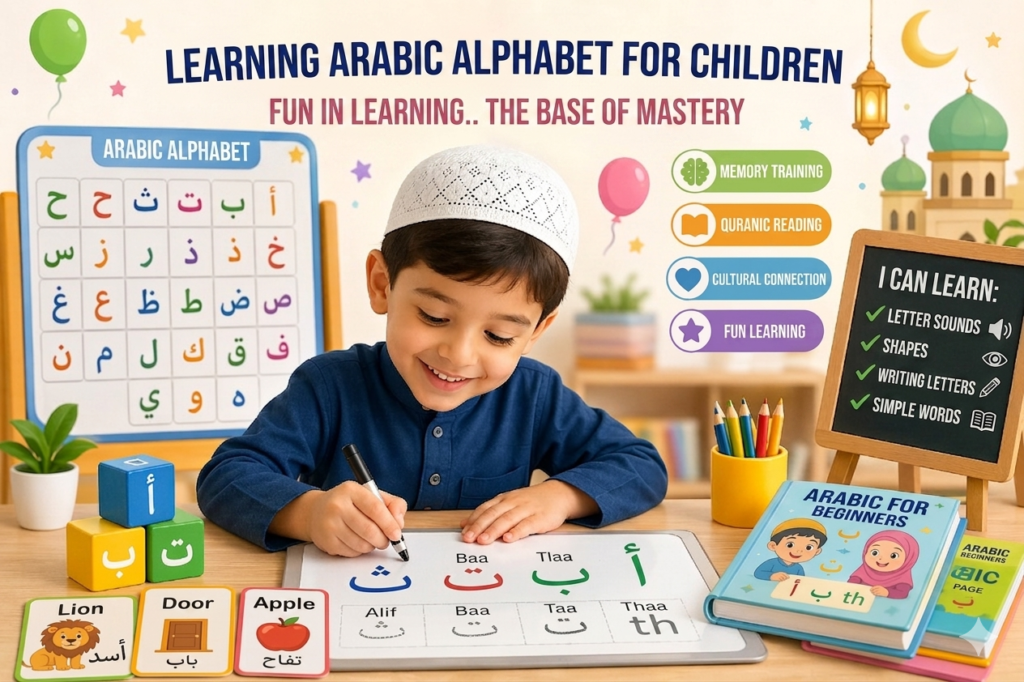
Table of Contents
Why Learning the Arabic Alphabet Is Important for Children?
The Arabic alphabet is the foundation of reading, writing, and speaking Arabic. For Muslim children, it is also the very first step toward reading the Quran correctly and confidently.
Learning the alphabet is not just about memorizing letters—it is about building a lifelong connection with language, identity, and understanding.
Here’s why it matters:
1. Builds Strong Language Skills
When children learn Arabic letters, they begin to understand how sounds connect to symbols. This helps them:
- Recognize words more easily
- Pronounce sounds correctly
- Develop early reading skills in Arabic
It becomes much easier for them to move from letters → words → full sentences later on.
2. Enhances Memory and Focus
Arabic learning naturally involves repetition, listening, and visual recognition. This combination strengthens:
- Memory retention
- Attention span
- Pattern recognition skills
Children’s brains at a young age are especially good at absorbing new sounds and visual systems, making this the perfect stage to start.
3. Supports Quran Reading (Tajweed Preparation)
The Quran is written in Arabic, so knowing the alphabet is the first essential step toward reading it properly.
When a child knows the letters well, they can:
- Recognize Quranic words more easily
- Learn Tajweed (correct pronunciation) more smoothly
- Avoid common reading mistakes later on
Without a strong alphabet foundation, Quran reading becomes much harder and slower.
Give your child the elite guidance they deserve to master their recitation; secure their seat in our upcoming Tajweed Course For Kids at Denk Arabisch before registration closes for the term!
4. Connects Children to Culture and Religion
Arabic is not just a language—it is deeply connected to Islamic identity and heritage.
By learning the alphabet, children:
- Feel closer to the Quran
- Understand Islamic culture better
- Develop pride in their language and identity
This emotional connection often increases motivation and consistency in learning.
Empower your children to navigate today’s world with unshakable confidence in their beliefs through a comprehensive Islamic Studies Course at Denk Arabisch that covers Seerah, Fiqh, and everyday manners.
At What Age Should Children Start Learning Arabic Letters?
Children can start learning the Arabic alphabet as early as 3 to 5 years old. At this stage:
- Their hearing is very sensitive to new sounds
- They learn quickly through play and repetition
- They are naturally curious and open to new languages
However, the goal at this age is not perfection. It is familiarity and enjoyment.
Best Approach for Early Learning:
- Keep lessons very short (5–15 minutes)
- Use games, songs, and visuals
- Avoid pressure or correction-heavy teaching
- Focus on exposure, not speed
Understanding the Arabic Alphabet Basics For Kids
Before teaching, it’s important to understand what makes Arabic unique:
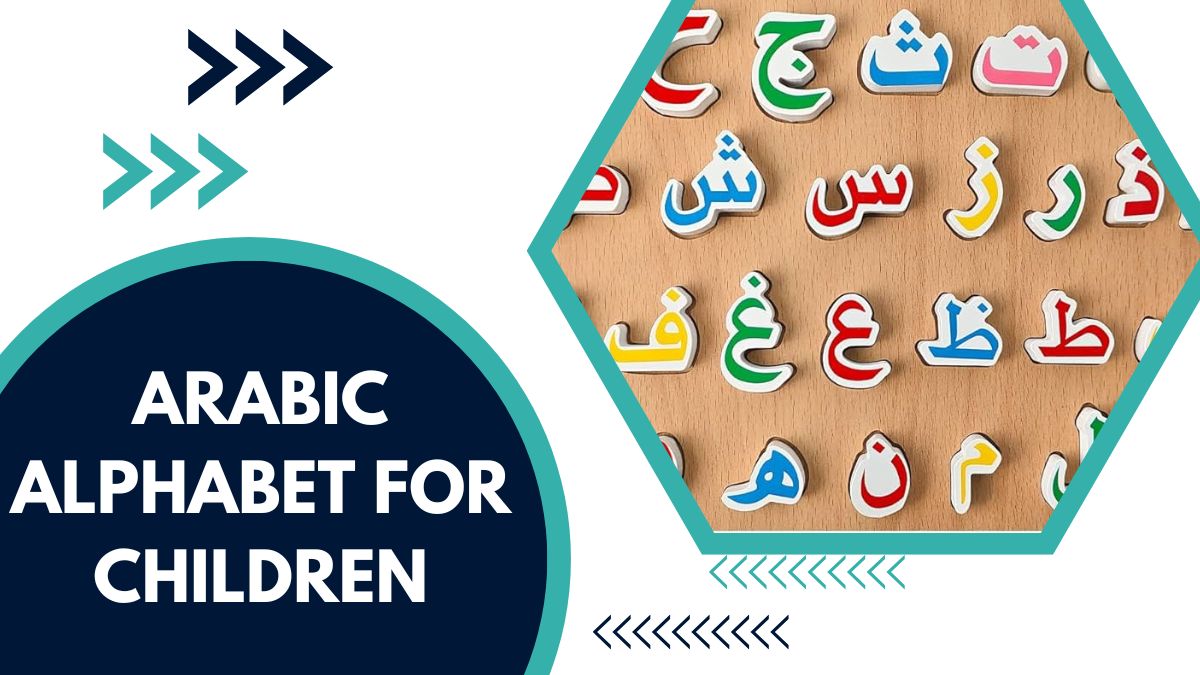
- Arabic has 28 letters
- It is written from right to left
- Letters change shape depending on their position (beginning, middle, end)
- Each letter has a distinct sound
Start by introducing children to:
- Letter shapes
- Letter sounds (not just names)
- Simple visual recognition
The Connection Between Arabic and the Quran
Arabic is the language of the Quran. Allah revealed the Quran in clear Arabic so Muslims could recite and understand it properly.
The Quran says:
“Indeed, We have sent it down as an Arabic Quran.”
— Surah يوسف (Yusuf) 12:2
This is why many Muslim parents prefer Quran-based Arabic learning instead of regular language lessons alone. Children not only learn letters but also connect them with Quranic sounds, words, and verses.
For example:
- Alif (ا) appears in Allah (الله)
- Ba (ب) appears in Bismillah (بسم الله)
- Meem (م) appears in Muhammad (محمد)
This method helps children remember letters naturally through Islamic vocabulary they hear daily.
Take the first step toward filling your home with the blessings of recitation and register for our elite Quran Course For Kids at Denk Arabisch to claim your exclusive trial session today!
Teaching Arabic Letters For Kids
Effective Arabic acquisition begins with auditory recognition. This means that children first learn to hear and recognize sounds before they are introduced to written letters.
By prioritizing phonemes (sounds) over letter names, children build a natural connection between speaking and reading, which makes the learning process smoother and more intuitive. Instead of memorizing abstract symbols, they begin to understand language as something they can hear, say, and then read.
1. Start with Letter Sounds First
One of the most effective ways to teach the Arabic alphabet is to begin with sounds, not names.
Instead of saying “This is the letter Baa,” the focus should be on the sound the letter produces.
For example:
- “ب” → “ba”
- “ت” → “ta”
Why this matters:
- It helps children read naturally instead of relying on memorization
- It builds early phonetic awareness, which is the ability to connect sound with symbol
- It prepares children for correct pronunciation (Tajweed foundation later)
- It reduces confusion when they start reading full Arabic words
How to apply it:
- Repeat each sound slowly, clearly, and consistently
- Use playful repetition: “ba–ba–ba”, “ta–ta–ta”
- Encourage the child to imitate the sound, not just listen passively
- Turn it into an interaction: ask “Can you say this sound?”
The goal is not to “know letters” immediately, but to train the ear first, so reading becomes natural later.
2. Teach a Few Letters at a Time
Children should not be exposed to too many letters at once, especially in early stages. Arabic becomes easier when it is introduced in small, structured steps.
Best approach:
- Teach 2–3 letters per week only
- Spend several days reviewing before introducing new ones
- Mix old and new letters in daily practice
Why this approach works:
- Prevents cognitive overload and confusion
- Strengthens long-term memory through repetition
- Gives the child a sense of achievement after mastering each step
- Improves focus and attention span gradually
| Letter | Name | Example |
| أ | Alif | Allah |
| ب | Baa | Bismillah |
| ت | Taa | Tajweed |
| ث | Thaa | Thawab |
| ج | Jeem | Jannah |
| ح | Haa | Halal |
| خ | Khaa | Khair |
The “Family” Method
To prevent confusion, group letters by their shapes. For example:
- The Boats: ب (Baa), ت (Taa), ث (Thaa). They all look like boats, but the dots move!
- The Belly Letters: ج (Jeem), ح (Haa), خ (Khaa). They have big tummies and live together in a group.
Why this method is powerful:
- Reduces confusion between similar-looking letters
- Builds visual memory and pattern recognition
- Makes learning feel like a structured game rather than memorization
If you’re not sure how to start, enrolling your child in a beginner-friendly course like Arabic Lessons for German-Speaking Children by Denk Arabisch can make the process much easier and more effective.
Read also: Common Mistakes Kids Make When Reading Quran – A Complete Guide
3. Use Visual Aids and Flashcards
Children learn best when learning is visual, colorful, and interactive.
Why visuals are important:
- They strengthen memory through image association
- They make abstract letters easier to understand
- They keep children engaged longer without boredom
Recommended tools:
- Colorful flashcards
- Illustrated Arabic alphabet charts
- Posters placed in visible areas
- Picture associations (e.g., “أ” = “أسد” meaning lion)
How to use them effectively:
- Always show the letter together with an image or word
- Repeat exposure daily without pressure
- Turn learning into a guessing game (“Which letter is this?”)
- Place charts where children naturally look every day
Consistency matters more than quantity—seeing letters often is more effective than long study sessions.
Denk Arabisch uses interactive visual materials and engaging activities that make children remember letters faster.
4. Make Learning Fun with Games
At early ages, play is not separate from learning—it is learning.
Why games are effective:
- Increase attention naturally without forcing focus
- Reduce fear or pressure from learning
- Encourage repetition without boredom
- Build emotional connection with Arabic
Useful game ideas:
- Matching letters with pictures
- Memory card games (flip and match)
- Letter puzzles (assemble the shape)
- “Find the letter” around the house or books
How to make it more effective:
- Celebrate small wins
- Keep sessions short and energetic
- Let the child lead the game sometimes
Learn Arabic with Denk Arabisch Academy
Speak and understand Arabic through a clear and effective learning system
Try a Free Trial5. Use Songs and Rhymes
Songs are one of the fastest ways for children to memorize the Arabic alphabet.
Why songs work so well:
- Rhythm helps memory retention
- Repetition becomes fun instead of boring
- Improves pronunciation naturally
- Builds familiarity without conscious effort
How to use them:
- Play Arabic alphabet songs daily
- Encourage singing along, even if imperfect
- Repeat the same song regularly for consistency
Benefits:
- Improve memory retention
- Make repetition enjoyable
- Help with pronunciation
6. Practice Writing Gradually
Writing should come after recognition, not at the same time.
Why gradual writing matters:
- Prevents frustration and hand fatigue
- Builds fine motor skills slowly
- Strengthens letter recognition through physical movement
Best starting methods:
- Tracing dotted letters first
- Writing in sand, flour, or rice trays
- Using whiteboards and markers
- Finger writing in air or on surfaces
Teaching focus:
- Shape first, accuracy later
- Encourage effort, not perfection
- Keep practice short and enjoyable
7. Repeat and Review Regularly
Repetition is the key to mastering the Arabic alphabet.
Daily review methods:
- Quick flashcard sessions
- Revisiting old letters before new ones
- Asking your child to identify letters around them
8. Connect Letters to Real Words
Help children see how letters form words.
Examples:
- “ب” → “باب” (door)
- “م” → “ماء” (water)
This builds:
- Vocabulary
- Reading readiness
Common Challenges and How to Overcome Them
Arabic is a visual language where small nuances make a big difference. Understanding the subtle graphic distinctions between characters is the first step toward reading fluency.
1. Confusing Similar Letters
Some Arabic letters look similar, like:
- ب، ت، ث
Solution:
- Highlight differences using colors
- Practice them together in comparison
2. Pronunciation Difficulties
Certain Arabic sounds may be hard, such as:
- ع، غ، ق
Solution:
- Model the sound clearly
- Let children repeat without pressure
- Use videos or audio support
3. Short Attention Span
Young children can lose focus quickly.
Solution:
- Keep lessons 10–15 minutes
- Use interactive activities
- Switch between tasks
Read also: Izhar Halqi – The Complete Guide
Best Tools and Resources for Teaching Arabic Letters
Here are some helpful tools:
- Alphabet apps for kids
- YouTube Arabic learning channels
- Printable worksheets
- Storybooks with simple Arabic words
Choose resources that are:
- Age-appropriate
- Visually engaging
- Easy to follow
Tips for Parents and Teachers
- Be patient and encouraging
- Celebrate small achievements
- Avoid criticism or pressure
- Create a consistent routine
- Make learning part of daily life
Remember: Every child learns at their own pace.
Sample Weekly Learning Plan
Consistency is the key to mastering a new script. This structured seven-day breakdown ensures a steady pace, moving from basic recognition to confident recall by the end of the week.
Week 1:
- Learn: أ، ب، ت
- Activities: Flashcards, song, tracing
Week 2:
- Learn: ث، ج، ح
- Review previous letters
Week 3:
- Learn: خ، د، ذ
- Introduce simple words
Repeat this pattern until all letters are covered.
Making Arabic Learning a Daily Habit
Consistency is more important than long study sessions.
Daily routine example:
- 10 minutes: Learn/review letters
- 5 minutes: Song or game
- 5 minutes: Writing practice
When Will Children Be Ready to Read?
Once a child:
- Recognizes all letters
- Knows their sounds
- Can blend simple sounds
They are ready to start reading basic Arabic words and eventually short Quranic verses.
What Our Students Say About Denk Arabisch Academy
See what our students say about learning at Denk Arabisch Academy on Trustpilot. Read their experiences and check out more reviews to discover how our courses help improve Arabic.

Ready to Help Your Child Learn Arabic the Right Way?
If you want your child to:
- Learn Arabic letters quickly and correctly
- Enjoy every lesson without boredom
- Read the Quran with confidence
- Learn from experienced, kid-friendly teachers
Our courses for children:
👉 Then it’s time to take the next step.
Join Denk Arabisch Courses for Kids today and give your child the best start in their Arabic journey.
Limited spots available – Book your child’s place now!
Start with a trial class and see the difference
Learn Arabic with Denk Arabisch Academy
Speak and understand Arabic through a clear and effective learning system
Try a Free TrialConclusion
Teaching the Arabic alphabet to children is not just about memorizing letters—it’s about building a strong foundation for lifelong learning. With the right approach, children can develop a love for the Arabic language while gaining essential reading and communication skills.
The key to success lies in making learning enjoyable, consistent, and suited to your child’s pace. By using interactive methods like games, songs, and visual tools, you can turn each lesson into a positive and engaging experience.
Remember, every small step counts. Celebrate progress, be patient with challenges, and focus on creating a supportive learning environment. Over time, your child will not only recognize Arabic letters but also gain the confidence to read, write, and explore the richness of the Arabic language.
If you stay consistent and keep the experience fun, you’ll be amazed at how quickly children can learn—and how much they enjoy the journey.
FAQs
1. At what age should children start learning the Arabic alphabet?
Children can begin learning the Arabic alphabet as early as 3 to 5 years old. At this stage, they are highly receptive to sounds and visual patterns. However, learning should be playful and pressure-free.
2. How long should daily Arabic lessons be for kids?
For young children, 10 to 20 minutes per day is ideal. Short, consistent sessions are more effective than long lessons, as they help maintain focus and prevent boredom.
3. What is the best way to teach Arabic letters to children?
The most effective method combines:
Visual aids (flashcards, charts)
Audio tools (songs, repetition)
Hands-on activities (writing, games)
A multi-sensory approach helps children learn faster and retain information longer.
4. Should I teach letter names or sounds first?
It’s best to start with letter sounds rather than names. This helps children develop reading skills more quickly, as they learn how letters are actually used in words.
5. How can I help my child remember Arabic letters?
Repetition and consistency are key. You can:
Review letters daily
Use games and songs
Practice writing regularly
Connect letters to familiar words
6. What are common difficulties children face when learning Arabic?
Some common challenges include:
Confusing similar-looking letters (ب، ت، ث)
Difficulty pronouncing certain sounds (ع، غ)
Short attention span
These can be overcome with patience, practice, and engaging teaching methods.
7. How long does it take for a child to learn the Arabic alphabet?
This varies from child to child, but most children can recognize and understand the Arabic alphabet within 6 to 12 weeks with consistent practice.