Takeaway:
- Mastering accurate pronunciation (Makharij al-Huruf) forms the foundation of beautiful recitation; clarity must come before melody.
- Understanding letter qualities (Sifat) adds depth, heaviness, lightness, and emotional texture to your voice.
- • Applying Tajweed rules, especially for Noon Sakinah and Tanween, protects meaning and ensures a smooth, rhythmic flow.
- Proper elongation (Madd) creates balance, prevents rushing, and gives the recitation a calm, reflective quality.
- Natural rhythm and intonation stem from correct pacing, emphasis, and matching your tone to the meaning of the verses.
- Controlled breathing and precise pauses (Waqf) preserve the meaning and allow you to recite long verses confidently.
- Listening to and imitating skilled Qaris trains the ear, while recording yourself reveals hidden mistakes for continuous refinement.
- Daily, consistent practice with a qualified teacher accelerates progress and prevents bad habits from taking root.
- True beauty ultimately comes from reciting with a present heart, sincere intention, and deep reflection on the words of the Quran.
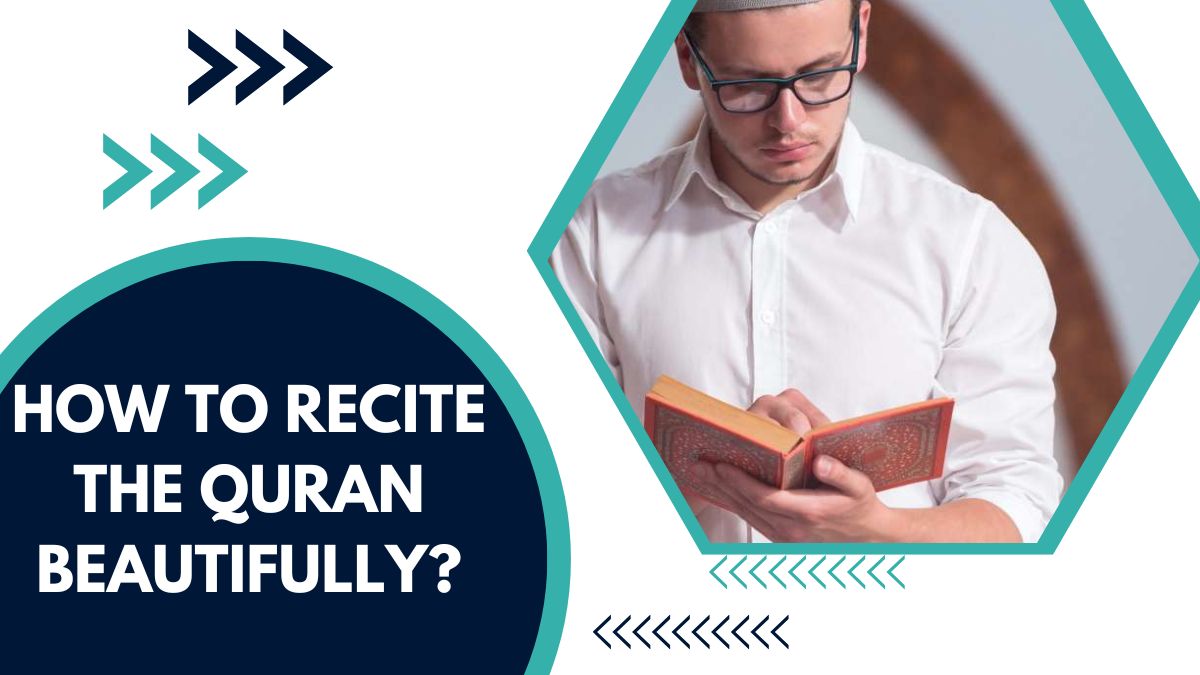
Reciting the Quran beautifully—often referred to as Tajweed al-Quran—is a profound discipline that bridges the gap between linguistic precision and spiritual resonance. It is not merely a performance; it is an act of worship that requires a synergy of the tongue, the intellect, and the heart.
To transform your recitation from a simple reading into a melodic, heart-trembling experience, follow this structured professional framework.
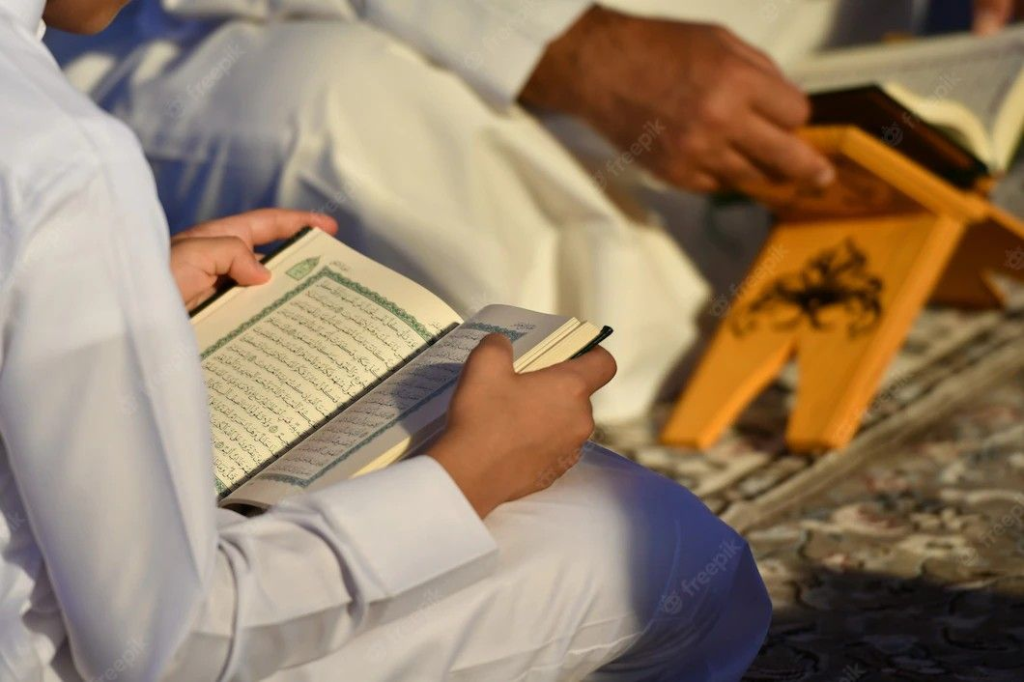
Table of Contents
1. Start with Correct Pronunciation (Makharij al-Huruf)
The foundation of beautiful Quran recitation begins with precise articulation of Arabic letters (Makharij). Every letter has a defined exit point from the throat, tongue, lips, or nasal cavity.
- Throat letters (ه، ء، ح، ع، خ، غ) require careful distinction
- Tongue letters include both light and heavy sounds (like س vs ص)
- Lip letters (ف، ب، م، و) rely on precise lip movement
For example:
- The difference between س (seen) and ص (saad) is subtle but essential.
- The throat letters like ع (ʿAyn) and ح (Haa) require controlled airflow from deep articulation points.
- Lip-based letters such as م (Meem) and ب (Ba) depend on exact lip closure.
A strong example can be found in Surah Al-Fatiha, where clear articulation is necessary for every letter to preserve meaning and flow.
Without correct pronunciation, even the most beautiful voice cannot deliver accurate recitation. Accuracy always comes before melody.
If pronunciation is incorrect, even a beautiful voice will not sound right. Focus first on clarity before melody.
At Denk Arabisch, our Quranic Arabic Course for German Speakers focus deeply on Makharij—so you don’t just read Arabic, you pronounce it correctly from day one.

2. Learn the Qualities of Letters (Sifat)
After mastering articulation (Makharij), the next step is understanding the characteristics of each letter (Sifat). These qualities give every letter its unique sound, strength, and personality, which directly affects the beauty and clarity of recitation.
Each letter is not only defined by where it comes from, but also by how it sounds. For example:
- Hams vs Jahr: whispering vs clear, audible sound
- Shiddah vs Rakhawah: strong, stopped sound vs soft, flowing sound
- Tafkheem vs Tarqeeq: heavy vs light pronunciation
For instance:
- The letter ق (Qaf) is heavy and deep, requiring a full, strong sound.
- The letter ك (Kaf) is lighter and softer, even though it comes from a nearby articulation point.
These differences become clear in short Surahs like Surah Al-Ikhlas, where every sound contributes to the rhythm and strength of the recitation.
Without applying Sifat correctly, letters may sound flat or incorrect—even if the articulation is technically right. Mastering Sifat adds depth, power, and emotional richness to your recitation.
3. Apply Tajweed Rules Properly
Tajweed is the system that preserves the exact way the Quran was revealed. It ensures that every letter is pronounced correctly, in the right place, and with the proper rules.
One of the most important areas is the rules of Noon Sakinah (نْ) and Tanween, which include:
- Izhar (clarity): pronouncing the “n” sound clearly (e.g., مِنْ هَادٍ)
- Idgham (merging): blending sounds smoothly
- Iqlab (conversion): changing the “n” sound into “m” before ب
- Ikhfa (hiding): partially concealing the sound with a nasal tone
For example, in Surah Al-Baqarah (2:5), these rules appear frequently and create a smooth, connected flow between words.
Without Tajweed, the meaning of words can be distorted, and the recitation loses its natural rhythm. Correct application brings clarity, precision, and beauty.
Join our Quran Tajweed for German Speakers at Denk Arabisch and learn Tajweed in a simplified, practical way—with real guidance, not just theory.
4. Master Elongation (Madd)
Madd (elongation) is essential for giving Quran recitation its smooth rhythm and balanced flow. It allows the reciter to extend certain sounds, creating harmony and preventing rushed reading.
There are different types of Madd, such as:
- Madd Tabee’i: natural elongation (2 counts)
- Madd Wajib: required elongation (4–5 counts)
- Madd Jaiz: flexible elongation depending on the recitation style
For instance, in
“الرَّحْمَٰنِ الرَّحِيمِ”
(Surah Al-Fatiha), the elongation in الرَّحْمَٰنِ creates a soft, flowing sound that enhances the beauty of the verse.
If Madd is ignored, the recitation may sound rushed and unbalanced. When applied correctly, it brings calmness, reflection, and a natural musicality to the recitation.
5. Focus on Rhythm and Intonation
Beautiful Quran recitation is not singing, but it naturally carries a rhythm and tone that reflect the meaning of the verses. This rhythm is not artificial—it comes from applying Tajweed correctly, understanding the flow of the words, and giving each letter and phrase its proper timing.
This natural flow is built through proper pacing, clear emphasis, and smooth transitions between words—not through forced voice manipulation. To improve your rhythm and intonation:
- Maintain a steady, calm pace
- Emphasize important words naturally
- Avoid exaggeration or forced melody
In Surah Ar-Rahman, the repeated verse
“فَبِأَيِّ آلَاءِ رَبِّكُمَا تُكَذِّبَانِ”
creates a powerful, recurring rhythm that invites reflection and emotional engagement. Each repetition reinforces the message and gives the reciter a chance to vary tone slightly while maintaining consistency.
Also, different Surahs carry different emotional tones—some are calm and reflective, while others are strong and warning. Recognizing this helps you naturally adjust your voice without forcing it.
Ignoring rhythm can make recitation feel flat, rushed, or disconnected. But when proper intonation is applied, the recitation becomes more alive, expressive, and impactful—allowing both the reciter and the listener to connect more deeply with the words of the Quran.
Build a strong foundation in Quran reading with Denk Arabisch and experience the beauty of correct recitation from day one.
Read also: Quran Memorization For Kids – A Comprehensive Guide
6. Control Your Breath
Breath control is essential for smooth and confident recitation. It helps you maintain flow without breaking words or losing clarity.
Good recitation depends on managing your breathing carefully. Key techniques include:
- Pausing only at correct stopping points (Waqf)
- Avoiding interruptions in the middle of words
- Using steady, controlled exhalation
For example:
Long verses like Ayat al-Kursi (2:255) require planned breathing to maintain clarity from beginning to end.
Without proper breath control, recitation becomes uneven and difficult to follow. Strong breath control creates stability, confidence, and smooth flow.
7. Learn Where to Pause (Waqf)
Stopping at the right places (Waqf) is critical because incorrect pauses can change the meaning of the verse.
Recitation is not just about reading words—it’s about delivering complete meanings. Important guidelines include:
- Stop only when the meaning is complete
- Follow the stopping symbols in the Mushaf
- Avoid pausing in the middle of connected phrases
For example, incorrect stopping in Surah Al-Fatiha could distort meaning, especially in connected phrases like
“إِيَّاكَ نَعْبُدُ وَإِيَّاكَ نَسْتَعِينُ”.
can break the meaning and affect the message.
Correct Waqf improves clarity, understanding, and the overall beauty of recitation.
Learn the Quran with Denk Arabisch Academy
Master reading and understanding the Quran through structured and supportive learning
Try a Free Trial8. Listen and Imitate Skilled Qaris
One of the most effective ways to improve recitation is by listening to skilled reciters and imitating their style.
This method helps train both your ear and your voice. Recommended reciters include:
- Sheikh Abdul Basit Abdul Samad
- Sheikh Maher Al-Muaiqly
- Sheikh Mishary Rashid Alafasy
- Sheikh Al-Husary
A simple method:
- Listen to one verse carefully
- Pause the recitation
- Repeat it exactly as you heard it
- Compare and refine your performance
For example:
Short Surahs like Surah Ad-Duha are perfect for practicing tone, rhythm, and consistency.
Without listening practice, improvement is slow. Imitation accelerates learning and builds confidence.
With steady daily revision, Quran Memorization becomes easier, stronger, and more permanent.
9. Record and Evaluate Yourself
Self-recording is a powerful tool to identify mistakes and track your progress over time.
When you listen to your own recitation, you notice errors that are easy to miss while reading. Focus on:
- Pronunciation accuracy
- Smoothness and rhythm
- Consistency and clarity
For example:
Recording a short Surah and comparing it with a professional reciter helps highlight differences and areas for improvement.
Without self-evaluation, mistakes can become habits. Regular review helps refine and strengthen your recitation.
Our teachers at Denk Arabisch provide real feedback on your recitation—so you don’t stay stuck repeating the same mistakes.

10. Practice Daily with Consistency
Consistency is the key to mastering Quran recitation. Small, regular practice is far more effective than long, irregular sessions.
Daily practice helps reinforce skills and build confidence over time. To stay consistent:
- Set a fixed daily time (e.g., after Fajr)
- Practice even for a short duration
- Review previously learned verses regularly
For example:
Repeating the same verses daily improves both memorization and pronunciation accuracy.
Without consistency, progress becomes slow and unstable. Regular practice leads to steady and lasting improvement.
11. Learn with a Qualified Teacher
Learning Quran recitation with a qualified teacher is essential for proper progress and accuracy. While self-learning can help, it often lacks precise correction and structured guidance.
A skilled teacher listens to your recitation, identifies mistakes, and corrects them immediately—especially in areas like Makharij and Tajweed that are hard to self-evaluate.
Key benefits include:
- Immediate correction of mistakes
- Clear and structured learning path
- Continuous motivation and consistency
- Authentic learning based on proper transmission
For example:
A small pronunciation mistake may go unnoticed when learning alone, but a teacher can correct it early before it becomes a habit.
Without guidance, errors may persist. A qualified teacher ensures your recitation is accurate, confident, and steadily improving.
12. Recite the Quran with Heart and Presence
The true beauty of Quran recitation comes from sincerity and presence of heart—not just sound.
Recitation is an act of worship, so it should be done with focus and reflection. When you understand and feel the meaning, your voice naturally becomes more expressive and impactful.
To improve this connection:
- Reflect on the meanings of the verses
- Recite with intention and humility
- Match your tone with the message
- Minimize distractions During recitation
For example:
Verses about mercy can be recited with softness, while verses of warning carry a stronger tone.
Without presence, recitation may sound correct but feel empty. When the heart is engaged, the recitation becomes more powerful, meaningful, and beautiful.
Perfect your Quran Recitation with expert Tajweed guidance and a voice that reflects the beauty of the words.
Read also: Quran Memorization For Adults – A Practical Guide
What Our Students Say About Denk Arabisch Academy
See what our students say about learning at Denk Arabisch Academy on Trustpilot. Read their experiences and check out more reviews to discover how our courses help improve Arabic.

Start Now!
Reading more guides won’t take you further—
practice with the right guidance will.
At Denk Arabisch, we help you turn intention into real progress:
- Structured step-by-step Quran & Arabic learning system
- Courses designed specifically for German speakers
- Qualified teachers who correct your recitation in detail
- Live interaction and real feedback—not passive learning
- Noticeable improvement you can actually hear
Whether you are just starting or already reciting,
This is where your recitation becomes clearer, stronger, and more confident.
Our Courses Include:
- Arabic Courses for German Speakers
- Arabic Levels for German Speakers
- Arabic Dialect Courses for German Speakers
- Qur’an Learning Courses for German Speakers
- Islamic Studies Courses for German Speakers
- Courses for Muslim Kids for German Speakers
Don’t just learn the Quran—learn to recite it properly.
👉 Join Denk Arabisch today and experience real transformation in your Quran recitation.
Learn the Quran with Denk Arabisch Academy
Master reading and understanding the Quran through structured and supportive learning
Try a Free Trial
Conclusion
Reciting the Quran beautifully is a journey that combines knowledge, practice, and spirituality. By mastering pronunciation, applying Tajweed rules, controlling your voice, and learning from skilled reciters, you can elevate your recitation step by step.
Most importantly, remember that beauty in recitation comes from sincerity and consistency. With dedication and guidance, your recitation will not only sound better—but also deepen your connection with the words of Allah.
FAQs
1. What is the meaning of reciting the Quran beautifully?
Reciting the Quran beautifully means applying Tajweed rules correctly while maintaining a pleasant, natural tone. It combines accurate pronunciation, proper rhythm, and heartfelt delivery—not singing or exaggeration.
2. Can I learn beautiful Quran recitation by myself?
You can start on your own using recordings and practice, but progress is much faster and more accurate with a qualified teacher who can correct mistakes in real time.
3. How long does it take to improve Quran recitation?
It depends on consistency and guidance. With daily practice, noticeable improvement can occur within a few weeks, while mastery may take months or years.
4. Do I need a beautiful voice to recite the Quran well?
No. A naturally beautiful voice is not required. Proper Tajweed, clarity, and sincerity are far more important—and these can be learned and developed.
5. What is the most important rule in Tajweed for beginners?
Correct pronunciation (Makharij al-Huruf) is the most important starting point. Without it, other rules will not be applied correctly.
6. How can I improve my pronunciation quickly?
Focus on:
Learning articulation points (Makharij)
Practicing slowly
Repeating after skilled reciters
Getting feedback from a teacher
7. Is it allowed to use melody while reciting the Quran?
Yes, as long as it is natural and does not distort pronunciation or meaning. The Prophet ﷺ encouraged beautifying the voice when reciting the Quran.
8. How often should I practice Quran recitation?
Daily practice is recommended—even 10–15 minutes consistently is more effective than long, irregular sessions.
9. What is the best time to practice Quran recitation?
Early morning (after Fajr) is ideal due to focus and calmness, but any quiet time where you can concentrate works well.
10. How do I know if I am reciting correctly?
You can:
Record yourself and review
Compare with professional reciters
Get feedback from a qualified teacher