Takeaway:
- Quranic education shapes the child’s identity, faith, and character, not just recitation skills.
- Students learn correct recitation (Tajweed), memorization (Hifz), and understanding of meanings (Tafsir).
- It builds Islamic character (Akhlaq) through values like honesty, patience, forgiveness, and respect.
- A deep, personal relationship with Allah is nurtured, strengthening Iman and emotional stability.
- Consistent study develops discipline, time management, and long-term commitment.
- Stories of the Prophets teach moral lessons, resilience, and trust in Allah in a memorable way.
- Arabic language skills improve naturally, connecting children to Islamic heritage.
- The Quran becomes a lifelong guide, source of comfort, and moral compass.
- A balanced approach combining memorization with understanding makes the Quran relevant to daily life.
- Early, structured, and loving introduction to the Quran is an investment in a child’s spiritual and worldly success.
In a world full of distractions and rapidly changing values, many Muslim parents are seeking something timeless, grounding, and deeply meaningful for their children. This is where the concept of “Children of the Quran” comes in—a generation raised with the words of Allah ﷻ at the center of their lives.
But what does it really mean to be a child of the Quran? And more importantly, what do Muslim students actually learn when they embark on this journey?
This comprehensive guide explores the spiritual, intellectual, and character-building lessons that shape young Muslims through Quranic education.
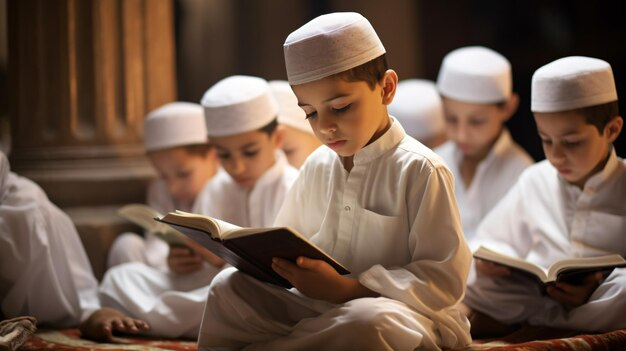
Table of Contents
What Does “Children of the Quran” Mean?
The term “Children of the Quran” refers to young Muslims who grow up learning, understanding, memorizing, and living by the teachings of the Quran. It is not limited to memorization alone—it is a holistic educational experience that nurtures the heart, mind, and soul.
A child connected to the Quran is someone who:
- Recites it regularly
- Understands its meanings
- Applies its teachings in daily life
- Develops a strong relationship with Allah ﷻ
Allah says:
﴿ إِنَّ هَـٰذَا ٱلْقُرْءَانَ يَهْدِى لِلَّتِى هِىَ أَقْوَمُ ﴾ (سورة الإسراء)
“Indeed, this Quran guides to that which is most upright.” (Surah Al-Isra 17:9)
This guidance begins early when children are introduced to the Quran in a structured and loving environment.
1. Start With Learning Correct Quran Recitation (Tajweed)
One of the very first steps in Quranic education is teaching children how to recite the Quran correctly through Tajweed. Tajweed is not simply about reading beautifully—it is about preserving the exact words of Allah ﷻ the way they were revealed to Prophet Muhammad ﷺ.
Children begin by learning the Arabic alphabet, how each letter sounds, and where every sound comes from in the mouth and throat (Makharij). Since many Arabic letters may sound similar to non-Arabic speakers, this stage is extremely important. A child learns, for example, the difference between:
- س and ص
- ت and ط
- د and ض
This careful pronunciation protects the meaning of Quranic words from being changed accidentally.
The Prophet ﷺ said:
“اقْرَؤُوا الْقُرْآنَ بِأَلْحَانِ الْعَرَبِ وَأَصْوَاتِهَا”
“Recite the Quran in a clear and distinct manner.”
And Allah says:
﴿ وَرَتِّلِ الْقُرْآنَ تَرْتِيلًا ﴾ (سورة المزمل: 4)
“And recite the Quran with measured recitation.” (Surah Al-Muzzammil 73:4)
As children continue learning Tajweed, they are introduced to:
- Rules of Noon Sakinah and Tanween
- Rules of Meem Sakinah
- Elongation rules (Madd)
- Stopping and starting correctly during recitation
Teachers usually introduce these rules gradually using repetition, listening exercises, and practical recitation. Children often imitate their teachers first before fully understanding the technical rules, which helps them naturally develop fluency and confidence.
Learning Tajweed also strengthens a child’s emotional connection to the Quran. When children recite beautifully and correctly, they begin to enjoy Quran recitation more deeply. They feel proud when they can read independently and participate in prayer confidently.
This process also improves:
- Listening skills
- Pronunciation accuracy
- Concentration
- Patience during learning
At Denk Arabisch, we specialize in making complex rules simple. Our Tajweed Course for German-Speaking Children uses modern pedagogical methods to help children master pronunciation with ease and confidence.
2. Memorization of the Quran (Hifz)
Memorizing the Quran is one of the greatest honors a Muslim child can achieve. The journey of Hifz teaches children not only how to remember verses, but also how to develop discipline, consistency, and a lifelong relationship with the Quran.
Children usually begin with short and easy surahs from Juz’ Amma, such as:
- Surah Al-Fatiha
- Surah Al-Ikhlas
- Surah Al-Falaq
- Surah An-Nas
Starting with shorter surahs helps children feel successful early in their learning journey. This builds confidence and motivates them to continue memorizing more verses over time.
Teachers often divide memorization into small daily portions so children are not overwhelmed. Repetition plays a huge role in helping verses remain strong in memory. A child may repeat one verse many times throughout the day until it becomes easy and natural to recite.
The Prophet ﷺ said:
“خَيْرُكُمْ مَنْ تَعَلَّمَ الْقُرْآنَ وَعَلَّمَهُ” (رواه البخاري)
“The best of you are those who learn the Quran and teach it.” (Sahih Bukhari)
One of the most important parts of Hifz is Muraja’ah (revision). Without regular revision, memorized surahs can easily be forgotten. Through revision, children learn:
- Commitment
- Responsibility
- Time management
- Long-term consistency
Hifz also benefits children intellectually and emotionally. Studies and practical experience show that Quran memorization can improve:
- Memory strength
- Mental focus
- Language development
- Cognitive skills
Emotionally, memorization creates a deep bond between the child and the Quran. The verses become part of their daily life:
- They recite them in prayer
- Remember them during hardship
- Reflect on them during important moments
Many children also develop a strong sense of achievement and spiritual confidence as they progress in their memorization journey.
3. Understanding the Meaning (Tafsir)
While memorization is important, understanding the Quran gives children the ability to connect its teachings to their real lives. Tafsir helps children move beyond simply reciting verses to actually reflecting on their meanings and lessons.
Children learn Quranic meanings in simple, age-appropriate language. Teachers explain:
- Why certain verses were revealed
- The stories behind the ayat
- Important moral lessons
- How to apply Quranic guidance daily
For example: Allah says
﴿ وَقُولُوا لِلنَّاسِ حُسْنًا ﴾
“And speak to people kindly.” (Surah Al-Baqarah 2:83)
Children are taught practical examples of this verse such as:
- Speaking respectfully to parents
- Avoiding hurtful language with siblings
- Being polite to classmates and teachers
This practical approach makes the Quran feel alive and relevant to their daily experiences.
Children also study stories of the prophets to understand important life lessons. Through the story of Prophet Yusuf Piece Be Upon Him, they learn:
- Patience during hardship
- Forgiveness toward others
- Trust in Allah’s plan
Through the story of Prophet Musa Piece Be Upon Him, they learn courage, leadership, and standing for truth.
Tafsir strengthens:
- Critical thinking
- Emotional intelligence
- Moral understanding
- Decision-making skills
Instead of viewing the Quran as only a religious subject, children begin to see it as guidance for every part of life:
- Family relationships
- Friendships
- School behavior
- Emotional struggles
- Personal goals
This deeper understanding encourages children to build a sincere and lasting relationship with the Quran.
4. Building Strong Islamic Character (Akhlaq)
One of the greatest goals of Quranic education is developing excellent character (Akhlaq). The Quran does not only teach worship—it teaches Muslims how to treat people, handle emotions, and behave with kindness and integrity.
Children are constantly reminded that good manners are an essential part of Islam. They learn qualities such as:
- Truthfulness (الصدق) even when it is difficult
- Patience (الصبر) during frustration
- Forgiveness (التسامح) instead of revenge
- Humility (التواضع) instead of arrogance
- Respect (الاحترام) for others
The Prophet ﷺ said:
“إِنَّمَا بُعِثْتُ لِأُتَمِّمَ مَكَارِمَ الْأَخْلَاقِ”
“I was sent to perfect good character.”
Teachers help children apply these values in everyday situations. For example:
- Telling the truth even when afraid
- Sharing with siblings and friends
- Respecting elders
- Apologizing after mistakes
- Controlling anger during conflicts
Children also learn that Islam encourages mercy and forgiveness rather than cruelty and revenge.
By studying stories from the Quran and Seerah, children understand the consequences of both good and bad behavior. They see how:
- Patience leads to reward
- Arrogance leads to destruction
- Kindness softens hearts
- Sincerity brings blessings
Over time, these lessons shape the child’s personality and emotional maturity.
Good Akhlaq also improves children socially. They often become:
- More respectful in conversations
- More caring toward others
- Better at handling disagreements
- More aware of their actions and words
Through our Islamic Studies for German Speakers, we provide a comprehensive framework that helps children build a resilient Muslim identity and noble character.
Read also: Basic Islamic Beliefs For Kids – A Complete Guide To Faith
5. Strengthening Faith (Iman)
The Quran nurtures a deep and personal connection with Allah ﷻ. From an early age, children begin learning that Islam is not simply a set of rituals or rules—it is a relationship between the servant and their Creator built upon love, trust, hope, and sincerity.
Through Quranic studies, children gradually understand:
- Who Allah is through His Beautiful Names and Attributes
- Why Allah created humanity
- Why Muslims pray, fast, and worship
- The importance of relying on Allah in every situation
Allah says:
﴿ وَمَا خَلَقْتُ ٱلْجِنَّ وَٱلْإِنسَ إِلَّا لِيَعْبُدُونِ ﴾
“I did not create jinn and mankind except to worship Me.” (Surah Adh-Dhariyat 51:56)
This understanding builds faith on both knowledge and emotion. Instead of Islam feeling like a list of obligations, children begin to feel spiritually connected to Allah in their daily lives.
Children also learn about:
- Allah’s mercy and forgiveness
- Allah’s wisdom and justice
- The beauty of making duaa
- The reward of patience and gratitude
As their Iman strengthens, children naturally begin to:
- Make duaa sincerely from the heart
- Feel awareness of Allah (مراقبة الله)
- Remember Allah during moments of fear or sadness
- Trust Allah during difficult situations
- Feel thankful for blessings they often overlooked before
For example, when children learn stories from the Quran about the Prophets, they begin to understand how believers always turned back to Allah during hardship. This teaches them emotional reliance on Allah rather than hopelessness or despair.
Faith also gives children emotional security. They learn that:
- Allah always hears them
- Allah understands their struggles
- Mistakes can be forgiven through repentance
- Every hardship has wisdom behind it
Instead of faith being something abstract or theoretical, it becomes something deeply personal and meaningful that shapes the child’s thoughts, emotions, and behavior every day.
6. Developing Discipline and Consistency
Quran learning requires regular effort and commitment, which naturally helps children develop discipline and consistency from a young age. Unlike short-term activities, Quran education teaches children that growth happens through patience and steady practice over time.
Students often follow structured routines such as:
- Daily memorization goals
- Weekly revision schedules
- Consistent recitation practice
- Listening and repetition exercises
The Prophet ﷺ said:
“أَحَبُّ الأَعْمَالِ إِلَى اللَّهِ أَدْوَمُهَا وَإِنْ قَلَّ”
“The most beloved deeds to Allah are those done consistently, even if small.”
At the beginning, maintaining a Quran routine may feel difficult for some children. However, with encouragement and structure, they gradually develop strong habits that become part of their daily lifestyle.
Through Quran study, children learn:
- How to manage their time properly
- The importance of patience and repetition
- How to stay committed even when motivation decreases
- That success comes through small consistent efforts
For example, memorizing just a few verses every day may seem simple, but over months and years, those small efforts lead to major accomplishments. This teaches children the value of persistence and long-term dedication.
Quran learning also strengthens:
- Focus and concentration
- Listening skills
- Self-control
- Responsibility toward goals
These benefits extend far beyond Islamic studies. Children who build discipline through Quran learning often become:
- More organized in school
- Better at completing responsibilities
- More independent in managing tasks
- More confident in overcoming challenges
The process also teaches emotional resilience. Children understand that mistakes and forgetfulness are part of learning, but consistency and effort lead to improvement over time.
All of our Quran Courses for Children at Denk Arabisch are designed not just to teach, but to nurture a sense of belonging and peace in every student.
Learn the Quran with Denk Arabisch Academy
Master reading and understanding the Quran through structured and supportive learning
Try a Free Trial7. Enhancing Arabic Language Skills
Since the Quran was revealed in Arabic, Quran education naturally helps children become familiar with the Arabic language over time. Even for non-Arabic-speaking children, regular exposure to Quranic Arabic strengthens listening, pronunciation, and vocabulary skills.
Children gradually learn:
- Arabic letters and sounds
- Common Quranic vocabulary
- Sentence structures
- Basic grammar patterns
- Frequently repeated Quranic expressions
As children continue reciting and memorizing verses, they begin recognizing words and understanding their meanings without relying completely on translation.
This opens the door to:
- Understanding the Quran directly
- Appreciating the beauty and eloquence of Arabic
- Building confidence in reading Arabic texts
- Strengthening communication with Islamic terminology
For many children living in non-Arabic-speaking countries, Quran learning may become their strongest connection to the Arabic language and Islamic heritage.
Children also become familiar with important Islamic phrases such as:
- الحمد لله
- سبحان الله
- إن شاء الله
- بسم الله
Over time, these expressions naturally become part of their speech and daily habits.
Learning Arabic through the Quran is often more meaningful for children because the language is connected to worship, spirituality, and love for Allah’s words. This emotional connection increases motivation and makes learning more engaging.
Additionally, Quranic Arabic improves:
- Pronunciation accuracy
- Memory retention
- Reading fluency
- Language awareness
Gain a profound connection to the text by joining our Quranic Arabic Course For German Speakers, specifically crafted for those who wish to understand the deep linguistic miracles of the Holy Quran.
Read also: Quran Learning For Children App – A Comprehensive Guide
8. Emotional and Spiritual Stability
Children who engage regularly with the Quran often develop stronger emotional balance and inner peace. In today’s fast-paced world filled with distractions, stress, and emotional pressure, the Quran provides children with comfort, stability, and spiritual reassurance.
Allah says:
﴿ أَلَا بِذِكْرِ ٱللَّهِ تَطْمَئِنُّ ٱلْقُلُوبُ ﴾
“Indeed, in the remembrance of Allah do hearts find rest.” (Surah Ar-Ra’d 13:28)
Through Quran recitation and reflection, children often feel:
- Calm during stressful situations
- Spiritually connected
- Emotionally comforted
- More secure and hopeful
The rhythmic recitation of the Quran itself can create a calming effect on the heart and mind. Many children feel relaxed and emotionally safe when listening to or reciting Quran regularly.
Quranic education also teaches children healthy emotional responses. They learn:
- How to remain patient during hardship
- How to control anger
- How to seek help from Allah during sadness
- How to avoid hopelessness and despair
For example, when children study stories of the Prophets, they realize that difficulties are part of life and that believers always turn back to Allah with patience and trust.
The Quran teaches children that:
- Fear should lead to duaa, not panic
- Mistakes should lead to repentance, not hopelessness
- Hardship is temporary
- Allah’s mercy is always near
This emotional grounding becomes extremely valuable as children grow older and face social, academic, and personal challenges.
Children who maintain a strong relationship with the Quran often develop:
- Greater emotional resilience
- Positive thinking
- Better self-control
- A stronger sense of purpose
Find your voice and your flow with our Quran Recitation Course For German Speakers, a journey designed to take you from hesitant reading to confident, soulful recitation.
9. Learning Through Stories of the Prophets
One of the most engaging and impactful parts of Quranic education is learning through the stories of the Prophets. These stories capture children’s attention while teaching powerful moral and spiritual lessons in a way they can easily understand and remember.
Children study the lives of:
- Prophet Nuh (Noah) عليه السلام
- Prophet Ibrahim (Abraham) عليه السلام
- Prophet Musa (Moses) عليه السلام
- Prophet Yusuf (Joseph) عليه السلام
- Prophet Muhammad ﷺ
Each story contains important lessons that help shape the child’s character and worldview.
For example:
- The story of Prophet Nuh teaches patience and perseverance despite rejection.
- The story of Prophet Ibrahim teaches complete trust and obedience to Allah.
- The story of Prophet Yusuf teaches forgiveness, patience, and resisting temptation.
- The story of Prophet Musa teaches courage and standing up for truth.
- The Seerah of Prophet Muhammad ﷺ teaches mercy, honesty, humility, and leadership.
Children naturally connect emotionally with these stories because they involve real struggles, emotions, and challenges. Through them, children learn:
- How righteous people handled difficulties
- The consequences of good and bad behavior
- The importance of sincerity and faith
- That success comes through patience and trust in Allah
These stories also help children build emotional intelligence. They learn empathy, compassion, bravery, and resilience through relatable examples rather than abstract lectures.
Because storytelling is highly memorable, many Quranic lessons stay with children for years and continue influencing their decisions as they grow older.
Read also: Is Listening To The Quran Equal To Reading It In Reward? – A Complete Guide
10. Building a Lifelong Relationship with the Quran
Perhaps the most important goal of Quranic education is helping children develop a lifelong relationship with the Quran. The purpose is not simply memorization during childhood, but creating a lasting bond that continues throughout every stage of life.
Children are encouraged to:
- Love the Quran emotionally and spiritually
- Read it regularly
- Reflect on its meanings
- Apply its teachings daily
- Turn to it during both happiness and hardship
Over time, the Quran becomes:
- A source of comfort during sadness
- A guide for making decisions
- A reminder during moments of weakness
- A companion throughout life
Children also learn that the Quran is not only for Ramadan or special occasions—it is meant to be part of daily life. Even reading a few verses consistently helps maintain this connection.
As children grow older, this relationship protects and guides them through:
- Peer pressure
- Emotional struggles
- Identity challenges
- Difficult life decisions
The Quran becomes a moral compass that helps them distinguish right from wrong and remain connected to their Islamic values.
A strong relationship with the Quran also creates spiritual confidence. Children who grow up loving the Quran often continue returning to it as adults for:
- Guidance
- Healing
- Motivation
- Inner peace
The ultimate goal of Quranic education is not temporary learning, but nurturing hearts that remain connected to the words of Allah for an entire lifetime.
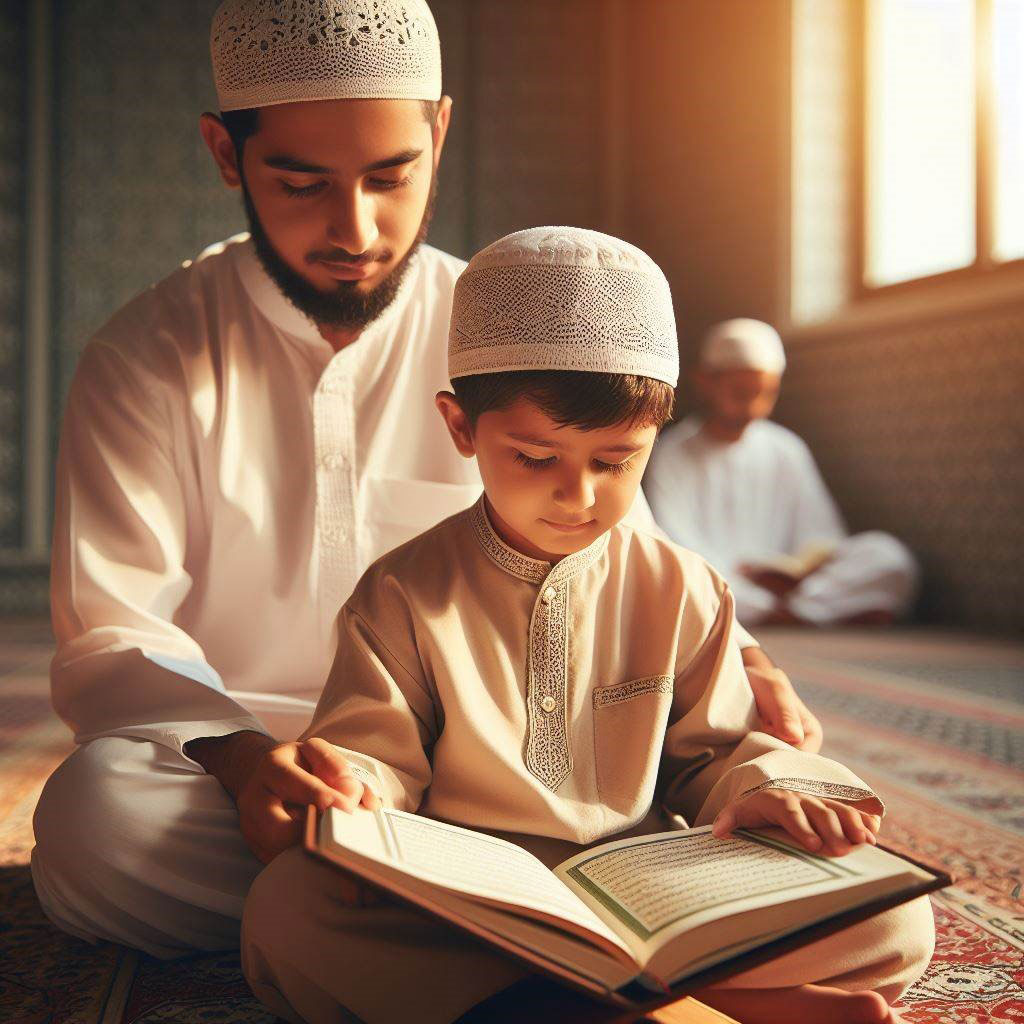
The Best Investment for Your Child’s Future!
Time moves fast, and the window for foundational learning is precious. As a parent, you want your child to navigate life with a strong moral compass, a clear identity, and a deep connection to their faith.
At Denk Arabisch, we don’t just provide “classes”—we build identities. We combine the depth of traditional Islamic knowledge with a modern understanding of the challenges faced by Muslim children growing up in Germany.
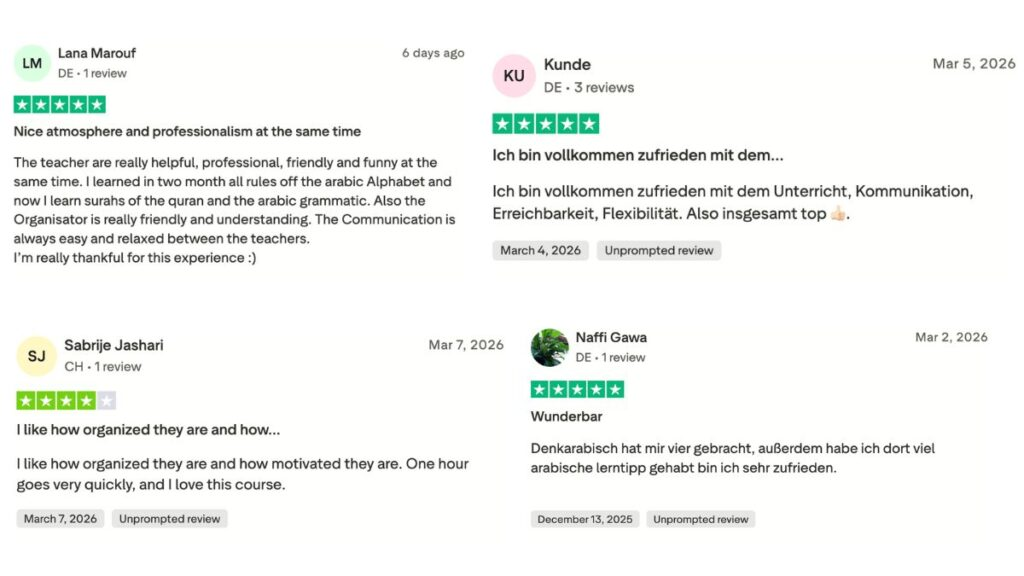
What Our Students Say About Denk Arabisch Academy
See what our students say about learning at Denk Arabisch Academy on Trustpilot. Read their experiences and check out more reviews to discover how our courses help improve Arabic.
Why Choose Denk Arabisch Today?
- Bilingual Experts: Teachers who understand both the language of the Quran and the German cultural context.
- Flexible Online Learning: High-quality education from the comfort of your home, fitting perfectly into your family’s schedule.
- Interactive & Engaging: We make sure children love what they learn, fostering a lifelong bond with the Quran.
Courses for Muslim Kids
- Gift your little ones the beauty of perfect recitation through our Tajweed Course For German-Speaking Children, where complex rules are transformed into fun, easy-to-master lessons tailored for young minds.
- Watch your child’s confidence grow as they embark on our Quran Course For German-Speaking Children, a journey that takes them from their very first letters to a lifelong friendship with the Holy Book.
- Unlock a world of heritage and culture with our Arabic Lessons For German-Speaking Children, using interactive stories and games to make learning the language of the Quran an adventure they look forward to every day.
Don’t wait for the “right time”—the right time is now. Give your child the tools to succeed in this life and the hereafter.
👉 Browse Our Courses & Enroll Your Child Today!
Denk Arabisch – Where Language and Faith Meet.
Learn the Quran with Denk Arabisch Academy
Master reading and understanding the Quran through structured and supportive learning
Try a Free TrialConclusion
Raising children of the Quran is one of the greatest investments a Muslim family can make. It goes far beyond teaching recitation—it shapes identity, character, and purpose.
A child connected to the Quran grows into:
- A person of strong faith
- A source of goodness in society
- A believer with clarity and direction
In a time when values are constantly shifting, the Quran remains ثابت (firm) and unchanging—a perfect guide for every generation.
By nurturing children with the Quran, we are not just educating them—we are preparing them to lead meaningful, principled, and spiritually fulfilling lives.
FAQs
1. At what age should a child start learning the Quran?
Most scholars and educators suggest starting as early as age 4 or 5 with basic Arabic letters and short surahs. However, the best time is whenever the child shows readiness and interest.
2. How can I help my child memorize if I am not a Hafiz myself?
You don’t need to be an expert to help. You can create a consistent routine, play Quranic recitations at home, and use digital apps to track their progress. Your role is to provide encouragement and a quiet environment.
3. Is it better to focus on memorization or understanding?
Both are vital. While memorization (Hifz) protects the text in the heart, understanding (Tafsir) allows the child to live by its values. A balanced approach is usually the most successful.
4. My child finds Arabic difficult. How can I keep them motivated?
Make learning fun through interactive games, stories of the Prophets, and small rewards for reaching milestones. Focusing on the meaning often makes the language more interesting to a child.
5. What are the benefits of online Quran classes?
Online classes offer flexibility, access to qualified teachers from around the world, and one-on-one attention that may not be available in a crowded local classroom.