Takeaway:
- Reading the Quran (Tilawah) is an active act of worship that earns 10 rewards per letter, as stated in the hadith, because it engages the tongue, eyes, mind, and heart simultaneously.
- Listening to the Quran (Istima’) is a receptive act of worship commanded by Allah to receive His mercy and tranquility, but it does not carry the same “per-letter” reward as recitation.
- The two acts are not equal in reward: recitation yields a measurable, multiplied reward for each letter uttered, while listening’s reward is tied to attentiveness, reflection, and divine mercy.
- Listening becomes more practical and spiritually beneficial when reading is not possible—such as during commutes, illness, fatigue, or for beginners building pronunciation skills.
- A balanced routine combines morning recitation for reward and skill, evening focused listening for heart softness and reflection, and occasional study of meaning to deepen understanding.
- Neither act replaces the other; they complement each other, and the highest spiritual benefit comes from engaging the Quran with love in all its forms—reading, listening, and understanding.
For many Muslims today, balancing a busy life with spiritual growth is a common challenge. With the widespread availability of Quran apps, YouTube recitations, and audio platforms, listening to the Quran has become easier than ever. Whether during a commute, before sleep, or while doing daily tasks, hearing the Word of Allah brings deep peace.
However, a fundamental question often arises: Is listening to the Quran equal to reading it in reward? While both are noble acts of worship, understanding the nuance between them is essential for every believer seeking to maximize their “Ajr” (reward).
👉 If you want to learn how to read the Quran correctly with Tajweed, explore structured Quran courses at Denk Arabisch.
Table of Contents
Does Listening to the Quran Count as “Reading”?
Listening to the Quran does not count as reading (Tilawah) in the linguistic or jurisprudential sense.
To understand this distinction properly, it is important to recognize that the terms “reading” and “listening” are used differently in both the Arabic language and Islamic scholarly terminology. Although both are connected to the Quran and both are considered acts of worship, they are not interchangeable.
In Islamic jurisprudence, Reading (Tilawah) specifically refers to the verbal act of reciting the Quranic text. This means that a person must actively pronounce the words using their tongue, even if they are reading silently from the Mushaf. Because of this requirement of articulation.
Reading (Tilawah) is classified as an active form of worship that involves multiple faculties:
- The tongue (pronunciation)
- The eyes (reading from the Mushaf)
- The mind (processing and understanding the text)
Listening, on the other hand, does not involve producing the words at all. Instead, it is known as Istima’, which refers to receiving the recitation through hearing with attentiveness and presence of heart.
The listener is not performing the Quran, but rather allowing its meaning and sound to enter the heart and create reflection and emotional impact.
Listening (Istima’) is classified as a receptive form of worship that primarily engages:
- The ears (hearing the recitation)
- The heart (reflection and emotional response)
For this reason, scholars clearly distinguish between the two:
- Reading (Tilawah) is an act of expression and performance
- Listening (Istima’) is an act of reception and reflection
So even though both are forms of worship and both bring reward, they differ in their definition and ruling. Listening to the Quran, therefore, does not fulfill the technical meaning of “reading” in either linguistic usage or Islamic jurisprudence.
👉 At Denk Arabisch, we help students bridge this gap through Quran Reading Course designed for all levels.
The Reward of Reading The Quran
Reading the Quran (Tilawah) carries a unique and clearly defined reward that is explicitly mentioned in the Sunnah of the Prophet ﷺ. It is not a general form of worship, but one that has a specific and measurable spiritual reward attached to each letter recited.
The Prophet ﷺ said:
“من قرأ حرفًا من كتاب الله فله به حسنة، والحسنة بعشر أمثالها، لا أقول: (الم) حرف، ولكن ألف حرف، ولام حرف، وميم حرف.” (رواه الترمذي)
“Whoever recites a letter from the Book of Allah will receive one good deed, and each good deed is multiplied by ten. I do not say that ‘Alif Lam Meem’ is one letter, rather Alif is a letter, Lam is a letter, and Meem is a letter.” (At-Tirmidhi)
This hadith explains that every single letter recited from the Quran carries a reward from Allah, and this reward is multiplied tenfold. It highlights the immense mercy of Allah, where even the smallest act of recitation is not overlooked but instead transformed into multiplied blessings.
This shows that Quran recitation is never wasted effort—every sound, every letter, and every attempt to engage with the words of Allah becomes a source of continuous reward, encouraging believers to recite with consistency, care, and devotion.
Why Does Reading Carry a Greater Reward?
The higher reward of recitation is linked to the fact that it is a multi-dimensional act of worship, not a single action.
When a person reads the Quran, several forms of worship happen simultaneously:
- The tongue engages in remembrance (dhikr) through pronunciation
- The eyes actively follow the words of the Mushaf
- The mind processes meaning, structure, and flow of the verses
- The heart reflects, responds, and connects spiritually
- The rules of Tajweed are applied, adding precision and discipline
Because of this combination, recitation is not just reading text — it is a complete act of engagement with the revelation.
This is why scholars describe Tilawah as a form of worship that is both physical and spiritual at the same time, which explains its uniquely high reward.
The Reward of Listening to The Quran
Although listening does not carry the same structured “per-letter” reward as recitation, it remains a highly virtuous and spiritually powerful act of worship in Islam.
Allah ﷻ commands in the Quran:
﴿وَإِذَا قُرِئَ الْقُرْآنُ فَاسْتَمِعُوا لَهُ وَأَنْصِتُوا لَعَلَّكُمْ تُرْحَمُونَ﴾
“When the Quran is recited, listen to it attentively and remain silent so that you may receive mercy.” (Al-A‘raf 7:204)
This verse shows that listening to the Quran is a direct command from Allah, which means it is not optional but an act of obedience and respect toward the Words of Allah.
It teaches the believer to approach the recitation with full attention and silence, avoiding distractions or background noise, so that the heart is fully present with what is being heard.
The verse also connects this act of attentive listening to a clear spiritual outcome, which is receiving the mercy of Allah, showing that the quality of listening has a direct impact on the spiritual benefit gained.
In this way, listening to the Quran is not a passive experience, but a conscious and intentional act of worship that requires presence of heart, humility, and reflection while the Words of Allah are being recited.
👉 Master the art of beautiful Quran Recitation with precise Tajweed rules and a deeper spiritual connection to every verse.
Spiritual Benefits of Listening to the Quran
Listening to the Quran has profound effects on the heart and soul, even though its nature differs from recitation.
1. Connection to the Sunnah
The Prophet ﷺ himself deeply valued listening to the Quran. He would request companions to recite for him and was emotionally moved during their recitation. This shows that listening is not passive — it is a deep spiritual experience even for the Prophet ﷺ.
2. Inner Peace and Tranquility (Sakinah)
Listening to the Quran brings a sense of calmness and emotional stability. The sound of the recitation can soften inner stress, ease anxiety, and bring tranquility to the heart.
3. Accessibility of Worship
One of the greatest blessings of listening is that it allows continuous connection to the Quran in situations where reading is not possible — such as while working, traveling, or resting. This makes the remembrance of Allah accessible in everyday life.
4. Softening of the Heart
Regular listening helps remove spiritual hardness and creates emotional sensitivity toward the Quranic message. Over time, it increases humility and awareness of Allah.
5. Increase in Khushu‘ (Humility)
Attentive listening encourages a state of presence and submission, where the heart becomes more receptive and humble before the words of Allah.
6. Encouragement of Reflection (Tadabbur)
Listening gives the mind space to reflect on meanings without the pressure of reading, which often leads to deeper emotional and spiritual understanding.
7. Spiritual Environment of Blessing
When the Quran is recited and listened to properly, it brings an atmosphere of mercy and spiritual presence. Many scholars mention that such gatherings are accompanied by angels and divine blessings.
Learn the Quran with Denk Arabisch Academy
Master reading and understanding the Quran through structured and supportive learning
Try a Free TrialDirect Comparison: Reading vs. Listening
The main difference between reading the Quran (Tilawah) and listening to it (Istima’) lies in the nature of the act itself and the type of spiritual engagement it creates. Recitation is an active form of worship, where the believer directly engages with the words of Allah through pronunciation, effort, and focus.
This is why it carries a clearly defined reward, as the Prophet ﷺ explained that every letter recited earns multiplied good deeds.
Listening, on the other hand, is a receptive form of worship. It is centered on receiving the recitation with attentiveness and allowing the heart to be affected by it. Instead of producing the words, the believer absorbs them, and Allah ﷻ has commanded this form of engagement as a means of attaining His mercy and softening the heart.
Both acts involve the Quran, but they engage the believer in different ways: recitation engages the entire person in action and effort, while listening engages the heart in reflection and presence.
For this reason, neither is insignificant, and neither replaces the other — they complement each other in building a deeper connection with the Quran. This difference becomes even more meaningful at blessed times such as Fajr, when angels are present and witness the worship of believers.
In such moments, recitation reflects active devotion and effort, while listening reflects humility, attentiveness, and openness to divine guidance. Each has its own spiritual value, and both contribute in different ways to a believer’s closeness to Allah.
Read also: Benefits Of Reading Quran At Night
| Factor | Reading (Recitation) | Listening (Attentiveness) |
| Reward Basis | 10 Hasanat per letter. | Divine Mercy and peace. |
| Effort Level | High (Active). | Moderate (Receptive). |
| Primary Goal | Building Skill & Reward. | Reflection (Tadabbur). |
| Accessibility | Requires Focus & Skill. | Accessible to all. |
When Listening To The Quran May Be the Better Option
While reading the Quran generally holds a higher “per-letter” reward, there are certain situations in life where listening becomes more practical and sometimes even more spiritually beneficial:
1. For Beginners:
Beginners often struggle with Arabic letters and pronunciation. Listening helps them:
- Become familiar with correct pronunciation
- Build confidence gradually in recitation
- Improve their pronunciation over time through repetition
2. During Physical Limitation:
For those who are ill, tired, or have difficulty reading, listening becomes a great mercy. It allows them to stay connected to the Quran without physical effort, keeping the heart nourished even when reading is not possible.
3. During Daily Tasks:
While driving, cooking, working, or commuting, listening transforms everyday activities into moments of remembrance (Dhikr), allowing the Quran to remain present throughout daily life.
4. For Emotional Healing:
A beautiful recitation can have a powerful impact on the heart. It often reaches deeper emotional layers, bringing calmness, easing stress, and softening a heavy heart more effectively than silent reading.
5. For Memorization:
Listening repeatedly is a highly effective tool for memorization. It helps:
- Strengthen retention of verses
- Improve recall and fluency
- Reinforce correct pronunciation and rhythm
Quran Memorization made simple. Our flexible online schedules at Denk Arabisch ensure that your Hifz journey remains consistent, no matter how busy your day is.
Do You Get Reward Without Understanding The Quran?
Yes. Engaging with the Quran in any form is a virtuous act, even without full understanding, because the Quran is the literal Speech of Allah ﷻ. Simply listening to it or reciting it with sincerity is an act of worship, and a believer is rewarded for their intention, effort, and respect toward the Words of Allah.
However, while reward is present in all forms of engagement, understanding the Quran remains a higher goal. When a person begins to understand its meanings, the Quran shifts from being only a source of sound and recitation into a source of guidance, reflection, and transformation.
This deeper level of connection allows the heart to interact with the message of the Quran more consciously and meaningfully.
In essence, reward is not limited to understanding, but understanding elevates the impact of the Quran in a believer’s life.
👉 Denk Arabisch also offers Quranic Arabic courses to help you understand what you recite and hear.
A Practical Routine to Balance Both
A successful approach to engaging with the Quran is not choosing between reading and listening, but rather combining both in a balanced and consistent routine. Each form of engagement complements the other and strengthens a different aspect of the believer’s connection with the Quran.
Active Recitation (Morning): Begin the day by reciting even a small portion of the Quran from the Mushaf. Morning recitation helps establish consistency, strengthens focus, and brings the reward of each letter multiplied by ten, as mentioned in the Sunnah. It also sets a spiritual tone for the rest of the day.
Focused Listening (Evening): In the evening, listen to a Surah with full attention, silence, and presence of heart. This form of listening allows the mind to rest while the heart reflects, helping to soften emotions and inviting Allah’s mercy and tranquility.
Translation and Reflection: Occasionally, take time to read the translation or explanation of what you have recited or listened to. This step deepens understanding, strengthens reflection, and transforms interaction with the Quran from mere exposure into conscious guidance and insight.
What Our Students Say About Denk Arabisch Academy
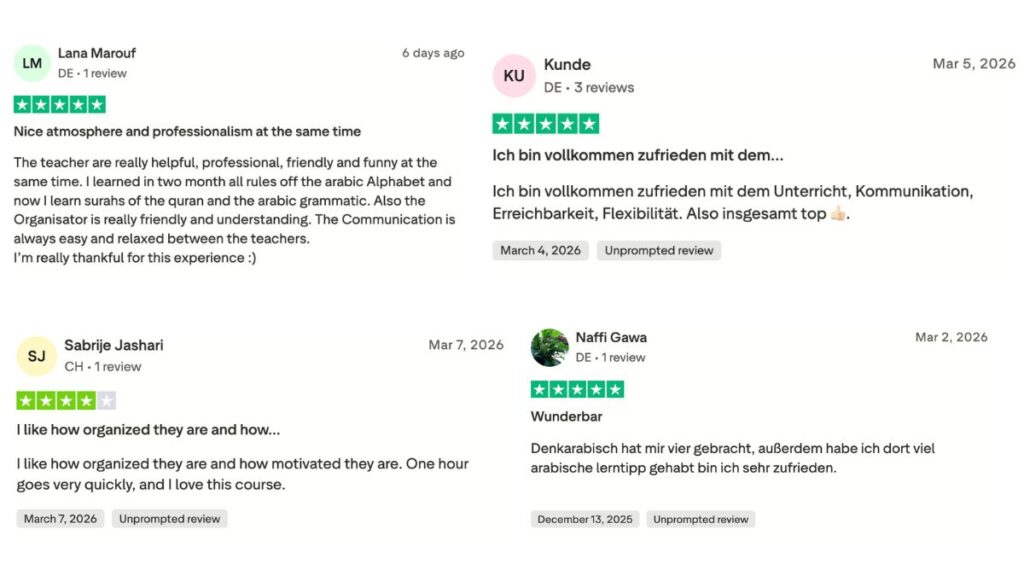
See what our students say about learning at Denk Arabisch Academy on Trustpilot. Read their experiences and check out more reviews to discover how our courses help improve Arabic.
Start Your Quranic Journey Today!
Are you tired of just listening and wishing you could recite the Quran fluently yourself? The gap between where you are and where you want to be is simply a structured plan.
At Denk Arabisch, we don’t just teach languages; we connect hearts to the Revelation. Our courses are specifically tailored for the German-speaking community, ensuring that language barriers never stand between you and Allah’s Book.
Read also: Benefits of Reading Quran at Fajr
Find the Right Path for Your Goals:
Whether you are starting from the very beginning or aiming to master the art of memorization, we have a specialized program for you:
- Quran Reading Course for German Speakers: Perfect for beginners who want to master the Arabic script and start reading the words of Allah with confidence.
- Quran Tajweed Course for German Speakers: Elevate your recitation by mastering the rules of Tajweed, ensuring every letter is pronounced with its rightful characteristics.
- Quran Recitation Course for German Speakers: Focus on fluency and the beautiful art of recitation to make your prayers more soulful.
- Quran Memorization Course for Muslims in Germany: A structured Hifz program designed to help you lock the verses in your heart while living a busy European lifestyle.
- Quranic Arabic Course for German Speakers: Go beyond reading and begin to understand the deep linguistic meanings and vocabulary of the Revelation.
Why Choose Denk Arabisch?
- Expert Tutors: Specialized in Tajweed and Quranic Arabic.
- Flexible Scheduling: Fits perfectly into your busy life in Germany.
- Proven Results: Join a growing community of German-speaking Muslims who have transformed their relationship with the Quran through our platform.
👉 Enroll in your course at Denk Arabisch today and claim your rewards!
Learn the Quran with Denk Arabisch Academy
Master reading and understanding the Quran through structured and supportive learning
Try a Free Trial
Conclusion
Is listening to the Quran equal to reading it in reward?
No—reading generally carries a higher reward due to the active effort and direct engagement involved. However, listening is an essential Sunnah that brings emotional depth, mercy, and peace.
The wisdom behind this difference is simple: Islam encourages effort. Those who strive to learn and recite earn more, but those who listen with a humble heart are never left empty-handed. Approach the Quran with love in all its forms, and you will find your soul at peace.
So Reading is superior in terms of the reward attached to the letters, while listening is a noble act of worship that brings mercy and tranquility. A wise believer integrates both to fill their heart with light.
FAQs
To help clarify any remaining doubts, here are the most common questions regarding the reward of listening to versus reading the Quran.
1. Does listening to the Quran count as a “Khatm” (completion)?
Technically, a Khatm refers to the complete recitation of the Quran from beginning to end. While listening to the entire Quran is a massive achievement that brings immense blessing and mercy, scholars generally agree that the specific reward for “completing” the Quran applies to the person who recites it with their own tongue. However, if you listen to the whole Quran with the intention of completing it because you cannot read, Allah’s generosity is limitless.
2. Is it better to read a small amount or listen to a large amount?
In Islam, the quality of worship often outweighs the quantity.
Reciting even a few verses with focus (Khushu) is better than listening to hours of recitation as mere background noise.
However, if listening helps you reflect deeply on the meaning while reading feels like a mechanical chore, then listening may be more spiritually beneficial for you at that moment.
3. Can I listen to the Quran while I am working or studying?
Yes, but with a condition. The Quranic command is to “listen and be silent” to receive mercy.
If your work requires deep concentration and you cannot pay attention to the words, it is better to pause the recitation out of respect.
If you are doing manual tasks (like driving or cleaning) and your heart is attentive to the recitation, it is highly recommended and rewarded.
4. Do I need to have Wudu (ablution) to listen to the Quran?
No, Wudu is not a requirement for listening to the Quran. While it is always virtuous to be in a state of purity when engaging with the Word of Allah, you can listen to audio recitations while resting, traveling, or even in a state of minor ritual impurity.
5. Can a woman listen to the Quran during her menstrual cycle?
Absolutely. While there are varying scholarly opinions on touching the Mushaf or reciting aloud during this time, there is a consensus that listening to the Quran is permitted and encouraged. It is a vital way for women to maintain their spiritual connection and seek peace during their period.
6. Will I be rewarded if I listen to the Quran while I sleep?
Listening to the Quran as you fall asleep is a beautiful way to end the day and can bring peace to the soul. However, the specific reward mentioned in Surah Al-A’raf depends on active listening and silence. You receive the blessing of having the Quran played in your home, but the highest reward is reserved for the time you were awake and attentive.