Arabic is a remarkably beautiful, expressive, and nuanced language. When you learn how to say thank you in Arabic, you are not just memorizing a direct translation—you are unlocking a window into the rich tapestry of Arab culture, hospitality, and values. Generosity, warmth, and respect form the bedrock of Arabic-speaking communities, and the way people express gratitude reflects this deeply.
While a simple “thanks” works in English for almost any situation, Arabic offers a vast vocabulary of thankful expressions. Depending on whether you are speaking formally, informally, practicing religious traditions, or chatting in a specific regional dialect (like Egyptian, Levantine, or Gulf Arabic), your choice of words will change.
This comprehensive guide will teach you exactly how to say thank you in Arabic across various contexts, how to respond when someone thanks you, and how to avoid common mistakes so you can communicate naturally and confidently.
Table of Contents
1. Saying “Thank You” in Modern Standard Arabic (Fus’ha)
Modern Standard Arabic (MSA), known as Fus’ha (فصحى), is the literary and official version of the language used in news broadcasts, literature, academic settings, and formal writing across all Arab nations. If you are a beginner, starting with MSA is your safest bet because these phrases are universally understood.
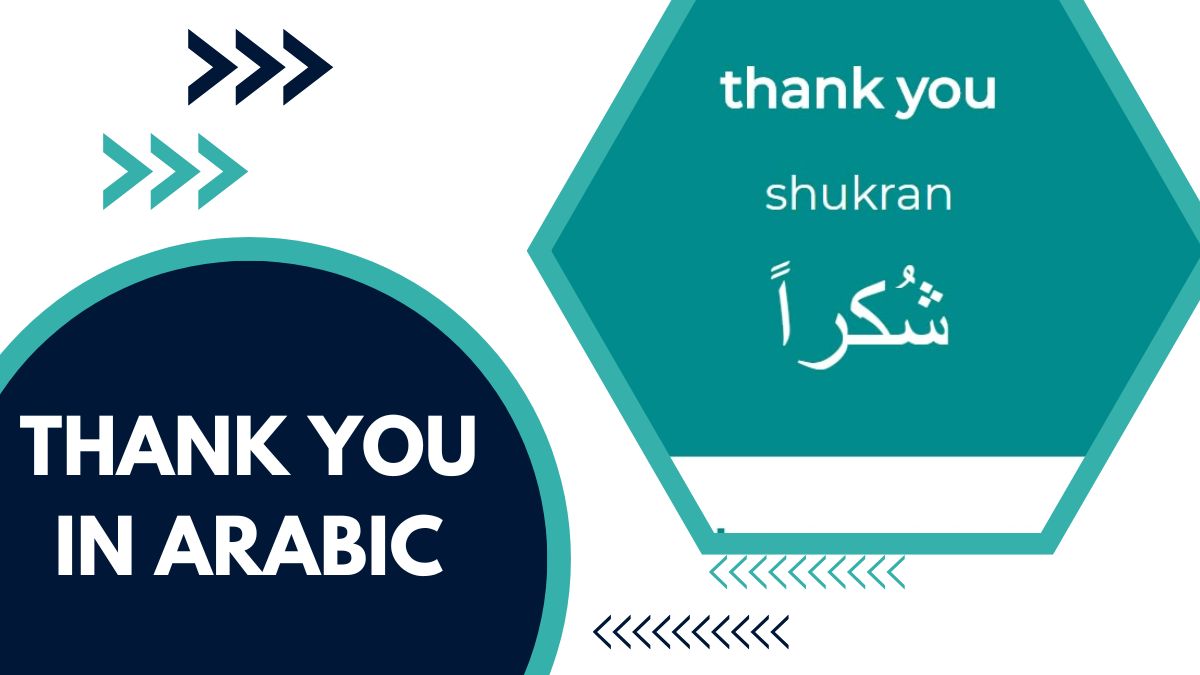
“Shukran” (شكراً) – The Universal “Thank You”
The absolute most common, versatile, and essential word to learn is Shukran. Derived from the Arabic root verb shakara (شَكَرَ), which means “to thank” or “to be grateful,” it functions perfectly in both casual and formal settings.
Whether you are buying bread at a local bakery, receiving a meal at a restaurant, or thanking a colleague, Shukran is universally accepted by speakers of every dialect.
To make your gratitude more specific, you can append object pronouns to address people directly:
| Arabic | Transliteration | Meaning / Target Audience |
| شكرًا | Shukran | Thank you (General) |
| شكرًا لكَ | Shukran laka | Thank you (To a male) |
| شكرًا لكِ | Shukran laki | Thank you (To a female) |
| شكرًا لكم | Shukran lakum | Thank you (To a group) |
“Ashkuruka” (أَشْكُرُك) – A Respectful “I Thank You”
If you are speaking to an elder, a supervisor, or a professional acquaintance, you can say Ashkuruka (to a male) or Ashkuruki (to a female). While brief, this phrase carries a highly respectful, formal undertone that builds immediate rapport in professional spaces.
“Shukran Jazilan” (شكرًا جزيلًا) – “Thanks a Lot”
When a simple Shukran isn’t quite enough, you can elevate your appreciation by saying Shukran Jazilan. The word jazilan (جزيلًا) translates to “greatly” or “a lot,” making this the perfect Arabic equivalent to “thank you very much.”
Build an absolutely flawless foundational skillset and gain instant conversational confidence through an interactive Arabic Course For Beginners at Denk Arabisch that perfectly fits your busy weekly routine.
2. Deep and Formal Ways to Say Thank You in Arabic
In formal business correspondence, professional emails, or instances where someone has gone completely out of their way to do an incredible favor for you, Arabic speakers lean into more poetic, profound, and polished expressions.
Professional and Written Blessings
If you are ending a business email or writing an official letter, a simple phrase like Ma‘a jazil ash-shukr (مع جزيل الشكر), meaning “With many thanks,” adds a beautiful, sophisticated touch.
Another excellent corporate phrase is:
أشكركم على حسن تعاونكم
Transliteration: Ashkurukum ‘alā husni ta‘āwunikum
Meaning: “I thank you for your kind cooperation.”
Heartfelt and Emotional Gratitude
When you are deeply moved by someone’s immense generosity, the culture embraces humility. You can use phrases that express how their kindness has deeply touched your heart—or even playfully made you blush:
- Ashkuruka min kulli qalbi (أشكرك من كل قلبي): “I thank you from the bottom of my heart.”
- Lā a‘rifu kayfa ashkuruk (لا أعرف كيف أشكرك): “I do not know how to thank you.”
- Khajjalanī karamuk (خجلني كرمك): “Your kindness made me shy” (signifying immense gratitude that leaves you humbled).
3. The Islamic Way to Say Thank You: Spiritual Blessings
In Islamic culture, showing gratitude is intertwined with faith and spiritual mindfulness. Instead of merely thanking a person, it is common to make a du’aa (supplication) asking God to reward them on your behalf. These phrases are utilized daily by millions of Muslims worldwide.
“Jazak Allah Khayran” (جزاك الله خيرًا)
This is the most widely recognized Islamic expression of gratitude. It translates literally to: “May Allah reward you with goodness.” It is heavily rooted in Quranic values, where thankfulness (Shukr) is viewed as a spiritual responsibility that unlocks divine abundance.
Because Arabic is a gender-sensitive language, ensure you adjust the suffix depending on who you are talking to:
- To a male: Jazāk Allah khayran (جزاك الله خيرًا)
- To a female: Jazāki Allah khayran (جزاكِ الله خيرًا)
- To a group: Jazākum Allah khayran (جزاكم الله خيرًا)
“Baraka Allahou Feek” (بارك اللَّه فيك)
Another classic spiritual blessing is Baraka Allahou Feek, which means “May Allah bless you.” The word baraka represents divine blessing and goodwill, making this an incredibly warm way to validate someone’s thoughtful actions.
Go completely beyond standard translations and learn to decode classical grammar through a dedicated Quranic Arabic Course for German Speakers at Denk Arabisch taught by elite native experts.
4. Ways to Say “Thank You” in Arabic Dialects
While Fus’ha is standard for writing, colloquial Arabic (Aamiya) is what people use on the street. If you travel to different regions, adopting local dialects will help you sound natural and endearing to native speakers.
| Dialect / Region | Arabic Script | Transliteration | Meaning & Common Usage |
| Egyptian Arabic (Masri) | • متشكر اوي • مُتَشَكِّر \ مُتَشَكِّرة • يعطيك العافية | • Moutashaker Awi • Mutashakker / -ah • Ya‘tik Al-‘Afiyah | • “Thanks a lot.” • “I am thankful to you” (masculine / feminine). • “May God give you health” (used to thank someone for their labor or service). |
| Levantine Arabic (Shami) | • شُكْراً كْتير • بِاتْشَكَّرَك \ بِاتْشَكَّرِك • يسلموا إيديك | • Shoukran Ktir • Betshakkarak / -ek • Yislamu Ideyk | • “Thank you very much.” • “I am thanking you” (male / female standard target). • “May your hands stay safe” (perfect for acknowledging food, drinks, or physical favors). |
| Gulf Arabic (Khaleeji) | • مَشْكُور \ مَشْكُورة • شَاكِرٌ لك \ شَاكِرةٌ لك • ما قَصَّرْت \ ما قَصَّرْتي | • Mashkoor / Mashkoorah • Shakeron / Shakeraton Lak • Ma Qassart / -ti | • “You are deserving of thanks” (masculine / feminine). • “I am grateful to you” (highly respectful and formal). • “You didn’t fall short” (praising someone for doing their absolute best to help). |
Read also: Brother In Arabic – Your Guide For Arabic Language
Egyptian Arabic (Masri)
Egypt is the most populous Arab country, and its dialect is widely understood across the Middle East thanks to its prominent cinema and music industries.
- Moutashaker Awi (متشكر اوي): This means “Many thanks” or “I am very appreciative.”
- Mutashakker / Mutashakkerah (مُتَشَكِّر \ مُتَشَكِّرة): Polite form depending on gender.
Levantine Arabic (Syria, Lebanon, Jordan, Palestine)
The Levant features highly warm, rhythmic, and soft phrases of gratitude that emphasize close social bonds.
- Shoukran Ktir (شُكْراً كْتير): “Thank you very much.”
- Betshakkarak / Betshakkarek (بِاتْشَكَّرَك \ بِاتْشَكَّرِك): “I am thanking you.”
- Mamnounak / Mamnounik (ممنونك \ ممنونِك): “I am grateful to you.”
Gulf Arabic (UAE, Saudi Arabia, Qatar, Kuwait, Oman, Bahrain)
Gulf Arabic expressions maintain a highly dignified, respectful, and traditional tone.
- Mashkoor / Mashkoorah (مَشْكُور \ مَشْكُورة): “You are deserving of thanks.”
- Shakeron Lak / Shakeraton Lak (شَاكِرٌ لك \ شَاكِرةٌ لك): “I am thankful to you.”
Master the authentic spoken language of the streets right now; claim your open seat in our popular Arabic Dialect Courses at Denk Arabisch before cohorts are locked in for the semester!
Learn Arabic with Denk Arabisch Academy
Speak and understand Arabic through a clear and effective learning system
Try a Free Trial5. Contextual & Idiomatic Phrases of Gratitude
In casual Arabic, native speakers often completely bypass the literal word for “thank you” and instead use situational idioms that praise your effort, health, or character.
Thanking Someone for Their Labor: “Ya‘tik Al-‘Afiyah” (يعطيك العافية)
Literally translating to “May God give you health,” this phrase is used to mean “Thank you for your hard work” or “Well done.”
Thanking Someone for Hospitality or Gifts: “Yislamu Ideyk” (يسلموا إيديك)
Literally means “May your hands be safe.” Used when someone cooks, serves, or gives a gift.
Thanking Someone for Doing Their Best: “Ma Qassart” (ما قصرت)
Meaning: “You did not fall short.”
Thanking Someone for a Compliment: “Kullak Dhawq” (كلك ذوق)
Meaning: “You are all taste” or “You are very kind.”
Maximize your learning efficiency and secure your spot in our upcoming Arabic Courses Based On Skills & Topics at Denk Arabisch today to take full control of your linguistic journey!
6. How to Respond to “Thank You” in Arabic
The Standard “You’re Welcome”: “Afwan” (عفواً)
Universal response meaning “You’re welcome” or “No problem.”
Other Gracious Responses
- Wala yhemmak (ولا يهمك): “Don’t worry about it.”
- ‘Ala ar-rahb wa as-sa‘ah (على الرحب والسّعة): “You are most welcome.”
- Wa laka mithluh (ولك مثله): Response to Islamic gratitude.
- ‘Ala ra’si (على راسي): “On my head” (I am honored).
Take your intermediate skills to an elite, advanced tier without repeating the basics when you join our interactive Arabic Courses Based On Levels built for serious learners.
Quick Reference Summary Table
To help you choose the right phrase at a glance, here is a breakdown of the top Arabic expressions of gratitude based on situation:
| Situation / Context | Best Arabic Phrase | Transliteration | True Meaning |
| Everyday / General | شكرًا | Shukran | Thank you |
| Enthusiastic Thanks | شكرًا جزيلًا | Shukran jazīlan | Thank you very much |
| Religious / Spiritual | جزاك الله خيرًا | Jazāk Allah khayran | May Allah reward you with good |
| Appreciating Effort/Work | يعطيك العافية | Ya‘tik al-‘afiyah | May God give you health |
| Food, Gifts, Handiwork | يسلموا إيديك | Yislamu ideyk | May your hands stay safe |
| Deep Favor / Going Above | ما قصرت | Ma qassart | You did not fall short |
| Accepting a Compliment | كلك ذوق | Kullak dhawq | You are all taste / very kind |
| Standard Reply | عفوًا | ‘Afwan | You’re welcome / No problem |
Read also: Eid Al-Fitr / Eid Al-Adha Wishes In Arabic – The Complete Guide
What Our Students Say About Denk Arabisch Academy
See what our students say about learning at Denk Arabisch Academy on Trustpilot. Read their experiences and check out more reviews to discover how our courses help improve Arabic.
Start Speaking Arabic Fluently with Denk Arabisch!
Let’s be honest: scrolling through free apps and watching random video clips hasn’t given you the fluency you want. It just leaves you with fragmented pieces of a language. If your goal is to truly master Arabic, deeply connect with the Quran, or speak an authentic dialect naturally, you don’t need more random content—you need a bulletproof system.
The doors are opening for our premium, live interactive cohorts, but spots are strictly capped to protect our high-quality, small-group dynamic. Once these slots go, you will have to wait until next term to get in.
Find Your Perfect Course:
- Arabic Course For Beginners: Demystify the Arabic script from day one.
- Quranic Arabic Course for German Speakers: Experience the direct, untranslated power of the Divine text.
- Arabic Courses Based On Skills & Topics: Zero filler content.
- Arabic Dialect Courses: Leave the formal, robotic textbook language behind.
- Arabic Courses Based On Levels: No redundant lessons.
Time is Running Out – The Next Cohort is Locking In!
Why spend another year wishing you spoke the language when you can learn directly from handpicked, world-class native educators? Denk Arabisch takes the frustration out of the equation, giving you a clear, structured path that fits perfectly around your career or studies.
The longer you wait, the further your goals drift away. Claim your breakthrough today before registration locks completely!
Learn Arabic with Denk Arabisch Academy
Speak and understand Arabic through a clear and effective learning system
Try a Free TrialConclusion
Mastering how to say thank you in Arabic is a beautiful journey that takes you far beyond vocabulary lists. By learning regional dialects, spiritual phrases, and everyday cultural idioms, you demonstrate profound respect, emotional intelligence, and warmth to native speakers.
Start simple with Shukran, and gradually incorporate phrases like Ya‘tik al-‘afiyah or Jazāk Allah khayran into your conversations. The more you practice these heartfelt expressions of Arabic gratitude, the more natural, confident, and welcome you will feel throughout the Arab-speaking world!
FAQs
1. What is the most common way to say “thank you” in Arabic?
The most common and universal way is “Shukran” (شكراً). It is understood in all Arabic-speaking countries and can be used in both formal and informal situations.
2. How do you say “thank you very much” in Arabic?
You can say “Shukran jazilan” (شكراً جزيلاً), which means “thank you very much”. It is used when you want to express stronger gratitude.
3. What is the Islamic way to say thank you in Arabic?
The most common Islamic expression is “Jazak Allah Khayran” (جزاك الله خيرًا), meaning “May Allah reward you with goodness.” It is considered both gratitude and a prayer.
4. Is “Shukran” enough in all situations?
Yes, Shukran is always correct and safe to use. However, native speakers often prefer more specific expressions depending on the situation, such as thanking someone for effort, hospitality, or kindness.
5. How do I respond when someone says thank you in Arabic?
The most common response is “Afwan” (عفواً), which means “you’re welcome” or “no problem.” Other responses include:
Wala yhemmak (ولا يهمك) – Don’t worry about it
Ala ar-rahb wa as-sa‘ah (على الرحب والسعة) – You are very welcome
6. Do Arabic speakers always use the word “thank you”?
Not always. In many situations, Arabic speakers use idiomatic expressions like:
Ya‘tik al-‘afiyah (May God give you health)
Yislamu ideyk (May your hands be safe)
These are culturally richer ways of showing gratitude.