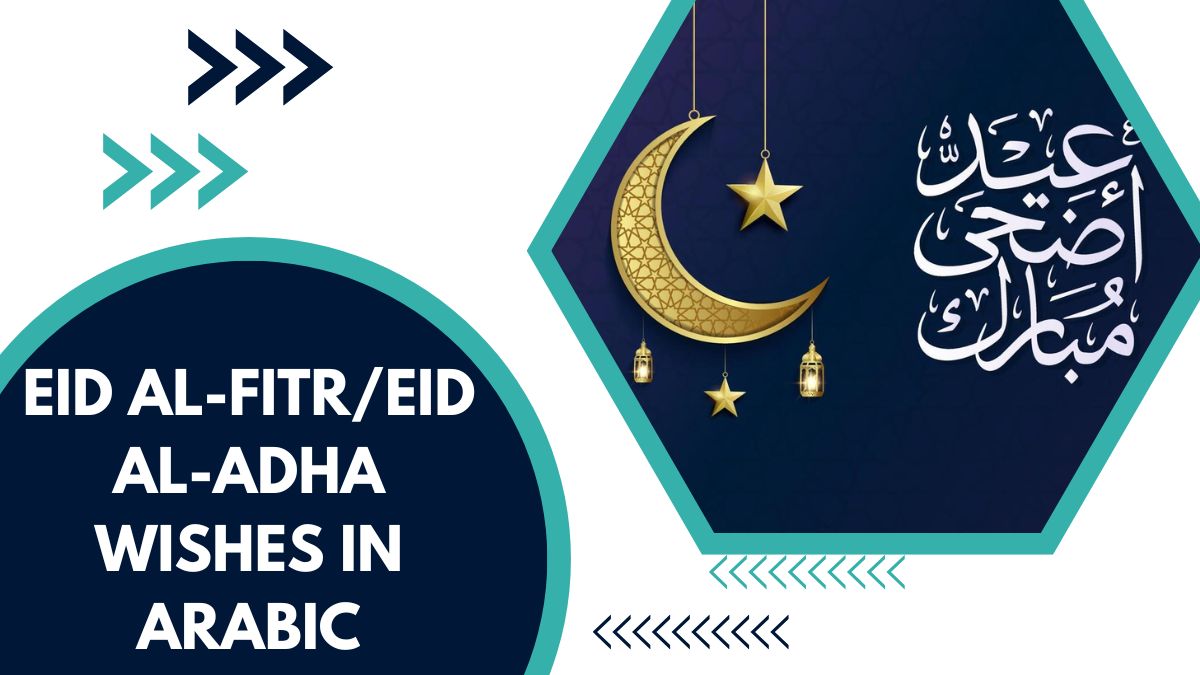
The Eid Al-Fitr, is one of the happiest and most meaningful celebrations in the Islamic world. After a full month of fasting during Ramadan, Muslims gather with family and friends to celebrate with prayers, delicious food, sweets, gifts, and warm greetings.
Another major Islamic celebration is Eid al-Adha (عيد الأضحى). It honors the willingness of Prophet Ibrahim (Abraham) to sacrifice in obedience to God, and is marked by prayers, charity, and sharing food with family, friends, and those in need.
One of the most loved traditions during both Eids is exchanging heartfelt wishes. Arabic Eid greetings are not only beautiful in sound, but they also carry deep meanings of peace, blessings, and joy. From simple phrases like “Eid Mubarak” to longer spiritual wishes, these expressions help people share happiness and strengthen relationships.
In this guide, you will discover the most common Eid Al-Fitr wishes in Arabic, their meanings, when to use them, and how different Arab countries celebrate both Eid al-Fitr and Eid al-Adha through language and greetings.
Table of Contents
Why Are Eid Greetings Important in Arabic Culture?
In Arab and Islamic culture, words have strong emotional and spiritual value. During Eid al-Fitr, greeting others with kind words is considered part of spreading joy and maintaining good relationships.
People exchange Eid wishes to:
- Show love and respect
- Pray for blessings and happiness
- Strengthen family bonds
- Celebrate the completion of Ramadan
- Share positive feelings with others
Whether spoken face-to-face, sent through WhatsApp, or posted online, Eid greetings are an essential part of the celebration.
Master the script from day one with the Arabic Alphabet Course at Denk Arabisch and start reading with confidence.
The Most Common Eid Greeting in Arabic
One of the most beautiful traditions during Eid al-Fitr is exchanging warm greetings and heartfelt wishes with family, friends, and loved ones.
Eid Mubarak – عيد مبارك
The phrase “Eid Mubarak” is the most popular Eid greeting in the Muslim world.
Meaning:
- Eid = Celebration or festival
- Mubarak = Blessed
So the full meaning is:
“Blessed Eid”
This phrase is suitable for almost every situation:
- Family gatherings
- Text messages
- Social media captions
- Formal greetings
- Workplace conversations
Example:
عيد مبارك لكم ولعائلتكم
“Blessed Eid to you and your family.”
Understand the core of sentence structure with the Arabic Personal Pronouns Course at Denk Arabisch for better grammar.
Beautiful Alternative Ways to Say Happy Eid in Arabic
Arabic has many elegant Eid expressions that people use depending on the situation and country.
1. Eid Saeed – عيد سعيد
Meaning:
Happy Eid
This greeting is short, friendly, and easy for beginners to remember. It is commonly used between friends, classmates, neighbors, and family members during Eid visits and celebrations.
Common Uses:
- Casual greetings
- WhatsApp messages
- Social media comments
- Friendly conversations
Example:
عيد سعيد لكم جميعاً
“Happy Eid to all of you.”
2. Kul ‘Am Wa Antum Bikhair – كل عام وأنتم بخير
Meaning:
May you be well every year
This is one of the warmest and most respectful Eid greetings in Arabic. It expresses wishes for happiness, health, peace, and blessings every year.
People often use it during:
- Eid holidays
- Ramadan
- Islamic celebrations
- New Year greetings
- Family gatherings
Example:
كل عام وأنتم بخير وصحة وسعادة
“May you always remain in goodness, health, and happiness.”
3. Taqabbal Allah Minna Wa Minkum – تقبل الله منا ومنكم
Meaning:
May Allah accept from us and from you
This phrase carries deep spiritual meaning because it refers to Allah accepting worship, fasting, prayers, and good deeds after Ramadan.
It is especially common:
- After Eid prayers
- Between practicing Muslims
- During religious gatherings
- At the end of Ramadan
Example:
تقبل الله منا ومنكم صالح الأعمال
“May Allah accept our good deeds.”
4. Eidkum Mubarak – عيدكم مبارك
Meaning:
Blessed Eid to all of you
This version is used when speaking to a group, family, or community. It sounds warm, welcoming, and inclusive, which makes it very popular in public Eid greetings.
Common Uses:
- Family messages
- Community celebrations
- Social media posts
- Group chats
- Public announcements
Example:
عيدكم مبارك وعساكم من عواده
“Blessed Eid, and may you celebrate it again.”
5. Eid al-Fitr Mubarak – عيد الفطر مبارك
Meaning:
Blessed Eid al-Fitr
This greeting is specifically used during the Eid Al-Fitr. It directly mentions the occasion, making the message feel more personal and festive.
Common Uses:
- Eid al-Fitr greetings
- Greeting cards
- Social media captions
- Family messages
Example:
عيد الفطر مبارك عليكم وعلى أحبابكم
“Blessed Eid al-Fitr to you and your loved ones.”
Read also: Brother In Arabic – Your Guide For Arabic Language
6. A‘adahu Allahu ‘Alaykum Bil Khayr – أعاده الله عليكم بالخير
Meaning:
May Allah return it to you with goodness
This elegant expression is often used in formal or respectful Eid greetings. It carries a prayer for many future Eids filled with blessings and happiness.
Common Uses:
- Formal Eid wishes
- Greetings to elders
- Religious occasions
- Professional messages
Example:
أعاده الله عليكم بالصحة والسعادة
“May Allah return it to you with health and happiness.”
Connect your thoughts seamlessly using the Arabic Prepositions Course to bridge every sentence.
Learn Arabic with Denk Arabisch Academy
Speak and understand Arabic through a clear and effective learning system
Try a Free TrialEid Wishes Across Different Arab Countries
Although all Arabs celebrate Eid al-Fitr, each country has its own unique style of greeting.
Egyptian Arabic
كل سنة وانت طيب
May you stay well every year
Egyptians use this greeting in almost every celebration and holiday.
Gulf Arabic
عيدكم مبارك وعساكم من عواده
Blessed Eid, and may you celebrate it again
This expression is very common in Saudi Arabia, UAE, Kuwait, and other Gulf countries.
Levantine Arabic
كل عام وأنتم بخير
May you always be in goodness
Used widely in:
- Jordan
- Syria
- Lebanon
- Palestine
Moroccan Arabic
مبروك العيد
Happy or blessed Eid
Moroccan greetings are usually shorter and spoken quickly in Darija dialect.
Master the unique sounds and slang of your favorite region through the Arabic Dialect Courses and sound like a native.
How Arabs Usually Respond to Eid Greetings
When someone says “Eid Mubarak,” there are several polite responses you can use.
Common Replies
وأنتم بخير
“And may you be well too.”
الله يبارك فيك
“May Allah bless you.”
علينا وعليكم
“Upon us and you.”
وإياكم إن شاء الله
“And to you as well, God willing.”
These replies help continue the warm and respectful spirit of Eid conversations.
Arabic Eid Greetings for Family and Friends
People often choose more emotional messages for loved ones during Eid.
For Family
إلى عائلتي الغالية، عيدكم سعادة وفرحة لا تنتهي
“To my dear family, may your Eid be full of endless happiness and joy.”
For Friends
أصدقائي الأعزاء، أتمنى لكم عيداً مليئاً بالضحكات والذكريات الجميلة
“My dear friends, I wish you an Eid full of laughter and beautiful memories.”
For Parents
أمي وأبي، أسأل الله أن يديم عليكم الصحة والسعادة في كل عيد
“My mother and father, I pray that Allah blesses you with health and happiness every Eid.”
Perfect your calligraphy and stroke order in the Arabic Writing Course designed for clarity.
Using Arabic Eid Wishes on Social Media
Today, many people search for stylish Arabic Eid captions to post online during the Eid Al-Fitr.
Popular examples include:
- العيد فرحة تجمعنا
“Eid is a joy that brings us together.” - اللهم اجعل هذا العيد بداية لكل خير
“O Allah, make this Eid the beginning of every goodness.” - عيدكم حب وسلام
“May your Eid be filled with love and peace.” - أجمل أيام السنة هي أيام العيد
“The most beautiful days of the year are the days of Eid.”
These phrases are perfect for:
- Instagram captions
- Facebook posts
- WhatsApp stories
The Hidden Meaning Behind Eid Wishes
Eid greetings are not only social traditions — they also reflect important Islamic values.
When Muslims exchange Eid wishes, they are sharing:
- Gratitude to Allah
- Forgiveness and kindness
- Prayers for blessings
- Wishes for peace and prosperity
The celebration of Eid al-Fitr comes after Ramadan, which is a month focused on:
- Patience
- Worship
- Charity
- Self-discipline
That is why Eid greetings often include prayers and words of blessing.
Read also: Thank You In Arabic – The Ultimate Guide To Expressing Gratitude In Arabic
When Can You Say Eid Mubarak?
People usually start saying Eid Mubarak:
- After the Eid prayer
- On the morning of Eid
- Throughout the Eid holiday
The greeting is commonly used during:
- Family visits
- Phone calls
- Video chats
- Online messages
- Community gatherings
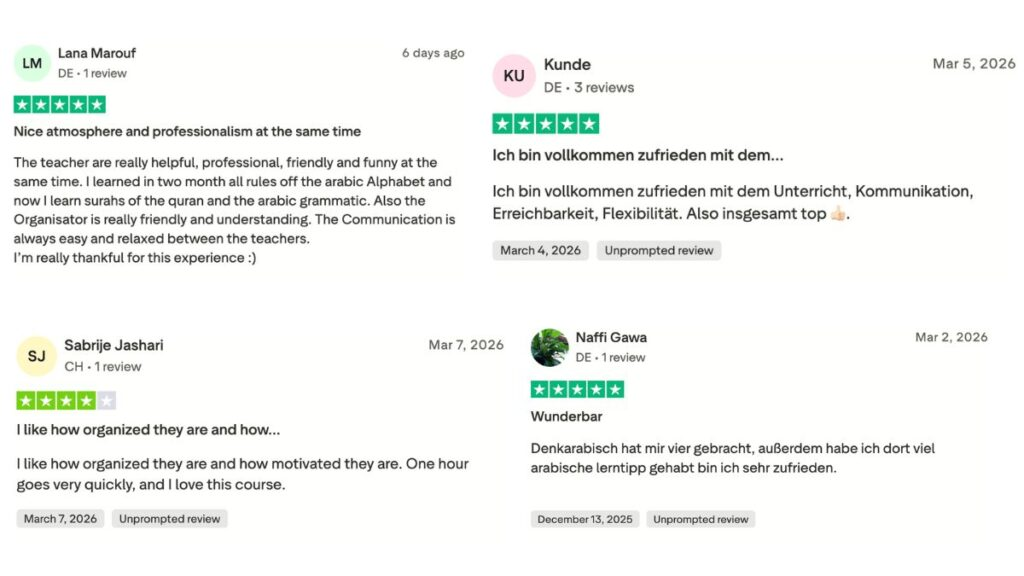
What Our Students Say About Denk Arabisch Academy
See what our students say about learning at Denk Arabisch Academy on Trustpilot. Read their experiences and check out more reviews to discover how our courses help improve Arabic.
Master the Arabic Language with Denk Arabisch
If you’ve always wanted to move beyond basic greetings and truly unlock the world of Arabic, now is the time to take the lead. Most people struggle with grammar and pronunciation for years, but Denk Arabisch provides the logical roadmap you need to achieve total fluency.
At Denk Arabisch, we bridge the gap between textbook theory and real-world mastery with our specialized Arabic Courses. We don’t just give you words; we give you the confidence to use them.
Why is Denk Arabisch the ultimate choice?
- Fast-Track Your Progress: Master the most essential Arabic Lessons designed to get you speaking from day one.
- Unlock the Region: Go beyond Modern Standard Arabic and dominate regional speech with our Arabic Dialect Courses.
- Precision and Clarity: Perfect your accent and grammar through a structured, visual approach that makes complex topics easy.
- Results-Oriented Training: Learn how to speak Arabic fluently using proven frameworks that stick.
- Total Accessibility: Whether you are starting from zero or refining professional skills, we have the perfect level for you.
Explore Our Specialized Arabic Courses
We offer a comprehensive range of Arabic Courses designed to take you from a complete beginner to a confident speaker:
- Arabic Courses Based On Skills: Master the essentials with our dedicated Arabic Alphabet Course, Arabic Reading Course, and Arabic Writing Course.
- Arabic Dialect Courses: Speak like a local by choosing from our Egyptian, Lebanese, Saudi, Moroccan, or Syrian Arabic Courses.
- Arabic Courses Based On Levels: Follow a structured path tailored to your current proficiency, ensuring steady and measurable progress.
- Quranic Arabic Course: Designed specifically for German speakers to understand the deep linguistic beauty of the Quran.
- Dive deep into the mechanics of the language with our Arabic Personal Pronouns Course and Arabic Prepositions Course.
👉 Don’t settle for being a spectator. Whether for career advancement, deeper cultural connection, or travel, Denk Arabisch is the engine that will drive your success.
Enroll today and transform your Arabic skills forever!
Learn Arabic with Denk Arabisch Academy
Speak and understand Arabic through a clear and effective learning system
Try a Free TrialConclusion
Eid Al-Fitr wishes in Arabic are a beautiful reflection of Islamic culture, kindness, and celebration. Whether you use “Eid Mubarak,” “Eid Saeed,” or “Kul ‘Am Wa Antum Bikhair,” every phrase carries feelings of warmth, blessings, and joy.
These greetings help people reconnect with loved ones, celebrate the end of Ramadan, and spread positivity during one of the most special times of the year.
By learning Arabic Eid wishes, you are not only learning vocabulary — you are also discovering the culture, emotions, and traditions behind the language.
عيد مبارك وكل عام وأنتم بخير
“Blessed Eid, and may you always remain in happiness and goodness.”
FAQs
1. Can non-Muslims say Eid Mubarak?
Yes, absolutely. Saying Eid Mubarak is considered respectful and kind, and many non-Muslims use it to celebrate with Muslim friends and colleagues.
2. What is the difference between Eid Mubarak and Happy Eid?
“Eid Mubarak” means “Blessed Eid,” while “Happy Eid” is a simple English greeting. The Arabic version carries stronger cultural and spiritual meaning.
3. Can I use Eid Mubarak for both Islamic Eids?
Yes. Eid Mubarak is used for both:
Eid al-Fitr
Eid al-Adha
4. What is the most common Eid greeting in Arabic?
The most common greeting is:
عيد مبارك
5. Is Eid Saeed formal or informal?
Eid Saeed is usually more casual and friendly, while Eid Mubarak works in both formal and informal situations.