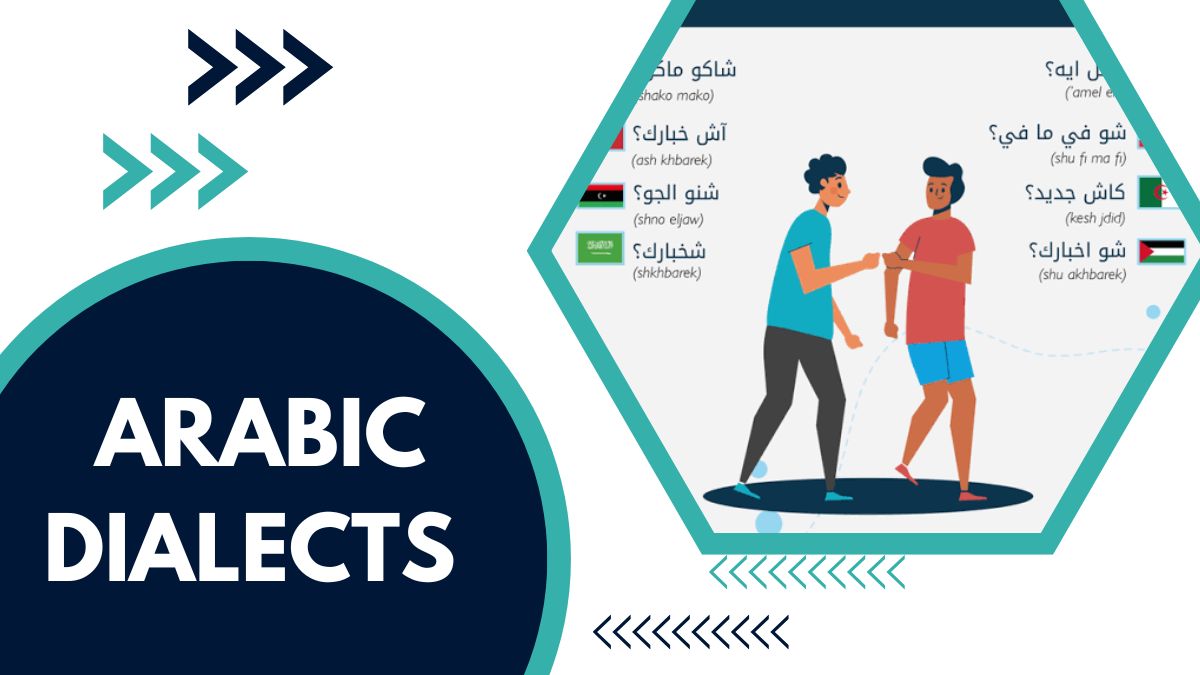
Arabic is one of the world’s most widely spoken languages, serving as the native language of more than 400 million people across the Middle East and North Africa. While many learners begin their journey with Modern Standard Arabic (MSA), they quickly discover that everyday conversations often sound quite different from what they have learned in textbooks. This difference exists because Arabic is not a single uniform spoken language. Instead, it consists of numerous regional varieties known as Arabic dialects.
Understanding Arabic dialects is essential for anyone interested in learning Arabic, traveling to Arabic-speaking countries, conducting business in the region, or exploring Arab culture. In this comprehensive guide, we’ll examine what Arabic dialects are, how they developed, the major dialect groups, and which dialect may be best for learners.
Table of Contents
What Are Arabic Dialects?
Arabic dialects are regional forms of Arabic that have evolved over centuries among different populations. While all dialects share roots in Classical Arabic and Modern Standard Arabic, they differ significantly in pronunciation, vocabulary, grammar, and expressions.
Modern Standard Arabic serves as the formal written language used in:
- Newspapers
- Books
- Government documents
- News broadcasts
- Formal speeches
- Academic writing
However, people rarely use Modern Standard Arabic in everyday conversations. Instead, they communicate using local dialects that reflect their country’s history, culture, and linguistic influences.
For example, a speaker from Morocco may find it challenging to understand casual speech from Iraq, despite both speaking Arabic.
Why Are There So Many Arabic Dialects?
The diversity of Arabic dialects developed over more than fourteen centuries as Arabic spread across different regions.
Several factors contributed to the emergence of distinct dialects:
Geographic Distance
Arabic-speaking countries span a vast area from the Atlantic Ocean in the west to the Arabian Gulf in the east. Geographic separation allowed local speech patterns to develop independently.
Historical Influences
Various civilizations influenced Arabic-speaking regions throughout history. Languages such as:
- Berber
- Turkish
- Persian
- French
- Spanish
- English
- Italian
left their mark on local dialects.
Cultural Differences
Each region developed its own customs, traditions, and ways of expression, contributing unique vocabulary and idioms to its dialect.
Colonization and Trade
Trade routes and colonial periods introduced new words and pronunciation patterns into local varieties of Arabic.
As a result, today’s Arabic dialects form a rich linguistic landscape that reflects centuries of cultural interaction.
Establish an unshakeable foundation in the language and gain immediate speaking confidence through a premium Arabic Course For Beginners at Denk Arabisch engineered specifically for busy professional schedules.
The Relationship Between Modern Standard Arabic and Dialects
One of the most interesting features of Arabic is diglossia.
Diglossia refers to the coexistence of two language varieties:
Modern Standard Arabic (MSA)
Used for:
- Writing
- Formal communication
- Education
- Media
- Religious discussions
Colloquial Arabic Dialects
Used for:
- Daily conversations
- Family interactions
- Social media
- Entertainment
- Informal settings
Most native Arabic speakers switch between these varieties depending on the situation.
For example, a news anchor may speak Modern Standard Arabic during a broadcast but switch to a local dialect when speaking with friends.
Major Arabic Dialect Groups
Although there are many local variations, Arabic dialects are generally classified into several major groups.
Egyptian Arabic
Egyptian Arabic is perhaps the most widely understood Arabic dialect.
It is spoken primarily in Egypt and has gained widespread recognition due to Egypt’s influential film, television, and music industries.
Characteristics include:
- Relatively clear pronunciation
- Extensive media exposure
- Large number of speakers
- Rich cultural influence
Common phrase:
إزيك؟
Transliteration: Izzayyak?
Meaning: How are you?
Many Arabic learners choose Egyptian Arabic because of its popularity and accessibility.
Levantine Arabic
Levantine Arabic is spoken in:
- Syria
- Lebanon
- Jordan
- Palestine
This dialect group is highly popular among learners due to its widespread use and relatively smooth pronunciation.
Characteristics include:
- Soft pronunciation
- Common use in television dramas
- High mutual intelligibility within the Levant
Example:
كيفك؟
Transliteration: Keefak?
Meaning: How are you?
Levantine Arabic is often considered one of the easiest dialects for communication across the Arab world.
Gulf Arabic
Gulf Arabic is spoken in:
- Saudi Arabia
- United Arab Emirates
- Kuwait
- Bahrain
- Qatar
- Oman
Characteristics include:
- Distinct pronunciation patterns
- Bedouin linguistic influences
- Vocabulary unique to the Gulf region
Example:
شلونك؟
Transliteration: Shlonak?
Meaning: How are you?
The growing economic importance of Gulf countries has increased interest in learning Gulf Arabic.
Claim your absolute mastery over genuine conversational speech right now; secure your spot in our popular Arabic Dialect Courses at Denk Arabisch before registration windows close for the season!
Iraqi Arabic
Iraqi Arabic has developed unique features due to historical contact with Persian, Turkish, and other neighboring languages.
Characteristics include:
- Distinct pronunciation
- Unique vocabulary
- Rich literary heritage
Example:
شلونك؟
Transliteration: Shlonak?
Meaning: How are you?
Although Iraqi Arabic shares similarities with Gulf dialects, it remains a distinct variety with its own identity.
Read also: Key Quranic Vocabulary
Maghrebi Arabic
Maghrebi Arabic refers to dialects spoken in:
- Morocco
- Algeria
- Tunisia
- Libya
- Mauritania
These dialects are often considered the most challenging for learners and other Arabic speakers.
Reasons include:
- Heavy influence from Berber languages
- French and Spanish loanwords
- Significant pronunciation differences
- Rapid speech patterns
For example, Moroccan Arabic (Darija) often shortens vowels and combines sounds in ways unfamiliar to speakers of eastern dialects.
Despite these challenges, Maghrebi dialects are vibrant and culturally rich.
Sudanese Arabic
Sudanese Arabic is spoken primarily in Sudan.
Characteristics include:
- Distinct pronunciation
- Unique vocabulary
- Influences from indigenous African languages
Many Arabic speakers consider Sudanese Arabic relatively easy to understand due to its moderate speech patterns.
Yemeni Arabic
Yemeni Arabic is among the oldest Arabic dialect groups and preserves many ancient linguistic features.
Characteristics include:
- Conservative grammatical structures
- Distinct pronunciation
- Historical significance
Due to Yemen’s geography and tribal diversity, numerous local varieties exist within the country.
Learn Arabic with Denk Arabisch Academy
Speak and understand Arabic through a clear and effective learning system
Try a Free TrialHow Different Are Arabic Dialects?
The degree of difference between dialects varies considerably.
Speakers from neighboring countries often communicate easily. However, communication may become more difficult between distant regions.
For example:
- Egyptians generally understand Levantine Arabic fairly well.
- Gulf and Iraqi speakers often communicate with relative ease.
- Moroccan and Algerian dialects may be difficult for speakers from Egypt or the Gulf to understand.
When misunderstandings occur, speakers frequently switch toward a more neutral form of Arabic or incorporate Modern Standard Arabic vocabulary.
Ensure your time and capital are perfectly optimized by choosing our premium Arabic Courses Based On Levels at Denk Arabisch supervised by world-class native instructional mentors.
Shared Features Across Arabic Dialects
Despite their differences, Arabic dialects share many common elements.
Common Vocabulary
Many essential words remain similar across dialects.
Examples include:
- كتاب (book)
- بيت (house)
- ماء (water)
- شمس (sun)
- قمر (moon)
Shared Grammar Foundations
Most dialects preserve core grammatical structures inherited from Classical Arabic.
Common Cultural Expressions
Religious and cultural phrases are widely understood throughout the Arabic-speaking world.
Examples include:
- الحمد لله
- إن شاء الله
- ما شاء الله
- جزاك الله خيراً
These expressions help create a shared linguistic identity among Arabic speakers.
Bring profound spiritual growth directly into your weekly home routine and join our premier Quranic Arabic Course for German Speakers at Denk Arabisch today before current cohorts hit capacity!
Which Arabic Dialect Should You Learn?
The best dialect depends on your goals.
Learn Egyptian Arabic If:
- You enjoy Egyptian films and television.
- You want a widely understood dialect.
- You are interested in Egyptian culture.
Learn Levantine Arabic If:
- You want conversational flexibility.
- You plan to visit Jordan, Lebanon, Syria, or Palestine.
- You prefer a dialect commonly taught to foreigners.
Learn Gulf Arabic If:
- You work with Gulf countries.
- You plan to live in the Arabian Gulf.
- Your career involves business in the region.
Learn Maghrebi Arabic If:
- You live in North Africa.
- You frequently interact with Moroccan, Algerian, or Tunisian speakers.
Learn Modern Standard Arabic First If:
- Your primary goal is reading and writing.
- You want access to literature and media.
- You seek a foundation that supports learning multiple dialects later.
Many language experts recommend studying Modern Standard Arabic alongside a spoken dialect for maximum effectiveness.
Enhance your career readiness or academic depth immediately by enrolling in specialized Arabic Courses Based On Skills & Topics at Denk Arabisch focused entirely on high-yield, real-world results.
Read also: Family Vocabulary – Essential Words And Phrases For Talking About Family
Challenges of Learning Arabic Dialects
Learning dialects presents unique challenges.
Limited Learning Resources
Compared to Modern Standard Arabic, some dialects have fewer textbooks and courses available.
Lack of Standardized Writing
Many dialects are primarily spoken rather than formally written.
Regional Variation
Even within the same country, accents and vocabulary can vary significantly.
Media Exposure
Learners may encounter multiple dialects through movies, television shows, and social media.
While these challenges exist, modern language-learning platforms have made dialect study more accessible than ever.
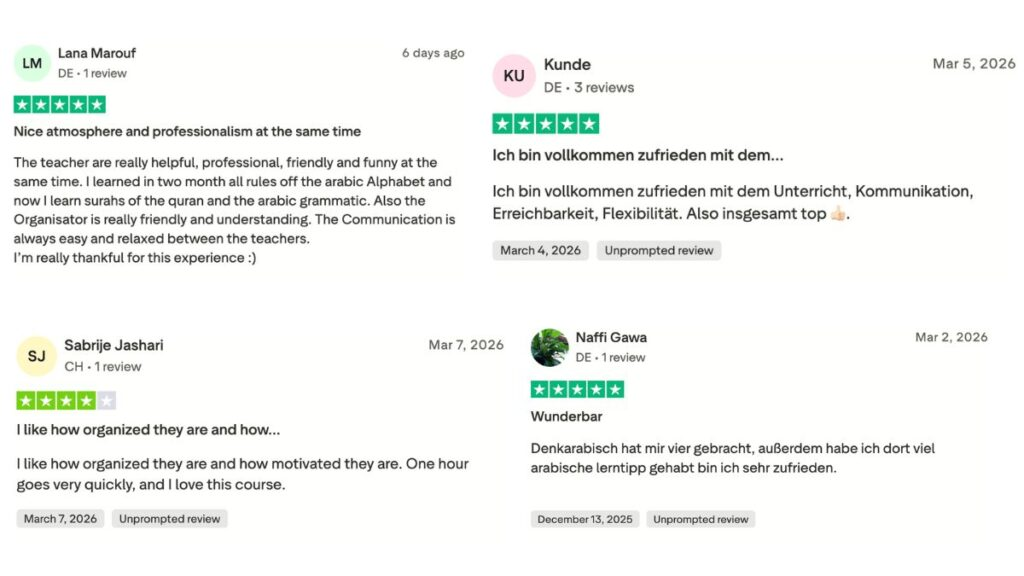
What Our Students Say About Denk Arabisch Academy
See what our students say about learning at Denk Arabisch Academy on Trustpilot. Read their experiences and check out more reviews to discover how our courses help improve Arabic.
Your Arabic Journey with Denk Arabisch
Let’s skip the pleasantries: you are reading this because your current approach to learning Arabic isn’t working. Relying on basic vocabulary apps and saving random social media tutorials doesn’t make you fluent—it just gives you a false sense of security. If you are ready to stop looking at translated subtitles, stop feeling left out of conversations, and finally master the language, you need to abandon the unorganized trial-and-error and embrace an elite framework.
Our premium, live interactive tracks are officially opening their doors for the new term. To ensure absolute conversational focus and individual feedback, we restrict classroom entry heavily. Once these small cohorts are locked, registration closes completely for the entire semester.
The Courses:
- Arabic Course For Beginners: Stop viewing the Arabic script as an obstacle. Our streamlined, high-velocity blueprint throws out dry textbook repetition to get you actively speaking, thinking, and framing complete sentences right from your first live class.
- Quranic Arabic Course for German Speakers: Experience the profound, moving depth of the classical text exactly as it was revealed. This curriculum is engineered to eliminate the unique grammatical friction between German and Arabic, granting you a direct, authentic connection to the words of Allah.
- Arabic Courses Based On Skills & Topics: High-efficiency training for individuals who value their time. Skip the filler material and target the exact linguistic areas you need—whether that’s advanced professional communication, deep grammar mechanics, or media comprehension.
- Arabic Dialect Courses: Ditch the formal, stiff broadcast phrasing that native speakers don’t use in daily life. Dive straight into vibrant, authentic street dialogue so you can joke, negotiate, and connect naturally across target regions.
- Arabic Courses Based On Levels: No more moving at the pace of the slowest student or repeating basic overviews. We run a precise assessment of your existing threshold and slot you right into the ideal tier to keep your learning curve moving up without a single pause.
Why spend another year wishing you spoke the language when you can train live under the direction of handpicked, elite native instructors? Denk Arabisch strips away the overwhelm and guarantees a structured online schedule that fits effortlessly around your high-pressure career or university studies.
The longer you hesitate, the harder it is to start. Click the link below and lock in your premium live spot before enrollment cuts off completely!
👉 [Secure Your Live Classroom Spot & Start Your Free Trial Now!]
Learn Arabic with Denk Arabisch Academy
Speak and understand Arabic through a clear and effective learning system
Try a Free TrialConclusion
Arabic dialects represent one of the most fascinating aspects of the Arabic language. From Egyptian Arabic and Levantine Arabic to Gulf Arabic and Moroccan Darija, each dialect reflects the history, culture, and experiences of its speakers. Although differences in pronunciation, vocabulary, and grammar can sometimes create communication challenges, all Arabic dialects share deep roots in a common linguistic heritage.
For language learners, understanding Arabic dialects opens the door to authentic conversations, cultural immersion, and meaningful connections with Arabic speakers across the globe. Whether you choose Egyptian, Levantine, Gulf, or another variety, learning an Arabic dialect will greatly enhance your ability to communicate naturally and confidently in the Arab world.
FAQs
1. What is the most widely understood Arabic dialect?
Egyptian Arabic is generally considered the most widely understood dialect due to Egypt’s large population and influential media industry.
2. Are Arabic dialects different from Modern Standard Arabic?
Yes. Modern Standard Arabic is used for formal writing and official communication, while dialects are used in everyday speech.
3. Which Arabic dialect is easiest to learn?
Many learners find Levantine Arabic and Egyptian Arabic among the easiest dialects due to the availability of learning resources and widespread understanding.
4. Can Arabic speakers understand all dialects?
Not always. Speakers from neighboring regions often understand each other well, but communication can be more challenging between distant dialects such as Moroccan Arabic and Iraqi Arabic.
5. Should beginners learn Modern Standard Arabic or a dialect first?
This depends on your goals. Modern Standard Arabic is useful for reading and formal communication, while a dialect is essential for everyday conversation.