Learning the Quran is one of the most rewarding journeys a Muslim can undertake. The Quran is not only the holy book of Islam but also a source of guidance, wisdom, spiritual growth, and closeness to Allah.
Whether you are a beginner learning the Arabic alphabet, someone striving to improve Quran recitation, or a student aiming to memorize the Quran, understanding the right approach can make the journey easier and more effective.
Many people wonder how to learn the Quran correctly, especially when balancing studies, work, family responsibilities, and other commitments. The good news is that with sincerity, consistency, and proper guidance, anyone can make steady progress in learning the Quran.
In this comprehensive guide, we will explore the best methods, practical steps, and proven strategies to help you learn the Quran effectively.

Table of Contents
Step 1: Set a Clear Intention
Every successful Quran learning journey begins with a sincere intention. In Islam, actions are judged by intentions, which means the purpose behind learning the Quran is just as important as the learning itself.
Before starting, take time to reflect on why you want to learn the Quran. Your primary goal should be to seek Allah’s pleasure, understand His message, and implement His guidance in your daily life.
A sincere intention transforms the learning process into an act of worship and helps maintain motivation over the long term.
There will inevitably be moments when progress feels slow or challenges arise. During these times, a strong and sincere intention serves as a reminder of your purpose and encourages you to continue striving.
Ask yourself:
- Do I want to improve my recitation?
- Do I want to understand the Quran?
- Do I want to memorize it?
- Do I want to strengthen my relationship with Allah?
Having a clear purpose makes the learning process more meaningful, structured, and rewarding.
Step 2: Learn the Arabic Alphabet
For beginners, the first practical step toward learning the Quran is mastering the Arabic alphabet. Since the Quran was revealed in Arabic, understanding the letters and their sounds is essential for reading correctly.
Start by learning:
- Letter names
- Letter sounds
- Letter shapes
- Connected forms of letters
- Basic pronunciation
Arabic letters often change shape depending on their position within a word, which can initially seem challenging. However, with consistent practice, recognizing these forms becomes much easier.
It is important to focus on mastering each letter individually before progressing to words and sentences. Developing a strong foundation at this stage prevents many common reading mistakes later on.
Many students begin with Noorani Qaida or similar foundational books specifically designed to introduce Quran reading skills gradually. These resources provide structured lessons that help learners move confidently from recognizing letters to reading complete Quranic words.
Step 3: Learn Proper Quran Pronunciation
Correct pronunciation is one of the most important aspects of Quran learning because even a small change in pronunciation can alter the meaning of a word. This is why Muslims place great emphasis on reciting the Quran exactly as it was revealed.
This is where Tajweed becomes essential.
Tajweed refers to the set of rules that govern Quran recitation and ensure every letter is pronounced from its correct articulation point with the appropriate characteristics.
Key areas include:
- Makharij (articulation points)
- Letter characteristics
- Elongation rules
- Stopping and starting rules
- Rules of Noon Sakinah and Meem Sakinah
Learning Tajweed may seem overwhelming at first, but it becomes manageable when studied gradually. By applying one rule at a time and practicing regularly, students steadily improve the beauty, accuracy, and confidence of their recitation.
Proper pronunciation not only preserves the meaning of the Quran but also allows learners to experience the beauty and rhythm of its recitation as intended.
Step 4: Find a Qualified Quran Teacher
While self-study can be beneficial, learning from a qualified Quran teacher often leads to faster and more accurate progress. A knowledgeable teacher can identify mistakes that students may not notice on their own and provide personalized guidance tailored to their needs.
A teacher can:
- Correct mistakes immediately
- Improve pronunciation
- Teach Tajweed properly
- Provide structured lessons
- Track progress
- Offer encouragement
One of the greatest advantages of studying with a teacher is receiving instant feedback. Instead of repeating mistakes for months, students can correct them early and build strong recitation habits from the beginning.
Today, online Quran classes have made learning more accessible than ever. Students from around the world can connect with experienced Quran teachers without needing to travel. This flexibility allows learners to study according to their schedules while still benefiting from professional instruction.
A supportive teacher not only improves technical skills but also helps maintain motivation and consistency throughout the learning journey.
Step 5: Establish a Consistent Learning Schedule
Consistency is one of the most important factors in successful Quran learning. Many students mistakenly believe they need to study for several hours each day to make progress. In reality, small daily efforts often produce better results than occasional long study sessions.
Even 20–30 minutes of focused practice each day can lead to remarkable improvement over time.
Consider creating a schedule such as:
Beginner Level
- 20 minutes reading practice
- 10 minutes revision
Intermediate Level
- 30 minutes recitation
- 15 minutes Tajweed practice
Advanced Level
- Memorization session
- Revision session
- Tafsir study
A structured schedule helps create positive habits and ensures steady progress. It also prevents long breaks that can lead to forgetting previously learned material.
Try to study at the same time each day whenever possible. Many learners find that consistency becomes easier when Quran study is incorporated into their daily routine after Fajr or before bedtime.
Daily practice strengthens retention, improves fluency, and develops a lifelong relationship with the Quran.
Stop guessing if your pronunciation is correct; dominate every single articulation rule inside our elite Quran Tajweed Course at Denk Arabisch under the direct guidance of native scholars.
Step 6: Learn Quran Reading Fluently
After mastering the Arabic alphabet and basic pronunciation, the next important milestone is developing fluency in Quran reading. Fluency means being able to read Quranic verses smoothly, confidently, and accurately without excessive hesitation.
This skill allows learners to focus more on understanding and reflecting upon the words of Allah rather than struggling with individual letters and sounds.
Building fluency takes time and patience. Every proficient Quran reader started as a beginner, and consistent practice is the key to long-term success. The more frequently you read, the more familiar you become with Quranic vocabulary, sentence structures, and recitation patterns.
To improve fluency:
Read Regularly Every Day
Daily exposure to the Quran is one of the most effective ways to improve reading skills. Even reading a few verses each day helps strengthen recognition of words and increases reading confidence over time. Consistency is far more beneficial than reading large portions only occasionally.
Repeat Verses Multiple Times
Repetition helps reinforce pronunciation, improve accuracy, and increase familiarity with challenging passages. Reading the same verses several times allows learners to recognize patterns and reduces hesitation during future recitations.
Listen to Skilled Quran Reciters
Listening to experienced reciters exposes learners to proper pronunciation, rhythm, and Tajweed application. Following along while listening can significantly improve reading ability and help students imitate correct recitation styles.
Conquer the Arabic script from day one when you join our high-velocity Quran Reading Course at Denk Arabisch and eliminate the frustration of stumbling through words forever.
Read also: Learning The Quranic Alphabet
Step 7: Understand the Meaning of the Quran
Learning to recite the Quran correctly is a tremendous achievement, but understanding its message is equally important. The Quran was revealed as guidance for humanity, and reflecting upon its meanings enables believers to strengthen their faith and apply Allah’s teachings in their daily lives.
When Muslims understand what they are reciting, their prayers become more meaningful, their connection with Allah deepens, and their appreciation for the Quran increases significantly.
Understanding the Quran transforms recitation from a mechanical activity into a deeply spiritual experience. Ways to improve understanding include:
Reading Reliable Translations
Translations help learners access the meanings of Quranic verses, especially if they are not yet proficient in Arabic. Reading trusted translations provides valuable insight into Allah’s message and helps establish a foundation for deeper study.
Studying Tafsir (Quranic Explanation)
Tafsir explains the context, lessons, historical background, and wisdom behind Quranic verses. It helps readers understand not only what the verses mean but also why they were revealed and how they should be applied.
Learning Quranic Vocabulary
Many words and phrases appear repeatedly throughout the Quran. Learning common Quranic vocabulary gradually increases comprehension and allows learners to recognize meanings directly from the Arabic text.
Learn the Quran with Denk Arabisch Academy
Master reading and understanding the Quran through structured and supportive learning
Try a Free TrialStep 8: Memorize the Quran Step by Step
Many Muslims dream of memorizing the Quran and becoming a Hafiz. While this goal may seem overwhelming at first, successful memorization is achieved through small, consistent efforts over time.
The key to Quran memorization is patience, dedication, and regular revision. Rather than focusing on large amounts of material, learners should prioritize consistency and quality.
Start Small
Begin with shorter surahs from Juz Amma, which are generally easier to memorize and frequently recited in prayer.
Examples include:
- Surah Al-Fatihah
- Surah Al-Ikhlas
- Surah Al-Falaq
- Surah An-Nas
Starting with shorter chapters helps build confidence and establishes effective memorization habits.
Use Repetition
Repetition is the foundation of memorization. Reciting each verse multiple times strengthens retention and helps transfer the words from short-term memory into long-term memory.
Review Regularly
Many students discover that revision is even more important than memorization itself. Without regular review, previously memorized passages can easily be forgotten. A balanced schedule should include both memorization and revision sessions.
Memorize Daily
Even memorizing one verse per day can produce remarkable results over months and years. Small daily efforts accumulate into significant achievements and help maintain consistency.
Successful memorization is not about speed; it is about persistence. Every verse learned is a step closer to building a lifelong relationship with the Quran.
Stop letting your Hifz goals remain a distant dream; enroll in our Quran Memorization Course at Denk Arabisch today and build an unshakeable, permanent connection to the text that you will never forget.
Step 9: Listen to Quran Recitation Frequently
Listening to skilled reciters helps improve pronunciation, fluency, and memorization.
Popular reciters include:
- Mishary Rashid Alafasy
- Abdul Basit Abdus Samad
- Maher Al Muaiqly
- Saad Al Ghamdi
Listening regularly trains the ear and helps learners internalize proper recitation patterns.
Many students listen during commutes, exercise, or daily routines.
Transform your reading into a beautiful, soul-stirring melody with our premium Quran Recitation Course at Denk Arabisch and finally recite the holy text with absolute authority and confidence.
Read also: Quran Memorization For Men – Full Guide
Step 10: Apply What You Learn
The ultimate goal of learning the Quran is not simply reading or memorizing it but implementing its teachings.
The Quran teaches:
- Honesty
- Patience
- Gratitude
- Kindness
- Justice
- Forgiveness
- Compassion
Applying these values strengthens faith and brings the Quran to life in everyday actions.
Knowledge becomes truly beneficial when it influences behavior and character.
Common Challenges When Learning the Quran
One of the most common obstacles for Quran learners today is balancing their studies with work, school, family responsibilities, and daily commitments, making consistent practice seem difficult.
Lack of Time
Many learners struggle to find time.
Solution: Dedicate a fixed daily period, even if it is only 15 minutes.
Difficulty with Arabic Pronunciation
Some sounds may be unfamiliar.
Solution: Practice consistently with a qualified teacher and listen carefully to native reciters.
Forgetting Memorized Verses
This is a common challenge.
Solution: Increase revision and maintain a regular review schedule.
Losing Motivation
Progress can sometimes feel slow.
Solution: Focus on small achievements and remember the immense rewards promised by Allah.
Tips for Faster Quran Learning
To maximize progress:
- Set realistic goals.
- Study daily.
- Learn from a qualified teacher.
- Practice Tajweed consistently.
- Listen to Quran recitation regularly.
- Review frequently.
- Make dua for success.
- Stay patient and persistent.
Small efforts performed consistently often produce the greatest long-term results.
Learning Quran Online
Online Quran learning has become increasingly popular due to its flexibility and accessibility.
Benefits include:
- Flexible scheduling
- One-on-one instruction
- Access to qualified teachers worldwide
- Comfortable learning environment
- Personalized lesson plans
- Affordable learning options
Online classes are particularly helpful for children, adults, and busy professionals seeking structured Quran education.
The Spiritual Rewards of Learning the Quran
Every effort invested in learning the Quran carries immense rewards.
The Quran serves as:
- A source of guidance.
- A means of earning Allah’s pleasure.
- A companion in daily life.
- A source of blessings and mercy.
- A path toward spiritual growth.
Every letter recited earns reward, making even small daily efforts highly valuable in the sight of Allah.
Read also: The Best Among You Is The One Who Learns And Teaches The Quran
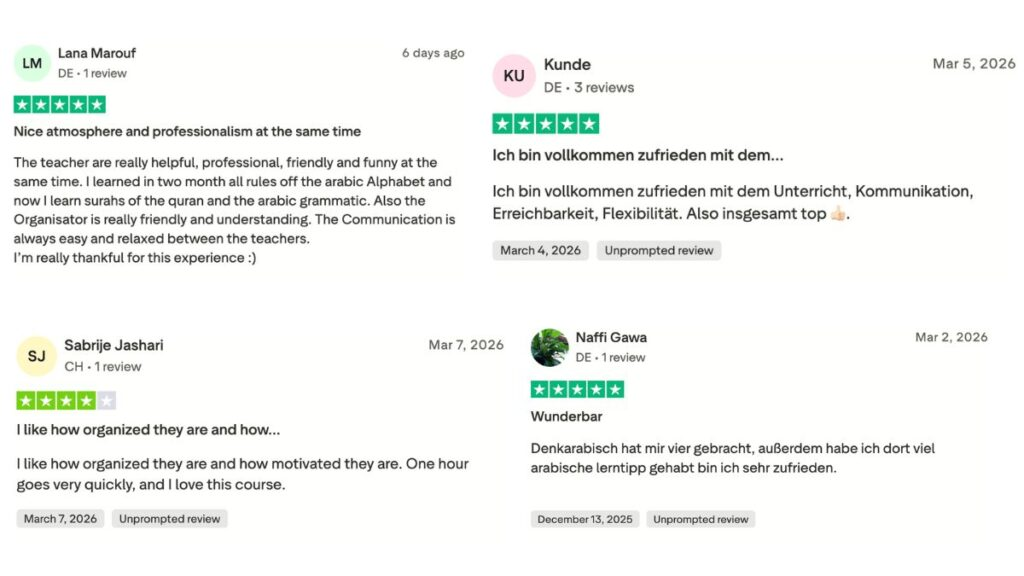
What Our Students Say About Denk Arabisch Academy
See what our students say about learning at Denk Arabisch Academy on Trustpilot. Read their experiences and check out more reviews to discover how our courses help improve Arabic.
Join Denk Arabisch!
Watching scattered online videos will never give you the confidence, fluency, and precision required to truly connect with the Book of Allah.
If you are serious about mastering Quran recitation, memorization, Tajweed, and Islamic knowledge, you need a proven system, qualified teachers, and live accountability.
At Denk Arabisch, we don’t offer ordinary online classes. We provide premium Quran education designed for students who refuse to settle for average results.
To maintain exceptional teaching quality and personalized attention, every class has a strict enrollment limit. Once a course reaches capacity, registration closes immediately.
The Courses we offer:
- Quran Memorization Course: Our structured memorization program combines daily guidance, effective retention techniques, and personalized review schedules to help you memorize with confidence and preserve what you’ve learned.
- Quran Reading Course: Our step-by-step reading course takes complete beginners from recognizing Arabic letters to reading Quranic verses smoothly and confidently.
- Quran Tajweed Course: Learn the rules of articulation, elongation, stopping points, and proper pronunciation directly from experienced Quran instructors.
- Quran Recitation Course: Learn how to recite with clarity, beauty, and correctness while eliminating bad habits that hold many students back for years.
- Islamic Studies Course: Our Islamic Studies Course provides a comprehensive foundation in Aqeedah, Fiqh, Seerah, Hadith, Islamic manners, and daily worship.
Our live classes are intentionally kept small to ensure every student receives direct guidance, personal feedback, and consistent support.
When enrollment reaches capacity, registration closes and new students must wait for the next intake period.
The question is simple: Will you spend another year wishing you had started, or will you finally take the step that transforms your Quran journey?
Thousands dream about reading, understanding, memorizing, and reciting the Quran better.
👉 Secure Your Spot Today & Start Your Free Trial Before Classes Fill Up!
Learn the Quran with Denk Arabisch Academy
Master reading and understanding the Quran through structured and supportive learning
Try a Free TrialConclusion
Learning the Quran is a lifelong journey filled with blessings, knowledge, and spiritual growth. Whether your goal is to read fluently, improve Tajweed, understand meanings, or memorize the Quran, success comes through sincerity, consistency, and proper guidance.
Begin with a clear intention, establish a daily routine, seek help from qualified teachers, and remain patient throughout the process. Every step you take brings you closer to Allah and deepens your connection with His divine words.
Remember that learning the Quran is not about speed but about steady progress and meaningful understanding. Start today, remain consistent, and trust that every effort you make will be rewarded by Allah.
FAQs
1. How can a beginner start learning the Quran?
A beginner should start by learning the Arabic alphabet, recognizing letter shapes, and practicing basic pronunciation. After mastering the fundamentals, they can progress to reading simple Quranic words, studying Tajweed rules, and reciting short surahs with the guidance of a qualified teacher.
2. What is the best way to learn Quran online?
The best way to learn Quran online is through structured lessons with an experienced Quran teacher. Online classes provide personalized guidance, pronunciation correction, Tajweed instruction, and flexible scheduling, making Quran learning accessible from anywhere in the world.
3. How long does it take to learn the Quran?
The time required depends on your goals and dedication. Learning to read the Quran may take a few months, while mastering Tajweed, understanding meanings, or memorizing the entire Quran can take several years. Consistent daily practice is the key to steady progress.
4. Can I learn the Quran without knowing Arabic?
Yes, you can learn to read the Quran without being fluent in Arabic. Many non-Arabic speakers successfully learn Quran recitation through phonetics, Tajweed lessons, and guidance from qualified teachers. However, learning Arabic can greatly enhance your understanding of the Quran’s message.
5. What is Tajweed, and why is it important?
Tajweed refers to the set of rules that govern the correct pronunciation and recitation of the Quran. It ensures that every letter is pronounced accurately and preserves the original way the ظQuran was revealed and recited by Prophet Muhammad (peace be upon him).