Embarking on the journey to read the Holy Quran in its original Arabic text is one of the most spiritually rewarding endeavors a person can undertake. Every letter uttered brings immense blessings, and every milestone achieved brings you closer to the divine word.
However, looking at the elegant, flowing script of the Arabic language can feel intimidating at first. You might wonder how a collection of unfamiliar shapes, dots, and accents transforms into the beautiful recitations you hear.
The secret lies in breaking it down to the absolute foundation: the Quranic alphabet. By mastering the individual letters, understanding how they change shape, and learning how vowels give them life, you will build a rock-solid foundation for fluent reading.
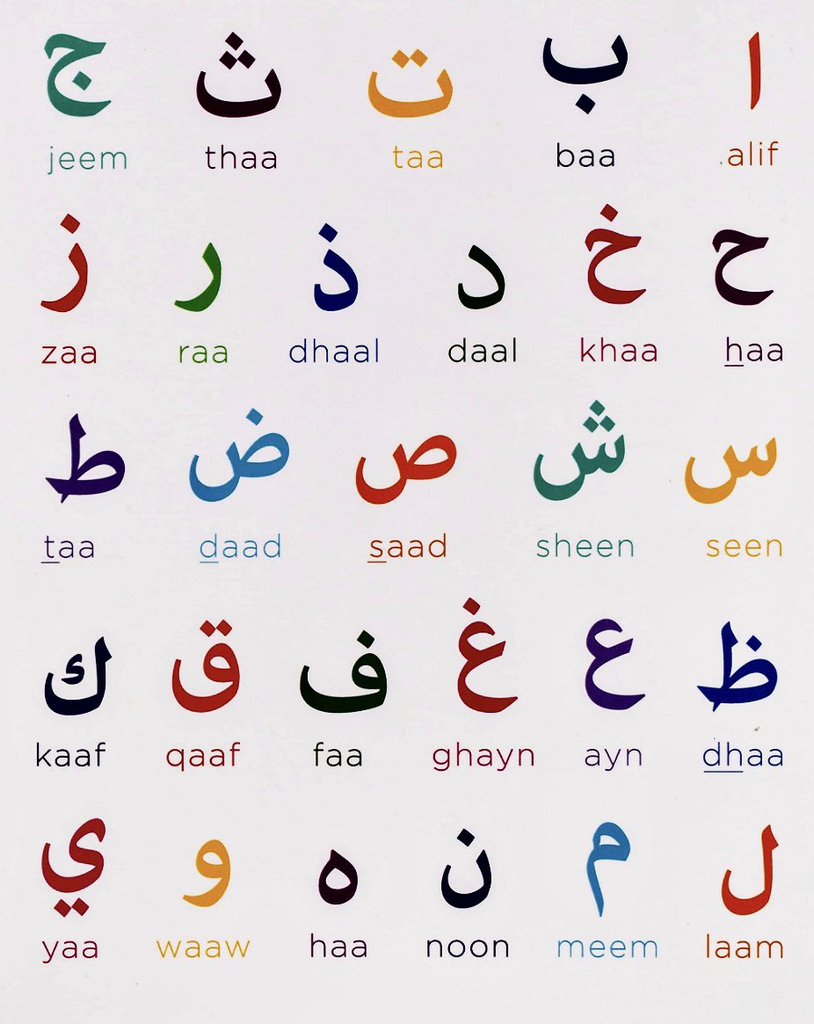
Table of Contents
1. Understand The The Reward of the Journey of Learning the Quranic Alphabet
Before diving into the letters themselves, it is helpful to understand the unique nature of the script you are about to learn.
The Reward of the Journey
In Islamic tradition, the effort put into learning is deeply cherished. The Prophet Muhammad (peace be upon him) noted that the one who recites the Quran beautifully, smoothly, and precisely will be in the company of the noble and obedient angels.
And for the one who recites with difficulty, stammering or stumbling through its verses, there is a double reward—one for the recitation and one for the dedication despite the hardship.
Sound vs. Transliteration
While many beginners rely on English transliterations (writing Arabic sounds using Latin letters) to read prayers or short verses, this method has severe limitations. Arabic contains distinct sounds that simply do not exist in English.
Relying on transliteration can lead to mispronunciations that alter the meaning of sacred words. Learning the alphabet ensures you capture the purity of the revelation.
Stop wasting hours on broken travel guide methods and activate the high-intensity Arabic Course For Beginners at Denk Arabisch to forge an unyielding structural foundation from day one.
2. Learn The 28 Arabic Letters
The Arabic alphabet consists of 28 core letters. Unlike English, Arabic is written and read from right to left. Another key feature is that Arabic is an entirely consonantal alphabet (an abjad), meaning the main letters represent consonants, while short vowels are indicated by separate marks above or below the letters.
Let us look at the full lineup of these letters in their isolated forms, alongside their approximate English phonetic equivalents:
| Letter | Name | Approximate Sound in English |
| ا | Alif | A quiet breath or long “aa” sound |
| ب | Baa | Like the “b” in book |
| ت | Taa | Like the “t” in table |
| ث | Thaa | Like the “th” in think |
| ج | Jeem | Like the “j” in jam |
| ح | Haa | A sharp, breathy “h” from the deep throat |
| خ | Khaa | A raspy, scraping sound like the “ch” in Loch Ness |
| د | Daal | Like the “d” in door |
| ذ | Thaal | Like the “th” in this |
| ر | Raa | A rolled or tapped “r” like in Spanish |
| ز | Zaay | Like the “z” in zebra |
| س | Seen | Like the “s” in sun |
| ش | Sheen | Like the “sh” in ship |
| ص | Saad | A heavy, emphatic “S” sound |
| ض | Daad | A heavy, deep “D” made with the side of the tongue |
| ط | Taa (Emphatic) | A heavy, powerful “T” sound |
| ظ | Zaa (Emphatic) | A heavy, dark “th” sound |
| ع | ‘Ayn | A deep throat sound, like a gentle constriction |
| غ | Ghayn | A gurgling sound, like gargling water |
| ف | Faa | Like the “f” in face |
| ق | Qaaf | A deep “k” sound made from the very back of the throat |
| ك | Kaaf | Like the “k” in kite |
| ل | Laam | Like the “l” in lemon |
| م | Meem | Like the “m” in moon |
| ن | Noon | Like the “n” in net |
| هـ | Haa (Light) | Like the soft “h” in hello |
| و | Waaw | Like the “w” in win, or a long “oo” |
| ي | Yaa | Like the “y” in yellow, or a long “ee” |
Refuse to let a shaky foundational script compromise your legacy and enroll in the intense Arabic Alphabet Course at Denk Arabisch to permanently wire perfect phonetic mechanics into your subconscious.
3. Learn The Different Shapes of Letters Depending on the Shape
One aspect that often confuses beginners is that Arabic letters look like chameleons. Because Arabic is always written in a connected, cursive script, letters change their shape depending on where they sit in a word.
A letter will look slightly different if it is at the beginning (initial), middle (medial), or end (final) of a word, compared to when it stands completely alone (isolated).
Think of it like regular English cursive writing: to connect a letter to the next one, you need a little tail or a bridge.
The Anatomy of Shape-Shifting
- Initial Form: The letter drops its dramatic loops or endings to extend a “hand” forward to connect to the next letter.
- Medial Form: The letter extends a hand backward to the previous letter and a hand forward to the next one.
- Final Form: The letter connects to the previous one, and then finishes with its full, natural structure since the word is ending.
The Six “Stubborn” Non-Connectors
There are six letters in the alphabet that are a bit stubborn. They happily connect to whatever comes before them, but they absolutely refuse to connect to the letter after them. They are:
ا (Alif) — د (Daal) — ذ (Thaal) — ر (Raa) — ز (Zaay) — و (Waaw)
When one of these six letters appears in the middle of a word, it causes a tiny visual break. The next letter must start in its initial form, even though it is still part of the exact same word. Keeping an eye out for these breaks makes recognizing words much simpler.
Force your way past human interpretations of the text and leverage the specialized Quranic Arabic Course for German Speakers at Denk Arabisch to directly unlock the profound literary genius of Revelation.
4. A Quick Guide to Arabic’s Lookalike Letters
When you look closely at the Arabic alphabet, you will notice that many letters share the exact same skeletal body. The only thing that sets them apart is the placement and number of dots (known as I’jam).
Learning to spot these dots instantly is a major shortcut to fluent reading. Let us group these visual twins together:
The Flat Vessels (Ba, Ta, Tha)
These letters sit flat on the line like a wide, shallow bowl:
- ب (Baa): One dot underneath the bowl.
- ت (Taa): Two dots inside the bowl.
- ث (Thaa): Three dots inside the bowl.
The Deep Hooks (Jeem, Haa, Khaa)
These letters feature a sharp top line with a large, sweeping belly that drops below the line:
- ج (Jeem): One dot nestled safely inside the belly.
- ح (Haa): Completely clean—no dots anywhere.
- خ (Khaa): One dot sitting right on top of its head.
The Sharp Valleys (Seen and Sheen)
These letters feature three sharp little teeth on top:
- س (Seen): Smooth and clean—no dots.
- ش (Sheen): Three dots arranged in a triangle on top.
By training your eyes to focus on the dots rather than just the overall shape of the letter, you eliminate guesswork entirely.
Eliminate the rookie grammatical mix-ups that sabotage your sentence syntax and utilize the surgical Arabic Personal Pronouns Course at Denk Arabisch to automate your core structural execution.
Read also: How To Learn The Quran? – 10 Steps
5. A Beginner’s Guide to Harakat (Short Vowels)
An isolated consonant has no voice. To turn the letter ب (Baa) into a dynamic sound like “Ba”, “Bu”, or “Bi”, we must introduce short vowels, called Harakat in Arabic.
In the Quran, these are small, precise symbols drawn above or below the letters to guide your voice.
A. Fathah (ـَ)
A small diagonal stroke placed above a letter. It produces a short, bright “a” sound (like the “u” in “cup”).
- Example: Placing a Fathah over Baa (بَ) makes the sound “Ba”.
B. Dammah (ـُ)
A tiny symbol that looks like a miniature version of the letter Waaw (و), placed above a letter. It produces a short “u” or “oo” sound (like the “oo” in “book”).
- Example: Placing a Dammah over Baa (بُ) makes the sound “Bu”.
C. Kasrah (ـِ)
A small diagonal stroke placed below a letter. It produces a short “i” sound (like the “i” in “pin”).
- Example: Placing a Kasrah under Baa (بِ) makes the sound “Bi”.
The Silent Rest: Sukoon (ـْ)
Sometimes, a letter does not have a vowel sound attached to it at all; it is completely stationary. This is indicated by a tiny circle or crescent placed above the letter, called a Sukoon. It tells you to blend that consonant directly into the next one without any vocal break.
Stop letting incorrect particle usage warp your entire meaning and trust the elite Arabic Prepositions Course at Denk Arabisch to ruthlessly patch your hidden knowledge gaps.
Learn the Quran with Denk Arabisch Academy
Master reading and understanding the Quran through structured and supportive learning
Try a Free Trial6. Short vs. Long Vowels In The Quran
Once you understand short vowels, the next step is recognizing long vowels, known as Madd (elongation) letters. There are three letters that pull double duty as consonants and long vowels: Alif (ا), Waaw (و), and Yaa (ي).
When these letters follow a matching short vowel, they stretch the sound out for twice as long:
- Fathah followed by Alif (ـَ + ا): Creates a long “aa” sound. Instead of a quick “Ba”, it becomes a sustained “Baa”.
- Dammah followed by Waaw (ـُ + و): Creates a long “oo” sound. Instead of a quick “Bu”, it becomes a sustained “Buu”.
- Kasrah followed by Yaa (ـِ + ي): Creates a long “ee” sound. Instead of a quick “Bi”, it becomes a sustained “Biee”.
Stretching these sounds correctly is vital when reading the Quran, as dragging a vowel or cutting it short can completely transform the underlying meaning of a word.
Move completely beyond the lazy convenience of digital keyboards and command the precision-driven Arabic Writing Course at Denk Arabisch to master calligraphic flow and perfect script mechanics.
7. Tanween, Shaddah, and Other Quranic Symbols Explained
As you open a page of the Quran, you will notice a few additional markings that do not appear in everyday modern Arabic newspapers or books.
These markings were carefully preserved by early scholars to ensure the text is recited exactly how it was revealed.
Tanween (The Double Vowels)
If you see two Fathahs (ـً), two Dammahs (ـٌ), or two Kasrahs (ـٍ) stacked together at the end of a word, this is called Tanween. It simply means you add a hidden “N” sound to the very end of the vowel.
- بً becomes Ban
- بٌ becomes Bun
- بٍ becomes Bin
Shaddah (The Double Consonant)
The Shaddah (ـّ) looks like a tiny “w” sitting above a letter. It tells you to emphasize and double the consonant, pressing down on it firmly with your tongue or lips.
Think of the difference in English between the casual “s” sound in “unseen” versus the sharp, distinct split double-consonant sound in “mid-day”.
Read also: Quran Memorization For Men – Full Guide
8. How to Produce the Correct Sound for Every Arabic Letter? (Makharij)
One of the most beautiful aspects of the Quranic alphabet is Makharij al-Huroof—the study of the exact points of articulation in the mouth and throat where each sound is born.
Unlike casual speech, where we often slur sounds together, Quranic reading requires giving every single letter its full rights (Haqq). The human vocal system is broken down into five primary areas for reading:
- The Throat (Halq): This area produces deep, resonant sounds like خ (Khaa), ع (‘Ayn), and the crisp ح (Haa). Learning to activate your lower and middle throat muscles is key to getting these right.
- The Tongue (Lisan): The majority of the alphabet relies on the tongue hitting different areas—the roof of the mouth, the back of the front teeth, or the sides of the molars.
- The Lips (Shafatain): Used for letters like ب (Baa), م (Meem), and ف (Faa), where your lips firmly close or press against your teeth.
- The Nasal Cavity (Khaishoom): Used to produce a beautiful, resonant humming sound (called Ghunnah) that accompanies the letters Noon and Meem under specific conditions.
- The Empty Space of the Mouth and Throat (Jawf): This is where the long open air sounds of the long Madd vowels float out freely.
Shatter the exhausting habit of stuttering through simple sentences and deploy the streamlined Arabic Reading Course at Denk Arabisch to force rapid, error-free sight-reading velocity.
9. Your 4-Step Daily Practice Plan to Learn the Quranic Alphabet
Learning a new script requires consistency rather than long, grueling hours. Here is a practical, step-by-step strategy to gain confidence in days rather than months:
Step 1: Study in Groups of Three
Do not try to memorize all 28 letters in a single afternoon. Instead, break them down by their shape families.
Spend day one mastering ب , ت , ث. Spend day two focusing on ج , ح , خ. This keeps your brain from feeling overwhelmed and lets you notice subtle dot variations easily.
Step 2: Use Audio Reinforcement
Never study the alphabet in total silence. Because your eyes are adapting to unfamiliar shapes, your ears need to guide your brain. Listen to a qualified reciter pronouncing each letter clearly, and repeat the sound out loud immediately after them.
Step 3: Practice “Letter Hunting”
Open up a page of the Quran (such as Surah Al-Fatiha, the opening chapter). Do not worry about trying to read the whole words or understanding the sentences yet.
Instead, turn it into a game: pick a single letter—like م (Meem)—and scan the page from right to left, circling every single Meem you find, whether it is at the start, middle, or end of a word.
Step 4: Graduate to the Qaida
Once you know the letters and basic vowels, pick up a classic beginner textbook like the Qaida Noorania or Yassarnal Quran.
These booklets are specifically engineered to transition beginners from isolated letters to complex connected words through beautifully structured exercises.
Read also: The Best Among You Is The One Who Learns And Teaches The Quran
What Our Students Say About Denk Arabisch Academy
See what our students say about learning at Denk Arabisch Academy on Trustpilot. Read their experiences and check out more reviews to discover how our courses help improve Arabic.

Claim Your Language with Denk Arabisch!
Let’s strip away the self-delusion: you’ve spent years convincing yourself you are “on the verge” of mastering Arabic, yet you remain trapped in the same loops—waiting for a lighter workload, relying on passive consumption, or treating language learning as a casual side project.
Gamified apps, shallow videos, and unguided web resources are engineered to sell you the illusion of progress while draining your time. You don’t lack the cognitive capacity for fluency—you lack a rigorous, systematic training infrastructure.
At Denk Arabisch, we don’t offer slow-paced hobby classes. We execute a high-intensity training pipeline precision-engineered to force immediate, undeniable breakthroughs.
Your Course Is Here:
- Arabic Course For Beginners: You will fully master the complex connecting forms of the alphabet, crack the code of phonetic pronunciation, and begin reading actual phrases from day one.
- Quranic Arabic Course for German Speakers: You will deep-dive directly into precise classical grammar, morphological root systems, and the profound literary genius of the verses exactly as they were revealed. Stop reading interpretations; unlock the direct truth.
- Arabic Alphabet Course: We don’t just teach you the shapes; we wire your brain to recognize, pronounce, and link them under intense, rapid-fire instruction.
- Arabic Reading Course: Through targeted, progressive reading modules, you will train your eyes to scan text fluidly, recognize vowel marks instantly, and build unparalleled sight-reading velocity.
- Arabic Writing Course: You will master the complex rules of script connection, eliminate spelling blind spots, and learn to draft flawless sentences with professional, fluid hand mechanics.
- Arabic Speaking Course: Through rigorous, immersive dialogue drills, we surgically remove your performance anxiety and force your brain to think and respond in Arabic without mental translation.
- Arabic Personal Pronouns Course: This targeted strike isolates singular, dual, and plural pronoun systems, hammering them into your mind until you apply them flawlessly without a second thought.
- Arabic Prepositions Course: We patch your hidden knowledge gaps, train you on how verbs interact with them, and ruthlessly push you to the next tier of advanced mastery.
We do not evaluate our academy based on passive registrations, vanity clicks, or superficial metrics. We measure our success solely by the permanent, radical transformation of our students.
- Total Linguistic Overhaul
- A Precision-Engineered Framework
- The Global Standard of Trust
- Uncompromising Human Support
The registration doors for these elite programs are wide open right now, but your inventory of excuses has officially run dry.
Book your free trial lesson right now, and dominate the language with Denk Arabisch.
Learn the Quran with Denk Arabisch Academy
Master reading and understanding the Quran through structured and supportive learning
Try a Free TrialConclusion
The journey of learning the Quranic alphabet is a deeply personal walk of faith and intellect. Some letters will feel incredibly easy, clicking into place on your very first try, while others might require your throat and tongue to work out in ways they never have before.
Be patient with yourself. Every minute you spend looking at the pages, tracing the shapes with your pen, and correcting your pronunciation is an act of devotion.
By taking it one letter, one dot, and one short vowel at a time, you will break down the barriers and open up a lifetime of direct, beautiful connection to the Holy Quran.
Read also: Rewards Of Learning Quran
FAQs
1. How long does it take to learn the Quranic alphabet?
For most beginners, memorizing the 28 core shapes takes about 1 to 2 weeks of consistent daily practice (around 15–20 minutes per day).
Transitioning from isolated letters to recognizing how they change shape in connected words usually takes another 2 to 3 weeks. Within a month, most students can successfully sound out full words slowly.
2. Is the Quranic alphabet different from the modern Arabic alphabet?
The core 28 letters are exactly the same. The primary difference lies in the diacritical markings (vowels and symbols). The Quran includes highly detailed, precise markings (such as specific signs for long extensions, pausing rules, and nasal rhythms) to ensure the text is preserved exactly as it was revealed.
3. Can I learn to read the Quran properly without an instructor?
While books, apps, and video tutorials are fantastic tools for memorizing shapes and basic rules, working with a qualified instructor is highly recommended for perfecting pronunciation.
Arabic has distinct phonetic points of articulation in the throat and mouth that are difficult to evaluate on your own. A teacher can hear subtle mistakes in your recitation and correct them before they become permanent habits.
4. Why do some letters look completely different when they are connected?
To make writing smooth and efficient, letters drop their wide loops, tails, or bellies when they are at the beginning or middle of a word so they can stretch out a connecting line to their neighbor.
The full, original shape of the letter typically returns only when it appears at the very end of a word.
5. What is the best resource to start with after learning the alphabet?
The absolute gold standard for beginners is a traditional booklet called the Qaida Noorania or Yassarnal Quran. These guides are universally recognized and structured specifically to take you step-by-step from single letters, to joined syllables, to short vowels, and eventually to complex words found directly in the sacred text.