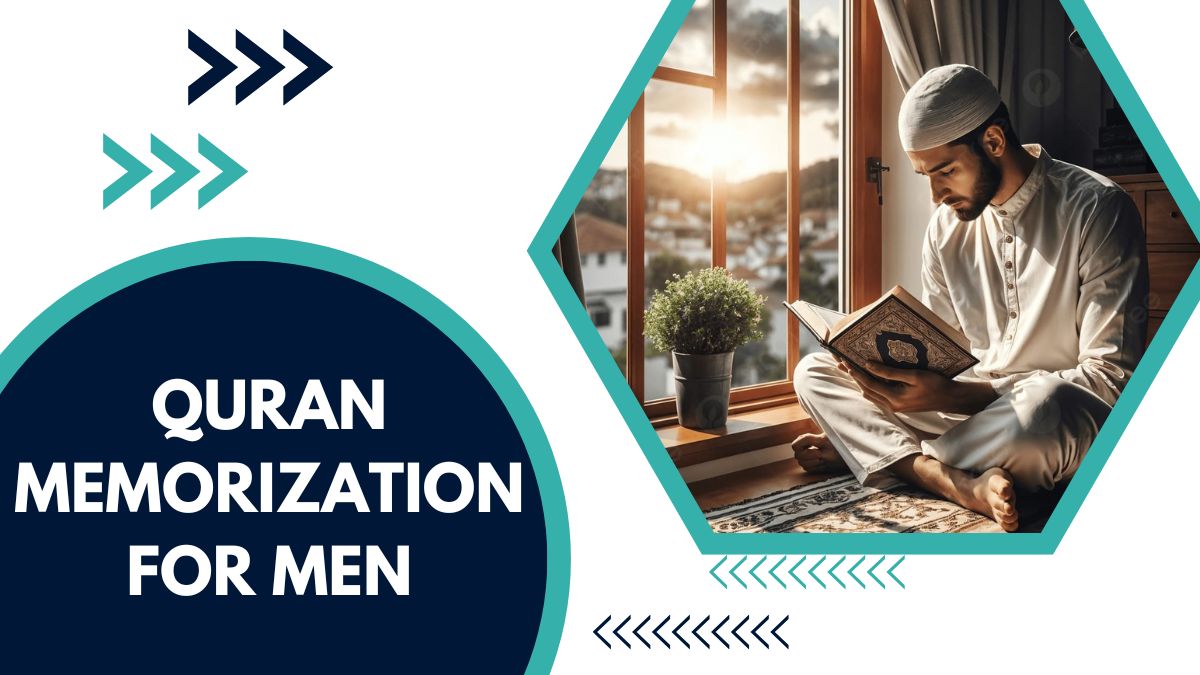
For many Muslim men, the desire to commit the Book of Allah to memory (Hifz) is a deeply held, lifelong ambition. The spiritual rewards are immense, promising an elevated status in this life and the next.
Yet, the realities of modern life—managing a demanding career, providing for a family, and navigating endless daily responsibilities—often make this noble goal feel out of reach.
Many adult men mistakenly believe that Quran memorization is an achievement reserved solely for young children in traditional madrasahs. The truth is that with a structured strategy, consistency, and the right mindset, memorizing the Quran as an adult man is entirely achievable.
This comprehensive guide breaks down the spiritual roadmap, practical techniques, and daily habits necessary for men to successfully embark on and complete their Hifz journey while balancing a busy lifestyle.
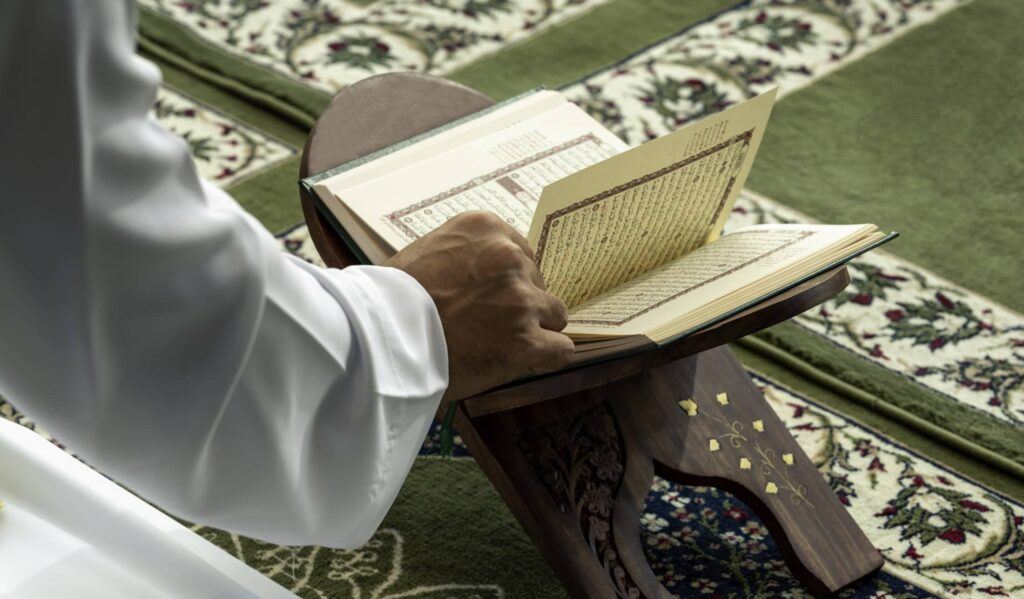
Table of Contents
A. Get the Motivation from The Spiritual Rewards and Eternal Status of a Hafiz
Before diving into the practical methodologies, it is essential to anchor your journey in the spiritual weights and rewards promised to those who memorize the Quran.
Keeping these virtues at the forefront of your mind serves as a powerful motivator during moments of fatigue or busy schedules.
Elevated Status in Paradise
The text of the Quran itself underscores that those gifted with its knowledge are raised in rank. Allah says in Surah Al-Mujadilah (58:11):
يَرْفَعِ اللَّهُ الَّذِينَ آمَنُوا مِنكُمْ وَالَّذِينَ أُوتُوا الْعِلْمَ دَرَجَاتٍ ۚ وَاللَّهُ بِمَا تَعْمَلُونَ خَبِيرٌ
“Allah will raise those who have believed among you and those who were given knowledge, by degrees. And Allah is Acquainted with what you do.”
Furthermore, the Prophet Muhammad (peace be upon him) explicitly detailed how this elevation manifests in the Hereafter:
عَنْ عَبْدِ اللَّهِ بْنِ عَمْرٍو عَنِ النَّبِيِّ صَلَّى اللَّهُ عَلَيْهِ وَسَلَّمَ قَالَ: يُقَالُ لِصَاحِبِ الْقُرْآنِ اقْرَأْ وَارْتَقِ وَرَتِّلْ كَمَا كُنْتَ تُرَتِّلُ فِي الدُّنْيَا فَإِنَّ مَنْزِلَتَكَ عِنْدَ آآخِرِ آيَةٍ تَقْرَأُ بِهَا
Narrated by Abdullah bin ‘Amr: The Prophet (pbuh) said: “It will be said to the companion of the Quran: ‘Read, and elevate your status, and recite as you used to recite in the world, for your status will be at the last verse you recite.'” (Jami` at-Tirmidhi)
The Best of Mankind
True leadership and excellence in the sight of Allah are tied directly to your relationship with the Revelation. The Prophet (peace be upon him) stated:
عَنْ عُثْمَانَ رَضِيَ اللَّهُ عَنْهُ عَنِ النَّبِيِّ صَلَّى اللَّهُ عَلَيْهِ وَسَلَّمَ قَالَ: خَيْرُكُمْ مَنْ تَعَلَّمَ الْقُرْآنَ وَعَلَّمَهُ
Narrated by ‘Uthman: The Prophet (pbuh) said: “The best of you are those who learn the Quran and teach it.” (Sahih al-Bukhari)
An Intercessor on Judgement Day
The Quran acts as a loyal companion that speaks up on behalf of its memorizer when they stand before Allah, terrified and in need of support:
عَنْ أَبِي أُمَامَةَ الْبَاهِلِيِّ قَالَ سَمِعْتُ رَسُولَ اللَّهِ صَلَّى اللَّهُ عَلَيْهِ وَسَلَّمَ يَقُولُ: اقْرَؤُوا الْقُرْآنَ فَإِنَّهُ يَأْتِي يَوْمَ الْقِيَامَةِ شَفِيعًا لِأَصْحَابِهِ
Narrated by Abu Umamah al-Bahili: I heard the Messenger of Allah (pbuh) say: “Recite the Quran, for it will come on the Day of Resurrection as an intercessor for its companions.” (Sahih Muslim)
Honor for the Parents
For married men with children, completing your own memorization sets a profound example. Furthermore, traditional narrations highlight that the parents of a Hafiz will be granted crowns of light on the Day of Resurrection, shining brighter than the sun.
Eradicate the paralyzing psychological overwhelm of unguided retention gaps and command the disciplined Quran Memorization Course at Denk Arabisch to forge an ironclad, permanent structural framework for your memory.
B. Mindset Shifts Required for Adult Men From Speed to Consistency And Quality
Memorizing as an adult is fundamentally different from memorizing as a child. Children have highly malleable minds and fewer responsibilities, but adult men possess a critical advantage: mature comprehension and conscious intention.
To succeed, you must adopt three foundational mental frameworks:
1. Shift from Speed to Consistency
A child might memorize multiple pages a day because they have hours of free time. As a working man, your goal should not be how fast you finish, but how unbroken your daily streak is.
Memorizing three lines a day consistently for five years is infinitely better than memorizing two pages a day for two weeks and then quitting for six months.
2. Connect Quality of Memorization with Meaning
Adults struggle to retain raw, abstract sounds. However, your mature cognitive faculties allow you to utilize context.
By reading the translation and brief exegesis (Tafseer) of the verses before you memorize them, you anchor the words to visual and conceptual meanings in your brain, making retention significantly stronger.
For instance, if you are memorizing Surah Az-Zumar (39:53):
قُلْ يَا عِبَادِيَ الَّذِينَ أَسْرَفُوا عَلَىٰ أَنفُسِهِمْ لَا تَقْنَطُوا مِن رَّحْمَةِ اللَّهِ ۚ إِنَّ اللَّهَ يَغْفِرُ الذُّنُوبَ جَمِيعًا ۚ إِنَّهُ هُوَ الْغَفُورُ الرَّحِيمُ
“Say, ‘O My servants who have transgressed against themselves [by sinning], do not despair of the mercy of Allah. Indeed, Allah forgives all sins. Indeed, it is He who is the Forgiving, the Merciful.'”
Understanding the historical context and the profound emotional depth of Allah’s forgiveness makes the verse resonate within your heart, causing the wording to lock into place much faster than mechanical repetition ever could.
3. Redefine “Free Time”
You do not need a contiguous three-hour block of undisturbed time to memorize the Quran. Instead, successful adult Huffaz utilize the hidden pockets of time embedded within their daily routines—commutes, waiting periods, and early mornings.
C. Step-by-Step Strategic Blueprint for Hifz
Embarking on this journey requires a systematic approach. Below is a structured blueprint designed specifically to fit into the lifestyle of a modern man.
Phase 1: Perfecting Recitation (Tajweed)
Never attempt to memorize a verse that you cannot recite perfectly from the page. If your Tajweed (rules of pronunciation) or fluency is lacking, your brain will hardwire the mistakes into your long-term memory.
Undoing a mis-memorized verse takes twice as much effort as learning it correctly the first time. Spend time reciting to a qualified teacher to correct your pronunciation before beginning your memorization schedule.
Phase 2: Choosing Your Mushaf (Copy of the Quran)
Select one specific print of the Quran and use it exclusively throughout your entire journey. The human brain utilizes spatial and visual memory to recall verses.
You will eventually begin to “see” the page in your mind’s eye—remembering whether a verse starts at the top, middle, or bottom of a left-hand or right-hand page.
Changing your Mushaf style disrupts this visual mapping. The standard 15-line Madinah script is highly recommended for this purpose.
Phase 3: The Three-Tier Daily System
Every successful memorization routine relies on three distinct components executed daily. If you only focus on memorizing new material, your progress will quickly crumble.
| Component | Description | Time Commitment |
| 1. Al-Jadeed (The New Lesson) | The brand-new portion of the text you are committing to memory for the very first time. | 15–30 minutes |
| 2. Al-Sabqi (The Recent Backlog) | Reviewing the text you memorized over the last 7 to 10 days. This stabilizes the new memories. | 10–15 minutes |
| 3. Al-Manzil / Al-Dawr (The Old Revision) | Reviewing older portions (Juz’s) that you memorized months ago to prevent them from slipping away completely. | 20–40 minutes |
Terminate the embarrassing visual hesitation that locks your jaw at every verse line and deploy the high-velocity Quran Reading Course at Denk Arabisch to install complete mechanical mastery over the script.
Read also: The Best Among You Is The One Who Learns And Teaches The Quran
D. Apply Advanced Memorization Techniques for Busy Men
For men managing tight professional schedules, traditional repetition alone can feel incredibly tedious. Utilizing advanced cognitive techniques can drastically reduce the time required to lock a verse into your memory.
The 5-Step Visual & Auditory Method
When sitting down to memorize a new section, use this multi-sensory approach to maximize retention efficiency:
1. Listen First: Listen to a proficient reciter (such as Sheikh Mahmoud Khalil Al-Husary or Sheikh Muhammad Siddiq Al-Minshawi) recite the target portion three to five times. This establishes the correct rhythm, vowel markings, and elongation lengths in your auditory cortex.
2. Analyze the Meaning: Read the translation of the portion. Identify the subject matter—is it a story of a Prophet? A description of Paradise? A legal ruling?
3. Active Visual Scanning: Read the first verse directly from the page out loud five times with full focus. Look closely at the shapes of the words and where they sit on the line.
4. Mental Recall: Close your eyes and attempt to recite the verse from memory five times. If you stumble, open your eyes immediately, correct your gaze, and restart the count.
5. The Linkage Step: Once you memorize verse one, move to verse two. After memorizing verse two, recite verses one and two together. Never move to a third verse without linking it to the chain of what came before it.
Learn the Quran with Denk Arabisch Academy
Master reading and understanding the Quran through structured and supportive learning
Try a Free TrialE. Linking Themes for Deeper Retention
When memorizing long passages, understanding how consecutive verses connect logically can significantly decrease cognitive load. Let’s look at a concrete example from Surah Al-Baqarah (2:1-5):
الم ﴿١﴾ ذَٰلِكَ الْكِتَابُ لَا رَيْبَ ۛ فِيهِ ۛ هُدًى لِّلْمُتَّقِينَ ﴿٢﴾ الَّذِينَ يُؤْمِنُونَ بِالْغَيْبِ وَيُقِيمُونَ الصَّلَاةَ وَمِمَّا رَزَقْنَاهُمْ يُنفِقُونَ ﴿٣﴾
وَالَّذِينَ يُؤْمِنُونَ بِمَا أُنزِلَ إِلَيْكَ وَمَا أُنزِلَ مِن قَبْلِكَ وَبِالْآخِرَةِ هُمْ يُوقِنُونَ ﴿٤﴾ أُولَٰئِكَ عَلَىٰ هُدًى مِّن رَّبِّهِمْ ۖ وَأُولَٰئِكَ هُمُ الْمُفْلِحُونَ ﴿٥﴾
1. Alif, Lam, Meem. 2. This is the Book about which there is no doubt, a guidance for those conscious of Allah. 3. Who believe in the unseen, establish prayer, and spend out of what We have provided for them. 4. And who believe in what has been revealed to you, [O Muhammad], and what was revealed before you, and of the Hereafter they are certain [in faith]. 5. Those are upon [right] guidance from their Lord, and it is those who are the successful.
Cognitive Mapping of this Passage:
- Verse 2 introduces the Quran as a book of guidance for a specific group: the Muttaqeen (those conscious of Allah).
- Verse 3 immediately begins defining who these people are through their actions: they believe in the unseen, establish prayer, and give charity.
- Verse 4 continues the definition by explaining their beliefs regarding revelation (past and present) and their absolute certainty in the afterlife.
- Verse 5 concludes the thought process by giving the final verdict on this group: they are on true guidance and they are successful.
By mapping the text this way, you no longer memorize arbitrary sentences. You memorize a logical profile of a successful believer.
If you forget verse 4, your brain will ask, “What was the second part of the description of their beliefs?” This active cognitive retrieval helps you recover the text instantly without looking at the book.
Refuse to let careless, sloppy pronunciation risk fundamentally warping the literal meaning of Revelation and enforce the surgical Quran Tajweed Course at Denk Arabisch to claim absolute phonetic perfection.
Read also: Why Every Muslim Should Learn the Quran?
F. Integrating Hifz Into a Modern Man’s Daily Schedule
The biggest barrier for men is time. However, by structuring your day around the Islamic prayer times (Salah), you naturally create the ideal environment for memorization.
The Early Morning Barakah (Blessing)
The Prophet (peace be upon him) made a specific supplication for his nation regarding productivity:
عَنْ صَخْرٍ الْغَامِدِيِّ عَنِ النَّبِيِّ صَلَّى اللَّهُ عَلَيْهِ وَسَلَّمَ قَالَ: اللَّهُمَّ بَارِكْ لِأُمَّتِي فِي بُكُورِهَا
Narrated by Sakhr al-Ghamidi: The Prophet (pbuh) said: “O Allah, bless my Ummah in their early mornings.” (Sunan Ibn Majah)
The optimal time to memorize Al-Jadeed (the new lesson) is immediately after the Fajr prayer. Your mind is completely fresh, the house is quiet, and the distractions of emails, phone calls, and workplace stress have not yet begun.
Waking up just 30 to 45 minutes before your usual time can unlock a massive amount of spiritual productivity.
Utilizing the Commute and Travel Times
If you spend 30 minutes driving or riding public transit to work, this is prime real estate for your Al-Manzil (old revision). Listen to the portions you need to review, or recite them quietly out loud.
By the time you arrive at your workplace, you will have completed a massive chunk of your daily spiritual goals without taking a single minute away from your office work or family time.
Utilizing the Musallah / Mosque Waiting Times
Arrive at the mosque 10 minutes before the Iqamah (the call to stand for prayer) for Dhuhr, Asr, or Maghrib. Use these brief 10-minute windows to review your Sabqi (recent backlog).
This distributes your cognitive load throughout the day so that you never feel overwhelmed by a single massive block of study time.
Move entirely past flat, robotic decoding habits that drain the spiritual presence from your devotion and unleash the immersive Quran Recitation Course at Denk Arabisch to cultivate a commanding, rhythmic flow.
Read also: Learning The Quranic Alphabet
G. Overcoming the Pitfalls of Forgetting the Quran
It is a natural law of human biology that we forget. In fact, the Quran requires active upkeep. The Prophet (peace be upon him) issued a strong warning about neglecting what you have learned:
عَنْ عَبْدِ اللَّهِ رَضِيَ اللَّهُ عَنْهُ قَالَ قَالَ النَّبِيُّ صَلَّى اللَّهُ عَلَيْهِ وَسَلَّمَ: تَعَاهَدُوا الْقُرْآنَ فَإِنَّهُ أَشَدُّ تَفَصِّيًا مِنْ صُدُورِ الرِّجَالِ مِنَ النَّعَمِ
Narrated by Abdullah: The Prophet (pbuh) said: “Commit yourselves to this Quran, for it flees faster from the chests of men than camels which are released from their cords.” (Sahih al-Bukhari)
Managing the “Plateau of Frustration”
There will be weeks where your memory feels sharp, and there will be weeks where you feel like you cannot get a single verse to stick. This is completely normal. When you hit a mental block, do not abandon the routine. Instead, reduce your volume. If your goal was half a page a day, drop it to two lines a day, but keep the daily habit alive. Remember Allah’s reassurance in Surah Al-Qamar (54:17):
وَلَقَدْ يَسَّرْنَا الْقُرْآنَ لِلذِّكْرِ فَهَلْ مِن مُّدَّكِرٍ
“And We have certainly made the Quran easy for remembrance, so is there any who will remember?”
The Dual Role of Sins and Spiritual Clarity
Islamic scholarship has long highlighted the direct connection between the purity of a man’s lifestyle and his ability to retain the words of Allah. The famous scholar Imam Al-Shafi’i once penned these famous lines of poetry:
شَكَوْتُ إلَى وَكِيعٍ سُوءَ حِفْظِي … فَأَرْشَدَنِي إلَى تَرْكِ الْمَعَاصِي
وَأَخْبَرَنِي بِأَنَّ الْعِلْمَ نُورٌ … وَنُورُ اللَّهِ لَا يُهْدَى لِعَاصِي
“I complained to [my teacher] Waki’ about my poor memory, so he advised me to abandon sins.
And he informed me that knowledge is a light, and the light of Allah is not given to a sinner.”
For men operating in highly stimulating, modern corporate or social environments, guarding one’s eyes, avoiding ill speech, and maintaining ethical financial dealings are not just general moral requirements—they are practical prerequisites for preserving the sacred text within the chest.
Bypasses the danger of surviving on random, fragmented internet snippets and anchor your theological defenses in the rigorous Islamic Studies Course at Denk Arabisch engineered to build an elite classical command of your faith.
H. Family Integration: Turning Hifz into a Shared Household Value
One of the greatest mistakes a married man can make is treating his Hifz journey as a secret, isolated hobby. If your family perceives your memorization as a competing interest that takes you away from them, it can cause domestic friction. Instead, you should integrate your family directly into the process.
1. Let Your Children See You Memorizing
In a world dominated by digital distractions, seeing a father sit quietly with a physical copy of the Quran sends a powerful silent message. You do not need to lecture your children about reading the Quran if they regularly observe you prioritizing it over your smartphone.
2. Use Your Wife or Children as Testers
Once you have memorized your daily portion, hand your Mushaf to your wife or one of your older children and ask them to trace along as you recite. This accomplishes three things simultaneously:
- It forces you to overcome the nervousness of reciting to an audience.
- It creates a shared spiritual bonding activity inside the household.
- It naturally encourages your family members to start their own memorization schedules.
3. Create a Culture of Encouragement
When you cross major milestones—such as finishing an entire Juz’ (chapter)—celebrate it with your family. Take them out for dinner or buy a small gift. Let your family feel that your spiritual success is a collective victory for the whole household.
I. The Role of Accountability and Finding a Mentor
Attempting to memorize the entire Quran entirely on your own without external feedback is a recipe for abandonment. Human beings require accountability to maintain long-term discipline.
- Find a Qualified Teacher: Whether it is a local Imam at your neighborhood mosque or a certified online tutor, you must have a teacher to whom you recite regularly (at least once or twice a week).
- Form a Brotherhood Circle: Partner with a fellow brother, friend, or colleague who shares the same goal. Check in on each other daily, share your struggles, and celebrate milestones together.
- Leverage Prayers for Revision: The absolute best way for a man to solidify his memorization is to recite his newly learned verses during his voluntary night prayers (Tahajjud) or the rawatib (sunnah) prayers attached to the five daily obligations.
Read also: How To Learn The Quran? – 10 Steps
What Our Students Say About Denk Arabisch Academy
See what our students say about learning at Denk Arabisch Academy on Trustpilot. Read their experiences and check out more reviews to discover how our courses help improve Arabic.

Memorize the Quran With Denk Arabisch!
Let’s eliminate the excuses: you have spent semesters convincing yourself that you will “eventually” master the Quran, yet your routine hasn’t changed. You continue hiding behind a busy schedule, treating your spiritual progression as a low-stakes side project, and expecting passive effort to lead to fluency.
Automated apps and low-stakes online tools give you a false sense of progress while wasting your time, keeping you locked out of the true depth of Revelation. You don’t lack the ability—you lack a strict, systematic training infrastructure.
At Denk Arabisch, we don’t build slow-paced environments for hobbyists. We operate a high-intensity pipeline precision-engineered to force immediate, undeniable breakthroughs.
Your Course:
- Quran Memorization Course: We deploy progressive pipelines mapped directly to your cognitive threshold, driving you through aggressive revision cycles to lock verses down permanently.
- Quran Reading Course: This rapid foundational track strips away background noise to install flawless, fluid mechanical reading velocity.
- Quran Tajweed Course: This is a tactical, surgical strike to master the strict laws of elongation, nasalization, and vocal exit points.
- Quran Recitation Course: Train your breathing mechanics, vocal stability, and elegant cadence to recite with a commanding, rhythmic flow that carries authentic spiritual authority.
- Islamic Studies Course: Deep-dive straight into verifiable classical jurisprudence, creed, and Hadith sciences to forge a bulletproof core.
The registration doors for these elite tracks are wide open right now, but your inventory of excuses has officially run dry.
Book your free trial lesson right now, and dominate your learning journey with Denk Arabisch.
Learn the Quran with Denk Arabisch Academy
Master reading and understanding the Quran through structured and supportive learning
Try a Free TrialConclusion
Committing the Book of Allah to memory as a modern man is not an impossible dream; it is simply a matter of strategic prioritization.
The demands of your career, the financial obligations to your family, and the fast-paced nature of contemporary life are realities that require a smart, flexible, and deeply structured approach to Hifz.
By shifting your mindset from speed to consistency, integrating your family into your goals, and fiercely protecting the early morning hours, you can successfully join the ranks of the guardians of the Revelation.
The Prophet Muhammad (peace be upon him) reminded us of a profound spiritual law regarding taking action toward good deeds:
عَنْ أَبِي هُرَيْرَةَ قَالَ قَالَ رَسُولُ اللَّهِ صَلَّى اللَّهُ عَلَيْهِ وَسَلَّمَ: مَنْ سَلَكَ طَرِيقًا يَلْتَمِسُ فِيهِ عِلْمًا سَهَّلَ اللَّهُ لَهُ بِهِ طَرِيقًا إلَى الْجَنَّةِ
Narrated by Abu Hurayrah: The Messenger of Allah (pbuh) said: “Whosoever treads a path seeking knowledge therein, Allah will make easy for him a path to Paradise.” (Sahih Muslim)
Do not wait for your life to become less complicated, because the perfect, stress-free season will never arrive. The time to start is today. Open your Mushaf, fix your intention, recite your first three lines after Fajr, and step firmly onto the path of ultimate spiritual success.
FAQs
1. Can I realistically memorize the Quran if I am over 30 or 40 years old?
Absolutely. While children memorize faster through raw auditory repetition, adults possess superior logical reasoning, emotional maturity, and contextual understanding.
By using the meaning (Tafseer) of the verses as a mental anchor, older men can achieve highly stable, deeply rooted memorization that often surpasses the retention of younger students who do not comprehend what they recite.
2. How much should I memorize every day as a busy working professional?
It is a grave mistake to look at what children do and try to match them. Your primary objective is an unbroken daily streak. If three lines feel too heavy during a hectic work week, drop your target down to a single verse, but never let your daily habit die.
3. What should I do if I keep forgetting old portions while learning new ones?
You must immediately freeze all new memorization (Al-Jadeed) and dedicate 100% of your allocated Quran time to revision (Al-Manzil and Al-Sabqi). Only resume memorizing new verses once your older backlog feels secure and fluent.
4. Is it permissible to memorize the Quran without a formal teacher?
A teacher serves two critical purposes: ensuring you do not hardwire subtle Tajweed mistakes into your long-term memory, and providing the necessary external accountability that keeps you disciplined when your personal motivation wanes.
5. How long does it take an adult man to complete the entire Hifz journey?
At a pace of three lines per day, it will take around six to seven years. Remember, in the sight of Allah, you are rewarded for the sincerity of the journey and the effort expended, not just the final destination.