Learning to read Arabic is one of the most rewarding skills you can develop. Whether your goal is understanding the Quran, communicating with Arabic speakers, traveling in Arabic-speaking countries, or exploring the rich culture and history of the Arab world, reading Arabic is the foundation of your journey.
At first glance, Arabic may seem challenging because it uses a different script than English and many other languages. However, with the right approach, consistent practice, and a structured learning plan, anyone can learn to read Arabic successfully.
In this complete guide, you’ll discover the most effective methods, essential skills, and practical tips to help you learn to read Arabic from scratch.
Table of Contents
Step 1: Understanding the Arabic Alphabet
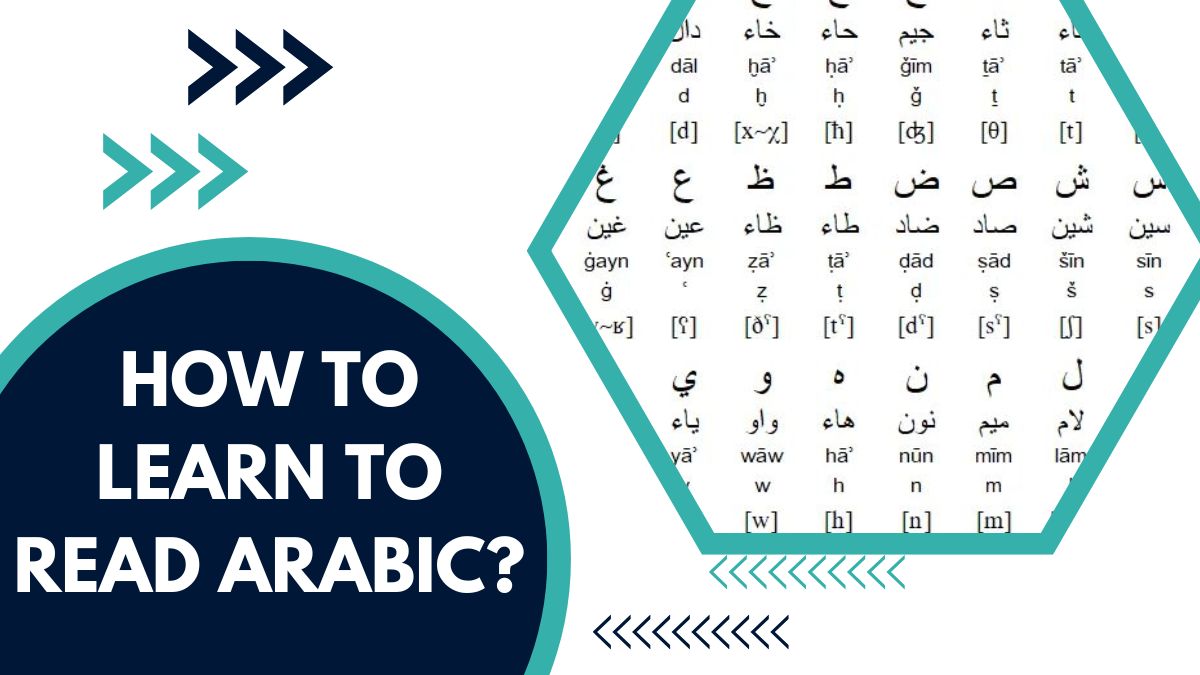
The first step in learning to read Arabic is mastering the Arabic alphabet. Every Arabic word, sentence, and text is built from these 28 letters, making alphabet mastery the foundation of your reading journey.
Arabic consists of 28 letters. Unlike English, Arabic is written from right to left, which may feel unusual at first. However, most learners adapt surprisingly quickly after a few days of consistent practice.
Some Arabic letters may look unfamiliar initially, especially if you have only used the Latin alphabet. Don’t be intimidated. With regular exposure and repetition, most students become comfortable recognizing the letters within a few weeks.
One advantage of Arabic is that its spelling is generally more phonetic than English. In many cases, words are pronounced much closer to how they are written, which can make reading easier once you understand the alphabet and vowel system.
Key Features of the Arabic Alphabet
- Written from right to left
- Contains 28 letters
- Most letters connect to neighboring letters
- Letter shapes change depending on position
- No capital letters exist
- Several letters share similar shapes but differ in dots
- Many letters represent sounds not found in English
- Short vowels are represented using special marks
For example:
- ب (Ba)
- ت (Ta)
- ث (Tha)
These letters share the same basic shape but are distinguished by the placement and number of dots. Beginners often confuse these letters at first, which is completely normal.
Learning to distinguish between similar letters is an essential early skill because even a small difference in dots can completely change a word’s meaning.
A useful strategy is to study letters in groups that share similar shapes. This helps train your eyes to notice the details that make each letter unique.
Refuse to let hesitation delay your personal development milestones for another year; claim your virtual seat in our high-demand Arabic Course For Beginners at Denk Arabisch before the semester registration officially closes!
Step 2: Learn Letter Names and Sounds
Memorizing letter names alone is not enough. To become a successful Arabic reader, you must also learn how each letter sounds when used in words.
Arabic pronunciation differs from English in several ways. Some sounds exist in Arabic but not in English, which can make them challenging for beginners.
For example:
- ح (Haa)
- خ (Khaa)
- ع (Ayn)
- غ (Ghayn)
These sounds may feel difficult initially, but listening to native speakers and practicing consistently will improve your pronunciation over time.
It is important to focus on correct pronunciation from the beginning. Developing good habits early prevents mistakes from becoming difficult to correct later.
Many learners find it helpful to listen to a letter, repeat it aloud, and then identify it in written form. This combination of visual and auditory learning accelerates letter recognition.
Tips for Learning Letter Sounds
- Listen to native Arabic speakers
- Repeat sounds aloud daily
- Use audio-based learning resources
- Compare similar sounds carefully
- Record yourself and review pronunciation
- Practice with a teacher or language partner
- Read simple words out loud regularly
Strong pronunciation skills improve reading accuracy, fluency, and comprehension. The more familiar you become with Arabic sounds, the easier it will be to decode new words when reading.
Step 3: Master Arabic Vowel Marks
Unlike English, Arabic uses special symbols called harakat (vowel marks) to indicate pronunciation. These marks are especially important for beginners because they show exactly how a word should be read.
The three main short vowels are:
Fatha (َ)
Produces an “a” sound.
Example:
بَ = Ba
Kasra (ِ)
Produces an “i” sound.
Example:
بِ = Bi
Damma (ُ)
Produces a “u” sound.
Example:
بُ = Bu
Additional symbols include:
- Sukoon (ْ)
- Shadda (ّ)
- Tanween (ً ٍ ٌ)
These marks may seem small, but they play a crucial role in pronunciation and meaning. A single change in vowel marks can completely alter how a word is read.
For example, the same set of letters may have different meanings depending on the vowels attached to them.
Beginners should spend significant time practicing letters with vowel marks before moving to full words. Reading exercises that combine letters and harakat help build confidence and establish strong reading habits.
As your skills improve, you will gradually become comfortable reading both fully-vowelized texts and texts that contain fewer vowel marks.
Step 4: Learn Connected Letter Forms
One of the most unique features of Arabic writing is that letters connect together to form words. Unlike English, where letters are usually written separately, Arabic script flows continuously across the page.
Most Arabic letters have up to four forms:
- Isolated form
- Initial form
- Medial form
- Final form
For example, the letter ع changes appearance depending on its position within a word.
At first, these variations can seem confusing because the same letter may look different from one word to another. Fortunately, the changes follow consistent patterns that become easier to recognize with practice.
Understanding connected forms is essential because nearly every Arabic word contains connected letters. The sooner you become comfortable with these forms, the faster your reading progress will be.
How to Learn Connected Forms?
- Study one letter at a time
- Compare isolated and connected versions
- Practice writing simple words
- Read beginner Arabic texts regularly
- Use alphabet charts for reference
- Highlight recurring letter patterns
- Trace Arabic words to build visual familiarity
Recognizing connected letters quickly is a major milestone in becoming a fluent reader. Once your eyes automatically identify letters in their different forms, reading speed increases dramatically.
Stop draining your intellectual energy on outdated materials you will never actually use and secure your spot in our upcoming Arabic Reading Course at Denk Arabisch to maximize your learning efficiency today!
Step 5: Start Reading Simple Arabic Words
Once you know the alphabet and vowel marks, begin reading simple words. This is where individual letters start coming together to form meaningful language.
Start with short words containing two or three letters.
Examples:
- بيت (House)
- باب (Door)
- قلم (Pen)
- كتاب (Book)
Read each word slowly and carefully. Focus on sounding out every letter and vowel rather than trying to memorize entire words immediately.
Many beginners rush through this stage and attempt to guess words based on appearance. This habit can slow progress later. Instead, train yourself to decode each letter systematically.
As you gain confidence, move from single words to short phrases and simple sentences. Gradually increasing difficulty helps strengthen reading fluency without creating frustration.
Reading familiar everyday vocabulary is particularly helpful because repeated exposure reinforces both letter recognition and word memory.
This process builds strong reading habits, improves pronunciation accuracy, expands vocabulary, and creates the foundation for fluent Arabic reading in the future.
Read also: Harakat In Arabic – The Ultimate Guide To Arabic Diacritics
Step 6: Practice Reading Arabic Every Day
Consistency is more important than intensity when learning to read Arabic. Many beginners believe they need hours of study every day to make progress, but regular daily practice is far more effective than occasional long study sessions.
Reading Arabic for just 15 to 20 minutes every day is often more productive than studying for several hours once a week. Daily exposure helps your brain become familiar with Arabic letters, word patterns, and pronunciation rules.
The key is building a sustainable habit. Small daily efforts compound over time and lead to significant improvements in reading fluency.
Daily reading helps:
- Strengthen letter recognition
- Improve pronunciation
- Build reading speed
- Increase vocabulary
- Enhance confidence
- Improve memory retention
- Develop reading fluency naturally
- Reinforce previously learned concepts
Even short practice sessions create significant long-term improvement. The more frequently you interact with Arabic text, the faster your brain learns to recognize words automatically.
Suggested Daily Reading Routine
5 Minutes
Review alphabet and sounds.
5 Minutes
Practice vowel combinations and pronunciation drills.
5 Minutes
Read simple words and short phrases.
5 Minutes
Read short sentences aloud and focus on fluency.
As your skills improve, gradually increase the complexity of your reading materials. Maintaining this routine consistently can produce impressive results within a few months.
Learn Arabic with Denk Arabisch Academy
Speak and understand Arabic through a clear and effective learning system
Try a Free TrialStep 7: Use Children’s Arabic Books
Many beginners make the mistake of starting with advanced texts that contain difficult vocabulary and complex sentence structures. This often leads to frustration and discouragement.
Children’s books are often among the best reading resources for new Arabic learners because they are specifically designed to introduce language gradually.
They typically include:
- Simple vocabulary
- Short sentences
- Large text
- Helpful illustrations
- Repetition of common words
- Clear pronunciation patterns
- Engaging stories
Illustrations provide context clues that help readers understand unfamiliar words without constantly relying on translations.
Reading children’s stories helps develop fluency without overwhelming the learner. Repeated exposure to common sentence patterns also strengthens comprehension skills.
As your skills improve, gradually move from children’s books to graded readers, short stories, news articles, and eventually more advanced Arabic texts.
Step 8: Learn Common Arabic Vocabulary
Reading becomes easier when you recognize words instantly rather than decoding every letter individually.
Building vocabulary alongside reading practice accelerates progress because familiar words can be recognized automatically.
Start with high-frequency words such as:
- الله (Allah)
- كتاب (Book)
- بيت (House)
- مدرسة (School)
- ولد (Boy)
- بنت (Girl)
- ماء (Water)
- مسجد (Mosque)
- قلم (Pen)
- معلم (Teacher)
Focus on words that appear frequently in beginner texts. The more often you encounter a word, the more quickly it becomes part of your active vocabulary.
Learning commonly used words reduces the amount of decoding required during reading. Over time, your brain begins recognizing complete words rather than processing individual letters.
The more words you recognize automatically, the faster and smoother your reading becomes.
Protect your calendar from redundant review material and discover your ideal instructional threshold by entering our structured Arabic Courses Based On Levels at Denk Arabisch optimized for continuous progress.
Step 9: Listen While Reading
Combining listening and reading is one of the fastest ways to improve Arabic literacy. This technique exposes you to correct pronunciation while simultaneously reinforcing word recognition.
When you hear words while seeing them written, your brain creates strong connections between spelling, pronunciation, and meaning.
Benefits include:
- Better pronunciation
- Faster word recognition
- Improved fluency
- Stronger comprehension
- Better listening skills
- Increased confidence
Many learners find that listening to Arabic audio while following written text dramatically speeds up their progress.
This technique is especially useful for Quran reading and Modern Standard Arabic because it helps learners absorb proper pronunciation and rhythm.
Try listening to recordings several times. First, simply listen. Then read along with the text. Finally, read independently while imitating the pronunciation you heard.
Step 10: Learn Basic Arabic Grammar
You do not need advanced grammar to start reading Arabic. In fact, focusing too heavily on grammar in the beginning can slow your progress.
However, learning basic grammar helps you understand sentence structure and improves comprehension.
Focus on:
- Nouns
- Verbs
- Pronouns
- Gender rules
- Simple sentence patterns
- Question forms
- Basic prepositions
Understanding these concepts makes reading less confusing because you begin to recognize how words function within a sentence.
For example, knowing the difference between a noun and a verb allows you to understand sentence meaning more quickly.
As your reading level increases, grammar knowledge will help you understand texts more accurately and efficiently.
Read also: Arabic Letters Connected Forms – The Complete Beginner’s Guide
Step 11: Practice Reading the Quran
Many people learn Arabic primarily to read the Quran. For these learners, Quran reading becomes both a linguistic and spiritual goal.
The Quran is an excellent reading resource because:
- It preserves classical Arabic
- Recitation recordings are widely available
- Texts are standardized
- Pronunciation rules are well documented
- Learning resources are abundant worldwide
However, complete beginners should first learn the alphabet, vowel marks, and basic reading skills before tackling Quranic verses.
Starting with short surahs and highly vowelized texts can make the transition easier.
Once these foundations are established, Quran reading becomes much more accessible and enjoyable.
Establish an unshakeable, rewarding routine in your spiritual life from the comfort of home by joining our premier Quranic Arabic Course for German Speakers at Denk Arabisch before current cohorts reach maximum capacity!
Common Challenges When Learning to Read Arabic
Every learner encounters obstacles while learning Arabic. Understanding these challenges can help you overcome them more effectively and avoid becoming discouraged.
Confusing Similar Letters
Letters such as ب، ت، ث may appear nearly identical to beginners.
Solution:
Practice distinguishing dot patterns daily and review similar letter groups regularly.
Difficulty with Pronunciation
Certain Arabic sounds do not exist in English and may feel unfamiliar.
Solution:
Listen carefully to native speakers, imitate their pronunciation, and practice consistently.
Slow Reading Speed
Most beginners read slowly because they process each letter individually.
Solution:
Focus on accuracy before speed. Fluency develops naturally through repetition and regular exposure.
Forgetting Letter Forms
Connected letters may seem difficult initially because their appearance changes depending on position.
Solution:
Read and write Arabic every day to reinforce recognition and build familiarity.
Lack of Consistency
Many learners make progress but then stop practicing regularly.
Solution:
Create a fixed study schedule and make Arabic reading part of your daily routine.
Best Tips for Learning Arabic Reading Faster
If you want faster progress, follow these proven strategies:
Practice Daily
Even 15 minutes per day makes a significant difference. Consistency always beats intensity.
Read Aloud
Reading aloud improves pronunciation, confidence, and fluency simultaneously.
Review Frequently
Regular revision prevents forgetting previously learned material and strengthens long-term memory.
Use Multiple Resources
Combine books, audio lessons, apps, videos, and teachers for a more complete learning experience.
Focus on Accuracy
Correct reading habits are more important than speed. Accuracy naturally leads to fluency.
Build Vocabulary Continuously
Learning new words every week makes reading increasingly easier.
Stay Patient
Arabic reading is a skill developed gradually through consistent effort. Every practice session moves you closer to fluency.
How Long Does It Take to Learn to Read Arabic?
The timeline varies depending on effort, study methods, prior language experience, and consistency.
Typical progression:
2–4 Weeks
Recognize the Arabic alphabet and basic sounds.
1–3 Months
Read basic words and simple sentences.
3–6 Months
Read beginner texts comfortably with reasonable accuracy.
6–12 Months
Develop good reading fluency and recognize many common words automatically.
1 Year and Beyond
Read increasingly complex texts with confidence and improved comprehension.
Remember that progress is not always linear. Some weeks may feel faster than others, but consistent daily practice significantly shortens the learning curve and produces lasting results.
What Our Students Say About Denk Arabisch Academy
See what our students say about learning at Denk Arabisch Academy on Trustpilot. Read their experiences and check out more reviews to discover how our courses help improve Arabic.

Learn Arabic with Denk Arabisch!
Let’s look at the hard truth: as long as you are using translation apps, scanning subtitles, or guessing your way through conversations, you aren’t truly commanding the language. Relying on passive worksheets or algorithms keeps you dependent on tools instead of your own mind. True fluency means processing Arabic natively, speaking without hesitation, and understanding the text instantly. To get there, you must trade passive browsing for a rigorous, live, professional architecture.
The enrollment window for our premium, live interactive tracks is officially shutting down. To protect our strict standard of high-impact conversational feedback and personalized correction, we enforce rigorous capacity limits on every classroom. Once these specific cohorts are filled, registration will close instantly for the entire term.
Our Courses:
- Arabic Course For Beginners: Stop letting a new script dictate your progress. Our high-velocity conversational blueprint throws out traditional, slow academic lecturing to get you actively structuring, thinking, and speaking your own complex sentences right from your very first live hour.
- Quranic Arabic Course for German Speakers: Access the direct, unaltered depth of the classical text without a secondary filter. This dedicated curriculum is custom-engineered to dismantle the unique structural and grammatical friction between German and Classical Arabic nodes.
- Arabic Reading Course: Pure efficiency for high-achieving adults. Stop sitting through generalized modules that don’t match your life; isolate and dominate your precise milestones—whether that means mastering corporate dialogue, complex reading mechanics, or deep syntax logic.
- Arabic Dialect Courses: Walk away from the rigid, artificial textbook phrasing that native speakers never use on the street. Master the living, authentic regional idioms of real life so you can easily joke, converse, and build genuine, natural relationships with locals.
- Arabic Courses Based On Levels: No more repetitive overviews or waiting on a slow classroom. We execute a precise audit of your current linguistic threshold and place you directly into the optimal tier to ensure your learning momentum keeps climbing without a single pause.
Why keep spending another year locked out of a beautiful, complex culture when you can train live with handpicked, world-class native educators? Denk Arabisch eliminates the trial-and-error, saving you years of frustration with a premium online structure built to fit flawlessly into your demanding career or university schedule.
The longer you stay on the fence, the more time you waste. Act decisively right now and lock in your live spot before our classroom doors shut completely!
Learn Arabic with Denk Arabisch Academy
Speak and understand Arabic through a clear and effective learning system
Try a Free TrialConclusion
Learning to read Arabic may seem challenging at first, but it becomes much easier when approached step by step. Begin by mastering the Arabic alphabet, learning letter sounds, understanding vowel marks, and recognizing connected letter forms. From there, gradually progress to reading words, sentences, and complete texts.
The key to success is consistency. A few minutes of focused practice every day can transform a complete beginner into a confident Arabic reader. Whether your goal is reading the Quran, understanding Arabic literature, or communicating with Arabic speakers, developing strong reading skills will open countless opportunities.
Remember that every fluent Arabic reader once started by learning a single letter. Stay patient, practice regularly, and enjoy the journey toward Arabic literacy.
FAQs
1. Is Arabic difficult to learn to read?
Arabic can seem challenging initially because of its unique script and right-to-left writing system. However, with regular practice and proper guidance, most learners can master basic reading skills within a few months.
2. How long does it take to learn to read Arabic?
Most learners can recognize the alphabet within a few weeks and begin reading simple words within one to three months. Fluency typically develops over several months of consistent practice.
3. Can I learn to read Arabic without speaking it?
Yes. Many students learn to read Arabic before developing speaking skills. Reading and speaking are separate language abilities, although they support each other.
4. What is the best way to learn Arabic reading?
The most effective method combines learning the alphabet, practicing pronunciation, studying vowel marks, reading simple texts, and listening to native Arabic audio regularly.
5. Can I learn to read the Quran without knowing Arabic?
Yes. Many learners first learn Arabic reading for Quran recitation without fully understanding the language. Understanding can be developed later through vocabulary and grammar study.
6. How much should I practice each day?
A daily practice session of 15 to 30 minutes is usually sufficient for steady progress. Consistency matters more than long study sessions.