Takeaway:
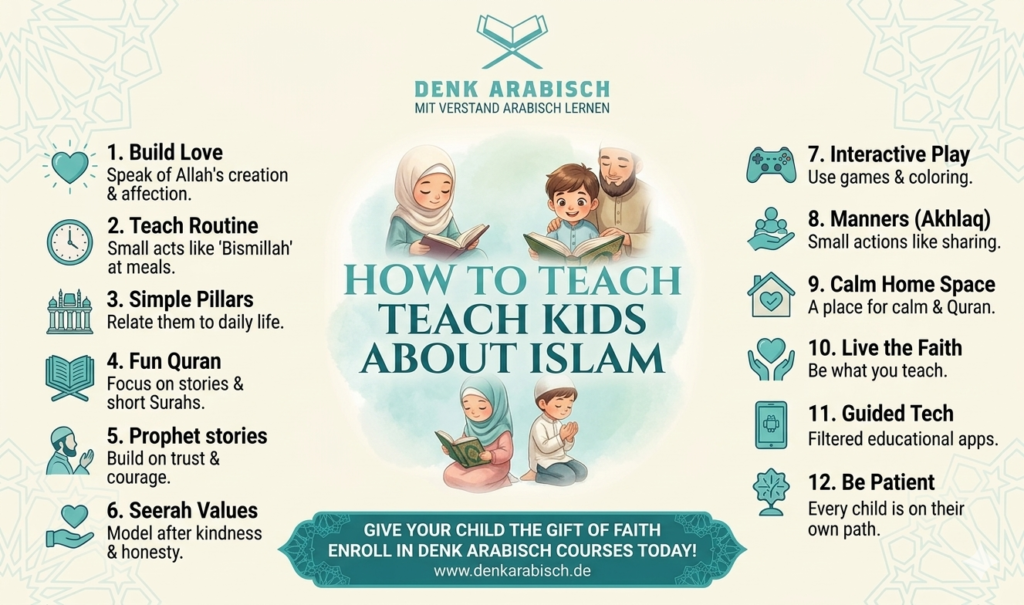
- Build a foundation of love for Allah before rules, using phrases like “Allah loves you” and connecting everyday blessings to Him.
- Weave Islam into daily routines: say “Bismillah” before eating, “Alhamdulillah” after sneezing, make du’a before sleep, and greet with “Salam Alaikum.”
- Introduce the Five Pillars through simple, relatable meanings: Shahada as loving Allah, Salah as talking to Him, Zakat as sharing, Sawm as learning patience, and Hajj as a special journey.
- Make Quran learning short, joyful, and pressure-free; start with small surahs, use repetition, play recitations at home, and celebrate every effort.
- Tell stories of Prophet Muhammad ﷺ and other Prophets in an engaging way, highlighting their honesty, kindness, patience, and forgiveness to shape character.
- Use interactive methods like Islamic quizzes, coloring, role-playing, and nasheeds to keep children engaged and curious.
- Teach good manners (akhlaq) by linking behavior to faith: “A Muslim speaks kindly because Allah loves good words.”
- Shape the home environment with background Quran, family prayer, Islamic reminders, and open, simple answers to children’s questions.
- Model the behavior you teach—pray on time, speak respectfully, show patience, and admit mistakes openly.
- Guide technology use toward beneficial content like Quran videos, educational apps, and supervised online Islamic classes.
- Remain patient and consistent; small daily habits matter more than long, irregular lessons, and every child learns at their own pace.
- The ultimate goal is progress, not perfection—raising children who feel a sincere, loving connection with Allah and a confident Islamic identity.
Teaching children about Islam is one of the most meaningful responsibilities for Muslim parents and educators. It is not only about passing on knowledge, but also about nurturing faith, identity, manners, and a strong connection with Allah.
In today’s fast-paced digital world, parents often wonder how to make Islamic education engaging, age-appropriate, and consistent.
This guide will walk you through practical and effective ways to teach kids about Islam in a loving and impactful way. It also highlights the importance of leading by example, building simple daily habits like duaa and Quran listening, and using creative methods that suit each child’s learning style.
By focusing on consistency, positivity, and compassion, parents can help children develop a strong and lasting connection with their faith.
Table of Contents
Why Teaching Kids About Islam Is Important?
Islamic education in early childhood plays a key role in shaping a child’s worldview and character. When children learn about Allah, the Prophet Muhammad ﷺ, and Islamic values from a young age, they grow up with a clear sense of purpose and direction.
It helps them understand who they are, where they belong, and how to navigate life with confidence and faith.
Through early Islamic learning, children can develop:
- A strong sense of identity
- Good moral character and manners
- Emotional stability and inner peace
- Respect for others and a sense of responsibility
- A lifelong connection with their faith
Children are naturally curious and open-minded, which makes early childhood the ideal time to introduce Islamic teachings in a simple, engaging, and positive way. When these values are taught with love and consistency, they become deeply rooted and easier to carry into adulthood.
At Denk Arabisch, Tajweed courses for German-speaking children are designed to support this journey. They provide a structured and encouraging environment where children can learn proper Quran recitation while strengthening their Islamic identity—surrounded by peers who share their language and faith.
1. Start with Love for Allah and Islam
The first step in teaching kids about Islam is not rules or memorization—it is love. Children should grow up feeling that Islam is gentle, safe, and full of mercy. When the emotional connection comes first, learning becomes something they enjoy rather than something they resist.
How to build love for Allah:
- Remind them that Allah created everything they love—family, favorite foods, animals, and nature
- Use simple, comforting phrases like “Allah loves you” and “Allah is always with us”
- Make “Alhamdulillah” a natural part of daily conversations
- Emphasize that Allah is الرحيم (The Most Merciful) and forgives and cares for us
You can also connect everyday experiences to faith—for example, when they feel happy, safe, or grateful, gently remind them that these are blessings from Allah. Over time, this builds a deep emotional attachment.
When children love Allah, they become more willing to pray, learn, and follow Islamic teachings without pressure.
2. Teach Islam Through Daily Life
Children don’t just learn from instructions—they learn from observation. Your behavior, tone, and daily habits are their biggest lessons. This is why turning everyday routines into Islamic practices is so powerful.
Examples of daily Islamic teaching moments:
- Saying “Bismillah” before eating
- Saying “Alhamdulillah” after eating or sneezing
- Making du’a before sleeping
- Greeting others with “Salam Alaikum”
- Praying together, even if it’s just one prayer a day
You can also explain why you’re doing these actions in simple ways:
- “We say Bismillah so Allah puts barakah in our food,”
- Or “We pray because it’s our special time with Allah.”
These small explanations help children connect actions with meaning. Over time, these habits become part of their identity, and the home itself becomes a place where Islam is naturally practiced—not forced.
3. Introduce the Five Pillars of Islam Simply
The Five Pillars are the foundation of Islam, but children need to understand them in a way that feels simple and relatable. Avoid overwhelming them with details—instead, focus on meaning and purpose.
Child-friendly explanation:
- Shahada (Faith): Loving and believing in Allah and the Prophet Muhammad ﷺ
- Salah (Prayer): Talking to Allah and thanking Him every day
- Zakat (Charity): Sharing what we have and helping others
- Sawm (Fasting): Learning patience and appreciating blessings
- Hajj (Pilgrimage): Visiting the Kaaba and gathering with Muslims from around the world
Try connecting each pillar to real-life actions. For example, let your child give a small amount of charity themselves or “practice fasting” for a few hours in a fun way.
Programs like those at Denk Arabisch help children go beyond memorization by understanding the meaning behind these pillars, making them easier to apply in daily life.
Our Quran Course for German-Speaking Children goes beyond recitation. We help kids understand the “Why” behind their faith, making the Five Pillars a living part of their daily routine.
4. Teach Quran in a Fun and Easy Way
The Quran is central to a child’s Islamic journey, but the experience should always feel positive. If children associate the Quran with pressure or stress, they may lose motivation. Instead, focus on making it a calm and enjoyable part of their routine.
Tips to teach Quran to kids:
- Start with short and easy Surahs like Al-Fatiha and Al-Ikhlas
- Use repetition in a gentle and encouraging way
- Play Quran recitation regularly at home so they become familiar with the sound
- Use colorful materials, flashcards, or apps to teach Arabic letters
- Celebrate small achievements with praise or rewards
You can also create a special “Quran time” each day, even if it’s just 10–15 minutes. Sitting together, listening, and repeating creates a bonding moment as well as a learning experience.
Consistency matters more than speed—slow and steady progress builds confidence and love for the Quran.
5. Teach the Life of Prophet Muhammad ﷺ
The Prophet Muhammad ﷺ is the perfect role model for children. His life is full of relatable and inspiring lessons that can shape a child’s behavior and character.
Key stories to share:
- His honesty and trustworthiness before prophethood
- His kindness and gentleness with children
- His patience during hardship
- His forgiveness, even toward enemies
- His compassion for animals and people
Bring these stories to life by telling them in a simple, engaging way. You can even act them out or connect them to situations your child experiences.
Ask reflective questions like:
- “What would you do if you were in his place?”
- “How can we follow the Prophet today?”
This helps children think deeply and apply Islamic values in their own lives. Over time, they begin to see the Prophet ﷺ not just as a historical figure, but as a role model they can follow every day.
6. Use Stories of the Prophets
Children are naturally drawn to stories, and the stories of the Prophets are among the most powerful ways to teach Islamic values. They are not just historical events—they are lessons filled with emotion, challenges, and strong moral messages that children can relate to.
Some powerful examples:
- Prophet Nuh (AS) and the Ark → Trusting Allah even when others doubt you
- Prophet Ibrahim (AS) → Complete faith and obedience to Allah
- Prophet Musa (AS) → Courage and reliance on Allah in difficult moments
- Prophet Yusuf (AS) → Patience, forgiveness, and hope during hardship
After telling each story, always highlight the lesson in a simple way. For example:
“What can we learn from this?” or “How can we act like this in our life?”
You can also make storytelling more engaging by using visuals, acting out scenes, or letting children retell the story in their own words. This strengthens both understanding and memory.
To build a deeper connection, learning Arabic plays an important role.
At Denk Arabisch, Islam Studies For Children help them gradually understand these stories in their original Quranic language, making the experience more meaningful and impactful.
Read also: Stories Of The Prophets For Kids – Inspiring Islamic Stories That Shape Faith And Character
7. Make Islamic Learning Interactive and Fun
Children learn best when they are actively involved. Long lectures or strict teaching methods can make them lose interest quickly. Instead, focus on making learning enjoyable and engaging.
Fun learning ideas:
- Islamic quiz games with simple questions
- Coloring activities with Arabic letters or Islamic themes
- Role-playing (e.g., acting out Hajj or daily good deeds)
- Listening to nasheeds and repeating them together
- Group storytelling sessions
You can also turn learning into a game by offering small rewards or praise. For example, a sticker chart for memorizing short surahs or practicing good manners.
When children enjoy the process, they become more curious and motivated to learn on their own. The goal is to make Islam something they look forward to, not something they feel forced to do.
Study Islamic knowledge with Denk Arabisch Academy
Deepen your understanding of Islam through authentic and structured learning
Try a Free Trial8. Teach Good Manners (Akhlaq)
In Islam, good character (akhlaq) is just as important as acts of worship. The Prophet Muhammad ﷺ emphasized kindness, honesty, and respect in all aspects of life.
Important manners to teach:
- Respecting parents and elders
- Speaking truthfully
- Being kind to friends and siblings
- Sharing and helping others
- Saying “thank you” and “sorry”
The best way to teach manners is through real-life situations. Instead of correcting harshly, guide gently.
For example:
Instead of saying “Don’t be rude,” say:
“A Muslim speaks kindly because Allah loves good words.”
This approach connects behavior with faith, helping children understand why good manners matter. Over time, these values become part of their personality.
9. Create a Strong Islamic Environment at Home
A child’s environment plays a major role in shaping their beliefs, habits, and identity. When Islam is part of the home atmosphere, children absorb its values naturally—without feeling like they are being constantly instructed or corrected.
Creating an Islamic environment doesn’t require big changes. It’s about consistency in small, meaningful details that surround the child every day.
For example, when children regularly hear Quran recitation in the background, see their parents praying, or hear phrases like “Alhamdulillah” and “Bismillah,” these become normal parts of life.
Practical ways to build an Islamic home:
- Play Quran recitation or short Islamic reminders daily
- Set a regular time for family prayer, even if it’s just one salah together
- Add simple Islamic decorations like Arabic calligraphy or reminders
- Talk about Allah in daily conversations (e.g., gratitude, blessings, patience)
- Encourage questions about Islam and answer them in a simple, open way
It’s also important to be mindful of what enters the home. Limiting harmful media and replacing it with beneficial content helps protect a child’s mindset and values.
If access to a local Islamic community is limited, platforms like Denk Arabisch can help recreate that environment at home by connecting children with structured learning and supportive teachers who understand their background.
10. Be a Role Model
Children naturally imitate their parents and caregivers. Your actions, tone, and reactions are constantly being observed—even when you don’t realize it. This makes your behavior the most powerful teaching tool you have.
If a child sees you praying consistently, speaking kindly, being honest, and showing patience, they will begin to copy these behaviors. On the other hand, if they hear instructions but see different actions, it can create confusion.
Being a role model doesn’t mean being perfect. It means being sincere and consistent in your efforts. It’s okay to make mistakes—as long as you show how to correct them. In fact, this can be a valuable lesson for children, teaching them humility and growth.
Ways to model Islamic behavior:
- Pray on time and let your child see you value salah
- Speak respectfully, even in moments of stress
- Show kindness in your interactions with others
- Practice patience during challenges
- Admit mistakes and say “sorry” when needed
You can also involve your child in your عبادات—like letting them stand next to you while praying or making du’a together. This creates a shared experience rather than a distant instruction.
Over time, your consistent example will leave a deeper impact than any lesson or lecture.
11. Use Technology Wisely
Technology is a central part of children’s lives today, and avoiding it completely is neither realistic nor necessary. The goal is to guide its use in a positive and beneficial way.
When used correctly, technology can become a powerful tool for Islamic education. It can make learning more engaging through visuals, sounds, and interactive experiences that children enjoy.
Examples of beneficial use:
- Watching Quran recitation videos to improve listening and pronunciation
- Using educational apps to learn Arabic letters and short surahs
- Watching animated stories of the Prophets
- Attending online Islamic classes with qualified teachers
However, supervision is essential. Not all content labeled “Islamic” is accurate or appropriate. Parents should review what their children watch and ensure it aligns with authentic teachings.
It’s also important to set healthy limits on screen time. Balance is key—technology should support learning, not replace real-life interaction, worship, or family time.
You can make it more meaningful by learning together. Watching a story or lesson as a family and discussing it afterward helps children understand and reflect, rather than just passively consume content.
12. Be Patient and Consistent
Teaching Islam is not a short-term task—it is a lifelong journey. Children develop understanding gradually, and each child learns at their own pace. Some may grasp concepts quickly, while others need more time and repetition.
Patience is essential. Pressuring children or expecting immediate results can lead to frustration and resistance. Instead, focus on steady, consistent effort. Even small steps, when repeated regularly, create lasting change.
Important principles to remember:
- Avoid comparing your child to others
- Celebrate small achievements, even simple efforts
- Repeat lessons in different ways to reinforce understanding
- Correct mistakes gently and with encouragement
- Always make du’a for your child’s guidance and growth
Consistency is what builds strong habits. A short daily routine—like a few minutes of Quran, a reminder, or a shared du’a—can have a bigger impact than occasional long lessons.
There will be challenges along the way, and that’s completely normal. What matters is maintaining a calm, supportive approach. When children feel safe, understood, and encouraged, they are more likely to stay connected to their faith.
In the end, the goal is not perfection, but progress—raising children who grow up loving Islam, feeling confident in their identity, and maintaining a sincere connection with Allah throughout their lives.
Read also: Home-Based Islamic Activities – Meaningful Ways To Strengthen Faith And Learning At Home
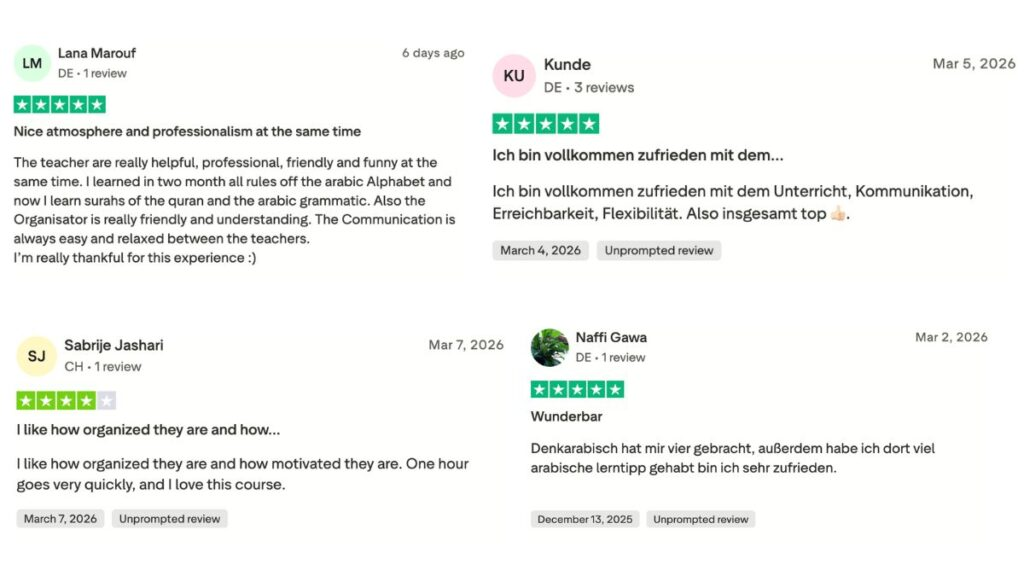
What Our Students Say About Denk Arabisch Academy
See what our students say about learning at Denk Arabisch Academy on Trustpilot. Read their experiences and check out more reviews to discover how our courses help improve Arabic.
Give Your Child the Gift of Faith with Denk Arabisch
Knowledge is the best inheritance you can leave for your children, but in a fast-paced world, finding the right resources can be overwhelming. Denk Arabisch is specifically built for German-speaking Muslims who refuse to compromise on quality or authenticity.
Why Choose Denk Arabisch?
- Tailored for Germany: We speak your language. Our courses are designed for kids who grow up in a German-speaking environment.
- Expert Educators: Our teachers are specialists in Quranic Tajweed, Arabic dialects, and Islamic studies.
- Interactive Classrooms: We don’t just lecture; we engage. Your child will love coming to class.
- Comprehensive Curriculum: From Arabic Levels for German Speakers to specialized Quran Memorization, we cover every step of the journey.
Specialized Courses for Muslim Kids
Designed specifically for German-speaking households to preserve identity and faith.
- Tajweed Course for German-Speaking Children: Master the rules of Quranic recitation with a focus on correct pronunciation and phonetic clarity tailored for non-native phonology.
- Quran Course for German-Speaking Children: A journey through the holy book focusing on memorization, understanding, and connecting with the divine message in a way that resonates with their daily lives.
- Arabic Lessons for German-Speaking Children: Building strong foundational skills in reading, writing, and speaking Arabic, bridging the gap between their German surroundings and their cultural heritage.
Don’t leave your child’s Islamic identity to chance. Ensure they have the tools to read the Quran with heart and understand their faith with clarity.
Enroll Now & Secure Your Child’s Future!
Click the “Contact Us” button at the top of the page or browse our Courses for Muslim Kids to find the perfect fit for your family today.
Study Islamic knowledge with Denk Arabisch Academy
Deepen your understanding of Islam through authentic and structured learning
Try a Free TrialConclusion
Teaching kids about Islam is a beautiful responsibility that shapes their identity, character, and relationship with Allah. It is not about perfection, but about love, patience, and consistency in everyday learning.
Children learn best when Islam is part of their daily life in a simple and natural way. Through small habits like saying du’a, listening to Quran, practicing good manners, and hearing meaningful stories, faith slowly becomes part of who they are.
By combining daily routines, storytelling, Quran learning, and a positive home environment, parents can raise children who understand Islam in a healthy and balanced way. The goal is to make Islam something they feel connected to, not something they are forced to memorize or follow without understanding.
It is also important to be patient and supportive, because every child learns differently. Some will respond quickly, while others need more time and repetition. What matters most is consistency and kindness in teaching.
FAQs
1. At what age should I start teaching my child about Islam?
There is no “official” start date, but Islamic education begins with immersion from birth. Infants can listen to the Quran, while toddlers can learn simple phrases like Bismillah. Formal concepts like Salah (prayer) are usually introduced more consistently around age seven, as recommended by the Sunnah, but the foundation of love for Allah starts from day one.
2. How do I explain “Allah” to a toddler who asks what He looks like?
Since Allah is beyond our physical imagination, focus on His attributes rather than a physical description.
The Analogy: You can explain that just as we feel the wind or see the light of the sun without seeing the source directly, we feel Allah’s love and see His creations.
The Focus: Use the Names of Allah (Asma-ul-Husna). Explain that He is Al-Basir (The All-Seeing) and Al-Wadud (The Most Loving).
3. My child is bored during Quran lessons. What should I do?
It is common for children to struggle with the discipline of Quranic Arabic. To fix this:
Shorten the sessions: 10–15 minutes of focused, happy learning is better than an hour of frustration.
Gamify it: Use apps, colorful flashcards, or “letter hunts” in the Mushaf.
Connect to the meaning: Don’t just teach the sounds; tell the story behind the Surah so the words come to life.
4. How can I teach my child about Jannah and Jahannam (Heaven and Hell)?
For young children (under 10), the focus should be predominantly on Jannah.
Jannah: Describe it as a place where they can have anything they imagine—limitless toys, beautiful nature, and meeting the Prophets.
Jahannam: Introduce this concept later as a place for those who are persistently unkind and refuse to follow Allah’s guidance, but always emphasize that Allah’s mercy outweighs His anger.
5. How do I handle Islamic holidays (Eid) in a Western or secular environment?
Make Eid feel “bigger” and more exciting than the secular holidays they see around them.
Decorate: Go all out with lights and banners.
Traditions: Create unique family traditions like an “Eid breakfast” or a special gift exchange.
Community: Take them to the Masjid for Eid prayer so they feel the strength and joy of the Ummah.