Morning is a sacred and highly blessed time in Islam, filled with divine mercy, spiritual renewal, and countless opportunities for remembrance of Allah (dhikr). It is the time when a new day begins, and a believer is given a fresh chance to reset their intentions, strengthen their faith, and seek Allah’s protection and guidance for everything that lies ahead.
Starting your day with Islamic Arabic morning sayings is not merely a daily habit or routine—it is a deeply rooted spiritual practice in the Sunnah of the Prophet Muhammad ﷺ. These morning supplications and remembrance phrases help purify the heart, calm the mind, and bring a sense of inner peace that carries through the entire day.
When a Muslim begins the morning with dhikr, they are actively placing their trust in Allah, seeking His blessings (barakah), and asking for protection from harm, stress, and unseen difficulties. This connection with Allah at the beginning of the day creates a powerful spiritual shield that influences thoughts, actions, and decisions throughout daily life.
In this comprehensive guide, you will explore the most beautiful and authentic Islamic morning sayings in Arabic, along with their meanings, transliterations, and spiritual benefits. You will also learn how to incorporate them into your daily routine in a simple and consistent way, so that your mornings become more peaceful, productive, and spiritually uplifting.
Table of Contents
What Are Islamic Arabic Morning Sayings?
Islamic Arabic morning sayings are known as:
- أذكار الصباح (Adhkar Al-Sabah)
- Morning supplications (duas)
- Sunnah remembrance phrases (dhikr)
These are short yet powerful phrases that a Muslim recites after Fajr prayer and throughout the early morning hours.
They are designed to:
- Strengthen faith (iman)
- Protect from harm and evil
- Bring peace to the heart
- Increase blessings in time and provision
- Keep the tongue constantly connected to Allah
Morning Adhkar is not just speech—it is a spiritual shield and a source of daily renewal.
Start your day with peace and structure through the Denk Arabisch Islamic Studies in Arabic Course and transform simple knowledge into deep understanding.
Below are some of the most authentic and widely recited morning sayings in Islam:
1. Ayat Al-Kursi (آية الكرسي)
Think of Ayat al-Kursi as your ultimate spiritual armor for the day. When you recite this verse with focus, Allah assigns a protector to guard you, and no devil or harm can get close to you until the evening.
﴿ اللَّهُ لَا إِلَهَ إِلَّا هُوَ الْحَيُّ الْقَيُّومُ لَا تَأْخُذُهُ سِنَةٌ وَلَا نَوْمٌ لَهُ مَا فِي السَّمَاوَاتِ وَمَا فِي الْأَرْضِ مَنْ ذَا الَّذِي يَشْفَعُ عِنْدَهُ إِلَّا بِإِذْنِهِ يَعْلَمُ مَا بَيْنَ أَيْدِيهِمْ وَمَا خَلْفَهُمْ وَلَا يُحِيطُونَ بِشَيْءٍ مِنْ عِلْمِهِ إِلَّا بِمَا شَاءَ وَسِعَ كُرْسِيُّهُ السَّمَاوَاتِ وَالْأَرْضَ وَلاَ يَؤُودُهُ حِفْظُهُمَا وَهُوَ الْعَلِيُّ الْعَظِيمُ ﴾ [ البقرة: 255]
Allah! There is no deity except Him, the Ever-Living, the Sustainer of all existence. Neither drowsiness overtakes Him nor sleep. To Him belongs whatever is in the heavens and whatever is on the earth. Who is it that can intercede with Him except by His permission? He knows what is [presently] before them and what will be after them, and they encompass not a thing of His knowledge except for what He wills. His Kursi extends over the heavens and the earth, and their preservation tires Him not. And He is the Most High, the Most Great.” (Qur’an, 2:255)
On a psychological level, reminding yourself that Allah never sleeps and holds the entire universe together brings an incredible sense of relief. Whatever worries you have about your day, you are leaving them in the hands of the One who controls everything.
2. Morning Dhikr of Protection
This is a very short, easy-to-remember phrase, but its impact is massive. By reciting this three times, you are actively asking Allah to protect you from any physical or hidden harms—whether that is a sudden illness, a toxic interaction, jealousy from others, or even accidents.
أَعُوذُ بِكَلِمَاتِ اللَّهِ التَّامَّاتِ مِنْ شَرِّ مَا خَلَقَ (ثلاث مرات)
“I seek refuge in the perfect words of Allah from the evil of what He has created.” (Three Times)
It gives you a deep, comforting sense of security as you step out of your door and walk into the unpredictability of the world.
3. Sayyidul Istighfar (Best Form of Seeking Forgiveness)
This is the ultimate expression of repentance, humility, and monotheism (Tawhid). The Prophet ﷺ stated that whoever recites this with sincere conviction in the morning and dies before the evening will be among the people of Paradise.
“اللَّهُمَّ أَنْتَ رَبِّي لَا إِلَهَ إِلَّا أَنْتَ، خَلَقْتَنِي وَأَنَا عَبْدُكَ، وَأَنَا عَلَى عَهْدِكَ وَوَعْدِكَ مَا اسْتَطَعْتُ، أَعُوذُ بِكَ مِنْ شَرِّ مَا صَنَعْتُ، أَبُوءُ لَكَ بِنِعْمَتِكَ عَلَيَّ، وَأَبُوءُ لَكَ بِذَنْبِي فَاغْفِرْ لِي، فَإِنَّهُ لَا يَغْفِرُ الذُّنُوبَ إِلَّا أَنْتَ”
O Allah, You are my Lord; there is no deity except You. You created me and I am Your servant, and I abide by Your covenant and promise as best as I can. I seek refuge in You from the evil of what I have done. I acknowledge Your favor upon me, and I acknowledge my sin, so forgive me; for indeed, none forgives sins except You.
The Prophet Muhammad ﷺ held this supplication in such high esteem that he referred to it as Sayyid al-Istighfar—the “Master of Seeking Forgiveness”—because of how deeply it captures the essence of faith.
He ﷺ stated that whoever recites this with sincere conviction and absolute certainty in their heart during the morning, and happens to pass away on that very day before evening comes, will be among the people of Paradise. Likewise, whoever recites it with the same deep conviction in the evening and passes away before the morning will enter Paradise.
4. Morning Praise of Allah
There is a reason the Prophet ﷺ called this the “Master” of seeking forgiveness. It is essentially a beautiful covenant you renew with Allah every morning. You are acknowledging that He made you, that you are doing your absolute best to stay true to Him, and that despite your flaws, you trust in His endless mercy.
أَصْبَحْنَا وَأَصْبَحَ الْمُلْكُ لِلَّهِ(1)، وَالْحَمْدُ لِلَّهِ، لَا إِلَهَ إِلَّا اللَّهُ وَحْدَهُ لَا شَرِيكَ لَهُ، لَهُ الْمُلْكُ، وَلَهُ الْحَمْدُ، وَهُوَ عَلَى كُلِّ شَيْءٍ قَدِيرٌ، رَبِّ أَسْأَلُكَ خَيْرَ مَا فِي هَذَا الْيَوْمِ وَخَيْرَ مَا بَعْدَهُ (2)، وَأَعُوذُ بِكَ مِنْ شَرِّ مَا فِي هَذَا الْيَوْمِ وَشَرِّ مَا بَعْدَهُ، رَبِّ أَعُوذُ بِكَ مِنَ الْكَسَلِ وَسُوءِ الْكِبَرِ، رَبِّ أَعُوذُ بِكَ مِنْ عَذَابٍ فِي النَّارِ وَعَذَابٍ فِي الْقَبْرِ (3).
We have entered the morning, and all dominion belongs to Allah. All praise is due to Allah. There is no deity except Allah alone, without a partner. To Him belongs dominion, and to Him belongs praise, and He has power over all things. My Lord, I ask You for the good of this day and the good of what follows it, and I seek refuge in You from the evil of this day and the evil of what follows it. My Lord, I seek refuge in You from laziness and the hardships of old age. My Lord, I seek refuge in You from punishment in the Fire and punishment in the grave.
The spiritual reward is immense: the Prophet ﷺ promised that if you say this in the morning with sincere belief and happen to pass away that day, you will enter Paradise. It wipes your slate clean and starts your day on a foundation of pure mercy.
5. Seeking Wellness and Protection
If you want a prayer that covers every single detail of your life, this is it. You are asking for Afiyah—which means complete wellness, safety, and peace of mind.
اللّهُـمَّ إِنِّـي أسْـأَلُـكَ العَـفْوَ وَالعـافِـيةَ في الدُّنْـيا وَالآخِـرَة ، اللّهُـمَّ إِنِّـي أسْـأَلُـكَ العَـفْوَ وَالعـافِـيةَ في ديني وَدُنْـيايَ وَأهْـلي وَمالـي ، اللّهُـمَّ اسْتُـرْ عـوْراتي وَآمِـنْ رَوْعاتـي ، اللّهُـمَّ احْفَظْـني مِن بَـينِ يَدَيَّ وَمِن خَلْفـي وَعَن يَمـيني وَعَن شِمـالي ، وَمِن فَوْقـي ، وَأَعـوذُ بِعَظَمَـتِكَ أَن أُغْـتالَ مِن تَحْتـي.
O Allah, I ask You for pardon and well-being in this world and the Hereafter. O Allah, I ask You for pardon and well-being in my religion, my worldly affairs, my family, and my wealth. O Allah, conceal my faults and calm my fears. O Allah, protect me from my front, from behind me, from my right, from my left, and from above me; and I seek refuge in Your greatness from being struck down from beneath me.
You ask Allah to protect your faith, your mental health, your family, your physical safety, and your hard-earned money. It literally covers you from all six directions (front, back, right, left, above, and below). Reciting this command is like protecting yourself with a strong barrier of divine security.
Build real spiritual and linguistic clarity with the Denk Arabisch Quranic Arabic Course for German Speakers and finally understand the meanings behind every Arabic word.
Read also: How Many Words Are In Arabic?
6. Gratitude Statement
In Islam, sleep is viewed as a minor form of death where your soul is temporarily released. Waking up is a literal gift of a brand-new life and a second chance. Saying this the second you wake up immediately programs your brain to feel grateful.
الحمد لله الذي أحيانا بعد ما أماتنا وإليه النشور
All praise is due to Allah, who gave us life after causing us to die [in sleep], and to Him is the final resurrection.
It turns your very first thought of the day away from stress, social media, or your endless to-do list, and redirects it toward the beauty of simply being alive.
7. Trust in Allah
This is the ultimate stress-reliever. When we say “Allah is sufficient for me,” we are declaring that no matter how overwhelming our problems, exams, jobs, or bills seem, Allah is bigger than all of them.
حَسْبِـيَ اللّهُ لا إلهَ إلاّ هُوَ عَلَـيهِ تَوَكَّـلتُ وَهُوَ رَبُّ العَرْشِ العَظـيم.
Allah is sufficient for me; there is no deity except Him. In Him I put my trust, and He is the Lord of the Mighty Throne.
Reciting this seven times builds a mental fortress of Tawakkul (trust). It quietens the voice of anxiety in your head and replaces it with a calm assurance that as long as you have Allah, you have enough to handle whatever comes your way.
8. Morning Blessing Request
Have you ever had days where hours fly by but you get absolutely nothing done, or you make money but it disappears instantly? That is a lack of Barakah (divine blessing). This short prayer asks Allah to put His blessings into your day.
اللَّهُمَّ بَارِكْ لَنَا فِي يَوْمِنَا هَذَا
O Allah, bless us in this day of ours.
With Barakah, a little bit of time is enough to accomplish a lot, a simple meal satisfies you, and your efforts yield beautiful results. It’s a quick ask that transforms the quality of your entire day.
Study Islamic knowledge with Denk Arabisch Academy
Deepen your understanding of Islam through authentic and structured learning
Try a Free TrialBenefits of Saying Islamic Morning Dhikr
Practicing Islamic Arabic morning sayings (أذكار الصباح) consistently brings countless spiritual, emotional, and practical benefits into a believer’s life. These morning supplications are not just words—they are a daily source of protection, peace, and renewal that shape how a person experiences their entire day.
When a Muslim begins the morning with dhikr, they are starting their day in remembrance of Allah, which fills the heart with light, stability, and reassurance. This simple act creates a powerful ripple effect that influences thoughts, emotions, decisions, and interactions throughout the day.
Below are some of the most important benefits of morning dhikr:
1. Spiritual Protection
Morning adhkar act as a strong spiritual shield that protects the believer from harm, evil influences, jealousy, the evil eye, and unseen negativity. It is a form of divine protection that surrounds the believer throughout the day.
When a person begins their day remembering Allah, they are placing themselves under His care and mercy, which brings a deep sense of safety and trust in His plan.
2. Inner Peace
One of the greatest benefits of morning dhikr is the sense of inner calm it brings to the heart. In a fast-paced world filled with stress and pressure, remembrance of Allah becomes a source of emotional balance and stability.
It reduces anxiety, calms overthinking, and helps the heart feel more centered and secure. This peace is not temporary—it becomes a steady feeling that grows stronger with consistency.
3. Increased Barakah (Blessing)
Starting the day with dhikr invites barakah (blessings) into everything a person does—time, work, health, and even decisions. A blessed day is not necessarily a day without problems, but a day where things feel easier, more meaningful, and more productive.
Morning remembrance helps a person manage time better, feel more focused, and experience success in both small and big tasks.
4. Strengthened Faith
Daily repetition of Islamic morning sayings strengthens the connection between the believer and Allah. Over time, it builds consistency in worship and keeps the heart spiritually alive.
This regular remembrance increases awareness of Allah in daily life, making faith not just something practiced in prayer, but something felt throughout the entire day.
5. Positive Mindset
Morning dhikr naturally encourages gratitude, optimism, and hope. When a person begins their day remembering Allah’s mercy and blessings, they are more likely to focus on what is good rather than what is missing.
This creates a healthier mindset that helps reduce negativity, frustration, and emotional imbalance, replacing them with patience and contentment.
Go beyond memorization when you join the Denk Arabisch Arabic Course for Beginners and start building a strong foundation in real Arabic understanding.
Read also: Alhamdulillah In Arabic
When Should You Say Morning Supplications?
Islamic scholars recommend that morning adhkar be recited within a specific time frame to gain the full spiritual benefit:
- After Fajr prayer (best and most recommended time)
- Until sunrise (ideal period for morning remembrance)
- Can be continued until before Dhuhr if missed earlier
While timing is important, consistency is even more important. Islam encourages regularity over perfection, meaning that even if a person cannot complete all adhkar at the ideal time, doing them later is still beneficial and rewarded.
The key is to build a sustainable habit—one that becomes part of daily life rather than an occasional practice. Over time, this consistency transforms not only the morning routine but the entire spiritual state of the believer.
How to Build a Morning Dhikr Routine?
Here is a simple routine you can follow daily:
1. Wake up and say: الحمد لله الذي أحيانا بعد ما أماتنا وإليه النشور
2. Perform Fajr prayer
3. Recite:
- Ayat Al-Kursi
- 3 Quls (Surah Al-Ikhlas, Al-Falaq, An-Nas)
4. Say key morning duas:
- أذكار الصباح
- Astaghfirullah (100 times if possible)
5. Begin your day with intention (niyyah)
Why Islamic Morning Sayings Are Powerful for Daily Life?
Islamic morning sayings are not just spiritual rituals or repeated words—they are a complete way of shaping your mindset, emotions, and behavior from the very beginning of the day. When a believer starts their morning with the remembrance of Allah (dhikr), they are setting the tone for the entire day with faith, clarity, and inner stability.
Morning adhkar works as a spiritual foundation that connects the heart to Allah before the distractions of work, stress, and daily responsibilities begin. This connection helps the believer stay grounded, focused, and emotionally balanced no matter what challenges arise during the day.
A person who starts the morning remembering Allah is more likely to:
- Stay calm under pressure and avoid emotional reactions
- Make better and more thoughtful decisions throughout the day
- Avoid negativity, toxic thoughts, and harmful behavior
- Feel content and grateful with what they have
- Approach life with patience, trust, and optimism
- Experience inner peace even during stressful situations
These benefits are not only spiritual—they also affect mental health and emotional well-being. Morning dhikr brings a sense of structure and stability to the heart, helping a person move through life with confidence and calmness instead of anxiety or confusion.
In this way, Islamic morning sayings act as emotional and spiritual grounding. They remind the believer that Allah is in control of everything, which reduces fear and increases trust (tawakkul). This mindset shift is one of the most powerful transformations a person can experience in daily life.
Experience real-life communication skills with the Denk Arabisch Arabic Personal Pronouns Course and start using Arabic naturally in daily situations.
Common Mistakes People Make When Saying Morning Dhikr
Despite the great rewards of morning dhikr, many people miss its true impact because of simple but important mistakes that reduce its effectiveness in their lives.
Many people miss the real benefit of morning dhikr because they:
- Rush through the Adhkar without understanding its meaning or reflecting on it
- Skip it completely on busy or stressful days, thinking it is not essential
- Treat it as an optional routine instead of a core part of daily spiritual life
- Only recite the words without presence of heart or awareness
- Focus on finishing quickly rather than connecting deeply with Allah
One of the biggest misunderstandings is treating dhikr as a mechanical habit rather than a moment of spiritual connection. Islam encourages not only recitation but also understanding, reflection, and sincerity. The true power of morning sayings comes when the tongue, heart, and mind are all engaged together.
When morning dhikr is done with awareness and consistency, it becomes a source of transformation—changing not just the start of the day, but the entire way a person thinks, feels, and responds to life.
Read also: Good Night In Arabic
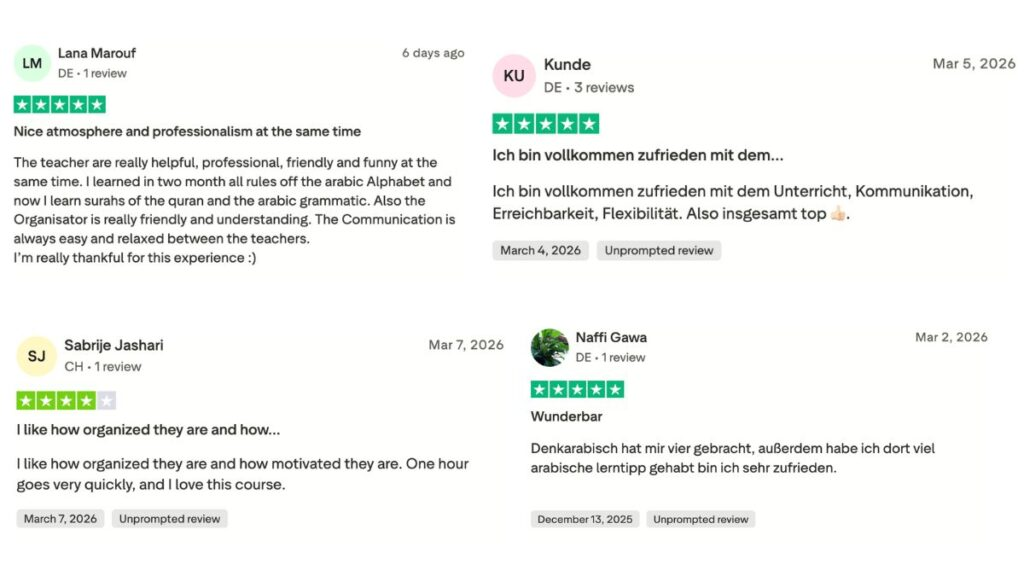
What Our Students Say About Denk Arabisch Academy
See what our students say about learning at Denk Arabisch Academy on Trustpilot. Read their experiences and check out more reviews to discover how our courses help improve Arabic.
Start Learning With Denk Arabisch!
At Denk Arabisch, we don’t just teach Arabic — we help you speak, understand, and live the language through structured, goal-oriented courses designed for real results.
If you’re serious about mastering Arabic, this is where your journey starts.
Denk Arabisch offers powerful, results-driven courses:
- Arabic Course for Beginners: Start from zero and build a strong foundation in reading, writing, speaking, and understanding Arabic with clear, step-by-step guidance.
- Quranic Arabic Course for German Speakers: Stop just reading translations — understand the Quran directly by learning its original language and deepening your connection with every verse.
- Islamic Studies in Arabic Course: Go beyond language and explore Islamic knowledge in Arabic, including key concepts, vocabulary, and texts that strengthen both your faith and understanding.
- Arabic Personal Pronouns Course: Focus exactly on what you need: speaking, listening, reading, writing, or practical real-life Arabic used in daily situations.
- Arabic Dialect Courses: Learn how people actually speak in the Arab world and communicate naturally in conversations with native speakers across different regions.
- Arabic Prepositions Course: Whether you’re a complete beginner or advancing to fluency, structured levels keep your progress consistent and measurable.
Every day you wait is another day you’re not improving.
Thousands of students have already started transforming their Arabic skills with Denk Arabisch — now it’s your turn.
Enroll today and start learning Arabic the way it should be learned: clear, structured, and effective.
Study Islamic knowledge with Denk Arabisch Academy
Deepen your understanding of Islam through authentic and structured learning
Try a Free TrialConclusion
Islamic Arabic morning sayings are a beautiful and powerful way to begin your day with faith, peace, gratitude, and divine protection. They are not just words you repeat in the morning, but a spiritual connection that brings your heart closer to Allah and fills your day with calmness and purpose.
These morning supplications and remembrance phrases help the believer start the day with the right mindset—one of trust in Allah, hope in His mercy, and awareness that every new morning is a gift and a fresh opportunity for forgiveness, growth, and guidance. When a Muslim begins their day with dhikr, they are actively inviting barakah (blessings) into their time, work, health, and decisions.
Islam teaches us that the morning is a critical moment of renewal, where the heart is most receptive and the mind is clear. That is why engaging in morning adhkar strengthens spiritual awareness and builds emotional resilience against stress, anxiety, and life challenges.
Even a few minutes of sincere morning dhikr can transform your entire day—spiritually, emotionally, and even mentally. It brings a sense of inner peace that no worldly distraction can replace, and it reminds the believer that Allah is in control of everything.
Start tomorrow morning with remembrance, reflection, and gratitude—and you will begin to notice a real difference in your heart, mindset, and daily life. Over time, this simple habit becomes a source of strength, stability, and lasting spiritual light.
FAQs
1. What is the best morning dhikr in Islam?
The best include Ayat Al-Kursi, Sayyidul Istighfar, and general remembrance like “Alhamdulillah”.
2. Can I say morning duas in English?
Yes, but Arabic is preferred as it preserves the original Sunnah wording.
3. Do I have to say all morning adhkar?
No, but consistency with even a few is highly rewarded.
4. What happens if I miss morning dhikr?
You can still say it later in the day; the reward is reduced but not lost.