Takeaway:
- There is no single word for “excuse me,” “sorry,” or “please” in Arabic. The language offers a range of expressions, each with its own social job.
Afwan(عفوًا) is the most versatile all-purpose tool: it works for light apologies, getting attention, or passing through a crowd.Law samaht(لو سمحت) literally means “if you allow” and is the go-to respectful opener when asking a stranger for help or making a request.- Gender matters. Most polite expressions change their ending depending on whether you’re addressing a man (
-ak/-t) or a woman (-ik/-ti). - For formal or professional settings, use
Ma'dhira(معذرة) orI'tizār(اعتذار) for “excuse me” and “apology,” andLaw takarramt(لو تكرّمت) for an elevated “please.” - Everyday apologies use
Asif(آسف, male) orAsifa(آسفة, female), whileSāmiḥnī(سامحني) asks for deeper forgiveness. - The most common “please” is
Min faḍlak(من فضلك), meaning “from your favor,” suitable for both formal and daily use. - A handwritten request or sign will often use the formal
Rajāʼan(رجاءً), whileArjūk(أرجوك) conveys a heartfelt, personal plea. - Placing your right hand over your heart while saying these phrases adds a layer of sincerity and is a widely recognized gesture of warmth.
- Real mastery comes from understanding context and intention, not from translating directly. Choosing the right phrase for the right moment shows cultural respect and emotional awareness.
Politeness is at the heart of human interaction, and language plays a powerful role in expressing respect, humility, and consideration. In Arabic, simple phrases like “excuse me,” “I’m sorry,” and “please” are not just words—they are social tools shaped by context, tone, and cultural awareness.
Unlike German, where one phrase can serve multiple purposes, Arabic offers a rich variety of expressions, each carefully chosen depending on the situation, the relationship between speakers, and the level of formality required. Whether you are asking for help, apologizing for a mistake, or making a polite request, knowing the right phrase can make your communication smoother and more meaningful.
Table of Contents
Ways to say Excuse Me In Arabic
In Arabic, there are several polite expressions used to say “excuse me,” depending on the situation. Some phrases are used to apologize, while others are used to get someone’s attention or politely pass by.
1. Afwan (عفوًا)
Afwan is perhaps the most versatile word. While it is commonly known as “You’re welcome,” it is the go-to phrase for minor social friction.
- Best for: Passing through a crowd, getting someone’s attention, or a very light apology.
- Social cue: Often paired with a slight nod or placing your right hand on your chest to show sincerity.
| English example | Arabic example |
| Afwan, could you move a little? | عفوًا، هل يمكنك أن تتحرّك قليلًا؟ |
2. Law Samaht (لو سمحت)
If you are about to ask a stranger for help or a question, start here. It literally translates to “If you allow,” making it incredibly respectful without being overly stiff.
Best for: Asking for directions, ordering at a restaurant, or requesting a favor.
Gender-specific:
- To a male: Law samaht
- To a female: Law samahti
Want to go beyond single words? Our Arabic Courses For German Speakers help you build full sentences so you can navigate any social situation with ease.
| English example | Arabic example |
| Law samaht, where is the nearest bank?Law samahti, where is the nearest bank? | لو سمحت، أين أقرب بنك؟لو سمحتِ، أين أقرب بنك؟ |
3. An Iznik (عن إذنك)
When you need to leave a conversation, enter a room, or physically move past someone, this phrase signals that you are seeking their “permission” to proceed.
- Best for: Stepping away from a group or asking to enter a private space.
- Variation: In many dialects, you will hear the shortened Bil-izin (بالإذن).
| English example | Arabic example |
| Asif, I didn’t mean to bump into you. | عن إذنك، أحتاج إلى المغادرة الآن. |
4. Baʿd Iḏnak (بَعْد إِذْنَك)
Particularly popular in Egypt and the Levant (Lebanon, Syria, Jordan, Palestine), this phrase translates to “after your permission.” It acts as a hybrid between “please” and “excuse me.”
- To a male: Baʿd iḏnak (بَعْد إِذْنَك)
- To a female: Baʿd iḏnik (بَعْد إِذْنِك)
Scenario: Stepping away from a conversation or asking to enter a room.
| English example | Arabic example |
| Baʿd iḏnak, I will leave now. | بعد إذنك، سأغادر الآن. |
5. Ma’dhira (معذرة) or Udhran (عذرًا)
These terms are the most literal translations of “Excuse me” and carry a higher level of formality. You will see these in textbooks or hear them in professional business settings.
- Best for: Arriving late to a meeting, formal writing, or interrupting a superior.
| English example | Arabic example |
| Ma’dhira, can you help me? | معذرة، هل يمكنك مساعدتي؟ |
6. Law Mumkin (لو ممكن)
Literally meaning “If possible,” this is a “softener.” It’s less of a command and more of a suggestion, which makes the person you are speaking to more likely to help.
- Best for: Casual requests where you don’t want to sound demanding.
| English example | Arabic example |
| Law mumkin, can you help me with this? | لو ممكن، تساعدني في ده؟ |
7. Asta’zin (أستأذنك)
This phrase literally means “I ask for permission.” It is a polite, proactive way to signal that you are about to do something—like entering a space or interrupting a conversation—and you are waiting for a nod of approval.
- Best for: Entering a room, politely interrupting a colleague, or asking to leave a group.
| English example | Arabic example |
| Asta’zinak, may I come in and ask a quick question? | أستأذنك، هل يمكنني الدخول للحظة؟ |
If you’re using Arabic for work or official matters, precision is key. Advance through our Arabic Levels For German Speakers to master formal etiquette.
Read also: Arabic Basics for Children – A Fun & Practical Guide
Ways to say I’m Sorry In Arabic
In Arabic, there are different ways to apologize depending on the situation and level of formality. Some expressions are simple and commonly used, while others add more emphasis or politeness.
1. Asif (آسف)
This is the most direct and common way to say “I’m sorry.” It is used for everything from bumping into someone to making a mistake at work. Unlike some other expressions, this one changes based on who is speaking.
- Male speaking: Asif (آسف)
- Female speaking: Asifa (آسفة)
| English example | Arabic example |
| Asif, I didn’t mean to bump into you. | آسف، لم أقصد أن أصطدم بك. |
2. I’tizār (اعتذار)
If you are in a professional setting or writing an email, you might want to use the formal noun for “apology.”
- The Phrase: Arju al-ma’dhira (أرجو المعذرة) — “I beg your pardon/forgiveness.”
- The Phrase: Ana i’tadhir (أنا أعتذر) — “I apologize.”
- Best for: Business environments, formal letters, or addressing someone of higher status.
| English example | Arabic example |
| I apologize for the inconvenience. | أنا أعتذر عن الإزعاج. |
3. Sāmiḥnī (سامحني)
When you have truly hurt someone’s feelings or made a significant error, you move beyond “sorry” and ask for forgiveness. This word carries more emotional weight.
- Addressing a male: Sāmiḥnī (سامحني)
- Addressing a female: Sāmiḥīnī (سامحيني)
- Best for: Friends, family, or deep personal regrets.
| English example | Arabic example |
| Please forgive me, I hurt your feelings. | سامحني، لقد آذيت مشاعرك. |
Learn Arabic with Denk Arabisch Academy
Speak and understand Arabic through a clear and effective learning system
Try a Free TrialWays to say Please In Arabic
Arabic offers several ways to say “please,” ranging from polite and formal expressions to more casual or emotional requests depending on the context.
1. Min Faḍlak (مِن فَضلِك)
This is the most widely recognized way to say “please” across the Arab world. It literally translates to “from your favor,” implying that you are asking for a kindness from the listener. It is appropriate for both formal settings and everyday polite interactions.
- To a male: Min faḍlaka (مِن فَضلِكَ)
- To a female: Min faḍliki (مِن فَضلِكِ)
Scenario: Asking a stranger to pass an item or requesting a pen in a meeting.
| English example | Arabic example |
| Give me the book, please. | من فضلك، أعطني الكتاب. |
2. Law Samaḥt (لَو سَمَحت)
Meaning “if you allow” or “if you permit,” this phrase is the “Swiss Army knife” of Arabic politeness. It is slightly more casual than Min faḍlak and is used constantly in spoken dialects.
- To a male: Law samaḥt (لَو سَمَحْتَ)
- To a female: Law samaḥti (لَو سَمَحْتِ)
Scenario: Asking for directions or getting someone’s attention in a crowded space.
| English example | Arabic example |
| Law samaḥt, can you show me the way? | لو سمحت، هل يمكنك أن تدلّني على الطريق؟ |
3. Law Takarramt (لَو تَكَرَّمت)
Coming from the root word for generosity (karam), this expression literally means “if you would be so kind/generous.” It is highly respectful and often used when addressing elders or in professional customer service.
- To a male: Law takarramta (لَو تَكَرَّمتَ)
- To a female: Law takarramti (لَو تَكَرَّمتِ)
Scenario: Asking a client for a formal signature or requesting a significant favor.
| English example | Arabic example |
| Law takarramt, please sign here. | لو تكرّمت، يرجى التوقيع هنا. |
Read also: Why Is The Quran In Arabic?
4. Rajāʼan (رَجاءً)
This is the adverbial form of “please” and is most common in written announcements, signs, or formal instructions. It sounds firm yet polite.
- Example: Rajāʼan, aghliqi al-hātifa (Please turn off the phone).
Scenario: Writing a formal email or posting a sign in a professional workspace.
| English example | Arabic example |
| Rajāʼan turn off your phone. | رجاءً، أطفئ هاتفك. |
5. Arjūk (أَرْجُوك)
While it can mean “please,” its tone ranges from “I ask you” to “I beg you.” It is a more personal and emotional way to make a request.
- To a male: Arjūka (أَرْجُوكَ)
- To a female: Arjūki (أَرْجُوكِ)
Scenario: When you are making a sincere, heartfelt plea or asking for a deep personal favor.
| English example | Arabic example |
| Arjūk, help me with this matter. | أرجوك، ساعدني في هذا الأمر. |
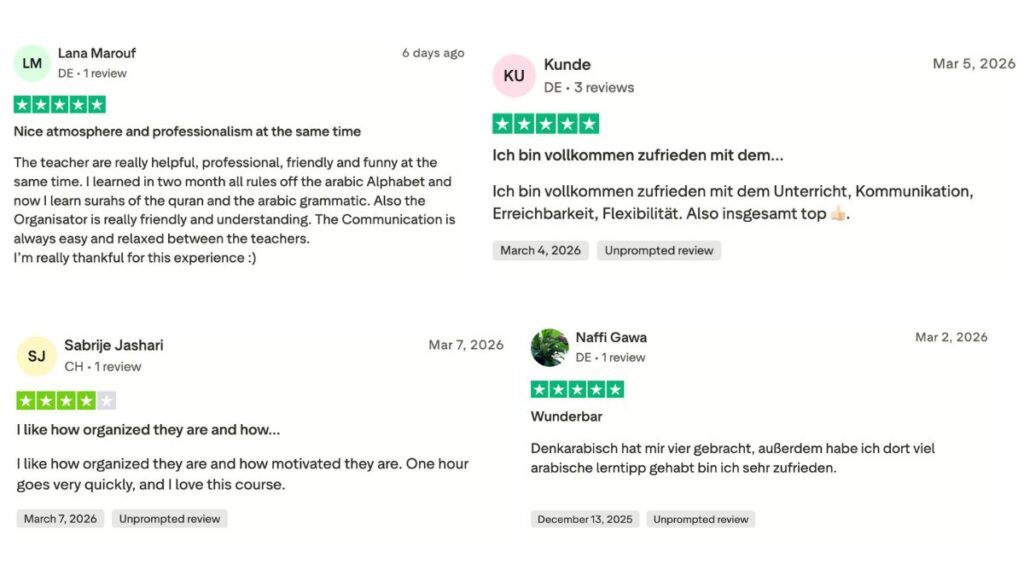
What Our Students Say About Denk Arabisch Academy
See what our students say about learning at Denk Arabisch Academy on Trustpilot. Read their experiences and check out more reviews to discover how our courses help improve Arabic.
Start Speaking Arabic Today with Denk Arabisch!
Stop struggling with confusing Arabic lessons that don’t work.
With Denk Arabisch, you’ll finally learn Arabic the practical way—focused on real conversations, real situations, and real results.
In just a short time, you will:
- Speak essential Arabic phrases confidently
- Understand everyday conversations
- Use polite expressions correctly in any situation
- Communicate naturally with native speakers
Forget endless grammar rules. We focus on what actually matters:
- Real spoken Arabic
- Easy step-by-step lessons
- Practical vocabulary you can use immediately
Learn key expressions like:
- عفوًا (Excuse me / You’re welcome)
- آسف (I’m sorry)
- لو سمحت (Please / Excuse me)
Whether you’re traveling, working, or learning for personal growth, Denk Arabisch gives you lessons to learn Arabic fast and effectively.
Our Courses Include:
- Arabic Courses for German Speakers
- Arabic Levels for German Speakers
- Arabic Dialect Courses for German Speakers
- Qur’an Learning Courses for German Speakers
- Islamic Studies Courses for German Speakers
- Courses for Muslim Kids for German Speakers
👉 Start today and see real progress from your very first lessons.
Join Denk Arabisch now and start speaking Arabic with confidence!
Learn Arabic with Denk Arabisch Academy
Speak and understand Arabic through a clear and effective learning system
Try a Free TrialConclusion
Mastering polite expressions in Arabic is less about memorizing vocabulary and more about understanding context and intention. The same situation may call for different phrases depending on whether you are speaking to a friend, a stranger, or someone in a formal setting.
By learning how to use phrases like عفوًا, آسف, and من فضلك appropriately, you not only improve your language skills but also show cultural respect and emotional awareness. Over time, with practice and real-life exposure, choosing the right expression will become natural.
In the end, Arabic politeness is not just about what you say—it’s about how, when, and why you say it.
FAQs
1. What is the difference between Asif and I’tizār?
Think of Asif as the everyday “I’m sorry.” You use it when you bump into someone or show up five minutes late. I’tizār (or the verb A’tadhir) is more formal, like saying “I offer my apologies.” You would use the latter in a business email or a formal letter to a supervisor.
2. Can I use Afwan for everything?
Almost! Afwan is the “Swiss Army Knife” of Arabic. It works as:
“You’re welcome” (response to Shukran).
“Excuse me” (to get past someone).
“Pardon?” (if you didn’t hear what someone said). However, it is too light for a serious mistake; if you break something, use Asif instead.
3. Why do some words change endings (e.g., Samaht vs. Samahti)?
Arabic is a gendered language. When you are speaking directly to someone, the suffix of the verb or particle usually changes:
-ak / -t: Ends with a short “a” sound for males.
-ik / -ti: Ends with a short “i” sound for females. Using the correct gender shows a higher level of fluency and respect.
4. How do I say “I’m sorry” to a group of people?
If you are apologizing to a crowd or a group of friends, you use the plural form.
Asif becomes Asifeen (آسفين).
Samihni becomes Samhouni (سامحوني).
5. Is there a physical gesture that goes with these phrases?
Yes! In many Arabic-speaking cultures, placing your right hand over your heart while saying Afwan, Asif, or Min Fadlak adds a layer of deep sincerity and warmth. It signals that the politeness is coming from the heart, not just the mouth.
6. What is the most polite way to interrupt someone?
If you must interrupt a conversation, the most graceful way is to use “Asta’zinak” (I seek your permission) or “Ma’dhira” (Excuse me). It acknowledges that their time is valuable before you state your request.