Takeaway:
- Islamic upbringing begins from infancy, aiming to nurture the child’s natural inclination toward God (fitra) and develop a character rooted in the Quran and the Sunnah, not just factual memorization.
- The core of all learning is Tawheed—the oneness of Allah—instilling that He is the Creator, ever-watchful, and most Merciful, shaping how children view themselves and the world.
- The Prophet Muhammad ﷺ is presented as the complete role model; children learn his honesty, mercy, patience, and justice, and are encouraged to mirror these traits in daily life.
- Quranic education follows a step-by-step path: Arabic letters, basic Tajweed, memorization of short chapters, and gradual understanding of meanings to build a lasting spiritual bond.
- The Five Pillars (Shahada, Salah, Zakat, Sawm, Hajj) are introduced as a practical framework for worship and social responsibility, taught gently and practised from an early age.
- The Six Articles of Faith (belief in Allah, angels, revealed books, messengers, the Day of Judgment, and divine destiny) form the inner belief system, offering emotional stability, purpose, and trust in Allah’s plan.
- Akhlaq and Adab (manners and character) are central—children learn respect, honesty, generosity, politeness, and anger management, applying faith in every interaction.
- Stories of the Prophets make moral lessons tangible; they teach patience, courage, trust in Allah, and forgiveness through vivid, emotionally engaging narratives.
- Daily worship (salah, du’a, gradual fasting) is cultivated with love, building discipline, mindfulness, and a natural habit of connecting with Allah throughout the day.
- Islamic values like gratitude, patience, forgiveness, responsibility, and helping others are woven into daily life, shaping a well-rounded personality.
- Children are taught they belong to one global Ummah, fostering unity, empathy, and brotherhood that crosses boundaries of race and language.
- Interactive methods—games, storytelling, visuals, and group activities—turn Islamic learning into an enjoyable, long-lasting experience rather than a theoretical lesson.
- Consistency is key: short daily sessions of Quran, du’a, and practice are far more effective than long, irregular lessons, building strong habits and a confident Islamic identity.
- Parents and teachers are the most powerful influence—they must teach by example, encourage worship with love, and create a supportive environment that makes faith beloved, not feared.
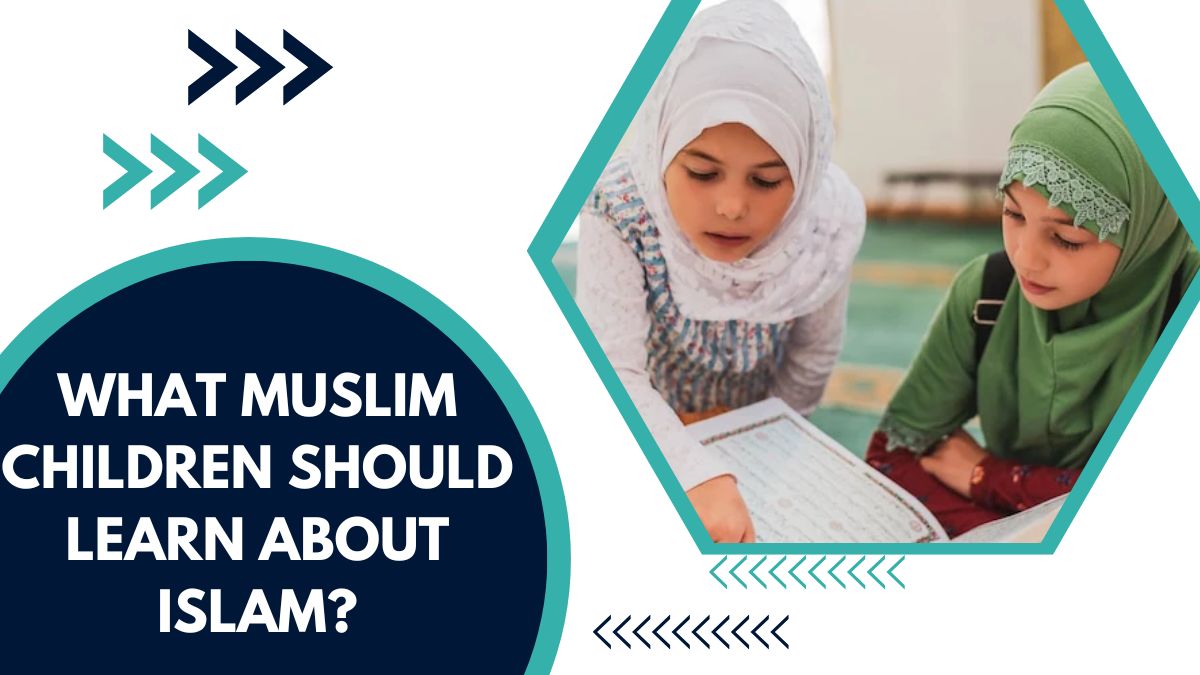
Teaching children about Islam is a journey that begins in infancy and evolves through various stages of development. The goal of Islamic education is not merely the memorization of facts, but the cultivation of a “Fitra” (natural inclination toward God) and the development of a moral compass rooted in the Quran and the Sunnah.
For parents, educators, and those curious about the Islamic upbringing, understanding the core components of this curriculum offers insight into how over a billion people are raised to view the world.
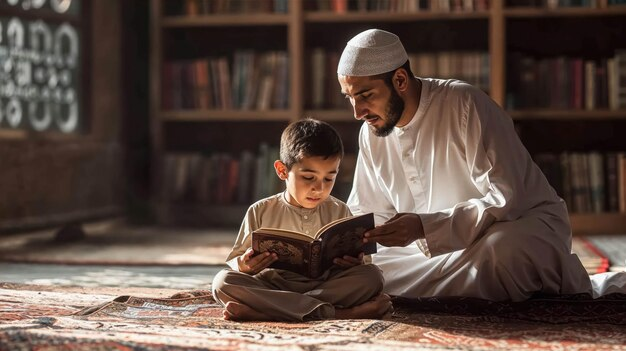
Table of Contents
1. Belief in Allah (Tawheed)
One of the first and most important lessons Muslim children learn is Tawheed, the belief in the oneness of Allah.
This belief forms the core of Islamic faith and shapes the way children understand themselves, the world around them, and their purpose in life. From an early age, children are encouraged to recognize Allah’s greatness, mercy, and wisdom through both worship and reflection on creation.
Children are taught that:
- Allah is the Creator of everything
- He has no partners or equals
- He is always watching over us
- He is the Most Merciful and Most Loving
This foundation shapes how children view the world. They learn that everything happens by Allah’s will and that they can always turn to Him in prayer and gratitude.
Teachers often introduce this concept through simple language, stories, and examples from daily life, such as the creation of the sky, plants, animals, and humans.
Build a lifelong bond with Allah—our Quran Course For German-Speaking Children at Denk Arabisch combines expert recitation with a supportive environment tailored specifically for young learners.
2. Learning About the Prophet Muhammad ﷺ
Children are also taught about the life and character of the Prophet Muhammad ﷺ, who is considered the final messenger in Islam.
His life serves as a complete role model for behavior, kindness, leadership, and honesty in all aspects of life. Through his biography (Seerah), children learn that good character is not just a concept but something lived and practiced daily.
They learn:
- He was honest and trustworthy (known as Al-Amin), even before prophethood, which made people trust him in trade and daily dealings.
- He showed kindness to children, animals, the poor, and neighbors, teaching mercy in every situation.
- He was patient in difficult situations, forgiving those who harmed him and responding with wisdom instead of anger.
- He taught people to worship Allah alone, guiding them away from idol worship and toward sincere faith and submission to Allah.
- He treated everyone with justice and respect, whether they were rich or poor, strong or weak.
- He encouraged good manners like smiling, speaking gently, and helping others without expecting anything in return.
Stories from his life are shared in simple, engaging ways so children can understand his compassion, humility, courage, and leadership. These stories are often repeated in classrooms, homes, and storytelling sessions to make the lessons easier to remember and apply.
The goal is not only to teach history, but to build character—helping children connect emotionally with his example and encouraging them to reflect his behavior in their everyday actions, such as honesty in school, kindness to friends, respect for parents, and patience in challenges.
3. The Quran: Learning, Reading, and Memorization
The Quran is the holy book of Islam, and children are introduced to it at an early age with a gradual, step-by-step approach that builds love, respect, and connection with it. Their learning journey usually includes:
A. Learning Arabic Letters
Children begin by learning the Arabic alphabet, sounds, and how each letter is written and pronounced. This stage is essential because it forms the foundation for correct Quran reading. They also practice connecting letters together to form simple words.
B. Recitation (Tajweed Basics)
As they progress, children are introduced to basic Tajweed rules, which help them pronounce the Quran correctly. They learn how to extend sounds, stop at the right places, and read with proper rhythm and clarity, which makes recitation more beautiful and accurate.
C. Memorization (Hifz)
Many children start memorizing short and easy chapters, especially from Juz’ Amma (the last part of the Quran). Common Surahs include Surah Al-Fatiha, Al-Ikhlas, Al-Falaq, and An-Nas. Repetition, listening, and daily practice help strengthen memorization over time.
D. Understanding Meaning
In more advanced stages, children are introduced to simple explanations of verses so they can understand the message behind what they are reading. This helps them connect emotionally and intellectually with the Quran, not just memorize it.
This process strengthens memory, discipline, patience, and spiritual connection with Allah. It also builds consistency and focus in daily routines.
Proper recitation requires guidance and practice. Specialized learning programs and Tajweed courses help children read fluently, confidently, and with correct pronunciation, especially when supported by structured learning at home.
Open the door to a rich heritage and a new language with our interactive Arabic Lessons For German-Speaking Children at Denk Arabisch, designed to make learning both fun and culturally immersive.
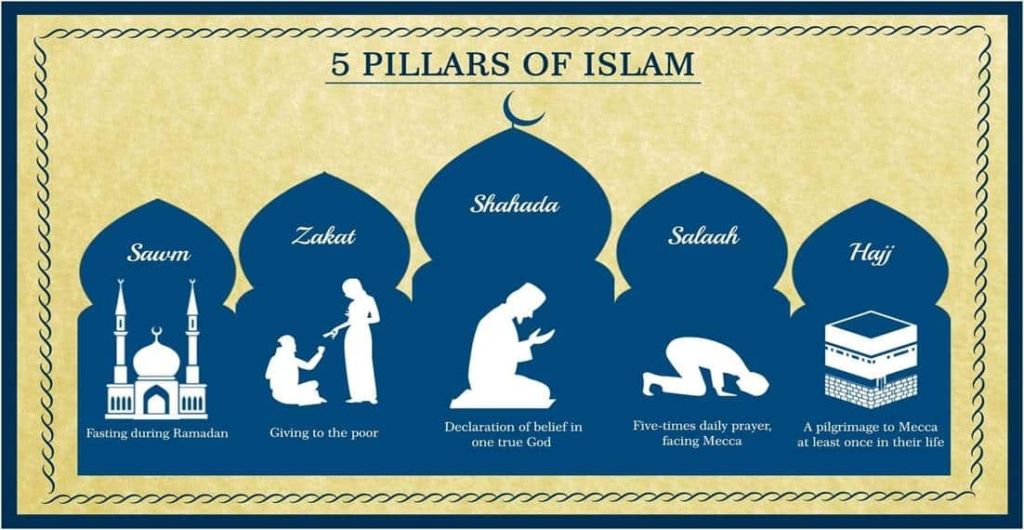
4. The Five Pillars of Islam
Children are taught that Islam is built upon five essential practices known as the Five Pillars, which guide a Muslim’s daily life, worship, and overall character.
These pillars are not just rituals, but a complete way of life that helps shape discipline, faith, and moral responsibility from an early age.
A. Shahada (Faith Declaration)
Believing that there is no god but Allah and that Muhammad ﷺ is His Messenger. Children learn that this statement is the foundation of Islam and the key that connects a person to the faith.
It shapes everything a Muslim does, from intentions to actions, and reminds them to live with sincerity, honesty, and devotion to Allah alone.
B. Salah (Prayer)
Performing five daily prayers teaches discipline, time management, and a constant connection with Allah throughout the day. Children are gradually trained to love prayer, beginning with learning the movements, short Surahs, and simple supplications.
Over time, Salah becomes a daily habit that brings peace, structure, and spiritual focus into their lives.
C. Zakat (Charity)
Giving to those in need teaches generosity, empathy, and social responsibility. Children learn that wealth is a trust from Allah and should be shared with others, especially the poor and needy.
Even small acts of giving, kindness, or sharing toys can be introduced as a way of building this value early in life, encouraging gratitude and compassion.
D. Sawm (Fasting)
Fasting during Ramadan helps children understand patience, self-control, and appreciation for blessings. They experience the meaning of hunger and gratitude, which increases empathy toward those who are less fortunate.
As they grow older, they may begin by fasting for part of the day, gradually building strength and commitment in a supportive environment.
E. Hajj (Pilgrimage)
Visiting Makkah if able teaches unity, equality, and devotion to Allah. Children learn that Muslims from all countries, languages, and cultures come together as one community, all wearing the same simple clothing and worshipping Allah equally.
This builds a deep sense of brotherhood, humility, and global unity in Islam.
Each pillar is explained in simple, practical, and age-appropriate ways so children can easily relate it to their daily lives. The aim is not only understanding, but also helping them gradually practice these values in real actions as they grow.
5. The Six Articles of Faith (Iman)
While the Five Pillars focus on outward actions and worship, the Six Articles of Faith focus on the inner beliefs that shape a Muslim’s heart, mindset, and understanding of life. Children are gently taught that true faith begins inside the heart and then reflects in behavior, choices, and attitude.
They are taught to believe in:
A. Allah (Monotheism)
Believing that Allah is the only Creator, Sustainer, and Controller of everything in existence. Children learn that Allah knows everything, sees everything, and is always near, which builds a sense of comfort, dependence, and love for Him.
They are also taught that worship is directed to Allah alone without partners.
B. The Angels
Believing in angels as special beings created by Allah from light. They never disobey Allah and always carry out His commands perfectly.
Children learn about important angels such as Jibreel (Gabriel), who delivered revelation to the prophets, and Mikaeel (Michael), who is associated with provision and nature.
C. The Revealed Books
Believing that Allah sent divine books as guidance for humanity. These include the Quran, the final and preserved revelation, as well as earlier scriptures like the Torah, Psalms, and Gospel.
Children learn that all true guidance originally came from Allah to help people distinguish right from wrong.
D. The Messengers
Believing in all prophets and messengers sent by Allah throughout history to guide different nations. From Adam عليه السلام to Prophet Muhammad ﷺ, each messenger taught people to worship Allah alone and live with good morals.
Children are taught that all prophets were truthful, honest, and chosen by Allah.
E. The Day of Judgment
Believing that there will come a final day when every person will be resurrected and held accountable for their actions in this life. Children are taught in a gentle way that every good deed will be rewarded and every wrong action will be accounted for, which encourages responsibility, fairness, and self-awareness.
F. Al-Qadr (Divine Destiny)
Believing that everything happens according to Allah’s complete knowledge, wisdom, and decree. This includes both good and difficult events. Children learn that while humans make choices, nothing happens outside of Allah’s will, which helps build patience, resilience, and acceptance during life challenges.
Together, these beliefs shape a child’s worldview in a balanced way—strengthening their trust in Allah, building emotional stability, and helping them understand life with purpose and meaning.
As children grow, these concepts also help them develop gratitude in good times and patience in difficult times, knowing that everything is part of Allah’s wise plan.
Read also: Best Surahs For Kids To Memorize – A Complete Guide For Parents
6. Islamic Manners and Good Character (Akhlaq and Adab)
A major part of Islamic education focuses on developing strong manners and character. Children learn that Islam is not only about worship, but also about how a person behaves in daily life and interacts with others.
They are taught to:
- Respect parents, teachers, elders, and all people
- Be honest in speech, studies, and actions, avoiding lying or cheating
- Share with others, help those in need, and show generosity
- Speak politely, use kind words, and avoid insults or harmful speech
- Show kindness to animals, the environment, and everything around them
- Control anger and respond with patience and calmness
These lessons are reinforced through daily examples, stories, and real-life practice, helping children grow into responsible, respectful, and caring individuals who positively impact their families and communities.
Language and understanding also play an important role in shaping manners and values. Learning Arabic and Islamic terminology helps children connect more deeply with the original sources of Islamic teachings.
7. Stories of the Prophets (Qisas al-Anbiya)
Islamic education includes inspiring and meaningful stories of the Prophets sent by Allah to guide humanity. These stories are especially effective for children because they combine imagination, emotion, and strong moral lessons.
They learn about:
- Prophet Nuh (Noah) عليه السلام – His long patience, perseverance, and trust in Allah despite rejection from his people.
- Prophet Ibrahim (Abraham) عليه السلام – His strong faith, courage in breaking idols, and willingness to sacrifice for Allah’s command.
- Prophet Musa (Moses) عليه السلام – His leadership, bravery in standing against ظلم (oppression), and trust in Allah when facing Pharaoh.
- Prophet Isa (Jesus) عليه السلام – His kindness, humility, and miracles granted by Allah as a sign of His power.
- Prophet Muhammad ﷺ – His mercy, honesty, leadership, and role as the final messenger sent as a blessing to all humanity.
These stories are not only historical accounts but also moral guides. They teach children values such as patience during hardship, bravery in truth, gratitude for blessings, forgiveness, and complete trust in Allah during difficult times.
Through repetition and storytelling, children develop emotional attachment to these examples, making it easier for them to apply the lessons in their own lives.
Empower your children with knowledge and values that last a lifetime through our comprehensive Islamic Studies For German Speakers program at Denk Arabisch, where faith meets clarity.
Study Islamic knowledge with Denk Arabisch Academy
Deepen your understanding of Islam through authentic and structured learning
Try a Free Trial8. Daily Worship and Practical Practice
Children are gradually introduced to daily Islamic practices in a simple, step-by-step way that helps them build habits naturally and with love for worship, not pressure.
Prayer (Salah)
They learn how to perform ablution (Wudu), including washing the hands, face, arms, wiping the head, and washing the feet in the correct order. They are also taught the steps of prayer, including standing, bowing, prostrating, and sitting. Gradually, they understand the importance of praying on time and how Salah brings peace, discipline, and structure into daily life.
Du’a (Supplication)
Children are introduced to short and meaningful supplications they can use in everyday situations, such as before eating, sleeping, waking up, entering or leaving the house, and traveling. These simple Du’as help them stay connected to Allah throughout the day and develop a habit of remembering Him in all actions.
Fasting
As children grow older, they begin to understand the wisdom and purpose behind fasting during Ramadan. They may start by fasting for a few hours or part of the day, gradually increasing their ability. This helps them develop patience, self-control, empathy for the poor, and appreciation for food and blessings.
These daily practices help children build discipline, mindfulness, and a strong spiritual awareness that becomes part of their routine life.
9. Islamic Calendar and Important Events
Children are also introduced to the Islamic (Hijri) calendar and the most important months and events in Islam. This helps them understand time from an Islamic perspective and connect their lives to religious occasions.
They learn about:
- Ramadan – The blessed month of fasting, worship, and increased good deeds. Children learn its spiritual importance and how families come together in worship and generosity.
- Eid al-Fitr – The joyful celebration marking the end of Ramadan, where Muslims thank Allah and share happiness with family, friends, and the community.
- Eid al-Adha – The festival of sacrifice, which teaches obedience to Allah, generosity, and caring for the poor through sharing food and charity.
- Islamic New Year (Hijri Calendar) – A reminder of the migration (Hijrah) of the Prophet ﷺ and the beginning of the Islamic calendar.
Children often participate in celebrations, decorations, and simple activities that help them feel connected to these events while also understanding their deeper meanings and spiritual lessons.
10. Islamic Values in Daily Life
Islamic education strongly emphasizes applying faith in everyday behavior, not just learning it theoretically. Children are taught that Islam is a complete way of life that guides how they think, act, and interact with others.
They learn values such as:
- Gratitude for blessings – Appreciating everything they have and saying “Alhamdulillah” in all situations.
- Patience during difficulties – Staying calm and trusting Allah during challenges, delays, or disappointments.
- Forgiveness toward others – Letting go of anger and learning to forgive mistakes.
- Responsibility in actions – Understanding that every action has consequences and being accountable for behavior.
- Helping family and community – Supporting parents, siblings, neighbors, and those in need with kindness and respect.
These values gradually shape their personality, decision-making, and emotional maturity, helping them grow into balanced and ethical individuals.
Master the art of beautiful recitation from an early age; At Denk Arabisch, our Tajweed Course For German-Speaking Children focuses on precision, pronunciation, and the grace of the Quranic language.
11. The Ummah
Children are taught that they are part of a large global community called the Ummah, which includes Muslims from all over the world regardless of race, language, culture, or nationality.
This concept builds strong feelings of unity and belonging. It teaches children that Muslims are like one body—when one part feels pain, the rest should care and respond.
They are also introduced to the idea of empathy and brotherhood in Islam, including the well-known meaning that a believer should love for others what they love for themselves. This helps them develop compassion, solidarity, and awareness of global Muslim issues in an age-appropriate way.
12. Learning Through Fun and Interactive Methods
Modern Islamic education for children does not rely only on traditional memorization or listening, but increasingly uses creative and interactive methods that make learning enjoyable, meaningful, and long-lasting.
The main idea is that children learn better when they are emotionally engaged and actively participating, rather than just receiving information.
These methods include:
- Educational games – Simple quizzes, memory games, and matching activities that help children remember Islamic concepts such as names of Prophets, pillars of Islam, or short Surahs in an enjoyable way.
- Storytelling and role play – Teachers and parents narrate stories of the Prophets and righteous people in a vivid, emotional way. Sometimes children act out scenes, which helps them understand moral lessons more deeply and personally.
- Visual aids and animations – Pictures, flashcards, videos, and animations simplify abstract concepts like angels, Hajj rituals, or historical events, making them easier to understand and remember.
- Group activities and quizzes – Children learn teamwork, healthy competition, and confidence through group challenges, classroom discussions, and friendly competitions.
These approaches turn Islamic education into a positive experience. Instead of feeling like a heavy subject, it becomes something children look forward to. Over time, this positive emotional connection helps strengthen their attachment to Islam and improves long-term learning retention.
Read also: Daily Quran Memorization Routine For Children – A Complete Guide For Parents
13. Importance of Consistent Islamic Education
Consistency is one of the most important factors in building a strong Islamic foundation in children. Islam is not learned in one lesson or one session—it is built gradually through repetition, practice, and daily exposure over time.
Short, regular learning sessions are often far more effective than long, occasional lessons because they help reinforce memory and build habits naturally. Even 10–20 minutes daily can make a significant difference when done consistently.
Regular Islamic education helps children:
- Retain knowledge more effectively – Frequent exposure to Quran, Du’as, and lessons strengthens memory and makes recall easier over time.
- Develop strong habits – Daily repetition of prayer, remembrance of Allah, and small acts of worship turn into natural habits rather than forced actions.
- Build confidence in worship and recitation – The more children practice, the more comfortable and confident they become in reading the Quran and performing Salah correctly.
- Strengthen Islamic identity – Consistent learning helps children feel proud of their faith and understand that Islam is part of their daily life, not just occasional practice.
- Prevent forgetfulness and disengagement – Without consistency, children may forget what they learned or lose interest over time.
Parents play a major role in maintaining this consistency by creating simple routines at home, such as reading a short Surah before bed, practicing Du’a after meals, or revising a small lesson daily. Encouragement, patience, and positive reinforcement are much more effective than pressure or criticism.
14. The Role of Parents and Teachers
Parents and teachers are the two strongest influences in shaping a child’s Islamic education and overall character. Their combined effort creates the environment in which a child’s faith either grows strongly or weakens over time.
Their responsibilities include:
- Encouraging worship in a loving way – Children should be gently guided toward prayer, Quran reading, and remembrance of Allah without fear or harsh pressure. Love for worship is built through encouragement and consistency.
- Teaching by example – Children learn more from what they see than what they are told. When parents and teachers show honesty, patience, kindness, and regular worship, children naturally imitate these behaviors.
- Creating a supportive environment – A calm, respectful, and faith-centered home or classroom helps children feel safe while learning Islam. This environment should allow questions, mistakes, and gradual improvement.
- Correcting mistakes with wisdom – Instead of punishment or anger, mistakes should be corrected gently, explaining the right behavior in a way children can understand and accept.
- Building love for Islam, not fear – The main goal is to make children love Allah, love the Prophet ﷺ, and love practicing Islam. When love is the foundation, learning becomes natural and long-lasting.
In addition, communication between parents and teachers is very important. When both sides work together, the child receives consistent messages and support, which strengthens learning outcomes.
Ultimately, a positive and balanced environment helps children grow into confident Muslims who practice their faith with understanding, love, and sincerity throughout their lives.
Exercises on What Muslim Children Should Learn About Islam?
Islamic Education Knowledge Assessment
1. Pillar-Practice Association
Which pillar focuses on social responsibility and empathy toward the poor?
2. Adab vs. Akhlaq
What term refers specifically to the outward manners and etiquette (like how to greet someone)?
3. Defining “Fitra”
What is the Islamic concept of “Fitra”?
4. Role Model Identification
Why was the Prophet Muhammad ﷺ known as “Al-Amin”?
5. Early Education Steps
What is the primary purpose of a “Qaida” in early Islamic learning?
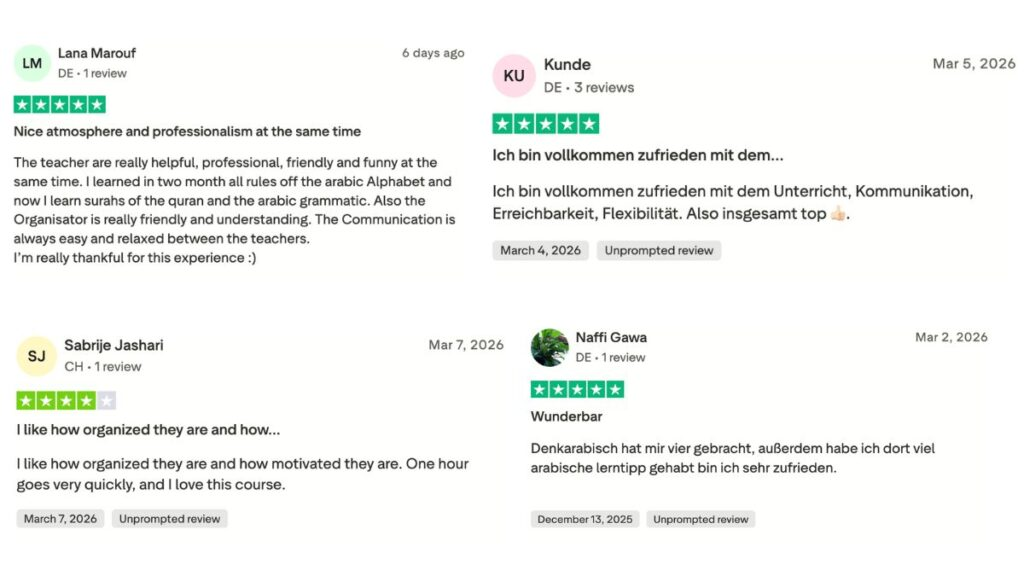
What Our Students Say About Denk Arabisch Academy
See what our students say about learning at Denk Arabisch Academy on Trustpilot. Read their experiences and check out more reviews to discover how our courses help improve Arabic.
Join Denk Arabisch Now!
Are you looking for a structured, engaging, and professional way to teach your children Arabic and Islamic principles? Denk Arabisch is your premier partner in Islamic education.
Why Choose Denk Arabisch?
- Native-Level Tutors: Learn from experts who understand the nuances of the language.
- Tailored Curriculum: Courses designed specifically for different age groups and skill levels.
- Flexible Learning: Join our online classes from anywhere in the world.
- Proven Results: We have helped hundreds of students master Quranic reading and Arabic conversation.
Our Specialized Courses
- Quran Course For German-Speaking Children A comprehensive program designed to help children master recitation and memorization through engaging, age-appropriate methods.
- Tajweed Course For German-Speaking Children Focused on the art of precise recitation, ensuring students master the correct pronunciation and phonetic rules of the Quran.
- Islamic Studies For German Speakers An essential curriculum covering faith, ethics, and daily practices, bridging the gap between Islamic heritage and the German language.
- Arabic Lessons For German-Speaking Children Interactive sessions that build strong foundations in speaking, reading, and writing Arabic, making the language accessible and fun.
Don’t wait to invest in your child’s future. Give them the gift of language and faith that will last a lifetime.
Study Islamic knowledge with Denk Arabisch Academy
Deepen your understanding of Islam through authentic and structured learning
Try a Free Trial
Conclusion
What Muslim children learn about Islam goes far beyond reading or memorization. It is a complete system of education that builds belief, character, and purpose. From learning about Allah and the Prophet Muhammad ﷺ to practicing good manners and daily worship, each lesson contributes to shaping a balanced and faithful individual.
By combining knowledge, practice, and values, Islamic education helps children grow into compassionate, responsible, and spiritually aware adults. For parents and educators, investing in this foundation is one of the most meaningful contributions to a child’s future.
FAQs
1. At what age should a child start learning about Islam?
Formal instruction often begins around age 5 to 7, but informal learning starts from birth. In many Muslim households, the Adhan (call to prayer) is whispered into a newborn’s ear, and toddlers naturally begin to mimic the physical movements of Salah (prayer) by watching their parents.
2. How do children learn to read the Quran if they don’t speak Arabic?
Most children start with a foundational primer called a Qaida. This teaches the phonetics of the Arabic alphabet, vowel markings, and connecting letters. Because the Quran has specific rules for pronunciation (Tajweed), children focus on mastering the sounds first, often followed by memorizing short chapters before moving on to full translation and meaning.
3. Are children required to fast during Ramadan?
No, children are not religiously obligated to fast until they reach the age of puberty. However, many children enjoy participating in “half-day” or “practice” fasts. This helps them build stamina and feel included in the family’s spiritual atmosphere and the festive evening meals (Iftar).
4. What is the difference between Akhlaq and Adab?
While both relate to character, they have slight nuances:
Akhlaq refers to the internal disposition or ethics (e.g., being a truthful person at heart).
Adab refers to the outward manners and etiquette (e.g., how you greet an elder or the proper way to eat). Together, they represent the “Islamic personality.”
5. Why are the Stories of the Prophets so important in Islamic education?
The Prophets are considered the ultimate role models. Instead of abstract concepts, children learn through narratives of real people who faced challenges. For example, the story of Prophet Nuh (Noah) teaches patience, while the story of Prophet Ibrahim (Abraham) teaches the importance of questioning and logic in faith.
6. How can parents make Islamic learning fun?
Modern educators recommend a “love-first” approach. This includes:
Using visual aids and animations to illustrate historical events.
Engaging in crafts, such as making a cardboard Kaaba or a Ramadan moon calendar.
Incentive charts for daily prayers or acts of kindness to build positive habits.
7. What is the “Fitra” mentioned in Islamic child-rearing?
Fitra is the Islamic concept that every child is born with an innate, natural inclination toward goodness and a belief in a Creator. The role of Islamic education is not to “change” the child, but to nurture this natural state and protect it from negative external influences.