Takeaway:
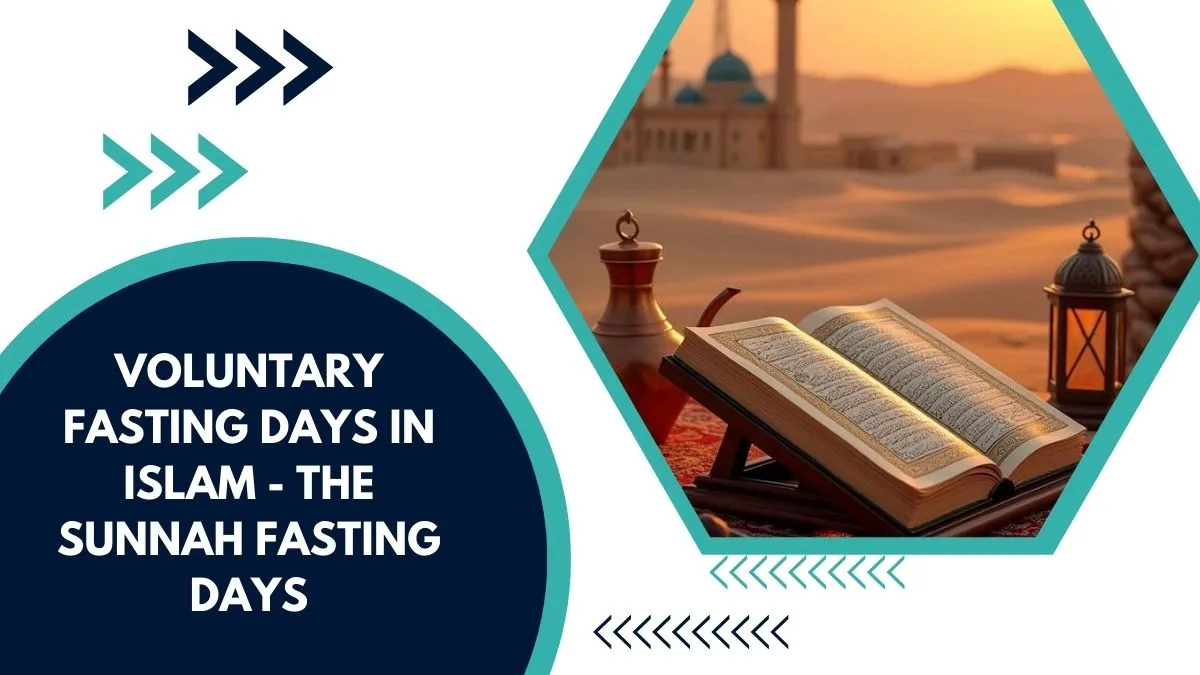
- Voluntary fasting in Islam extends spiritual growth beyond Ramadan, offering immense reward and a direct connection to Allah year-round.
- The most recommended Sunnah fasts include the White Days (13th–15th of each Hijri month), Mondays and Thursdays, six days of Shawwal, Day of Arafah, Ashura, and the fast of Dawud (alternate days).
- Fasting the six days of Shawwal after Ramadan grants the reward of fasting an entire year; they can be observed separately or consecutively, even combined with White Days.
- The Day of Arafah (9th Dhul Hijjah) expiates sins of the past and coming year; for non-pilgrims in Europe it is highly recommended.
- Ashura (10th Muharram) expiates the previous year’s sins; pairing it with the 9th or 11th is encouraged.
- Mondays and Thursdays are weekly opportunities to have deeds presented to Allah while fasting, making them easy to integrate into work and study routines in Germany, Austria, and Switzerland.
- Voluntary fasts can often be combined (e.g., Monday falling on a White Day) for multiple rewards, but obligatory make-up fasts should take priority.
- Consistency matters more than quantity; even one weekly fast brings profound spiritual benefit.
- Structured Arabic and Quran learning enhances understanding of these practices, helping European Muslims connect worship with deep linguistic and religious knowledge.
Voluntary Fasting Days in Islam are a spiritual complement to the obligatory fast of Ramadan. They allow Muslims to strengthen their relationship with Allah throughout the entire year. Especially for Muslims living in Germany, Austria, and Switzerland, observing sunnah fasting days brings structure, discipline, and inner clarity into daily life between work, university, and family commitments.
Allah says in a Hadith Qudsi:
كُلُّ عَمَلِ ابْنِ آدَمَ يُضَاعَفُ الْحَسَنَةُ بِعَشْرِ أَمْثَالِهَا إِلَى سَبْعِمِائَةِ ضِعْفٍ إِلَّا الصَّوْمَ فَإِنَّهُ لِي وَأَنَا أَجْزِي بِهِ
“Every deed of the son of Adam is multiplied – a good deed is rewarded ten to seven hundred times – except fasting. It is for Me, and I Myself will reward it.” (Hadith Qudsi, Muslim)
Voluntary fasting is therefore a direct connection with Allah that extends beyond Ramadan and opens doors to immense reward all year round.
Table of Contents
Complete List of Voluntary Fasting Days in Islam
The sunnah fasting days are distributed throughout the Islamic year, allowing flexible spiritual practice without overwhelm. These days are established in authentic Hadith and recommended by classical scholars.
For working professionals in Germany, Austria, and Switzerland, recurring days such as Mondays and Thursdays are especially easy to integrate.
| Fasting Day | Time | Special Reward |
| White Days | 13th 14th 15th of each Islamic month | Like fasting an entire month |
| Monday and Thursday | Weekly | Deeds are presented to Allah |
| Six Days of Shawwal | In Shawwal after Ramadan | Like fasting a full year |
| Day of Arafah | 9th Dhul Hijjah | Expiation for two years |
| Ashura | 10th Muharram | Expiation for one year |
| Fasting of Dawud | Every other day | Best voluntary fast |
| The month Sha‘ban | (13th, 14th, and 15th) | A recommended Sunnah of the Prophet ﷺ |
Read Also: Benefits and Importance of Fasting In Ramadan In Islam
1. White Days (13th–15th of Every Hijri Month
The White Days fall on the 13th, 14th, and 15th of every Islamic month. They offer a regular opportunity for spiritual renewal.
The Prophet ﷺ encouraged fasting these days. Abu Dharr reported:
“The Messenger of Allah commanded us to fast the three White Days – the 13th, 14th, and 15th.” (An-Nasai)
In another narration in Muslim, the Prophet ﷺ recommended fasting three days every month, and the most virtuous choice is the White Days.
For Muslims in Europe, this brings clear benefits:
- Three fixed days each month create routine
- Dates can be planned well in advance
- Employers can be informed early
- Short duration makes workplace integration easier
Study Islamic knowledge with Denk Arabisch Academy
Deepen your understanding of Islam through authentic and structured learning
Join now2. Fasting on Monday and Thursday
Fasting on Mondays and Thursdays is among the most consistent sunnah fasting days observed by the Prophet ﷺ throughout his life.
Aisha reported that the Prophet was keen to fast on Mondays and Thursdays.
The virtue of fasting on Mondays and Thursdays
- Presentation of deeds: Abu Huraira narrated that the Prophet said: “Deeds are presented on Mondays and Thursdays, and I love that my deeds be presented while I am fasting.” (At-Tirmidhi)
- Birth of the Prophet: When asked why he fasted on Monday, he replied: “That is the day I was born and the day revelation came to me.” (Muslim)
- Gates of Paradise open on these days
Those who wish to deepen their practice benefit immensely from understanding Arabic. Structured online programs at Denk Arabisch make this accessible and practical.
3. Fasting the Six Days of Shawwal
Whoever fasts six days in Shawwal after Ramadan receives the reward as if fasting the entire year, according to Hadith.
These days may be consecutive or spread throughout the month. Flexibility is explicitly permitted.
- Begin after Eid al Fitr
- Not obligatory
- Great reward equal to a full year of fasting
Can I Fast the Six Days Separately?
Yes. The majority of scholars allow both consecutive and distributed fasting.
For Muslims in Germany Austria and Switzerland:
- They may distribute the six days across weekends
- They can combine them with the White Days
- They have the entire month of Shawwal to complete them
Combining Intentions in Shawwal
If the six days coincide with the White Days, both intentions may be combined.
Important: You must complete six total days in Shawwal. If three are White Days, three additional days are required.
Read Also: What Is The Purpose Of Fasting In Ramadan?
4. Dhul Hijjah and the Day of Arafah
The first nine days of Dhul Hijjah are considered the best days of the year. The ninth day is Arafah.
Allah says:
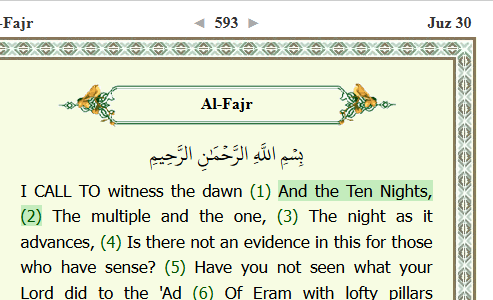
وَالْفَجْرِ وَلَيَالٍ عَشْرٍ
“By the dawn and the ten nights.” (Al-Fajr 1–2)
Fasting on the Day of Arafah Expiation for Two Years
Abu Qatada reported that the Prophet ﷺ said:
“Fasting on the Day of Arafah expiates the previous year and the coming year.” (Muslim)
For 2026:
The 9th of Dhul Hijjah 1447 is expected to fall on May 26 2026 in Germany Austria and Switzerland.
For pilgrims at Arafah fasting is not allowed. For non pilgrims worldwide it is highly recommended.
Read Also: Islamic Studies: Your Guide to Authentic Knowledge – Where to Begin?
5. Fasting in Muharram and Ashura
Muharram is one of the four sacred months. The Prophet ﷺ said:
“The best fasting after Ramadan is in the month of Allah, Muharram.” (Muslim)
The Virtue of Ashura
“Fasting on the day of Ashura expiates the past year.” (Muslim)
It is recommended to fast:
- 9th and 10th Muharram
- or 10th and 11th Muharram
This ensures distinction from other religious traditions.
Read also: Learning Arabic: The ultimate guide for Muslims in Germany
6. The Fasting of Prophet Dawud
The Fast of Prophet David (peace be upon him) is regarded as the best form of voluntary fasting. It consists of fasting one day and breaking the fast the next. The Prophet ﷺ described it as the most beloved type of fasting to Allah.
Among its virtues are:
- The Love of Allah: “The most beloved fasting to Allah is the fasting of David.”
- Great Reward: It is equivalent to fasting half of the year.
- Balance: It combines devotion with the body’s rightful need for rest.
It is recommended for those who are able to observe it without hardship, while maintaining other religious obligations and refraining from fasting on prohibited days such as the two Eids and the Days of Tashreeq.
Read Also: Rules for Fasting During Ramadan
7. Fasting in Sha’ban
Shaban holds a special place before Ramadan. Aisha reported:
“I never saw the Messenger of Allah fast more in any month than in Shaban.” (Bukhari and Muslim)
Wisdom behind fasting in Shaban:
- Preparation for Ramadan
- Increased spiritual awareness
- Deeds are raised to Allah
Caution: In the second half of Shaban, one should not begin new fasting unless it is part of an established routine.
Can You Combine Multiple Voluntary Fasts?
Yes. In many cases, you may combine two sunnah fasting intentions in one day (for example, fasting on a Monday that also falls on the White Days) and hope for the reward of both.
However, combining voluntary fasting with an obligatory fast (such as making up missed Ramadan days) is a matter of scholarly difference. To be safe, many scholars recommend completing obligatory fasts separately before observing voluntary ones.
At this stage, many learners seek structured guidance. Courses such as “Arabic Courses” or “Tajweed Quran Learning” at Denk Arabisch help connect religious practice with deep linguistic understanding.
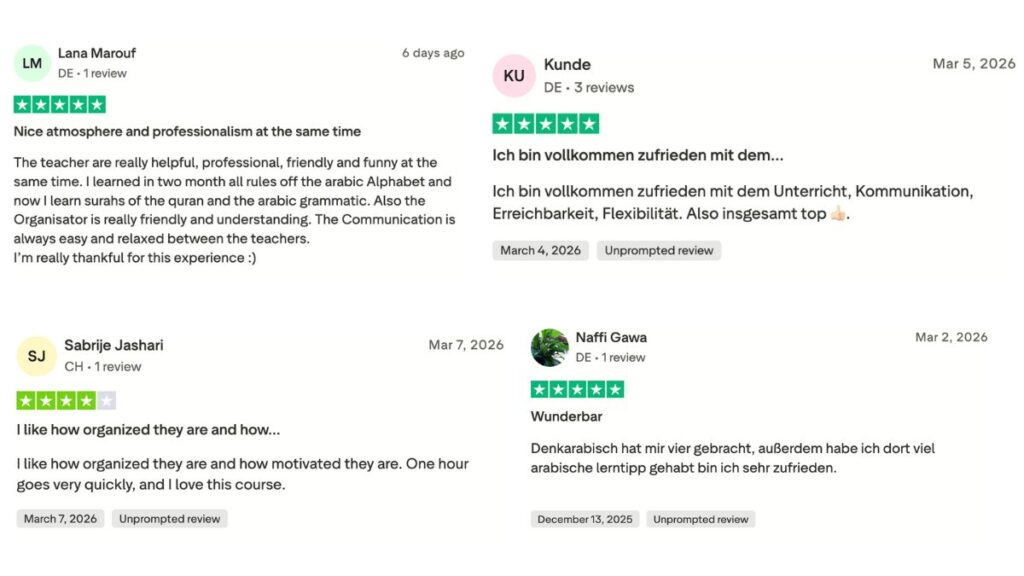
What Our Students Say About Denk Arabisch Academy
See what our students say about learning at Denk Arabisch Academy on Trustpilot. Read their experiences and check out more reviews to discover how our courses help improve Arabic.
Study Islamic knowledge with Denk Arabisch Academy
Deepen your understanding of Islam through authentic and structured learning
Join nowBegin Your Journey with Denk Arabisch
Would you like to deepen your understanding of Islamic practices and learn Arabic prayers and intentions correctly?
Denk Arabisch provides exactly the structured support German-speaking Muslims in Europe need.
Our Unique Advantages
- Native Arabic teachers with academic training from Al-Azhar University
- Cultural understanding of the challenges faced by Muslims in Europe
- Flexible online schedules ideal for professionals students and parents
- Personalized learning plans tailored to your level and goals
Our Courses
- “Tajweed Quran Learning” Perfect your recitation with expert guidance
- “Quran Memorization Program” Structured Hifz based on traditional Azhar methodology
- “Arabic Courses” From alphabet to fluent conversation
Start Today with Denk Arabisch
- Secure your free trial lesson with Denk Arabisch
- Begin your Arabic course for beginners with Denk Arabisch
- Start your Tajweed course with Azhar scholars at Denk Arabisch
FAQ
What is the correct intention for voluntary fasting?
The intention may be formed before midday as long as nothing has been eaten.
Is fasting on Friday alone allowed?
It is disliked unless combined with Thursday or Saturday.
Can I fast voluntarily while owing Ramadan days?
Obligatory missed days take priority.
On which days is fasting forbidden?
Fasting is prohibited on Eid al Fitr and Eid al Adha.
What breaks voluntary fasting?
Intentional eating or drinking. Intentional vomiting. Menstruation.
Can I Choose Only One Sunnah Fasting Day?
Yes. Consistency is more important than quantity. Even one Monday per week can have a profound impact.
Scholars emphasize regularity over intensity. Small consistent deeds are beloved to Allah.
Conclusion
Voluntary Fasting Days in Islam are a powerful way to strengthen spirituality throughout the year. Whether fasting on Mondays and Thursdays, observing the White Days, or fasting on Arafah, small consistent steps bring immense reward.
What matters most is sincerity and consistency.
If you wish to connect your fasting practice with a deeper understanding of the Quran and Arabic language, begin your structured learning journey today with Denk Arabisch.