Takeaway:
- Islamic games turn learning about Islam into a fun, engaging experience that helps children absorb faith, values, and knowledge naturally through play.
- They strengthen iman, encourage positive behavior, sharpen cognitive skills, boost social interaction, and make religious education enjoyable rather than a chore.
- Popular game types include Quran quizzes, prophet story role-plays, dua matching, Islamic board games, Arabic alphabet challenges, Tajweed games, and good deeds competitions.
- Parents and teachers should keep games age-appropriate, prioritize fun over strict teaching, use gentle rewards, and play consistently to build lasting habits.
- Digital Islamic apps can reinforce learning but shouldn’t replace structured, live instruction; DIY games made at home are affordable and equally effective.
- While games lay a strong foundation, mastering Quran, Arabic, and Islamic studies requires a structured system with expert guidance for lasting results.
Teaching children about Islam does not have to be limited to books and formal lessons. In fact, one of the most effective ways to help kids learn and love their religion is through play. Islamic games for kids combine fun, creativity, and meaningful lessons, making learning both enjoyable and memorable. Whether at home, in the classroom, or during Islamic events, these games can strengthen faith, improve knowledge, and build strong moral character.
In this article, we will explore the importance of Islamic games, their benefits, and a variety of engaging ideas suitable for children of different ages.
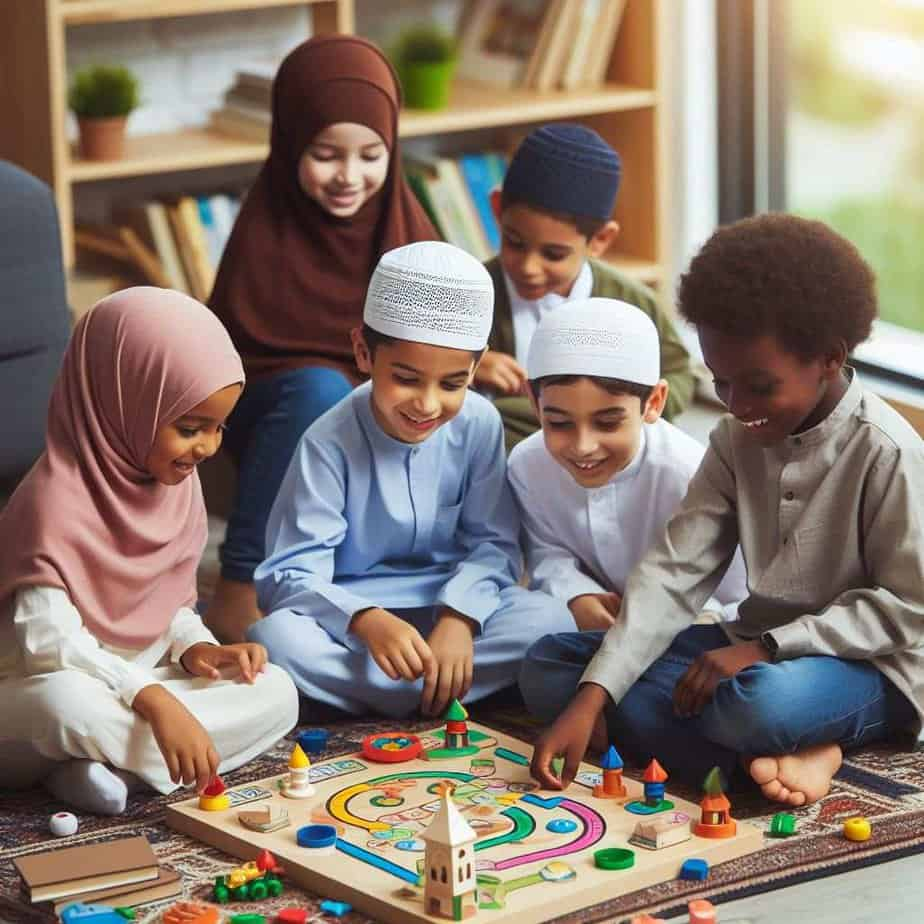
Table of Contents
Why Islamic Games Are Important for Kids
Children learn best when they are actively engaged. Traditional teaching methods may not always capture their attention, especially in today’s digital age. Games, however, stimulate curiosity and encourage participation.
Islamic games help children:
- Develop a love for Islam from an early age
- Understand important concepts in a simple and enjoyable way
- Build strong moral values and good manners
- Improve memory and focus
- Strengthen family and social bonds
By turning learning into a fun experience, children are more likely to remember what they learn and apply it in their daily lives.
Enhance this playful foundation with professional guidance through our Arabic Lessons For German-Speaking Children at Denk Arabisch, designed to make language acquisition as natural as playtime.
Benefits of Islamic Games for Children
Islamic games for children are more than just a source of entertainment—they are powerful tools for nurturing a child’s spiritual and moral development in a fun and engaging way. By combining play with meaningful Islamic teachings, these games help children absorb important values naturally while enjoying their time.
1. Strengthening Faith (Iman)
Through games that include stories of the Prophets, daily duas, and core Islamic teachings, children begin to form a natural and meaningful connection with their religion. Instead of learning through memorization alone, they experience Islam in a way that feels alive and relevant to their daily lives.
These interactive experiences help children understand the beauty of worship, the importance of trusting Allah, and the value of good character. Over time, this playful exposure nurtures a deep sense of iman, building a strong spiritual foundation that stays with them as they grow.
2. Encouraging Positive Behavior
Many Islamic games are designed around essential moral values such as honesty, kindness, patience, generosity, and respect for others. By engaging in scenarios where these values are practiced—whether through role-playing, storytelling, or reward-based challenges—children learn how to apply good manners in real-life situations.
Unlike traditional instruction, games allow children to experience these virtues, making them more likely to adopt them naturally. This repeated reinforcement helps shape their character and encourages them to act in ways that reflect Islamic ethics both at home and in society.
3. Enhancing Cognitive Skills
Islamic games often incorporate elements like puzzles, quizzes, memory challenges, and problem-solving activities that stimulate a child’s brain development. While learning about Islamic topics such as the names of Allah, Quranic verses, or historical events, children are also sharpening their thinking abilities, improving concentration, and developing better memory retention.
These cognitive benefits support their overall academic growth, making Islamic games a well-rounded educational tool that nurtures both the mind and the soul.
Deepen their understanding of these values with our comprehensive Islamic Studies Course For German-Speakers, where faith and character-building go hand in hand.
4. Promoting Social Interaction
Group-based Islamic games encourage children to interact with one another in a positive and meaningful way. Through teamwork, collaboration, and shared goals, children learn how to communicate effectively, listen to others, and respect different perspectives.
These social interactions help build confidence, empathy, and a sense of belonging within a community. Playing together also strengthens friendships and creates a supportive environment where children can grow emotionally and socially while staying connected to Islamic values.
5. Making Learning Enjoyable
One of the greatest advantages of Islamic games is that they transform learning into an enjoyable and exciting experience. When children associate Islamic education with fun and play, they become more eager to participate and more motivated to learn.
This positive emotional connection helps reduce resistance to learning and encourages curiosity about their religion. As a result, children develop a lifelong love for gaining Islamic knowledge, seeing it not as a task, but as something they genuinely enjoy and look forward to.
Types of Islamic Games for Kids
There are many types of Islamic games that cater to different interests and age groups. Below are some of the most popular and effective options.
1. Quran Quiz Games
Quran quiz games are a great way to test and reinforce children’s knowledge in a fun way.
How to Play:
- Ask questions about short surahs, meanings, or stories
- Give points for correct answers
- Offer small rewards or encouragement
Example Questions:
- Which surah is the shortest in the Quran?
- How many pillars of Islam are there?
- Who was the first prophet?
Benefits:
- Improves memory
- Reinforces Islamic knowledge
- Builds confidence
From letters to lifelong devotion—watch your child progress step-by-step with our Quran Course for German-Speaking Children.
2. Islamic Story Role-Play
Children love acting and storytelling. Role-playing stories of prophets allows them to engage emotionally and creatively.
How to Play:
- Assign characters from Islamic stories
- Let children act out the story
- Use simple costumes or props
Examples:
- Story of Prophet Nuh and the Ark
- Story of Prophet Ibrahim and the fire
- Story of Prophet Musa and the sea
Benefits:
- Enhances understanding of stories
- Builds confidence and creativity
- Helps children remember lessons better
3. Dua Matching Game
This game helps children learn daily duas in a simple and interactive way.
How to Play:
- Write duas on one set of cards
- Write their meanings on another set
- Mix them and let children match correctly
Benefits:
- Helps memorize duas
- Improves understanding of meanings
- Strengthens daily Islamic habits
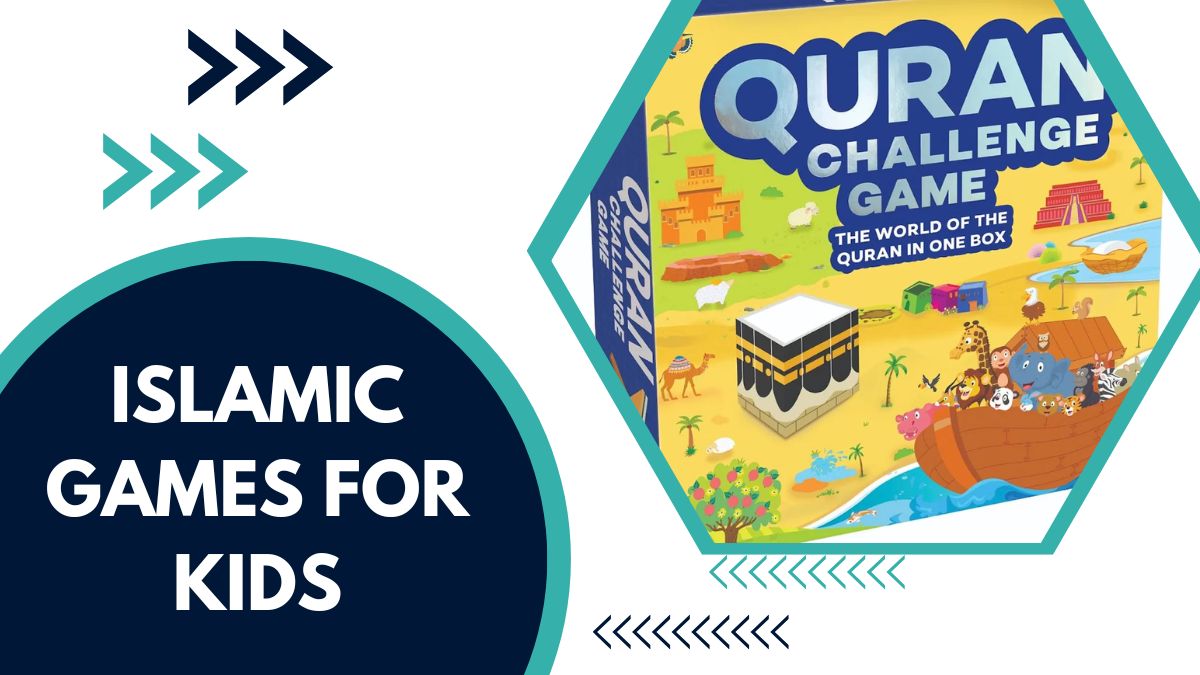
4. Islamic Board Games
Board games designed with Islamic themes are excellent for structured learning.
Ideas:
- Path-to-Jannah board game
- Good deeds vs bad deeds game
- Islamic trivia board game
Benefits:
- Encourages strategic thinking
- Teaches consequences of actions
- Promotes family bonding
5. Arabic Alphabet Games
Learning Arabic letters is essential for reading the Quran. Games make this process easier and more enjoyable.
Game Ideas:
- Letter matching cards
- Alphabet puzzles
- “Find the letter” scavenger hunt
Benefits:
- Improves letter recognition
- Builds a foundation for Quran reading
- Makes language learning fun
Supplement their play with our specialized Arabic Alphabet Course For German Speakers, ensuring every letter is mastered with precision.
Read also: Stories Of The Prophets For Kids – Inspiring Islamic Stories That Shape Faith And Character
6. Tajweed Challenge Game
Tajweed rules can be difficult for children, but games make them easier to understand.
How to Play:
- Write Tajweed rules on cards
- Recite a verse
- Ask the child to identify the rule
For Beginners:
Start with simple rules like:
- Madd
- Noon Sakinah
Benefits:
- Improves Quran pronunciation
- Builds listening skills
- Encourages focus
Ready to move beyond the game? Our Tajweed Course For German-Speaking Children provides the expert structure needed for beautiful and correct Quranic recitation.
Study Islamic knowledge with Denk Arabisch Academy
Deepen your understanding of Islam through authentic and structured learning
Try a Free Trial7. Islamic Charades
A fun and active game where children act out Islamic words or concepts without speaking.
Examples:
- Prayer (Salah)
- Fasting (Sawm)
- Charity (Zakat)
Benefits:
- Encourages creativity
- Reinforces Islamic concepts
- Promotes physical activity
8. Good Deeds Competition
This game encourages children to practice Islamic values in real life.
How to Play:
- Create a chart for good deeds
- Give points for actions like helping others, praying, or being kind
- Reward consistency, not just results
Benefits:
- Builds positive habits
- Encourages real-life application
- Strengthens character
9. Islamic Memory Game
Memory games are simple yet highly effective for learning.
How to Play:
- Use cards with Islamic words, pictures, or concepts
- Place them face down
- Children take turns flipping two cards to find matches
Benefits:
- Improves memory and concentration
- Reinforces learning
- Suitable for all ages
10. Ramadan and Eid Games
Special occasions are perfect opportunities for themed games.
Ideas:
- Ramadan calendar challenge
- Eid treasure hunt
- Fasting reward chart
Benefits:
- Builds excitement for Islamic events
- Creates lasting family traditions
- Deepens understanding of Islamic practices
Imagine your child not only enjoying Islamic games but also reading the Quran confidently and understanding Arabic naturally.
That’s exactly what Denk Arabisch helps you achieve with step-by-step guidance.
Tips for Parents and Teachers on Playing Islamic Games with Their Kids
To make Islamic games more effective, consider the following tips:
1. Keep It Age-Appropriate
Choose games that match the child’s age and understanding level. Younger children need simple and visual activities, while older kids can handle more complex games.
2. Focus on Fun First
The main goal is to make learning enjoyable. Avoid turning games into strict lessons.
3. Encourage Participation
Let children take the lead, ask questions, and express themselves freely.
4. Use Rewards Wisely
Small rewards or praise can motivate children, but focus more on encouragement than competition.
5. Be Consistent
Regular play helps reinforce learning and build lasting habits.
For families seeking a structured academic approach, explore our Arabic Course For German Speakers to provide your children with a deep, context-rich education.
Digital Islamic Games
In today’s world, digital games can also be beneficial when used correctly.
Examples:
- Quran learning apps
- Islamic quiz apps
- Interactive story apps
Benefits:
- Accessible anytime
- Engaging visuals and sounds
- Suitable for independent learning
However, it is important to monitor screen time and ensure the content is appropriate and beneficial.
Our platform at Denk Arabisch combines technology with live teaching, giving your child the best of both worlds.
Read also: Home-Based Islamic Activities – Meaningful Ways To Strengthen Faith And Learning At Home
Creating Your Own Islamic Games
You don’t always need to buy games—many can be created at home with simple materials.
Ideas:
- Flashcards for quizzes
- Handmade board games
- Printable worksheets
- Story cards
Creating games together can also be a fun activity that strengthens family bonds.
Exercises on Islamic Games For Kids
Interactive Learning Assessment: Islamic Games for Kids
Validate your understanding of the educational paradigms, core benefits, and pedagogical strategies covered in this guide using our secure, template-protected interactive module:
1. Classifying Core Child Development Benefits
Match each educational outcome with its corresponding developmental benefit area as defined in the article:
Children form a natural, living connection with prophetic histories rather than relying purely on rote memorization.
Puzzles, quiz games, and Arabic letter matching cards sharpen concentration, thinking speed, and memory retention.
Group activities build long-term confidence, collective communication metrics, and a deep sense of community belonging.
2. Pedagogical Case Study: Digital Apps vs. Structured Curriculums
“A parent notices that their child loves playing mobile Islamic quiz apps during long road trips and decides to replace all standard, live interactive teacher guidance with digital apps to optimize learning efficiency.”
Based on the article’s insights, how should this strategy be evaluated?
Digital apps are excellent supplementary tools for reinforcement, but they should not replace the personal connection, structured consistency, and live expert guidance required for comprehensive spiritual growth.
This is highly recommended because modern digital platforms contain advanced aniconism settings that entirely neutralize the need for external interactive verification models.
Apps are inefficient for independent reinforcement, meaning parents should entirely avoid gamified digital learning assets to focus strictly on physical board structures.
3. Gamification Dynamics & Skill Foundations
Select an active keyword chip below, then click inside the matching highlighted passage blank:
Associating religious learning with interactive games transforms the educational pipeline into an
[Click Blank]
milestone. For beginners, incorporating simple rules like Madd and Noon Sakinah via a specialized
[Click Blank]
challenge optimizes Quranic pronunciation, while establishing real-world point tallies on a
[Click Blank]
chart successfully fosters long-term moral habits.
Tajweed
enjoyable
Good Deeds
boring
4. Strategic Guidelines for Parents & Educators
Click to toggle and select all cards that reflect authentic instructional recommendations outlined in the guide:
Prioritize fun first instead of turning games into rigid lessons
Force complex, strategy-heavy trivia metrics on toddlers early
Encourage active participation, letting kids ask questions freely
Maintain structural consistency to reinforce habits effectively
5. Core Game Application to Practical Methodology Matching
Choose the exact procedural setup that corresponds to each core game category listed:
I. Dua Matching Game Architecture:
II. Islamic Charades Game Architecture:
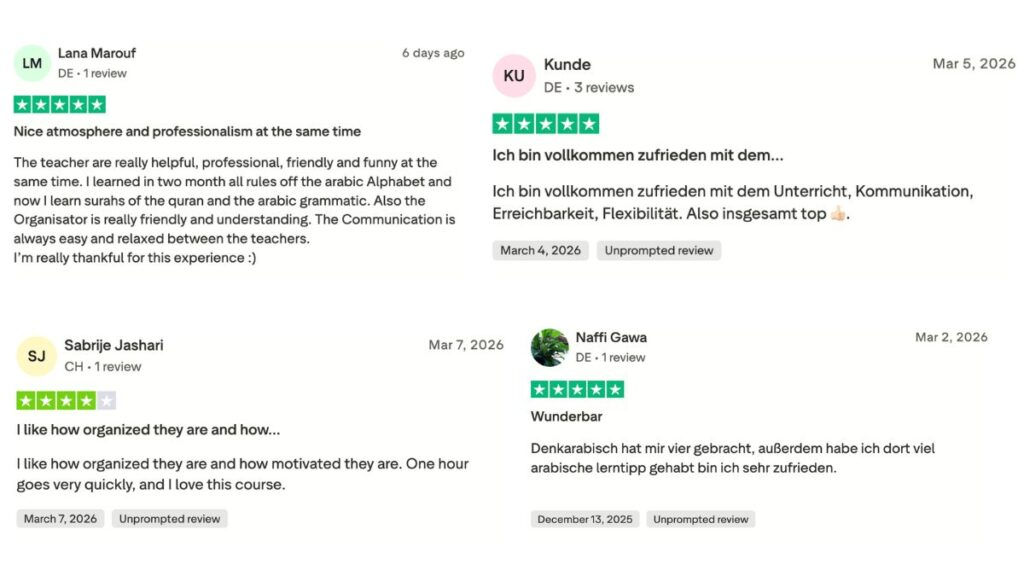
What Our Students Say About Denk Arabisch Academy
See what our students say about learning at Denk Arabisch Academy on Trustpilot. Read their experiences and check out more reviews to discover how our courses help improve Arabic.
Start Now!
If you truly care about your child’s future, don’t leave their Islamic education to chance.
Games alone are not enough.
Apps alone are not enough.
Occasional teaching is not enough.
👉 Your child needs structure, consistency, and expert guidance.
That’s exactly what Denk Arabisch delivers.
Why Parents Choose Denk Arabisch:
- Specialized for German-speaking Muslim families
- Qualified native Arabic teachers
- Flexible online classes
- Fun + structured learning system
- Proven results in Quran and Arabic learning
At Denk Arabisch, we provide:
Spots are limited.
Your child’s early years matter the most.
👉 Enroll today and give your child the gift of faith, language, and identity.
Because later… might be too late.
Study Islamic knowledge with Denk Arabisch Academy
Deepen your understanding of Islam through authentic and structured learning
Try a Free Trial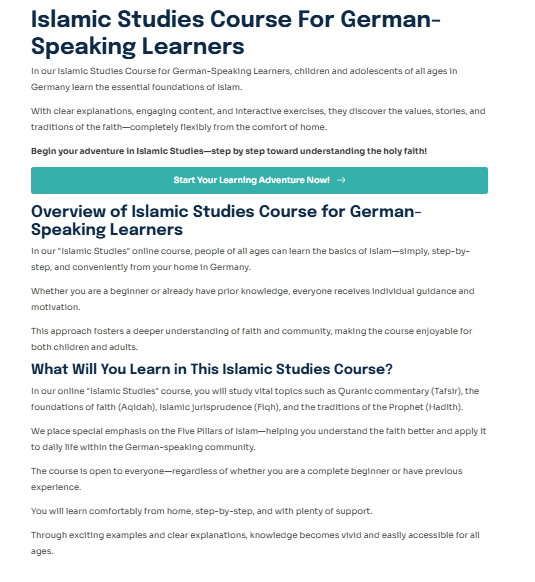
Conclusion
Islamic games for kids are a powerful tool for teaching faith, values, and knowledge in a way that children truly enjoy. By combining fun with learning, these games help children develop a strong connection to Islam while building important life skills.
Whether through quizzes, storytelling, role-play, or creative activities, the key is to make learning interactive and meaningful. When children associate Islam with joy and positivity, they are more likely to carry these values with them throughout their lives.
Start incorporating Islamic games into your child’s daily routine today, and watch how learning becomes an exciting and rewarding journey.
FAQs
1. At what age should I start introducing Islamic games to my child?
You can start as early as 2 or 3 years old. For toddlers, focus on sensory and visual games, such as “Arabic Letter Bingo” or simple “Simon Says” for Wudu. As children grow (ages 6–12), you can transition to strategy-based board games and more complex trivia quizzes.
2. Can digital Islamic apps replace traditional Madrasa learning?
While digital apps are excellent supplementary tools, they should not replace formal instruction or parental guidance. Apps are great for reinforcement and keeping kids engaged during travel, but the personal connection and nuanced teaching of a parent or teacher are essential for spiritual growth.
3. How do I keep my child interested if they find religious learning “boring”?
The key is gamification and variety. Instead of just asking questions, turn it into a competition with a “Good Deeds” chart or a treasure hunt. Use high-energy games like Islamic Charades or Salah Relay Races to break the monotony of sitting and reading.
4. Are there any “Haram” elements I should watch out for in digital games?
When choosing apps or digital games, ensure they are:
Ad-free: To avoid inappropriate pop-ups.
Respectful of Aniconism: Many Islamic games avoid showing the faces of Prophets or Sahaba, which is a preference for many families.
Music-free: Some parents prefer games that use only voice or duff (percussion) instead of orchestral music.
5. How can I play Islamic games if I don’t have a lot of money to buy expensive sets?
Islamic learning doesn’t have to be expensive! Many of the best activities are DIY (Do-It-Yourself). You can create your own flashcards from index cards, use LEGOs to build Masjids, or simply print out free worksheets and coloring pages found online.
6. Is it okay to give prizes for winning Islamic games?
Yes! In Islam, encouraging good behavior through small rewards is a great way to motivate children. However, try to balance material rewards (like a small toy or treat) with spiritual encouragement (like extra “points” on their Good Deeds chart or choosing the family movie for the night).
7. Can these games be played with non-Muslim friends?
Absolutely! Many Islamic games focus on universal values like honesty, kindness, and charity. Games like “Islamic Charades” or “Good Deeds Competitions” are inclusive and can be a wonderful way to introduce Islamic culture and ethics to friends in a fun, non-intimidating way.