Takeaway:
- Fasting during Ramadan is a mandatory religious obligation (Fard) for every adult Muslim who is mentally sound and physically able.
- The obligation is based directly on the Quran (Surah Al-Baqarah 2:183) and confirmed by the Prophet’s teachings as one of the five pillars of Islam.
- Fasting is not merely abstaining from food and drink; it builds self-discipline, patience, and God-consciousness (Taqwa).
- Specific exemptions exist for the sick, travelers, the elderly, pregnant or breastfeeding women, and menstruating women, with missed fasts to be made up later or compensated through Fidya if unable.
- Intentionally breaking the fast without a valid excuse is a major sin, requiring sincere repentance and making up the day, and in some cases, expiation (Kaffara).
- The four Sunni schools of law unanimously agree on the obligation, differing only on minor details.
- Islam balances firm obligation with mercy, protecting life and health while upholding the duty.
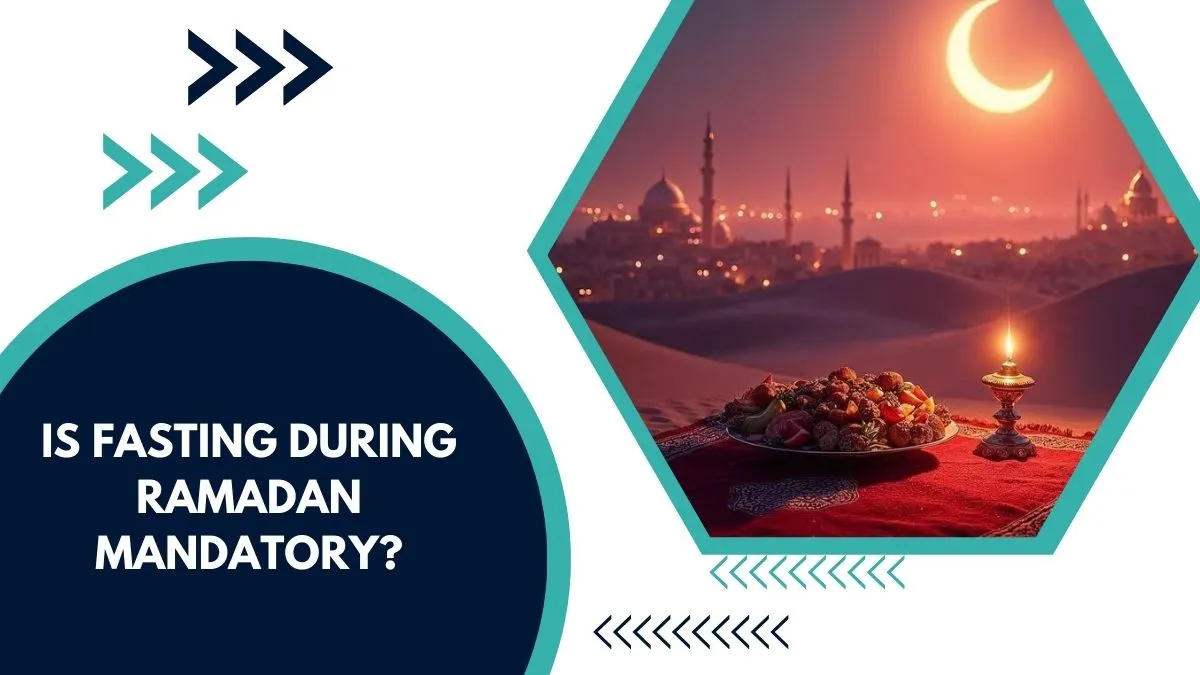
Yes. Fasting during the month of Ramadan is a binding religious obligation (Fard) in Islam.
Allah says in the Quran:
“O you who believe, fasting has been prescribed for you as it was prescribed for those before you, so that you may become righteous.” (Surah Al‑Baqarah 2:183)
This verse is the clear foundation of the obligation to fast. In addition, Prophet Muhammad (peace be upon him) confirmed in authentic narrations that fasting in Ramadan is one of the five pillars of Islam.
Islamic scholars of all four Sunni schools of law unanimously agree that fasting Ramadan is obligatory. This consensus (Ijmaʿ) highlights the central importance of this act of worship.
So the question, “Is Fasting During Ramadan Mandatory?” can be answered clearly: Yes—for everyone who meets the required conditions.
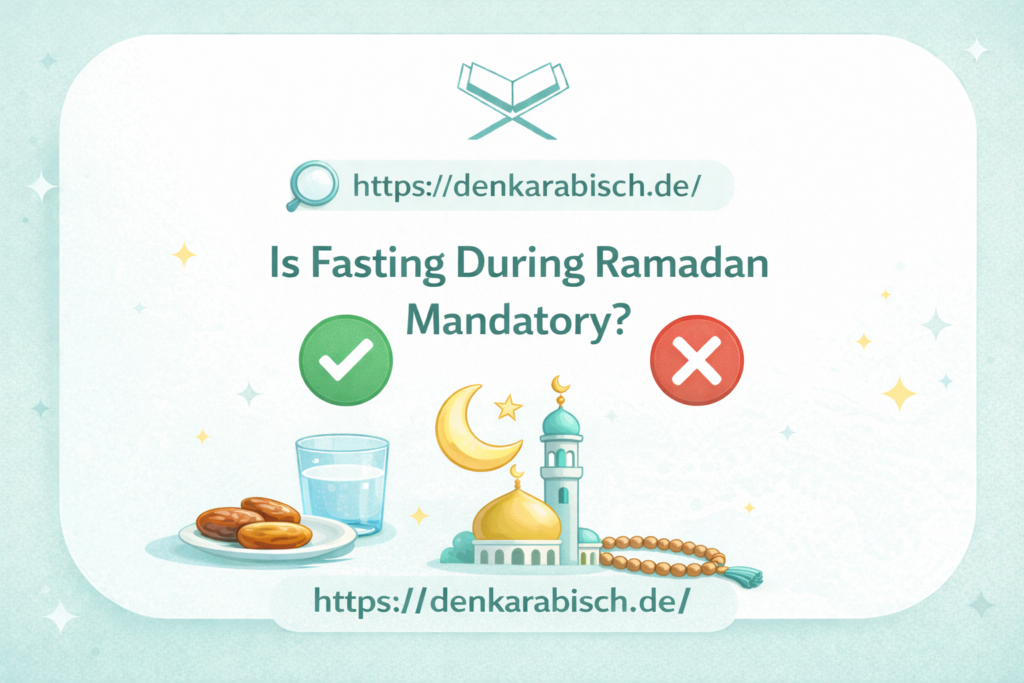
Table of Contents
Why Is Fasting Mandatory?
Fasting is mandatory because Allah explicitly commanded it. It is not a voluntary spiritual exercise but a prescribed religious duty.
However, the obligation carries deeper meaning. Fasting is not merely abstaining from food and drink. It strengthens self-discipline, patience, and God-consciousness (Taqwa). The believer learns to control desires and deepen their relationship with Allah.
The Prophet Muhammad (peace be upon him) said:
“Islam is built upon five pillars … and fasting in Ramadan.” (Bukhari, Muslim)
Being classified as a pillar shows that fasting is a foundational element of faith. Without it, a Muslim’s religious practice remains incomplete.
Who Is Required to Fast?
The obligation of fasting does not apply to every individual automatically. Islam sets clear conditions. Only when these are fulfilled does fasting during Ramadan become mandatory.
1. Being Muslim
The obligation applies only to Muslims. Accepting Islam includes accepting its essential duties.
2. Reaching Puberty
Fasting becomes obligatory upon reaching puberty. Children may fast voluntarily, but they are not required to do so.
3. Mental Soundness
A person must be mentally competent. Those with severe mental incapacity are not religiously accountable for this obligation.
4. Physical Ability
Fasting must not pose a serious health risk. If fasting would cause significant harm, the person is not required to fast.
5. Not Being on a Journey
Travelers are permitted to postpone fasting. The missed days must be made up later.
These conditions demonstrate that the obligation of fasting in Ramadan is structured and reasonable. It takes real-life circumstances into account.
When Is Fasting Not Mandatory?
Although fasting in Ramadan is generally obligatory, Islam provides specific exemptions. These exemptions are part of divine mercy.
Allah says:
“Allah intends for you ease and does not intend for you hardship.” (Surah Al‑Baqarah 2:185)
1. Illness
A person who is ill and fears that fasting may worsen their condition may postpone fasting. The missed days must be made up after recovery.
2. Travel
During travel, fasting is not obligatory. Even if the journey is comfortable, the concession remains valid. The days are made up later.
3. Chronic Illness or Old Age
Those who are permanently unable to fast do not need to make up the missed days. Instead, they must feed one needy person for each missed day (Fidya).
These rulings show that while the obligation remains firm, it is accompanied by clearly defined allowances.
Fasting During Pregnancy and Breastfeeding
Pregnant and breastfeeding women have a specific ruling.
If fasting poses a health risk to the mother or child, it is not obligatory. The missed days are made up at a later time.
While the schools of law differ slightly in certain details, the core principle is clear: the protection of life and health takes priority.
Read also: Medication Rules in Ramadan: What Breaks the Fast with Pills and Injections?
Fasting During Menstruation
Fasting during menstruation is not permitted.
The missed days must be made up after Ramadan. This ruling is based on authentic narrations and is unanimously accepted by all schools of law. A woman does not commit any sin by not fasting during this time. On the contrary, she is following a clear religious instruction.
What Happens If Someone Intentionally Does Not Fast?
Intentionally neglecting fasting without a valid excuse is considered a major sin.
The obligation is clearly established. Deliberately ignoring it carries serious responsibility.
1. Denying the Obligation
If someone denies that fasting Ramadan is obligatory—while knowing it is an essential part of Islam—they are rejecting a fundamental principle of faith.
2. Breaking the Fast Without Excuse
Anyone who deliberately eats or drinks must make up the day (Qada) and sincerely repent.
3. Required Expiation (Kaffara)
If someone intentionally engages in sexual intercourse during a fasting day, they must both make up the day and offer expiation (Kaffara), which consists of:
- Fasting 60 consecutive days, or
- Feeding 60 needy people.
This ruling reflects the seriousness of deliberately violating the fast.
Making Up Missed Fasts (Qada)
Anyone who missed fasting due to a valid reason must make up for the missed days.
It is recommended to complete them before the next Ramadan and not delay unnecessarily.
A clear intention (Niyya) is required for obligatory make-up fasts. Obligatory fasts take priority over voluntary fasting.
Differences Between the Schools of Law
The four Sunni schools—Hanafi, Maliki, Shafiʿi, and Hanbali—are united in the fundamental ruling that fasting Ramadan is obligatory.
Differences exist only in detailed matters, such as:
- The exact form of Kaffara
- Certain special cases related to illness
- Specific rulings concerning pregnancy or breastfeeding
These differences do not affect the central conclusion: fasting during Ramadan is mandatory.
Anyone uncertain about specific details should consult qualified scholars.
FAQ: Is Fasting During Ramadan Mandatory?
Does accidental eating invalidate the fast?
No. If someone eats or drinks out of forgetfulness, the fast remains valid.
Is fasting mandatory during very long days?
Yes. As long as there is no health risk, the obligation remains.
Can missed days be made up flexibly?
Yes. They may be made up on any permissible days except on religious holidays when fasting is forbidden.
What breaks the fast?
Intentional eating or drinking, deliberate vomiting, and sexual intercourse during the fasting day invalidate the fast.
What Our Students Say About Denk Arabisch Academy
See what our students say about learning at Denk Arabisch Academy on Trustpilot. Read their experiences and check out more reviews to discover how our courses help improve Arabic.

Study Islamic knowledge with Denk Arabisch Academy
Deepen your understanding of Islam through authentic and structured learning
Join nowStart your journey with Denk Arabisch
Would you like to deepen your religious knowledge and understand the Quran better? At Denk Arabisch you will find exactly the support you need as a German-speaking Muslim.
Our native Arabic teachers understand the special challenges faced by Muslims in the DACH region. They combine sound Azhar walking tradition with practical experience in a European context.
Our courses at a glance:
- Tajweed Quran Learning: Perfect Pronunciation for Your Prayers
- Memorizing the Koran: Structured Hifz programs with individual support
- Arabic courses: From the alphabet to fluent reading
Benefit from:
- Arabic Courses for German Speakers
- Arabic Levels for German Speakers
- Arabic Dialect Courses for German Speakers
- Qur’an Learning Courses for German Speakers
- Islamic Studies Courses for German Speakers
- Courses for Muslim Kids for German Speakers
Get a free trial lesson now and learn to understand the Quran better!
FAQ: Is Fasting During Ramadan Mandatory?
Is fasting in Ramadan obligatory for every single Muslim?
No. The obligation is binding only on those who meet specific conditions: being Muslim, having reached puberty, being of sound mind, and being physically able to fast without serious health risk. Travellers are also temporarily exempt. These conditions show that the obligation is structured with mercy.
At what age does fasting become mandatory for children?
Fasting becomes obligatory upon reaching puberty. Before that, children are not religiously required to fast, though they may practise it voluntarily to become accustomed to the worship.
What if I am sick or travelling during Ramadan?
Islam grants clear concessions. If you are ill and fear that fasting will worsen your condition, you may postpone the fast. Similarly, a traveller is permitted not to fast, even if the journey is comfortable. In both cases, the missed days must be made up (Qada) later.
I have a chronic illness and can never fast. What should I do?
If you suffer from a permanent condition or old age that makes fasting genuinely impossible, you are not required to make up the missed days. Instead, you must offer Fidya – feeding one needy person for each missed day. This ruling reflects the principle that “Allah intends for you ease.”
Are pregnant and breastfeeding women obliged to fast?
If a pregnant or breastfeeding woman fears a genuine health risk to herself or her child, fasting is not obligatory. The missed days are to be made up later. Protecting life and health takes priority over the fast.
Can I fast during my menstruation?
No. Fasting during menstruation is not permitted. A woman must break her fast and make up the issed days after Ramadan. She incurs no sin; she is following a clear religious instruction unanimously accepted by all schools of law.
What exactly breaks the fast?
The fast is invalidated by intentional eating or drinking, deliberate vomiting, and sexual intercourse during the fasting day. Anything done out of genuine forgetfulness, however, does not break the fast – the fast remains valid.
What happens if I intentionally break a fast without a valid reason?
Deliberately neglecting the fast is a major sin. If someone eats or drinks intentionally, they must make up the day (Qada) and sincerely repent. If the violation involves sexual intercourse, an additional expiation (Kaffara) is required: either fasting 60 consecutive days or feeding 60 needy people.
Do I have to make up missed fasts immediately after Ramadan?
Missed fasts from valid excuses must be made up (Qada), and it is strongly recommended to complete them before the next Ramadan arrives. You may choose any permissible days, except for the days of Eid when fasting is forbidden.
Is the ruling on fasting the same in all Islamic schools of law?
Yes, in its core obligation. All four Sunni schools – Hanafi, Maliki, Shafiʿi, and Hanbali – unanimously agree that fasting Ramadan is mandatory. Differences exist only in minor details, such as the exact form of Kaffara or special case rulings, but they do not affect the central ruling.
Conclusion
Is Fasting During Ramadan Mandatory? Yes. Fasting Ramadan is a clear and binding religious obligation in Islam for every adult, mentally sound, and physically able Muslim.
At the same time, Islam demonstrates mercy through regulated exemptions. Illness, travel, and special life circumstances do not result in sin but provide legitimate relief.
Anyone who wishes to fulfill their religious duties correctly should rely on authentic sources and continuously deepen their knowledge.