Takeaway:
- Learning Quranic Arabic becomes enjoyable and effective when you replace repetitive memorization with stories, games, rhythms, and daily life immersion.
- Begin with short surahs like Al-Ikhlas and Al-Fatiha; mastering a few words in familiar verses builds quick confidence and a personal connection to the Quran.
- Use flashcards with images, label household items with Arabic words, and turn vocabulary review into matching games or bingo to strengthen visual memory naturally.
- Listen to clear recitations and nasheeds repeatedly, then imitate the rhythm; melody helps the brain absorb pronunciation and common words without strain.
- Speak simple Arabic phrases every day—greetings, short expressions—so the tongue and mind grow comfortable with the language beyond reading.
- Introduce Tajweed one rule at a time using short, known surahs; gradual practice makes correct recitation achievable rather than overwhelming.
- Set small daily targets (5 new words, 10-minute listening) and celebrate milestones with stickers or family recognition to keep motivation high.
- Learn together as a family through shared recitation, games, and conversations; a supportive atmosphere reinforces consistency and turns learning into a shared spiritual habit.
- Combine self-study with interactive online classes led by qualified teachers who correct mistakes early and keep lessons engaging, especially for children and busy adults.
Learning Arabic for the Quran is a beautiful and rewarding journey. It connects you directly to the words of Allah, deepens your understanding of Islam, and enhances your spiritual experience. However, for many learners—especially children and beginners—traditional methods can sometimes feel challenging or repetitive.
The good news is that learning Quranic Arabic doesn’t have to be boring. With the right approach, it can be fun, interactive, and highly effective. In this article, we’ll explore creative and enjoyable ways to learn Arabic for the Quran while building strong language skills.

Table of Contents
Why Make Learning Arabic Fun?
Before diving into the methods, it’s important to understand why fun matters in learning Arabic—especially when learning Quranic Arabic.
Many learners struggle not because Arabic is impossible, but because traditional methods can sometimes feel repetitive or overwhelming.
Adding enjoyment to the learning process changes the entire experience and helps students stay connected to the language for a longer time.
- Boosts motivation: When lessons are enjoyable, learners become more excited to continue studying and are less likely to lose interest after a short period.
- Improves memory retention: People naturally remember things better when they are connected to emotions, stories, games, or visual experiences.
- Reduces frustration: Arabic may seem difficult at first because of new letters, pronunciation, and grammar rules, but fun activities make these challenges feel lighter and easier to manage.
- Encourages consistency: Learners who enjoy the process are more likely to practice every day, even if only for a few minutes.
This approach is especially effective for children, but adults also learn faster and with more confidence in a positive and interactive environment.
We at Denk Arabisch specialize in turning these benefits into reality. Our Arabic Lessons for Kids is specifically designed to bridge the gap between language and faith through a curriculum that is as engaging as it is spiritually fulfilling.
1. Learn Through Quranic Stories
Stories are one of the most effective ways to learn any language because they create emotional connection and context.
The Quran contains powerful stories filled with wisdom, lessons, and repeated vocabulary that help learners absorb Arabic naturally while strengthening their understanding of Islam.
How to apply this:
- Start with simple stories such as Prophet Nuh, Ibrahim, or Musa (peace be upon them).
- Read a few short verses at a time instead of long passages.
- Highlight important Arabic words and explain their meanings in context.
- Use storytelling videos, illustrated books, or animated Quranic content to make learning more visual and enjoyable.
- Encourage learners to retell the story using simple Arabic words they learned.
Why it works:
Stories help learners connect words with emotions, events, and characters, making vocabulary easier to remember. Instead of memorizing isolated words, students understand how Arabic is naturally used in sentences and conversations.
Repetition of common Quranic words across stories also strengthens recognition and comprehension over time.
2. Use Flashcards and Visual Aids
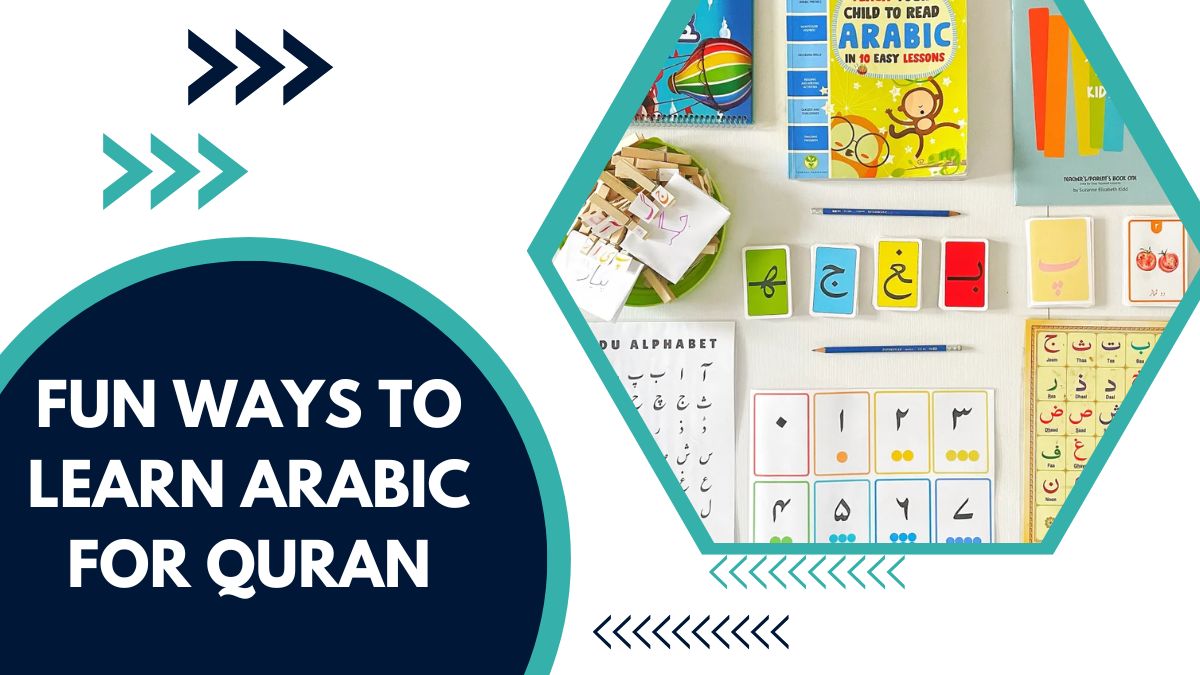
Visual learning is extremely helpful for beginners because it turns abstract words into something learners can immediately recognize and remember. Arabic script may look unfamiliar at first, but combining words with colors and images makes the learning process smoother and less intimidating.
Ideas:
- Create flashcards with Arabic words on one side and meanings on the other.
- Use different colors for verbs, nouns, and particles to help learners identify grammar patterns visually.
- Add pictures or symbols to connect vocabulary with real-life objects.
- Use posters, charts, or sticky notes around the house for daily exposure to Arabic words.
- Practice quick review sessions every day to strengthen memory.
Example:
Instead of only memorizing the word “سماء” (sky), show an image of the sky beside the word. This creates a mental connection that helps learners recall the meaning faster.
Benefits:
- Strengthens memory through visual association.
- Makes studying more interactive and less boring.
- Helps learners recognize Arabic words more quickly.
- Ideal for both children and adults who prefer visual learning methods.
At Denk Arabisch, mastering the Arabic Personal Pronouns Course For German Speakers is the first step to identifying yourself and others correctly.
3. Play Arabic Learning Games
Turning Arabic lessons into games can completely change the learning atmosphere. Games help learners feel relaxed and excited while still practicing important skills like reading, listening, vocabulary, and pronunciation.
Fun game ideas:
- Word matching games (Arabic words with meanings).
- Memory card games using Arabic vocabulary.
- Arabic bingo with letters or common words.
- Letter puzzles to improve recognition of Arabic script.
- Quiz competitions between friends or family members.
- “Guess the word” games using pictures or descriptions.
Digital options:
There are many apps and online platforms that offer gamified Arabic learning experiences with points, levels, rewards, and interactive exercises.
Why it works:
Games create excitement, participation, and healthy competition. Learners become more willing to repeat words and practice multiple times without feeling forced. This repetition improves fluency and confidence naturally while keeping the experience enjoyable.
4. Practice with Short Quranic Surahs
One of the easiest and most motivating ways to learn Quranic Arabic is by starting with short surahs. Many beginners feel overwhelmed when they try to study complicated grammar rules or long Quranic passages too early. Short surahs, however, make the learning journey feel simple, achievable, and spiritually rewarding from the very beginning.
Suggested surahs:
- Al-Fatiha
- Al-Ikhlas
- Al-Falaq
- An-Nas
Method:
Instead of trying to memorize an entire surah at once, focus on one small verse at a time. Read the ayah slowly, listen carefully to the pronunciation, and repeat it several times until it feels familiar. After that, learn the meaning of a few important Arabic words from the verse and understand how they connect together.
For example, when learning Surah Al-Ikhlas, students can recognize important words like “Allah,” “Ahad” (One), and “Samad” (The Eternal Refuge). Repeating these words regularly helps learners naturally remember their meanings and recognize them later in other Quranic verses.
It is also helpful to listen to recitations frequently throughout the day. Constant listening improves pronunciation, strengthens memory, and helps learners become comfortable with the sound and rhythm of Quranic Arabic.
Benefits:
Learning through short surahs allows students to feel progress very quickly, which increases confidence and motivation. Because these surahs are often recited in daily prayers, learners constantly review what they study, making memorization and understanding stronger over time.
This method also creates a deeper emotional and spiritual connection with the Quran. Instead of only memorizing sounds, learners begin to understand the meanings behind the verses they recite every day, making prayer and Quran recitation more meaningful and heartfelt.
Enrolling your child in our Tajweed Course For German-Speaking Children is the perfect way to ensure they recite the Quran with correct pronunciation from a young age.
5. Use Repetition with Rhythm and Melody
One of the most effective ways to improve Arabic pronunciation is through repetition combined with rhythm. Quranic Arabic has a natural flow and beauty that makes learning easier when learners repeatedly listen and imitate correct recitation.
Instead of feeling like a difficult language exercise, the process becomes smoother, calmer, and more enjoyable.
How to do it:
- Listen to slow and clear Quran recitations by skilled reciters.
- Repeat each verse immediately after the reciter while focusing on pronunciation.
- Practice daily, even for just a few minutes, to build consistency.
- Pay attention to the rhythm and pauses between words.
- Start with shorter verses before moving to longer passages.
Tip:
Children especially respond well to rhythmic learning because repetition with melody feels enjoyable and engaging. It keeps them focused longer and helps them memorize verses naturally without feeling pressured.
Why it works:
Repetition trains the tongue to pronounce Arabic letters correctly and helps learners become familiar with the sounds of the language. Over time, learners develop stronger fluency, better pronunciation, and greater confidence in recitation.
The rhythmic nature of Quran recitation also improves memorization because the brain remembers patterns and melodies more easily than isolated words.
6. Watch Educational Videos
Educational videos are a powerful learning tool because they combine both visual and audio elements, making Arabic easier to understand and more engaging for learners of all ages.
Many beginners struggle with pronunciation or understanding new vocabulary through textbooks alone, but videos can simplify difficult concepts in a more interactive way.
What to look for:
- Beginner-friendly Arabic lessons with simple explanations.
- Quranic vocabulary videos that explain meanings clearly.
- Animated learning videos for children.
- Videos with subtitles or repetition exercises.
- Content that teaches pronunciation slowly and clearly.
Advantages:
Watching videos allows learners to hear correct pronunciation while also seeing examples and visuals that explain meanings. This activates multiple senses at the same time, which improves understanding and memory retention.
Videos are also flexible and accessible, allowing students to learn anytime and review lessons as often as needed.
For children especially, animated educational content keeps attention focused and transforms learning into an enjoyable daily activity rather than a boring study session.
Learn the Quran with Denk Arabisch Academy
Master reading and understanding the Quran through structured and supportive learning
Try a Free Trial7. Label Everyday Objects in Arabic
One simple but highly effective method for learning Arabic vocabulary is turning your home into a mini Arabic environment. By labeling everyday objects with Arabic words, learners are constantly exposed to the language throughout the day without needing extra study time.
How:
- Place labels on common objects like door (باب), table (طاولة), book (كتاب), or window (نافذة).
- Encourage family members to use the Arabic words during daily conversations.
- Review the labels regularly and try pronouncing the words each time you see them.
Example:
When a child sees the word “باب” attached to the door every single day, the connection between the object and the Arabic word becomes automatic over time.
Benefits:
This method encourages passive learning because learners absorb vocabulary naturally through repetition and daily exposure. It also creates a practical connection between Arabic and real life, helping students remember words more easily than traditional memorization methods.
Over time, learners begin recognizing and recalling vocabulary without consciously trying, which makes language learning feel effortless and enjoyable.
Read also: How to Learn The Quran For Kids? – The Ultimate Guide
8. Practice Speaking Simple Arabic Daily
Even if the main goal is understanding the Quran, speaking Arabic regularly can greatly improve learning speed and confidence. Many learners focus only on reading and memorization, but speaking helps activate the language in the mind and strengthens long-term retention.
Start with:
- Simple Islamic greetings.
- Basic daily expressions.
- Short and easy sentences used regularly.
Example phrases:
- السلام عليكم
- كيف حالك؟
- الحمد لله
Why it matters:
Speaking helps learners become more comfortable with Arabic pronunciation and sentence structure. Repeating simple phrases daily trains the brain to process the language more naturally and improves fluency over time.
It also removes the fear of making mistakes. The more learners use Arabic in everyday situations, even in small ways, the faster they gain confidence and develop a stronger connection with the language.
Taking the Arabic Speaking Course For German Speakers will transform your theoretical knowledge into real-world conversational fluency.
9. Join Interactive Online Classes
Self-study can be helpful, but learning with a qualified teacher provides structure, support, and consistent progress. Interactive online classes make learning Arabic and Quran much easier because students receive direct guidance and immediate correction.
Features of good classes:
- Qualified Quran and Arabic teachers.
- Interactive lessons that encourage participation.
- Personalized feedback and pronunciation correction.
- Flexible schedules suitable for busy families and students.
- Lessons designed for different age groups and learning levels.
Benefits:
Having a teacher keeps learners motivated and accountable. Mistakes can be corrected early before they become habits, especially in pronunciation and Tajweed. Interactive classes also allow students to ask questions, practice speaking, and receive encouragement throughout their learning journey.
At Denk Arabisch, we offer qualified Quran and Arabic teachers who speak your language. Our interactive sessions are flexible, fitting perfectly into your busy life in Germany.
10. Use Arabic Songs and Nasheeds
Nasheeds and simple Arabic songs are an enjoyable way to improve listening skills, pronunciation, and vocabulary. Because melodies are easy to remember, learners often memorize words and phrases much faster through songs than through traditional repetition alone.
How to use them:
- Choose slow and simple nasheeds suitable for beginners.
- Listen carefully and focus on understanding repeated words.
- Sing along to improve pronunciation and fluency.
- Repeat favorite nasheeds regularly throughout the week.
Why it works:
Melody and rhythm make repetition feel fun instead of tiring. Learners naturally remember lyrics and repeated expressions, which strengthens vocabulary retention and pronunciation skills.
For children especially, nasheeds create positive emotional connections with Arabic and Islamic learning. Instead of seeing Arabic as difficult or academic, they begin associating it with enjoyment, creativity, and spiritual inspiration.
11. Create a Reward System
Motivation plays a huge role in successful learning, especially for children. When learners feel appreciated and rewarded for their effort, they become more excited to continue studying Arabic and the Quran.
A simple reward system can transform learning from a task into something students genuinely look forward to every day.
Ideas:
- Give stickers or stars to children after completing lessons.
- Offer small rewards for memorizing surahs or learning new vocabulary.
- Use progress charts to visually track achievements.
- Celebrate milestones with encouraging words or family recognition.
Example:
A child can receive a small reward after memorizing a short surah or successfully learning 10 new Arabic words during the week.
Benefits:
Rewards create positive emotional connections with learning. They help build excitement, encourage consistency, and make learners feel proud of their progress.
Over time, this positive reinforcement increases confidence and motivates students to continue improving without feeling pressured.
The goal is not perfection, but creating an encouraging atmosphere where learners enjoy the process and stay motivated for the long term.
12. Practice Writing Arabic Letters and Words
Writing is one of the best ways to strengthen Arabic recognition and understanding. Many learners focus only on reading or listening, but physically writing Arabic letters and words helps the brain remember them more effectively.
Activities:
- Trace Arabic letters to improve familiarity with shapes.
- Copy short Quranic words and verses.
- Practice writing simple sentences regularly.
- Use worksheets or handwriting exercises designed for beginners.
Tip:
Using colorful pens, notebooks, or creative writing activities can make practice sessions more enjoyable, especially for children.
Why it works:
Writing activates different parts of the brain than reading or listening alone. It helps learners recognize letter forms, improves spelling, and strengthens memory through repetition and movement.
Over time, students become more comfortable reading Arabic script because they understand how letters connect and change shape.
Writing also slows the learning process in a positive way, giving learners time to notice details in pronunciation and spelling that they might otherwise miss.
Starting the Arabic Alphabet Course For German Speakers provides the essential foundation for reading and recognizing every letter.
13. Learn Tajweed in a Simple Way
Tajweed is essential for reciting the Quran correctly and beautifully. However, many beginners feel intimidated because the rules may seem complicated at first. The key is to introduce Tajweed gradually and in a simple, practical way.
Approach:
- Focus on one Tajweed rule at a time.
- Use examples from short and familiar surahs.
- Listen carefully to proper recitation and imitate it.
- Practice regularly instead of trying to memorize all the rules at once.
Example:
Start with easy and common rules such as:
- مد (Madd): elongating certain sounds.
- غنة (Ghunna): nasal sounds used in recitation.
Benefits:
Learning Tajweed step by step improves pronunciation accuracy and helps learners recite the Quran with confidence and beauty. It also deepens the spiritual connection with the Quran because students begin reciting the words of Allah in the proper and respectful manner.
When Tajweed is taught patiently and practically, learners realize that mastering Quran recitation is achievable, even for complete beginners.
14. Set Small, Achievable Goals
One of the biggest mistakes learners make is setting goals that are too large or unrealistic. Trying to learn everything at once often leads to frustration and loss of motivation. Small, achievable goals create steady progress and help learners stay encouraged.
Examples:
- Learn 5 new Arabic words every day.
- Memorize one short surah each week.
- Practice reading or listening for 10–15 minutes daily.
- Review previously learned vocabulary before learning new words.
Why it works:
Small goals make learning feel manageable and less stressful. Every completed goal gives learners a sense of achievement, which builds confidence and motivation to continue.
Consistent small efforts often produce better long-term results than occasional long study sessions. Over time, these daily habits lead to major improvement in Quranic Arabic understanding and recitation.
Read also: Children Of The Quran – What Muslim Students Learn
15. Make Learning a Family Activity
Learning Arabic and the Quran becomes much more enjoyable when it is shared with family members. A supportive family environment encourages consistency and helps learners stay motivated through encouragement and shared experiences.
Ideas:
- Hold family Quran reading sessions.
- Play Arabic vocabulary games together.
- Practice simple Arabic conversations at home.
- Set shared learning goals as a family.
- Encourage children by learning alongside them.
Benefits:
Family learning creates a positive and supportive atmosphere where everyone motivates each other. Children especially feel more confident when parents participate in the learning process instead of only supervising it.
It also strengthens family bonds and turns Quranic learning into a meaningful daily habit rather than an isolated school activity. Shared learning moments create memories, increase motivation, and help build a stronger spiritual connection within the family.
From Courses for Muslim Kids to specialized adult levels, Denk Arabisch is the home for your family’s spiritual and linguistic growth.
Tips for Parents Teaching Children
Helping children learn Arabic for the Quran requires patience, encouragement, and consistency. Children learn best when the environment feels positive, relaxed, and enjoyable rather than strict or stressful.
Helpful tips:
- Keep lessons short and focused (around 10–20 minutes).
- Use games, stories, and interactive activities whenever possible.
- Be patient with mistakes and avoid excessive correction.
- Celebrate effort and progress, even if improvement is small.
- Create a consistent daily routine for Quran and Arabic practice.
Children develop confidence when they feel supported and appreciated. The goal is to help them build a lifelong love for the Quran and the Arabic language, not simply to complete lessons quickly.
A calm and encouraging learning environment can make a huge difference in how children connect with Arabic and Islamic learning for years to come.
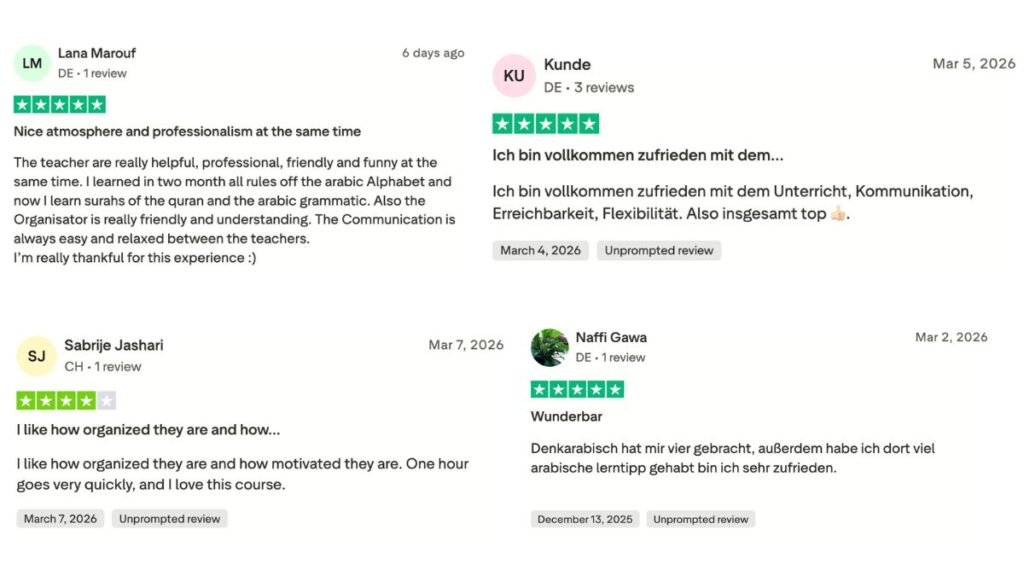
What Our Students Say About Denk Arabisch Academy
See what our students say about learning at Denk Arabisch Academy on Trustpilot. Read their experiences and check out more reviews to discover how our courses help improve Arabic.
JOIN DENK ARABISCH TODAY!
Are you tired of repetitive methods that don’t stick? Do you want your children to love the Quran as much as you do? Denk Arabisch is the leading online school specifically designed for German speakers to master the Arabic language and the Noble Quran.
Why Choose Us?
- Expert Teachers: Specialists in Tajweed, Quranic Arabic, and Dialects.
- Tailored for Germany: We understand your unique linguistic background.
- All-In-One Platform: From Quran Memorization to Islamic Studies, we cover it all.
- Flexible & Interactive: High-quality online classes that fit your schedule.
Our Premium Courses Include:
- Quran Tajweed & Recitation (For Adults & Kids)
- Quranic Arabic (Understand the meaning of every Ayah)
- Islamic Studies (Deepen your faith in German/Arabic)
- Arabic Levels (A1-C2) & Dialect Courses
Don’t wait for “tomorrow.” The best time to start your spiritual journey was yesterday; the second best time is NOW.
Learn the Quran with Denk Arabisch Academy
Master reading and understanding the Quran through structured and supportive learning
Try a Free TrialConclusion
Learning Arabic for the Quran is not just an academic goal—it’s a spiritual journey. By making the process fun, interactive, and meaningful, you can transform what might seem difficult into something truly enjoyable.
Whether you are a parent teaching your child or an adult learner starting from scratch, these fun methods can help you stay motivated, improve faster, and build a deeper connection with the Quran.
Start small, stay consistent, and most importantly—enjoy the journey.
FAQs
To help you navigate your journey of learning Quranic Arabic, we’ve compiled answers to the most common questions learners and parents often ask.
1. How long does it take to learn enough Arabic to understand the Quran?
There is no fixed timeline, as it depends on your starting point and consistency. However, since 80% of the Quran’s vocabulary is made up of only about 300-400 recurring words, many students find they can understand basic verses within 3 to 6 months of daily 15-minute practice.
2. Do I need to learn modern spoken Arabic to understand the Quran?
Not necessarily. The Quran is written in Classical Arabic (Fusha). While modern dialects (like Egyptian or Levantine) are great for travel, focusing specifically on Quranic Arabic or Modern Standard Arabic is more effective for your spiritual goals.
3. Can I learn Quranic Arabic on my own using apps?
Yes, you can build a strong foundation of vocabulary and basic grammar using apps. However, to master Tajweed (proper pronunciation) and complex linguistic nuances, it is highly recommended to eventually work with a qualified teacher or join an interactive class.
4. Is it harder for adults to learn Arabic than children?
While children absorb sounds more naturally, adults have the advantage of logical reasoning and pattern recognition. Adults often understand the “why” behind grammar rules much faster than children, which can speed up the learning process.
5. What is the best age for a child to start learning Quranic Arabic?
Children can start becoming familiar with the sounds of Arabic as early as 3 or 4 years old through nasheeds and stories. Formal learning usually becomes more effective around age 5 or 6, once they have a basic grasp of their native language.
6. How can I stay motivated when the grammar gets difficult?
Focus on the “Small Wins.” Instead of worrying about a whole chapter, celebrate when you recognize a single verb or pronoun during your daily prayer. Using the gamified methods mentioned in this guide—like rewards and games—also helps keep the “bore factor” at bay.
7. Should I learn to read first or learn the meanings first?
It is best to do both simultaneously. Learning to read without meaning can feel mechanical, while learning meaning without reading limits your direct access to the text. Use a word-for-word translation to bridge this gap from day one.