Frankfurt is one of Germany’s most dynamic and cosmopolitan cities, and it is also home to a growing Muslim community that takes Islamic education seriously. For Muslim parents raising children in this busy metropolitan environment, finding the right Quran learning program is a top priority — and thankfully, Frankfurt offers a wide range of options to make that possible.
From dedicated Islamic centers in the heart of the city to flexible online Quran academies that bring qualified teachers directly to your home, parents today have more choices than ever before. The challenge is knowing what to look for, what to expect, and how to give your child the best possible start on their Quranic journey.
This guide covers everything Frankfurt parents need to know about Quran education for children — why it matters, what good programs include, and how to set your child up for long-term success.
Table of Contents
What Makes a Good Quran Program for Children in Frankfurt?
Not every Quran class is the same, and parents should know what to look for when evaluating programs for their children. Quality Quran education goes far beyond simply asking a child to repeat verses. The best programs combine structured teaching, engaging delivery, and genuine care for each student’s progress.
Teachers Who Understand Children
The most important factor in any Quran program is the teacher. A qualified Quran teacher for children must have more than just knowledge of Tajweed and memorization — they must also understand child psychology, know how to maintain engagement, and be able to communicate with patience and encouragement.
Children respond to teachers who make them feel safe, valued, and capable. The best Quran teachers celebrate small wins, gently correct mistakes, and adjust their approach based on each child’s personality and learning style.
A Curriculum That Covers the Right Foundations
A well-structured children’s Quran program in Frankfurt should cover:
- Noorani Qaida — the essential first step for any beginner, covering Arabic letters, vowel sounds, and basic reading rules
- Quran Recitation — progressing from short Surahs to longer passages with proper fluency
- Tajweed — the rules of correct pronunciation that preserve the beauty and integrity of Quranic recitation
- Memorization (Hifz) — structured programs to help children memorize Surahs at their own pace
- Islamic Etiquette and Duas — practical lessons that connect Quranic teachings to everyday life
- Arabic Language Basics — vocabulary and simple grammar to help children understand what they are reciting
Enroll your child in the Tajweed Course For Kids at Denk Arabisch and watch their recitation transform — all from the comfort of your home.
Age-Appropriate and Engaging Teaching Methods
Young children have short attention spans and need variety to stay engaged. The best Quran programs use a combination of methods to keep lessons fresh and exciting — including storytelling, visual aids, educational games, group recitation, and reward systems that recognize progress.
When children enjoy their lessons, they look forward to attending and practice more willingly at home. Engagement is not a luxury in Quran education — it is a necessity for real progress.
Types of Quran Learning Options Available in Frankfurt
Frankfurt families have access to several different formats for Quran education, each with its own advantages depending on your family’s schedule, location, and educational goals.
Mosque and Islamic Center Classes
Frankfurt is home to numerous mosques and Islamic centers that offer Quran classes for children, particularly on weekends. These classes give children the opportunity to learn alongside peers, develop a sense of community, and participate in a structured Islamic environment.
Group settings are especially beneficial for building confidence in recitation and fostering a love of learning through friendly competition and shared motivation.
Private In-Home Tutoring
Some families prefer one-on-one instruction, either at home or at a tutor’s location. Private Quran tutoring allows for a completely personalized experience — the teacher can focus entirely on your child’s strengths and weaknesses, move at the right pace, and adapt the curriculum to your specific goals.
This format works particularly well for children who are shy, have learning differences, or need to catch up after starting later than their peers.
Online Quran Classes
Online Quran learning has become the most popular choice for many Frankfurt families, and it is easy to understand why. With a qualified teacher just a screen away, children can attend high-quality live lessons without any travel, at times that fit around school and family life.
Online classes also open up access to a much wider pool of teachers, including specialists in children’s Tajweed, female tutors, and educators who can teach in Arabic, German, or English depending on your child’s comfort level.
Give your child a solid start in Quran recitation with the Quran Course For Kids at Denk Arabisch — a structured, engaging program designed for young learners at every level.
Why Online Quran Learning Works So Well for Frankfurt Families?
Frankfurt is a busy city. Between school, after-school activities, family commitments, and the general pace of city life, finding time to travel to a Quran class several times a week is not always realistic. Online Quran learning solves this problem without compromising on quality.
No Time Wasted on Commuting
In a city like Frankfurt, even a short journey can take significant time. Online classes eliminate that entirely — your child simply opens a device and the lesson begins. This makes it much easier to maintain consistency, which is one of the most important factors in Quran learning progress.
Learning in a Comfortable and Familiar Space
Children tend to perform better when they feel comfortable. At home, there are no unfamiliar environments, no social anxiety, and no distractions from other students. Many parents notice that their children are more confident, more talkative, and more willing to make mistakes — and therefore learn faster — during online one-on-one sessions.
Complete Flexibility Around School Schedules
Online Quran academies typically offer morning, afternoon, evening, and weekend slots. This means you can schedule lessons after school, before family dinner, or on weekend mornings — whatever fits your routine best. If a lesson needs to be rescheduled, it is usually easy to find an alternative slot.
Direct Involvement for Parents
Online learning makes it very easy for parents to sit in on lessons, monitor their child’s progress, and communicate regularly with the teacher. This level of involvement is often harder to achieve with in-person classes. When parents stay engaged, children tend to revise more consistently at home, which significantly accelerates progress.
Key Subjects Covered in Children’s Quran Education
Understanding what your child will actually learn helps you set realistic expectations and have more meaningful conversations about their progress.
Noorani Qaida — Building the Foundation
Before a child can read the Quran, they need to master Arabic letters, their sounds, and the basic rules of combination. Noorani Qaida is the universally trusted method for achieving this, progressing step by step from individual letters to joined words and simple sentences. A child who completes Noorani Qaida is ready to begin reading the Quran with confidence.
Tajweed — Reciting the Quran the Right Way
Tajweed is the set of rules that govern how the Quran should be recited. It covers everything from the correct articulation of each letter (Makharij) to the rules of lengthening, merging, and stopping. Tajweed is not just an advanced topic — even beginners benefit from learning basic rules early so that correct habits are built from the start.
Hifz — Quran Memorization
Many Frankfurt parents want their children to memorize at least the shorter Surahs of the Quran, if not become full Huffaz. A good memorization program is built on three pillars: new memorization, regular revision of recently learned content, and periodic review of older material. Without this structure, children often forget what they have memorized.
Daily Duas and Islamic Practices
Practical Islamic education includes teaching children the Duas they will use every day — before eating, sleeping, leaving the house, entering the bathroom, and so on. This makes Islamic practice tangible and relevant to daily life, reinforcing the connection between Quranic learning and lived experience.
Give your child authentic Islamic values and essential Duas through the Islamic Studies Course at Denk Arabisch — built especially for Muslim children growing up in the West.
Read also: Learning The Quran For Children In Köln – A Complete Guide For Parents
Arabic for Quran Comprehension
Understanding even basic Arabic vocabulary dramatically changes a child’s relationship with the Quran. When children know what words like Rahman, Rahim, Alhamdulillah, and Subhanallah actually mean, recitation becomes far more meaningful. Some programs also introduce simple conversational Arabic to strengthen comprehension and cultural connection.
Connect your child to the Arabic language and Islamic heritage with our Arabic Lessons For Kids at Denk Arabisch — taught live online by native-speaking tutors.
Learn the Quran with Denk Arabisch Academy
Master reading and understanding the Quran through structured and supportive learning
Try a Free TrialHow to Support Your Child’s Quran Learning at Home?
The progress a child makes in class is directly related to what happens outside of class. Parents who actively support Quran learning at home see significantly better results than those who leave it entirely to the teacher.
Set a Consistent Daily Practice Time
Even fifteen to twenty minutes of daily Quran practice outside of class makes a dramatic difference over weeks and months. Choose a time that works consistently — after Fajr, after school, or before bed — and protect that time as much as possible.
Create the Right Environment
Turn off the television, put away devices, and find a quiet space for Quran practice. Children focus much better without background noise and distractions. Some families find that reciting together as a family creates a positive association with Quran time.
Use Encouragement Instead of Pressure
Children who feel pressured to perform often develop anxiety around Quran learning, which can create long-term resistance. Focus on effort and consistency rather than perfection. Celebrate every Surah completed, every lesson attended, and every small improvement noticed.
Listen to Quran Recitation at Home
Playing beautiful Quran recitation in the background at home — during meals, in the car, or while doing chores — helps children absorb correct pronunciation and become familiar with verses they are working on. This passive exposure is a powerful complement to formal lessons.
Stay in Regular Contact with the Teacher
Ask for brief updates after lessons. Find out what your child is working on, where they are excelling, and where they need more support. This keeps you informed and lets you target your home practice more effectively.
Common Challenges and How to Overcome Them
Every child learns differently, and parents may occasionally face obstacles during the Quran learning journey. Understanding these challenges and responding with patience and encouragement can help children stay motivated and connected to their studies.
By creating a positive and supportive environment, families can turn temporary difficulties into valuable learning experiences.
When Children Lose Interest
It is completely normal for children to go through phases where they seem less enthusiastic about Quran classes. When this happens, try to identify the cause — is the material too difficult? Are the lessons feeling monotonous? Is the child overtired from school?
Addressing the root cause is more effective than simply pushing harder. Sometimes a change in teaching approach, a short break, or introducing a new reward system is all it takes to reignite motivation.
When Arabic Pronunciation Feels Difficult
Arabic contains sounds that do not exist in German or English, and some children find certain letters genuinely challenging. The key is patient, consistent correction — never shaming a child for mispronunciation, but gently repeating the correct sound and celebrating improvement.
Listening exercises, where children hear correct recitation repeatedly before attempting it themselves, can also be very helpful.
When School Life Gets Overwhelming
During exam periods or particularly busy school terms, Quran learning may need to temporarily take a back seat. This is fine. The important thing is to maintain some level of engagement — even one short lesson per week and a few minutes of daily revision keeps the momentum going until life settles down again.
The Long-Term Benefits of Starting Early
Every year that passes is an opportunity that cannot be recovered. Children who begin Quran education between the ages of four and eight have a significant advantage — not just in terms of memorization speed, but in terms of the depth of connection they develop with the Quran over time.
A child who grows up reciting the Quran daily enters adulthood with a completely different relationship to their faith than one who starts as a teenager. The Quran becomes a familiar friend rather than a distant obligation — something they turn to naturally in moments of joy, difficulty, and quiet reflection.
The habits, values, and spiritual awareness built during childhood are the ones that last a lifetime. There is no better investment a Frankfurt parent can make in their child’s future.
Read also: Ikhfa Shafawi – The Complete Guide
Start Your Child’s Quran Journey with Denk Arabisch
At Denk Arabisch, we specialize in bringing high-quality, engaging Islamic education to Muslim children and families across Germany — including right here in Frankfurt.
Our live online classes are taught by professional native Arabic teachers who are experienced in working with children of all ages and levels. Whether your child is just beginning with Arabic letters or is ready to focus on Tajweed and memorization, we have a program designed for them.
Our courses for children include:
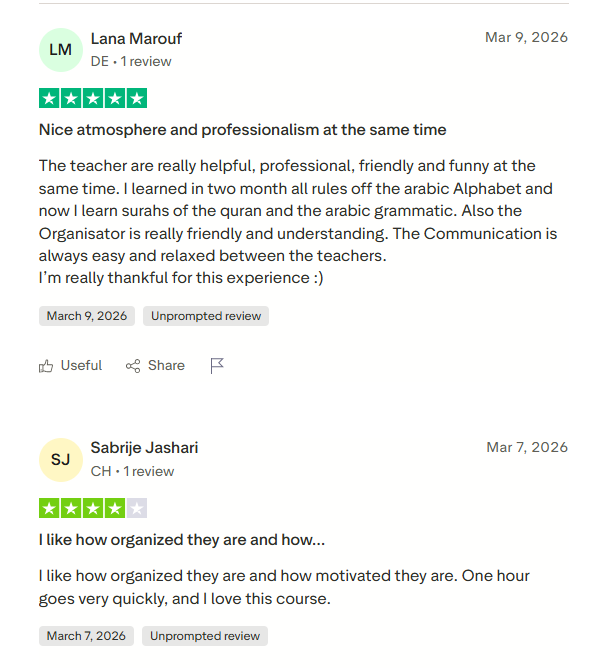
We keep class sizes small, sessions interactive, and our teachers patient, positive, and genuinely invested in every student’s progress. Families across Frankfurt trust Denk Arabisch because we make the Quran learning something children actually look forward to.
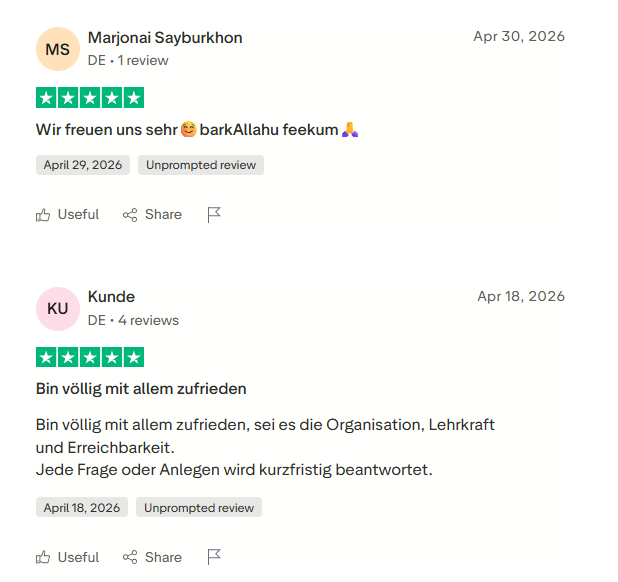
👉 Book your child’s FREE trial class today and take the first step toward a lifelong connection with the Quran.
Learn the Quran with Denk Arabisch Academy
Master reading and understanding the Quran through structured and supportive learning
Try a Free TrialConclusion
Frankfurt offers Muslim families a strong foundation from which to build their children’s Islamic education. With the right program, the right teacher, and consistent support at home, every child in Frankfurt has the potential to develop a beautiful relationship with the Quran — one that will guide, strengthen, and inspire them for the rest of their lives.
In today’s fast-paced world, helping children stay connected to their faith is more important than ever. Quran learning provides children with spiritual direction, emotional balance, and strong moral values that benefit them throughout every stage of life.
Beyond memorization and recitation, the Quran teaches compassion, discipline, patience, and respect — qualities that help children succeed both academically and socially.
Parents also play a vital role in this journey. Encouraging daily Quran practice, celebrating progress, and creating a positive Islamic environment at home can make a lasting difference in a child’s motivation and confidence. Even small, consistent efforts can lead to remarkable results over time.
Whether you choose mosque classes, weekend Islamic schools, or online Quran programs, the most important step is to begin. Every verse a child learns strengthens their connection with Islam and builds a foundation that can remain with them forever.
The best time to start is always now. Do not wait for the perfect moment — take the first step today and give your child the priceless gift of the Quran.
FAQs
1. At what age should my child start Quran classes?
Most children are ready to begin between the ages of 4 and 6, starting with Arabic letter recognition through Noorani Qaida. Some children start even earlier with simple Duas and listening exercises.
2. How many times a week should a child attend Quran class?
Two to three sessions per week is generally the most effective frequency for children — enough to maintain momentum without overwhelming them alongside school commitments.
3. Is it better to choose group classes or private lessons?
Both have their merits. Group classes build community and motivation through peer interaction. Private lessons allow for more personalized attention and faster progress on specific weaknesses. Many families choose private online lessons for the main sessions and group activities for community building.
4. How can I tell if my child is making real progress?
Look for improvements in fluency, confidence during recitation, and the ability to read new verses independently. A good teacher will also provide regular feedback and set clear milestones so you can track your child’s development.
5. My child was born in Germany and doesn’t speak Arabic — is that a problem?
Not at all. Most children’s Quran programs are specifically designed for non-Arabic speakers and start from absolute basics. Many Frankfurt children learn to read Arabic beautifully without speaking it conversationally.
6. Are online classes really as effective as in-person lessons?
For Quran recitation and Tajweed, online one-on-one classes are just as effective — and often more so — because the child receives the teacher’s full attention throughout the session. The key is choosing a qualified, experienced teacher who knows how to engage children through a screen.