For Muslim families in Reutlingen, helping children build a meaningful relationship with the Quran is an important part of Islamic upbringing. Children often use German at school and in daily life, while Arabic remains the language of the Quran and an important part of Islamic education.
Learning the Quran is therefore about more than recognizing Arabic letters or memorizing Surahs. A structured program can help children improve their reading, pronunciation, recitation, Tajweed, and memorization while becoming more comfortable with Arabic.
For families looking for Quran learning for children in Reutlingen, gradual learning is especially important. Children can benefit from structured lessons, regular practice, individual support, and positive encouragement.
With Denk Arabisch, children in Reutlingen can learn Arabic and the Quran through structured online lessons with individual support and guidance.
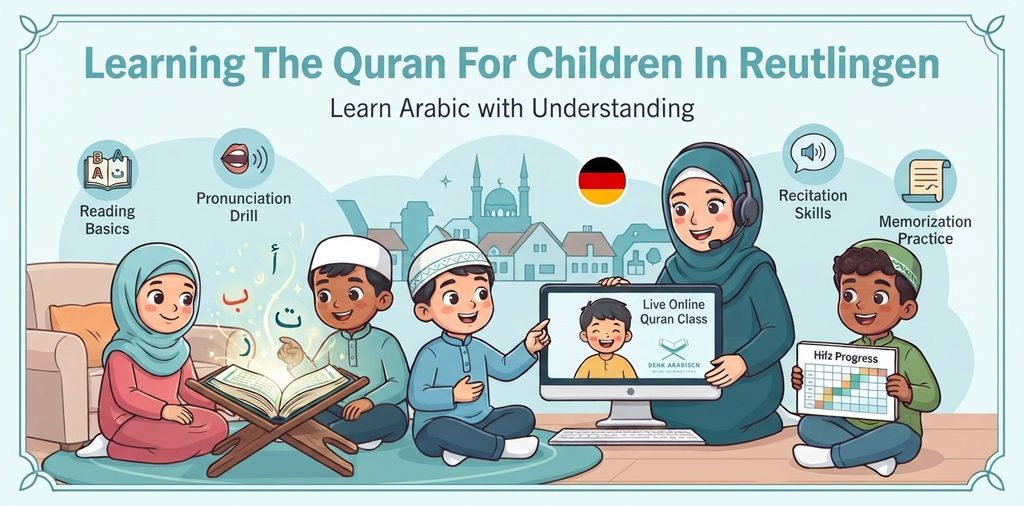
Table of Contents
Why Is Quran Learning Important for Children?
Childhood is an important time for developing habits that can continue into later life. When Quran learning is introduced through simple and age-appropriate lessons, children can gradually become familiar with Arabic letters, sounds, recitation, and Islamic values.
Children also learn differently from adults. They often benefit from repetition, shorter activities, practical examples, encouragement, and regular practice rather than long and difficult lessons.
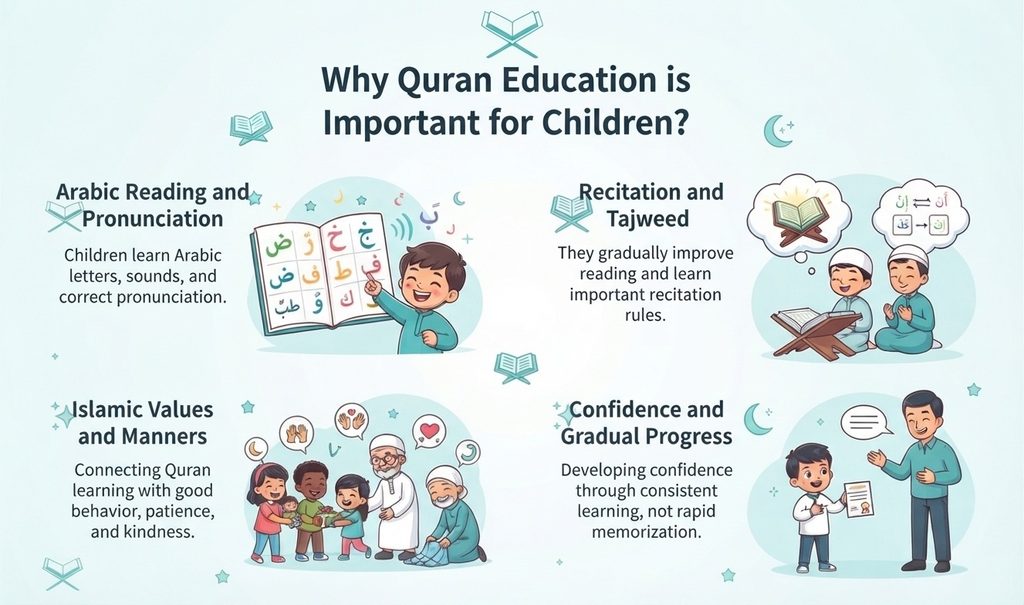
A well-organized Quran program can therefore focus on several connected areas:
- Arabic reading and pronunciation: Children learn letters, sounds, and correct pronunciation.
- Recitation and Tajweed: They gradually improve their reading and learn important recitation rules.
- Memorization and revision: They memorize suitable Surahs and regularly review previous material.
- Confidence and Islamic values: They develop confidence while connecting learning with good manners.
Read our article, “Rewards Of Reciting The Quran”
How Does a Child Begin Learning the Quran?
A child’s Quran journey is usually easier when learning follows a clear and gradual sequence. Beginners should first develop the skills they need for Arabic reading before moving toward longer Surahs or more advanced Tajweed.
The learning process can gradually move from basic Arabic skills to Quran reading, recitation, Tajweed, memorization, and revision.
| Learning Stage | What the Child Develops |
| Arabic Foundation | Letters, sounds, vowels, and letter connections |
| Basic Reading | Simple Arabic words and short Quranic passages |
| Quran Reading | Accuracy and reduced hesitation |
| Recitation | Pronunciation, fluency, and confidence |
| Tajweed | Important Quran recitation rules |
| Memorization | Suitable Surahs with regular Muraja’ah |
This gradual approach gives children enough time to strengthen each skill before moving forward. The pace can be adapted according to the child’s age, previous experience, and individual learning needs.
a. Arabic Letters and Correct Pronunciation
For children who are completely new to Arabic, learning the Arabic alphabet is usually an important first step. Children need to recognize the letters visually and understand the sounds they represent.
Arabic also contains sounds that may not exist in German or other languages familiar to the child. Because of this, children need to hear, repeat, compare, and practice difficult sounds.
At this stage, children can focus on:
- Recognizing Arabic letters.
- Distinguishing between similar letters.
- Connecting letters with basic vowel sounds.
- Repeating difficult sounds with teacher guidance.
Strong pronunciation foundations can make later Quran reading and Tajweed learning easier. Learning the correct sounds from the beginning gives children a stronger foundation for accurate recitation.
b. Learning to Read Quranic Arabic
After becoming familiar with Arabic letters and their sounds, children can gradually develop their Quran reading skills. Arabic reading requires understanding how letters connect and how vowel signs affect pronunciation.
Quranic Arabic also contains reading patterns that become easier through repeated exposure and guided practice. Children should therefore be given enough time to develop fluency instead of being expected to read quickly from the beginning.
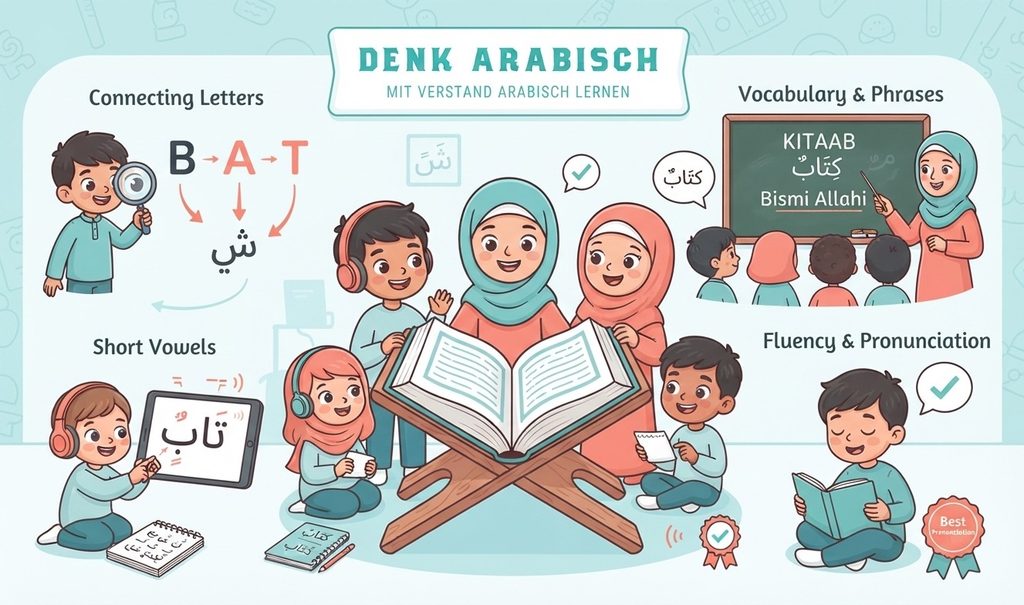
During this stage, children can practice:
- Connecting Arabic letters correctly.
- Reading words with short vowels.
- Recognizing familiar Quranic words.
- Reading short Quranic phrases.
Accuracy and correct pronunciation are more important than speed, especially while children are still developing their basic reading skills.
Arabic Classes for Kids at Denk Arabisch help children develop their Arabic skills through structured lessons suitable for their age and level.
Beginners can start with the basics, while children with previous experience can continue improving their skills.
c. Improving Quran Recitation Step by Step
Once children can read basic Quranic Arabic, they can begin working on smoother and more accurate recitation. Recitation requires more than recognizing words; children also need to pronounce letters correctly and gradually apply appropriate reading rules.
A teacher can listen carefully to the child’s recitation and identify areas that need improvement. Difficult words can be repeated, pronunciation can be demonstrated, and short passages can be practiced regularly.
Children can improve through:
- Listening carefully to correct pronunciation.
- Repeating difficult words and verses.
- Reading aloud regularly.
- Receiving patient correction and feedback.
Regular correction is especially useful because children may not always notice their own pronunciation mistakes. Patient guidance can help them improve without feeling embarrassed about making mistakes.
Quran Memorization for Children in Reutlingen
Quran memorization, or Hifz, is an important part of Quran education for many Muslim families. However, children have different memory abilities, concentration levels, and learning speeds, so memorization should be adapted to each child.
Some children may memorize several verses quickly but need frequent revision. Others may memorize more slowly but remember what they learn for longer. Both situations are normal.
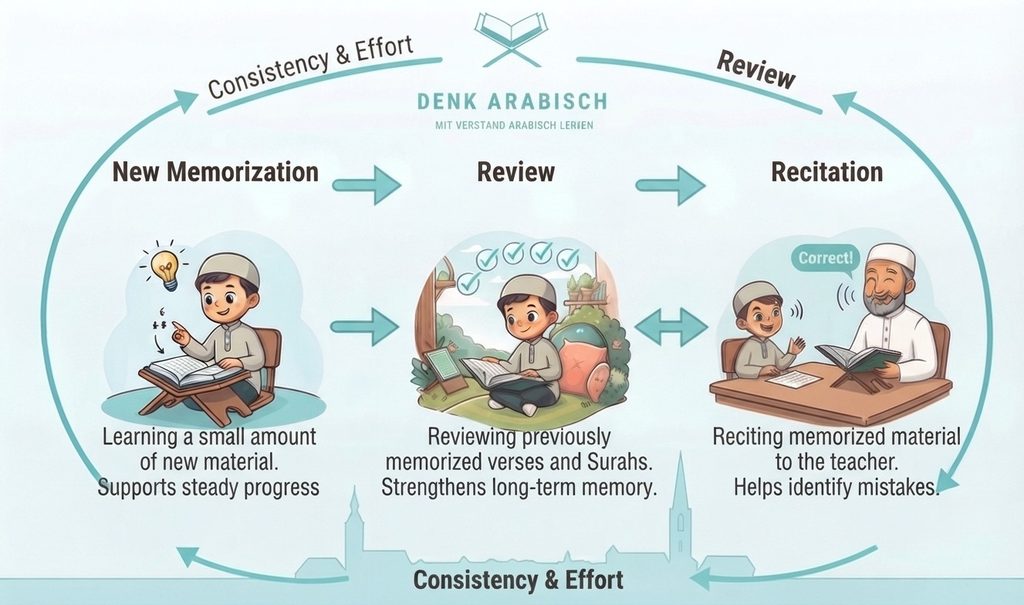
A balanced memorization routine can include three connected stages:
| Stage | What Happens | Why It Matters |
| New Memorization | Learning a small amount of new material | Supports steady progress |
| Muraja’ah | Reviewing previously memorized verses and Surahs | Strengthens long-term memory |
| Recitation | Reciting memorized material to the teacher | Helps identify mistakes |
The key is to balance new memorization with regular revision. Parents can support this by reviewing small amounts regularly and encouraging consistent effort.
How Can Parents Help Children Learn the Quran at Home?
Parents have an important role in supporting Quran education, even when children attend regular Quran lessons. Home practice does not need to replace the teacher; instead, it can help children repeat what they have already learned.
A regular Quran time can be arranged after school, after a daily prayer, or during another quiet period that works for the family.
Parents can support learning by:
- Creating a regular and realistic practice time.
- Listening to recently learned Surahs.
- Encouraging repetition of difficult verses.
- Communicating with the teacher about areas needing support.
Discover practical ideas and guidance in our article, “Raising Muslim Kids in Germany”, and learn more about supporting your children’s Islamic upbringing while growing up in Germany.
Read also: Learning The Quran For Children In Freiburg
a. Building Good Quran Learning Habits at Home
One of the most useful things parents can give their children is not a large amount of daily homework, but a consistent learning habit.
A child who practices a small amount regularly can gradually develop stronger skills than a child who studies only occasionally. Consistency also helps children see Quran learning as a normal and meaningful part of family life.
A simple home routine should focus on:
- A regular and realistic practice time.
- Reviewing older material as well as learning new material.
- Keeping the environment calm and free from unnecessary distractions.
b. Quran Learning Options for Muslim Families in Reutlingen
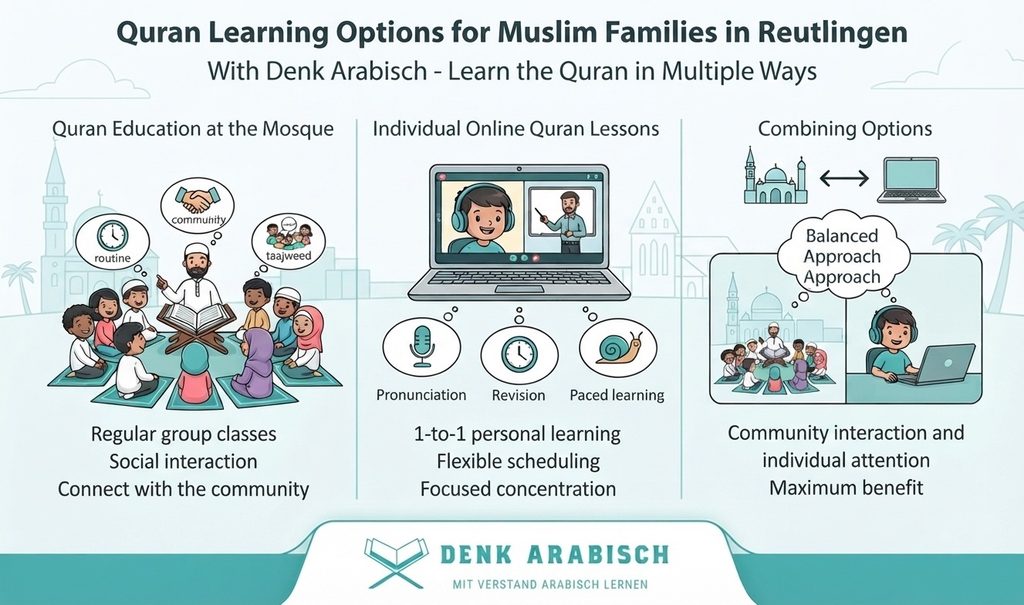
Families in Reutlingen can choose between different approaches to Quran education. The most suitable option can depend on the child’s age, Arabic level, learning style, family schedule, and need for individual support.
Some families may prefer community-based learning, while others may find individual online lessons more suitable for their children.
Learn the Quran with Denk Arabisch Academy
Master reading and understanding the Quran through structured and supportive learning
Try a Free Trial1. Quran Classes at a Mosque or Islamic Community
Mosques and Islamic communities can give children a good opportunity to learn the Quran in a group with other Muslim children. This can make learning more social and help children become familiar with a regular Quran learning routine.
Group classes can provide:
- Regular learning times and a structured routine.
- Direct contact with a Quran teacher.
- Interaction and learning with other children.
- A connection to the local Muslim community.
However, larger groups may give the teacher less time to focus on each child. Some children may need extra support with pronunciation, Arabic reading, Tajweed, or memorization.
2. Individual Online Quran Lessons
One-to-one online lessons provide a more personalized learning environment. The teacher can focus directly on one child’s current needs and adjust the lesson according to the child’s level.
This can be useful when a child needs:
- Additional pronunciation practice.
- More time for revision.
- A slower lesson pace.
- Extra explanation of difficult areas.
Online lessons can also be convenient for families who have busy schedules or prefer learning from home.
3. Combining Different Learning Options
Some families may combine community activities with individual online lessons. For example, a child may participate in Quran activities at a mosque while receiving additional online support for Tajweed or pronunciation.
This approach can provide both community interaction and personalized attention, depending on the family’s needs.
Read our article, “Islamic Teachings For Kids”
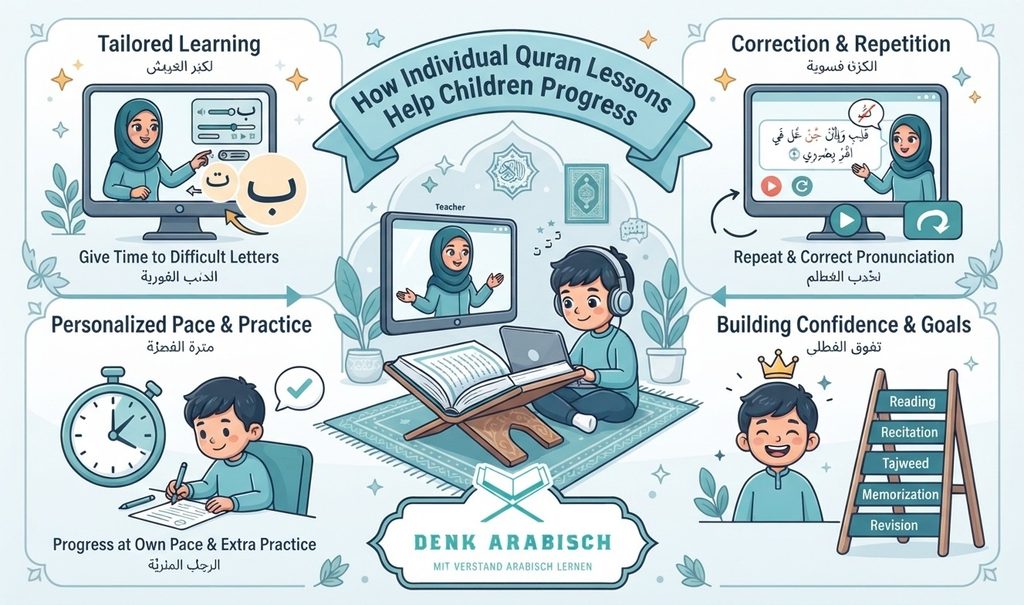
How Individual Quran Lessons Can Help Children Progress?
Every child learns differently. Some children may know the Arabic letters but need help connecting them, while others may read well but struggle with certain sounds.
Individual Quran lessons allow the teacher to adjust the lesson according to each child’s needs.
The teacher can:
- Give more time to difficult letters and sounds.
- Correct pronunciation mistakes.
- Repeat difficult words and verses.
- Adjust the lesson speed.
- Provide extra practice when needed.
This personalized approach helps children progress at their own pace without feeling pressured or compared with other students.
It also gives children more opportunities to ask questions, practice, and receive direct feedback from the teacher.
As their skills improve, lessons can gradually move from basic Arabic reading to Quran recitation, Tajweed, memorization, and regular revision.
Tajweed Course for Kids at Denk Arabisch teaches essential Tajweed rules through simple and practical exercises.
With individual online lessons, the teacher can focus on each child’s progress, correct pronunciation difficulties, and provide extra practice when needed.
Read also: Learning The Quran For Children In Tübingen
How to Choose the Right Quran Course for Your Child
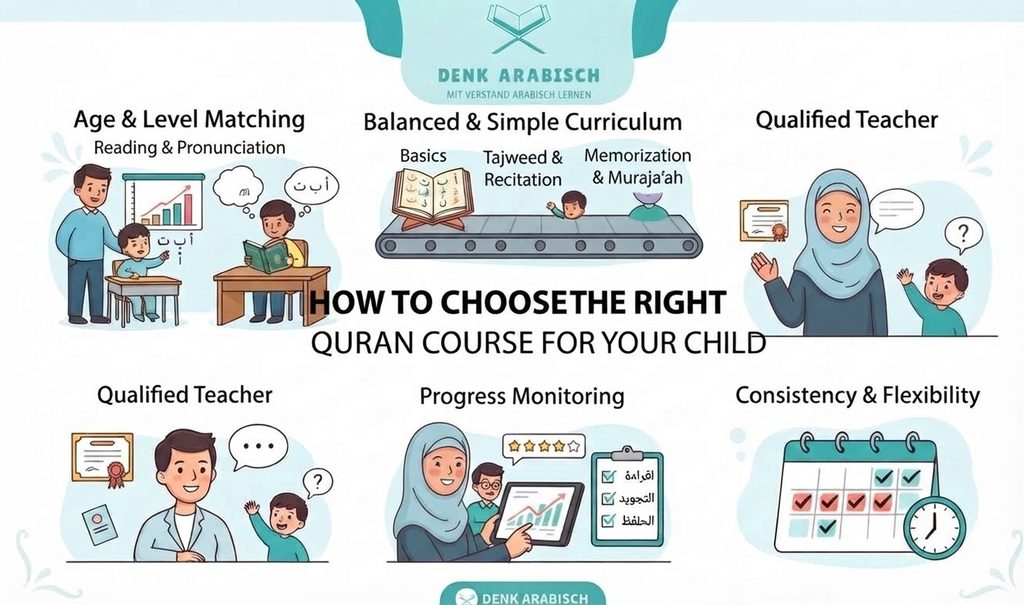
Choosing a Quran course requires looking beyond the number of lessons or the amount of material covered. Parents should consider whether the program matches the child’s age, current level, learning style, and weekly schedule.
What Should Parents Look For?
Parents should also consider the teacher’s Quran knowledge and experience with children. Patience, clear pronunciation, good communication, and simple explanations are especially important.
A balanced curriculum can include:
- Quran reading and pronunciation.
- Tajweed and recitation.
- Memorization and Muraja’ah.
- Basic Islamic knowledge.
Parents can also ask how progress is monitored. Regular feedback helps families understand what the child has learned and which areas still need practice.
Finally, consistency matters. A realistic schedule that the family can maintain is often more useful than an intensive schedule that becomes difficult to continue.
Read our article, “Learning The Quran For Children – Ages 5 And Up”
What Age Should a Child Start Learning the Quran?
There is no single perfect age for every child. Some children may begin becoming familiar with Arabic letters and short Surahs at a young age, while others may need more time before starting structured lessons.
Early Quran exposure can remain simple and enjoyable. Young children can listen to Quran recitation, become familiar with Arabic letters, repeat short Surahs, and practice short periods of reading.
The most important factor is not simply age. Teaching should match the child’s development, attention span, previous knowledge, and ability to learn comfortably.
Make Quran Learning Enjoyable for Children
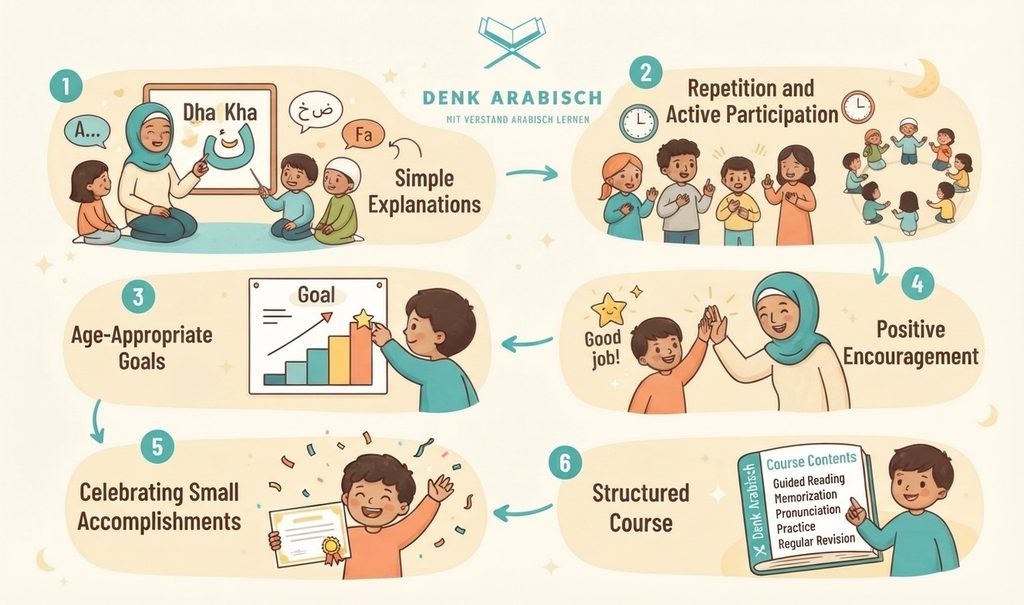
Children are naturally curious, but they can lose interest when lessons feel too difficult or repetitive. Making Quran learning enjoyable does not mean removing structure or discipline. Teachers and parents can make learning more engaging through:
- Simple explanations and practical examples.
- Repetition and active participation.
- Age-appropriate goals.
- Positive encouragement.
- Celebrating small achievements.
Children do not need to master every skill immediately. Giving them enough time to improve can help them build confidence and maintain a positive attitude toward Quran learning.
Quran Course for Kids at Denk Arabisch helps children improve their Quran reading, recitation, and memorization in a structured way.
The course can include:
- Guided Quran reading.
- Memorization of suitable Surahs.
- Pronunciation practice.
- Regular Muraja’ah and revision.
How Can Quran Learning Support a Child’s Islamic Development?
Quran learning can contribute to a child’s broader Islamic education. When Quran lessons are connected with simple Islamic values, children can begin to understand that the Quran is not simply a book they read or memorize, but also a source of guidance.
Depending on their age, children can gradually learn about:
- Kindness and respect.
- Honesty and patience.
- Good manners.
- Responsibility toward others.
These values can be connected to everyday situations at home, school, and with friends. Simple examples can help children understand how Islamic values relate to their own behavior.
Young children do not need complicated discussions. Age-appropriate explanations can make these ideas easier to understand and remember.
Read also: Learning The Quran For Children In Konstanz
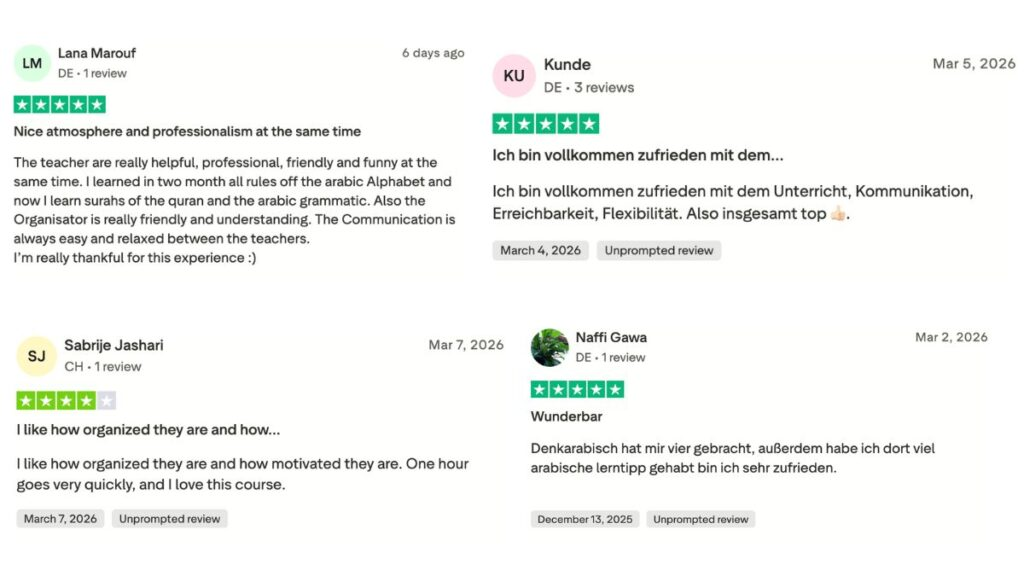
What Our Students Say About Denk Arabisch Academy
See what our students say about learning at Denk Arabisch Academy on Trustpilot. Read their experiences and check out more reviews to discover how our courses help improve Arabic.
Quran for Children in Reutlingen with Denk Arabisch
At Denk Arabisch, children in Reutlingen can learn Arabic and the Quran through structured online lessons tailored to their individual abilities.
Our approach focuses on strong foundations while allowing each child to progress at a comfortable and steady pace. Individual lessons allow the teacher to focus directly on the child’s progress and provide additional support when needed.
- Quran Course for Kids
- Tajweed Course for Kids
- Quran Tajweed Course
- Arabic Course For Beginners
- Arabic Reading Course
- Quran Recitation Course
- Islamic Studies Course
Learn the Quran with Denk Arabisch Academy
Master reading and understanding the Quran through structured and supportive learning
Try a Free TrialFor families in Reutlingen, learning from home also offers a convenient way to include Quran and Arabic education in the child’s weekly routine without additional travel.
Book a free trial lesson with Denk Arabisch and give your child a structured start to learning Arabic and the Quran.

Conclusion
Learning the Quran for children in Reutlingen can be an important part of their Islamic education and personal development. Children do not need to learn everything at once. With structured lessons, regular practice, patient guidance, and positive encouragement, they can gradually build their Quranic skills.
A consistent Quran learning journey can help children develop:
- Strong Arabic reading skills.
- Better pronunciation and Quran recitation.
- Basic Tajweed knowledge.
- Regular memorization and revision habits.
- A stronger connection with the Quran and Islamic values.
Whether children are starting with the Arabic alphabet, learning to read the Quran, studying Tajweed, or memorizing Surahs, progress should be gradual and suitable for their individual level.
For families in Reutlingen, online Quran learning can provide a flexible way for children to study from home while receiving direct guidance and individual support from a teacher.
With Denk Arabisch, children in Reutlingen can learn Arabic and the Quran through structured online lessons with individual support and guidance.
The main goal is not simply to memorize a large number of Surahs quickly. It is to help children develop good Quran learning habits, confidence, correct reading skills, and a lasting love for the Quran.
FAQs
1. Can children in Reutlingen learn the Quran online?
Yes. Online Quran classes allow children to study from home with a teacher without traveling to a physical learning center.
Children can use online lessons to develop:
Quran reading.
Pronunciation.
Tajweed and recitation.
Memorization and revision habits.
2. What do children learn in Quran classes?
The content depends on the child’s age and current level. Beginners may start with Arabic letters and basic reading, while more advanced children can focus on Tajweed, recitation, or memorization.
The program can therefore develop from basic Arabic reading toward more advanced Quran skills as the child progresses.
3. Can beginners join Quran classes?
Yes. Beginners can start with the basics without previous Quran-learning experience.
They may begin with:
Arabic letters and sounds.
Short vowels.
Letter connections.
Simple Arabic reading.
Once these foundations become stronger, the child can gradually progress toward Quran reading, recitation, Tajweed, and memorization.
4. How often should children practice the Quran?
Regular short practice sessions are often easier for children to maintain than occasional long sessions. The ideal routine depends on the child’s age, level, concentration, school schedule, and learning speed.
The most important point is to choose a realistic routine that the child and family can maintain consistently.
5. Is online Quran learning suitable for young children?
Online learning can be suitable for young children when lessons are interactive, age-appropriate, and adapted to their attention span.
Young children can benefit from:
Short focused activities.
Repetition and practice.
Direct teacher interaction.
Simple explanations.
Encouragement and individual attention.