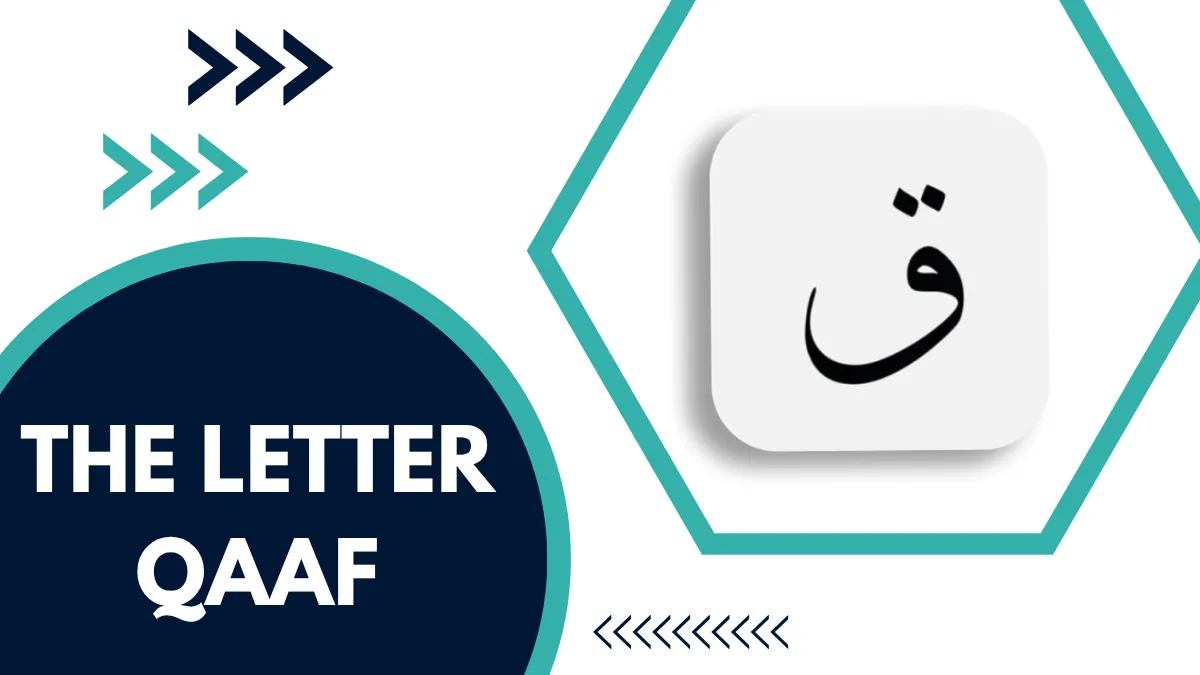
The letter Qaaf (ق), called قَاف, is the 21st letter of the Arabic alphabet. You make it at the very back of the mouth, where the tongue meets the soft palate and the uvula. Linguists call it a voiceless uvular plosive, written [q] in the IPA.
German has no Qaaf, and that is the honest starting point. Your k in Kuh sits further forward. But your Rachen-R, the throaty R of standard German, is made in the same area, so your mouth already knows the address. This guide shows you how to get there.
These ten facts are the ones you will use most when you read, write or recite Qaaf. Come back to this table whenever a detail slips your mind.
Discover how many letters are in the Arabic alphabet and explore their sounds, shapes, and secrets in How Many Letters in Arabic? Start your Arabic learning journey today!
| Fact | Detail |
| Name | Qaaf, قَاف |
| Sound | [q], voiceless uvular plosive. No German word has it; Greenlandic and Quechua do |
| Position in the alphabet | 21st letter (hijāʾī order) |
| Abjad value | 19th in Abjad order, value 100 |
| Transliteration | Common: q (Qaaf). DIN 31635: q (Qāf). Other spellings: Qaf, Qof. Arabizi: q (some writers use 8 or 9, depending on the region) |
| Point of articulation | Farthest part of the tongue against the soft palate (أَقْصَى اللِّسَانِ) |
| Sun or Moon letter | Moon letter |
| Heavy or light | Heavy (mufakhkham) |
| Dots | Two dots above |
| Connection | Connects on both sides, so it has four forms |
Table of Contents
The Letter Qaaf (ق) on the Alphabet Map
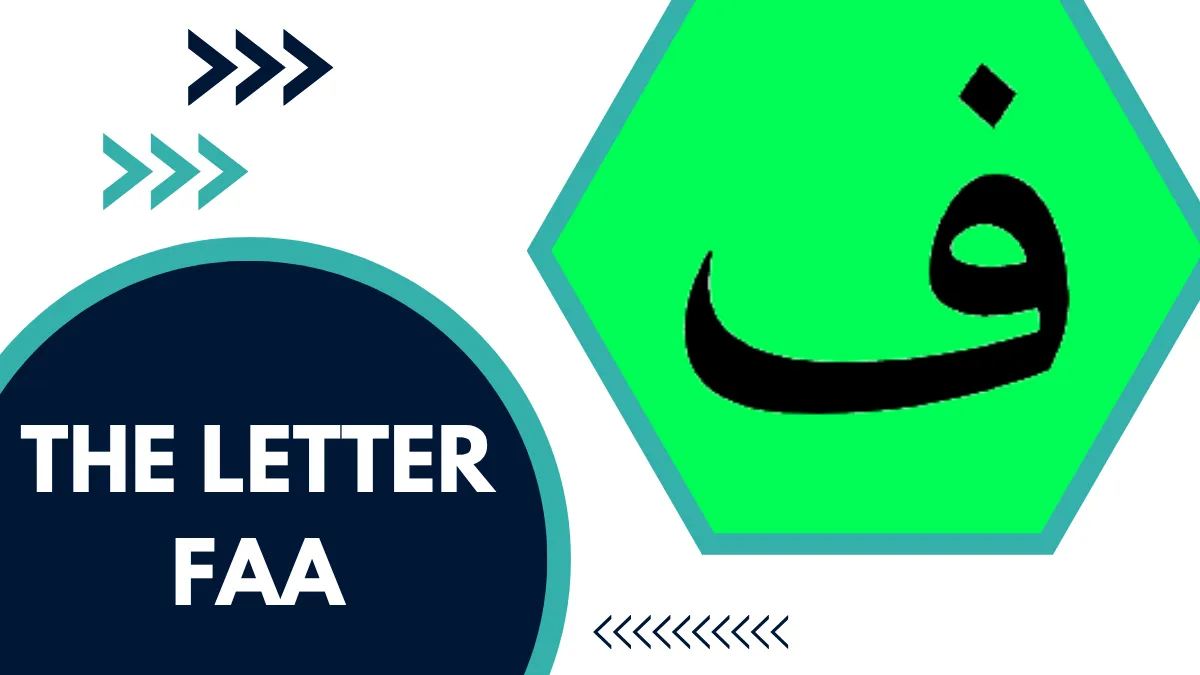
In the hijāʾī order, the order of charts and school books, Qaaf takes the 21st place right after Fā (ف): ا ب ت ث ج ح خ د ذ ر ز س ش ص ض ط ظ ع غ ف ق.
The older Abjad order runs أَبْجَدْ هَوَّزْ حُطِّي كَلَمُنْ سَعْفَصْ قَرَشَتْ ثَخَذْ ضَظَغْ. There Qaaf is the 19th letter with the value 100. This order still matters for numbers, dates on manuscripts and inscriptions.
Qaaf’s Look-alike Twin: Fā (ف)
Qaaf shares its body shape with one letter only, and the dots tell the two apart. Learn them as a pair and you will not mix them up in handwriting.
- فـ (Fā): one dot above
- قـ (Qaaf): two dots above
In the isolated and final forms the tails differ too: Qaaf drops in a deeper bowl below the line.
Why Qaaf Is a Moon Letter
Moon letters keep the lām of al- fully audible, so no assimilation happens before them. Qaaf belongs to this group, and three common words show the pattern:
- الْقَمَر (al-qamar): the moon
- الْقَلَم (al-qalam): the pen
- الْقَلْب (al-qalb): the heart
In writing, the lām carries a sukūn (لْ) and Qaaf has no shadda. Say al-qamar, never aq-qamar.
Starting from zero? The Arabic Course For Beginners at Denk Arabisch takes you from the first letters to your first words, with every step explained in German.
Where Qaaf Sits in Your Mouth: Makhraj and Tajweed Traits
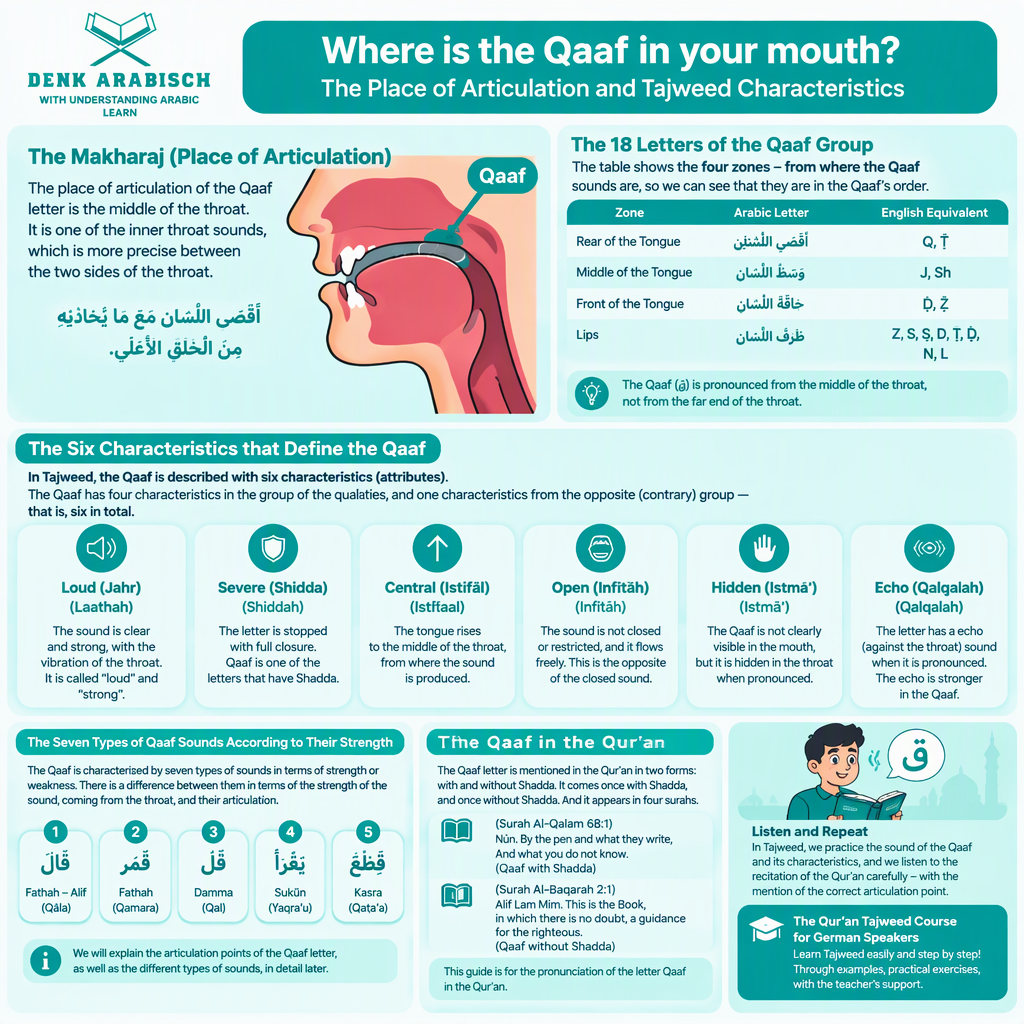
The makhraj (مَخْرَج) is the exit point of a sound. Qaaf comes from the farthest part of the tongue with the soft palate above it: أَقْصَى اللِّسَانِ مَعَ مَا يُحَاذِيهِ مِنَ الْحَنَكِ الْأَعْلَى.
Qaaf belongs to the tongue group, which holds 18 letters in four zones. The table runs from the deepest zone to the tip, so you can see how far back Qaaf really sits.
| Zone | Arabic | Letters |
| Back of the tongue | أَقْصَى اللِّسَانِ | ق ك |
| Middle of the tongue | وَسَطُ اللِّسَانِ | ج ش ي |
| Sides of the tongue | حَافَّةُ اللِّسَانِ | ض ل |
| Tip of the tongue | طَرَفُ اللِّسَانِ | ن ر ط د ت ص ز س ظ ذ ث |
Kaaf (ك) sits right beside Qaaf, just a little further forward. That closeness causes the first trap in the mistakes section.
Qaaf’s Six Defining Traits
Tajweed describes every letter through its attributes (ṣifāt). Qaaf has five traits that come with an opposite and one that has none, six in total:
- Jahr (الْجَهْر), loudness: the breath stays held back while the letter sounds. This is the classical Tajweed term; modern phonetics calls [q] voiceless.
- Shidda (الشِّدَّة), strength: the sound stops completely at the makhraj. The shidda letters are gathered in أَجِدُكَ قَطَبْتَ.
- Istiʿlāʾ (الِاسْتِعْلَاء), elevation: the back of the tongue rises toward the palate. The seven letters are خُصَّ ضَغْطٍ قِظْ.
- Infitāḥ (الِانْفِتَاح), openness: the tongue does not press flat against the palate, so a gap stays open. This separates Qaaf from ص ض ط ظ.
- Iṣmāt (الْإِصْمَات), restraint: Qaaf is not among the easy letters of فَرَّ مِنْ لُبٍّ, so it counts as a letter of iṣmāt.
- Qalqalah (الْقَلْقَلَة), echo: a small bounce on a silent Qaaf. This trait has no opposite, and its letters are gathered in قُطْبُ جَدٍّ.
Qaaf’s Weight: Five Levels of Heaviness
Qaaf is one of the seven heavy letters of the istiʿlāʾ group: خُصَّ ضَغْطٍ قِظْ. How heavy it sounds depends on the vowel beside it, from heaviest to lightest:
- Fatḥa followed by alif: قَالَ (qāla)
- Fatḥa: قَمَر (qamar)
- Ḍamma: قُلْ (qul)
- Sukūn: يَقْرَأُ (yaqraʾu)
- Kasra: قِطَّة (qiṭṭa)
Even at the lightest level, Qaaf stays heavy, because the back of the tongue stays raised.
The Echo After Qaaf: Qalqalah in the Quran
Qalqalah is a light bounce you add when a Qalqalah letter is still or when you stop on it. It is an echo of the letter, never a new vowel. Two verses show both strengths:
- اقْرَأْ (Surah Al-ʿAlaq 96:1): Qaaf carries a sukūn inside the word, so you hear a light bounce (Qalqalah ṣughrā).
- الْفَلَقِ (Surah Al-Falaq 113:1): when you stop at the end of the verse and say الْفَلَقْ, the bounce is stronger (Qalqalah kubrā).
This guide follows the recitation of Ḥafṣ ʿan ʿĀṣim.
Discover the Qalqalah Rules in Tajweed and learn how to pronounce these important Quranic sounds correctly with clear examples to improve your Quran recitation!
Want to recite with the right bounce and the right weight? The Quran Tajweed Course for German Speakers at Denk Arabisch explains every rule through German examples and practice.
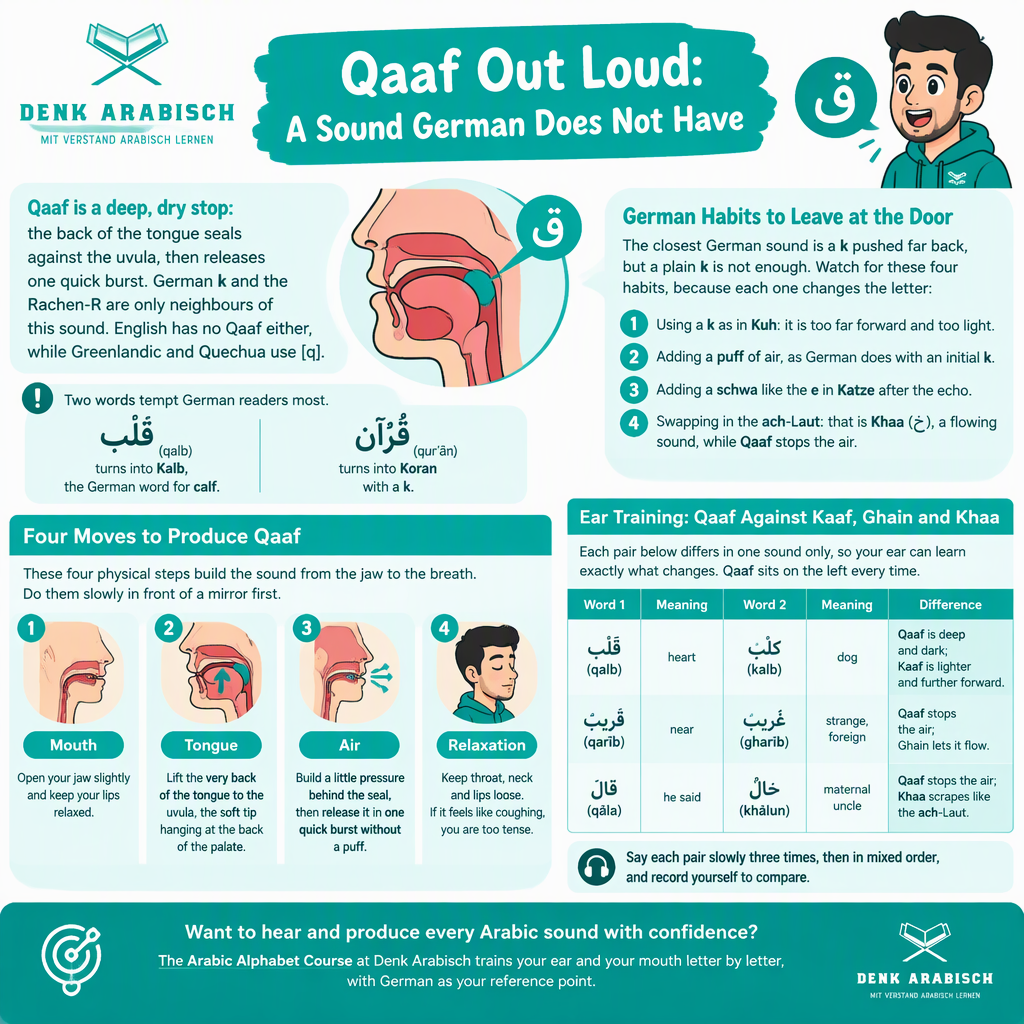
Saying Qaaf Out Loud: A Sound German Does Not Have
Qaaf is a deep, dry stop: the back of the tongue seals against the uvula, then releases one quick burst. German k and the Rachen-R are only neighbours of this sound. English has no Qaaf either, while Greenlandic and Quechua use [q].
German Habits to Leave at the Door
The closest German sound is a k pushed far back, but a plain k is not enough. Watch for these four habits, because each one changes the letter:
- Using a k as in Kuh: it is too far forward and too light.
- Adding a puff of air, as German does with an initial k.
- Adding a schwa like the e in Katze after the echo.
- Swapping in the ach-Laut: that is Khaa (خ), a flowing sound, while Qaaf stops the air.
Two words tempt German readers most. قَلْب (qalb, heart) turns into Kalb, the German word for calf. قُرْآن (qurʾān) turns into Koran with a k.
Four Moves to Produce Qaaf
These four physical steps build the sound from the jaw to the breath. Do them slowly in front of a mirror first.
- Mouth: open your jaw slightly and keep your lips relaxed.
- Tongue: lift the very back of the tongue to the uvula, the soft tip hanging at the back of the palate.
- Air: build a little pressure behind the seal, then release it in one quick burst without a puff.
- Relaxation: keep throat, neck and lips loose. If it feels like coughing, you are too tense.
Read our Article: Correct Arabic Pronunciation
Ear Training: Qaaf Against Kaaf, Ghain and Khaa
Each pair below differs in one sound only, so your ear can learn exactly what changes. Qaaf sits on the left every time.
| Word 1 | Meaning | Word 2 | Meaning | Difference |
| قَلْب (qalb) | heart | كَلْب (kalb) | dog | Qaaf is deep and dark; Kaaf is lighter and further forward |
| قَرِيب (qarīb) | near | غَرِيب (gharīb) | strange, foreign | Qaaf stops the air; Ghain lets it flow |
| قَالَ (qāla) | he said | خَالٌ (khālun) | maternal uncle | Qaaf stops the air; Khaa scrapes like the ach-Laut |
Say each pair slowly three times, then in mixed order, and record yourself to compare.
Want to hear and produce every Arabic sound with confidence? The Arabic Alphabet Course at Denk Arabisch trains your ear and your mouth letter by letter, with German as your reference point.
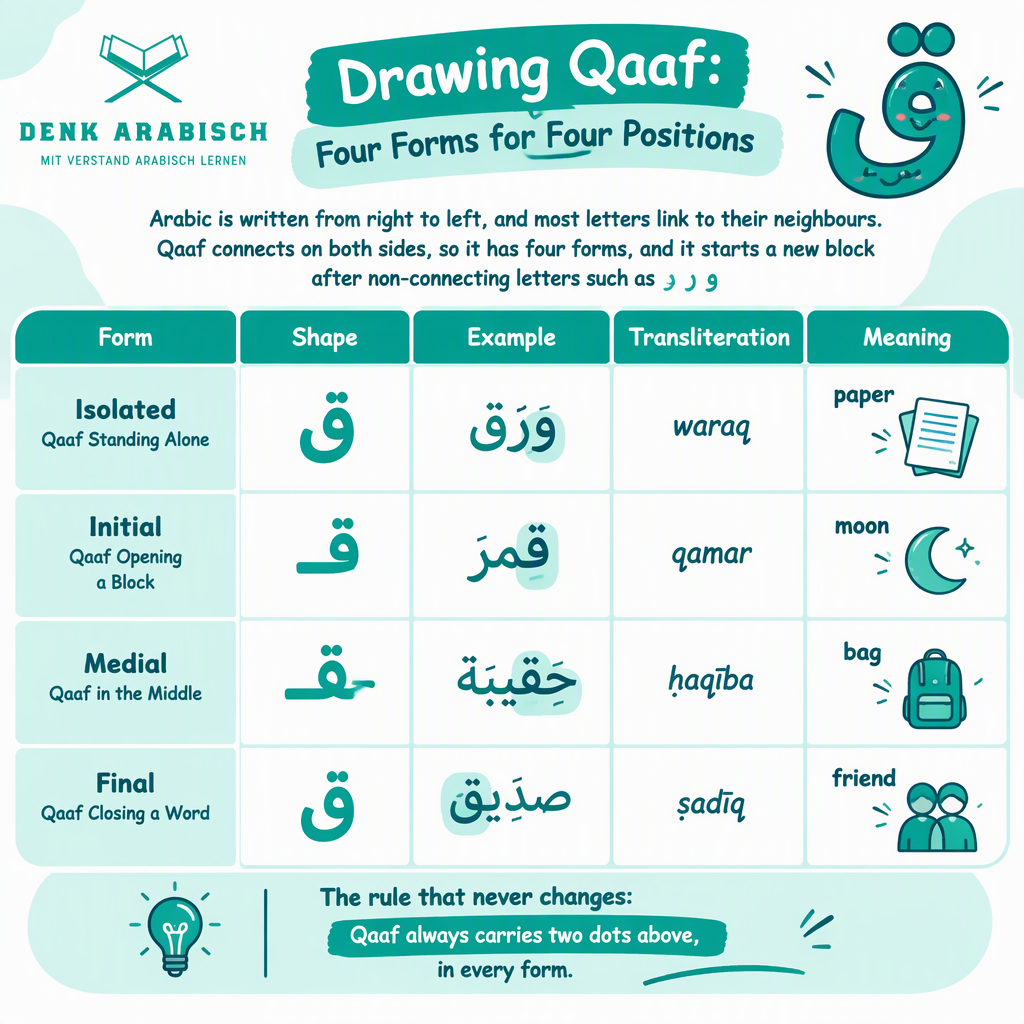
Drawing Qaaf: Four Forms for Four Positions
Arabic is written from right to left, and most letters link to their neighbours. Qaaf connects on both sides, so it has four forms, and it starts a new block after non-connecting letters such as و ر د.
The table gives one clear example per form. Notice that وَرَق shows what happens after a non-connecting letter.
| Form | Shape | Example | Transliteration | Meaning |
| Isolated | ق | وَرَق | waraq | paper |
| Initial | قـ | قَمَر | qamar | moon |
| Medial | ـقـ | حَقِيبَة | ḥaqība | bag |
| Final | ـق | صَدِيق | ṣadīq | friend |
1. Isolated Form (ق): Qaaf Standing Alone
You see this form when Qaaf stands alone or ends a word after a non-connecting letter, because those letters never join to the left.
Shape: a round head on the line with a deep bowl dropping below it.
Examples: وَرَق (waraq, paper), أَزْرَق (azraq, blue). In both, Qaaf follows ر.
2. Initial Form (قـ): Qaaf Opening a Block
You use this form at the start of a word, and also in the middle of a word after a non-connecting letter.
Shape: a small closed loop on the line with a stroke leading left.
Examples: قَمَر (qamar, moon), قَلَم (qalam, pen), وَقْت (waqt, time). In وَقْت, Qaaf follows the non-connecting و and joins forward to ت.
3. Medial Form (ـقـ): Qaaf in the Middle
You use this form between two connecting letters.
Shape: the same small loop, joined by a stroke on both sides.
Examples: حَقِيبَة (ḥaqība, bag), يَقُولُ (yaqūlu, he says).
Learn Arabic with Denk Arabisch Academy
Speak and understand Arabic through a clear and effective learning system
Try a Free Trial4. Final Form (ـق): Qaaf Closing a Word
You use this form at the end of a word after a connecting letter.
Shape: a stroke from the right, the loop, then a bowl-shaped tail below the line.
Examples: صَدِيق (ṣadīq, friend), طَرِيق (ṭarīq, road).
The rule that never changes: Qaaf always carries two dots above, in every form.
Discover Arabic Letters Connected Forms and learn how Arabic letters change their shapes when they appear at the beginning, middle, or end of a word.
Want to write Arabic confidently by hand? The Arabic Writing Course at Denk Arabisch guides you through letter shapes, connections and clean handwriting step by step.
Qaaf Dressed in Vowels
Every vowel changes how heavy Qaaf sounds, but none of them makes it light. Keep the back of the tongue raised, and the vowel will follow in the right colour.
Short Marks on Qaaf
The four marks below cover every short vowel and the silent stop. Each example is a word you will meet often.
| Mark | Name | Sound | Example | Meaning |
| قَ | Fatḥa | qa | قَمَر (qamar) | moon |
| قُ | Ḍamma | qu | قُلْ (qul) | say! |
| قِ | Kasra | qi | قِطَّة (qiṭṭa) | cat |
| قْ | Sukūn | q (no vowel) | يَقْرَأُ (yaqraʾu) | he reads |
Stretching Qaaf: Long Vowels
Long vowels last two beats and keep Qaaf’s dark colour. The three combinations below show ā, ū and ī.
| Combination | Sound | Example | Meaning |
| قَا | qā | قَالَ (qāla) | he said |
| قُو | qū | يَقُولُ (yaqūlu) | he says |
| قِي | qī | قِيلَ (qīla) | it was said |
Diphthongs also occur: قَوْل (qawl, saying) ends in aw, and قَيْد (qayd, restriction) ends in ay.
Doubling Qaaf: Shadda
Shadda doubles the letter: you press the seal once, hold it a moment, then release. Heavy Qaaf makes this doubling very strong. Three examples:
- حَقٌّ (ḥaqqun): truth, right
- دَقَّ (daqqa): he knocked
- شَقَّ (shaqqa): he split
If you stop on a doubled Qaaf, as in حَقّ, the echo is at its strongest.
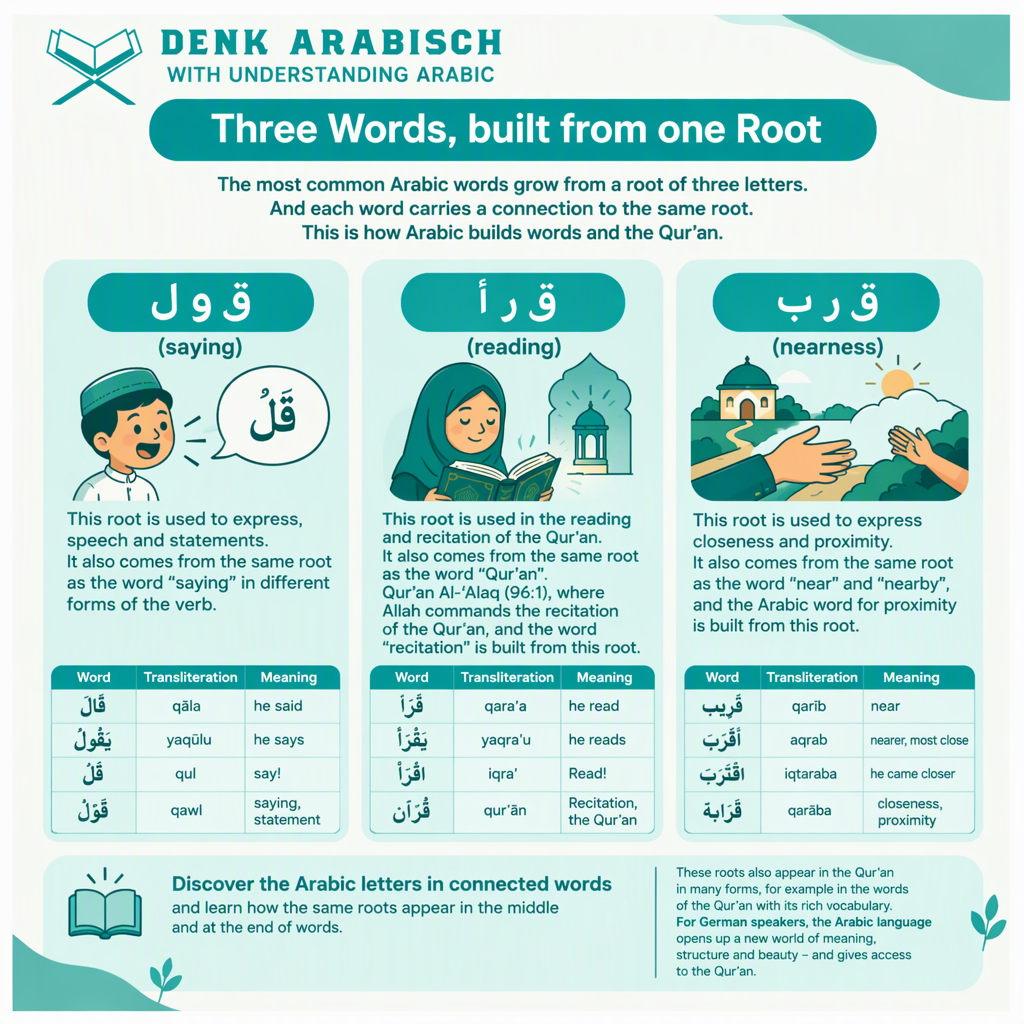
Three Roots Built on Qaaf
Most Arabic words grow from a root of three letters, and each root carries a core meaning. These three roots appear in everyday speech and in the Quran.
ق و ل (saying)
This root is used to express speech and statements, helping you recognize how the meaning of “saying” changes across different verb forms and related words.
| Word | Transliteration | Meaning |
| قَالَ | qāla | he said |
| يَقُولُ | yaqūlu | he says |
| قُلْ | qul | say! |
| قَوْل | qawl | saying, statement |
ق ر أ (reading)
This root is connected to reading and recitation, especially the recitation of the Quran. The word اِقْرَأْ appears in Surah Al-ʿAlaq (96:1), where the command to read introduces the importance of knowledge and recitation.
| Word | Transliteration | Meaning |
| قَرَأَ | qaraʾa | he read |
| يَقْرَأُ | yaqraʾu | he reads |
| اِقْرَأْ | iqraʾ | read! |
| قُرْآن | qurʾān | recitation, the Quran |
ق ر ب (nearness)
This root expresses closeness and proximity, whether physical or relational. Words derived from it, such as قَرِيب and أَقْرَب, help you understand how Arabic builds related meanings from a shared root.
| Word | Transliteration | Meaning |
| قَرِيب | qarīb | near |
| أَقْرَب | aqrab | nearer, nearest |
| اِقْتَرَبَ | iqtaraba | he came close |
| قَرَابَة | qarāba | kinship |
These roots are used a lot in Quranic Arabic. Want to read the Quran with real understanding? The Quranic Arabic Course for German Speakers at Denk Arabisch teaches you the vocabulary and structures behind the verses, explained through German.
Spotting Qaaf from Start to Finish
Qaaf can open, sit inside or close a word, and its form changes with each position. The table gives you fully voweled word for each position.
| Position | Arabic Word | Transliteration | Meaning |
| Beginning | قَمَر | qamar | moon |
| Middle | حَقِيبَة | ḥaqība | bag |
| End | صَدِيق | ṣadīq | friend |
Qaaf at Work in Three Sentences
These three short sentences reuse the words above, with case endings included. Read each one aloud and keep Qaaf deep every time.
| Arabic Sentence | Transliteration | Meaning |
| قَلَمُ صَدِيقِي فِي الْحَقِيبَةِ. | qalamu ṣadīqī fī l-ḥaqībati. | My friend’s pen is in the bag. |
| الطَّرِيقُ قَرِيبٌ. | aṭ-ṭarīqu qarībun. | The road is near. |
| الْقَمَرُ جَمِيلٌ. | al-qamaru jamīlun. | The moon is beautiful. |
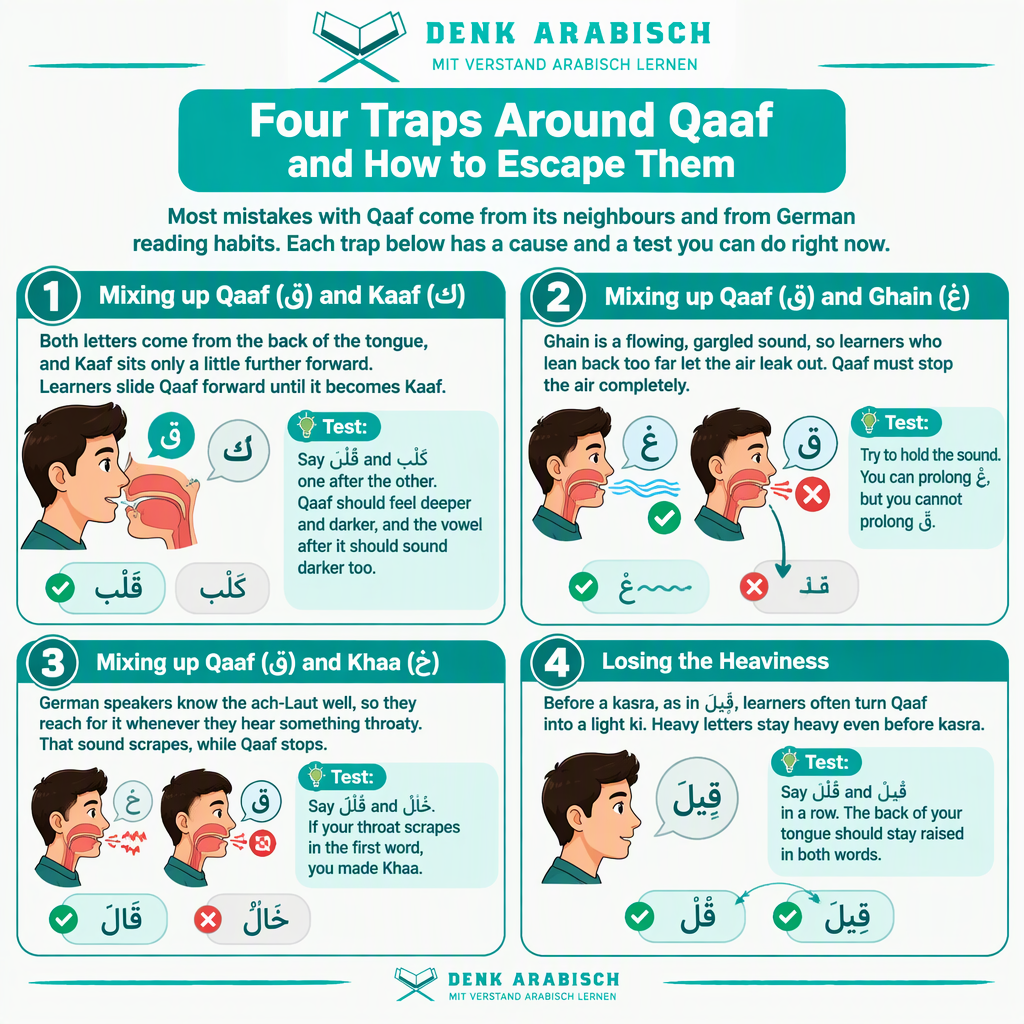
Four Traps Around Qaaf and How to Escape Them
Most mistakes with Qaaf come from its neighbours and from German reading habits. Each trap below has a cause and a test you can do right now.
1. Mixing up Qaaf (ق) and Kaaf (ك)
Both letters come from the back of the tongue, and Kaaf sits only a little further forward. Learners slide Qaaf forward until it becomes Kaaf.
Test: say قَلْب and كَلْب one after the other. Qaaf should feel deeper and darker, and the vowel after it should sound darker too.
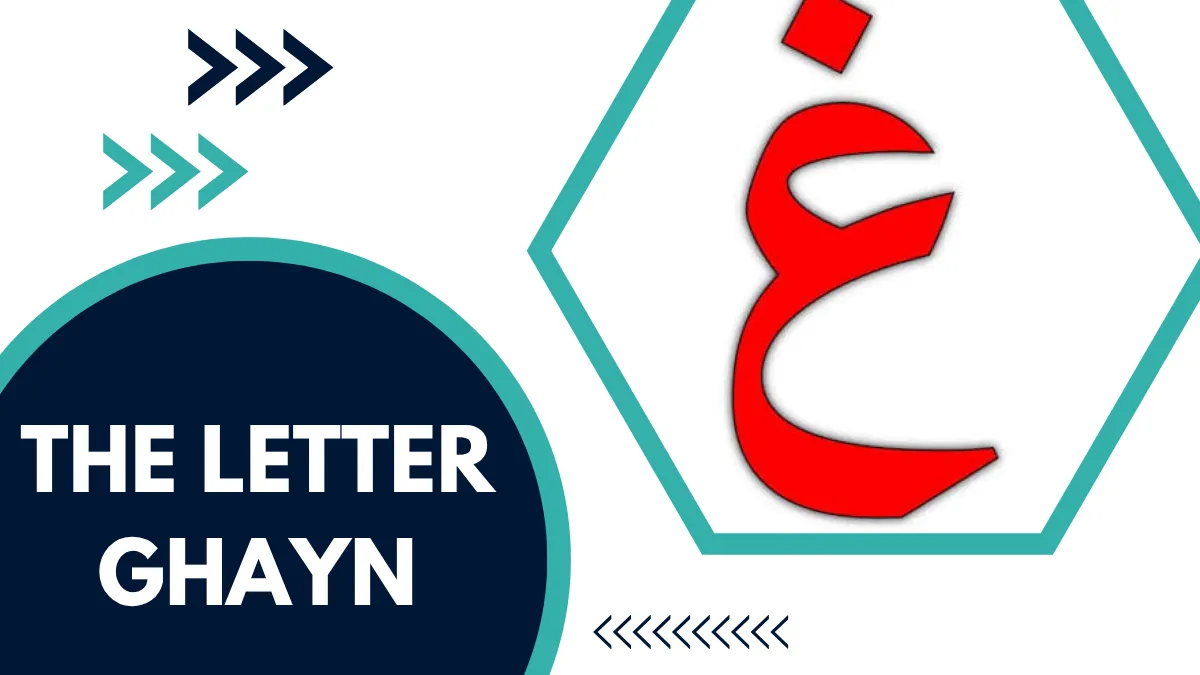
2. Mixing up Qaaf (ق) and Ghain (غ)
Ghayn is a flowing, gargled sound, so learners who lean back too far let the air leak out. Qaaf must stop the air completely.
Test: try to hold the sound. You can prolong غ, but you cannot prolong ق.
3. Mixing up Qaaf (ق) and Khaa (خ)
German speakers know the ach-Laut well, so they reach for it whenever they hear something throaty. That sound scrapes, while Qaaf stops.
Test: say قَالَ and خَالٌ. If your throat scrapes in the first word, you made Khaa.
4. Losing the Heaviness
Before a kasra, as in قِيلَ, learners often turn Qaaf into a light ki. Heavy letters stay heavy even before kasra.
Test: say قُلْ and قِيلَ in a row. The back of your tongue should stay raised in both words.
Put Qaaf to the Test
These four exercises use only words from this guide. Cover the answers, try each one, then check yourself.
Exercise 1: Choose the Word
Which word begins with Qaaf?
a) كَلْب b) غَرِيب c) قَمَر
Answer: c) قَمَر (qamar, moon).
Exercise 2: Match Word to Meaning
Match each word with its meaning: 1) قَلَم, 2) وَقْت, 3) صَدِيق, 4) طَرِيق. The meanings are: a) road, b) time, c) pen, d) friend.
Answer: 1-c, 2-b, 3-d, 4-a.
Exercise 3: Draw the Letter
Write ق in all four forms, five times each. Then write قَمَر and صَدِيق slowly, and add the two dots last.
Exercise 4: Right or Wrong
Decide whether each statement is true or false:
- Qaaf is a sun letter.
- Qaaf has two dots above.
- The first letter of كَلْب is Qaaf.
- Qaaf is a heavy letter.
Answers: 1) False, Qaaf is a moon letter, as in الْقَمَر. 2) True. 3) False, it is Kaaf. 4) True.
What Our Students Say About Denk Arabisch Academy
See what our students say about learning at Denk Arabisch Academy on Trustpilot. Read their experiences and check out more reviews to discover how our courses help improve Arabic.

Master the Letter Qaaf with Denk Arabisch
Qaaf is one of 28 letters, and learning them in a clear order saves months of guessing. Denk Arabisch is built for German-speaking learners and explains Arabic through German.
Here is what you get from learning with a structured path:
- Explanations that use German sounds and words as reference points
- A clear order from letters to reading, writing and speaking
- Tajweed and Quranic Arabic taught step by step
- Guided practice instead of guessing alone
Choose Your Specialized Course:
- Arabic Course For Beginners: your first letters, words and sentences
- Quranic Arabic Course for German Speakers: the vocabulary and structures behind the verses
- Quran Tajweed Course for German Speakers: the rules of correct recitation
- Arabic Alphabet Course: all 28 letters, their sounds and their forms
- Arabic Reading Course: from letters to fluent reading
- Arabic Writing Course: clean handwriting and connected letters
- Arabic Speaking Course: everyday conversation with confidence
Learn Arabic with Denk Arabisch Academy
Speak and understand Arabic through a clear and effective learning system
Try a Free TrialSchedule your free trial lesson with Denk Arabisch and take the first step toward finding the right course for your learning goals.

Conclusion
The Letter Qaaf (ق) is the deepest stop in the Arabic alphabet, and it becomes easy once you know where your tongue goes.
Three things to remember:
- Sound: a deep, dry stop at the back of the tongue, heavy and without a puff.
- Writing: four forms, two dots above, and a deeper tail than Fā in the final form.
- Recognition: a moon letter and a Qalqalah letter that stays heavy before every vowel.
For practice, say قَلْب, كَلْب, قَرِيب and غَرِيب in mixed order. Then write ق in its four forms and read the roots ق و ل, ق ر أ and ق ر ب aloud. A few minutes a day will make the sound automatic.
You already have a head start with your Rachen-R, so keep going.
Start your learning journey with a free trial lesson at Denk Arabisch and discover the course that best matches your needs and goals.
FAQs
1. What is the difference between Qaaf (ق) and Kaaf (ك)?
Qaaf is made deeper in the mouth and is heavy, while Kaaf is lighter and further forward. Compare قَلْب (heart) with كَلْب (dog).
2. How do I tell Qaaf (ق) from Ghain (غ)?
Qaaf stops the air completely, while Ghayn lets it flow like a gargle. If you can prolong the sound, it is Ghain.
3. Is Qaaf a sun or a moon letter?
Qaaf is a moon letter. The lām of al- keeps its sukūn, as in الْقَمَر, and Qaaf carries no shadda.
4. Is Qaaf heavy or light?
Qaaf is heavy and belongs to the group خُصَّ ضَغْطٍ قِظْ. It is heaviest with fatḥa and alif, lightest with kasra, but never light.
5. Which Tajweed rule does Qaaf trigger?
Qalqalah, a light echo when Qaaf is silent or when you stop on it. You hear it in اقْرَأْ and, when you stop, in الْفَلَقْ.