Takeaways:
- Salah must be performed in Arabic:
The obligatory prayer has a fixed structure, and essential parts like Surah Al-Fatiha must be recited in Arabic because the Qur’an was revealed in this language. - You can start praying immediately:
You don’t need to master Arabic first—begin your prayer now and improve gradually over time. - Only a small amount of Arabic is required:
Around 70–80 words are enough to perform the prayer correctly, and these are repeated daily, making them easier to memorize. - Fluency in Arabic is not required:
You don’t need to speak or understand full Arabic—just learn the specific phrases needed for prayer. - Temporary flexibility for beginners:
Some scholars allow new Muslims to use their native language briefly until they learn the required Arabic recitations. - Distinction between Salah and Du’a:
- Salah: Must be in Arabic
- Du’a (personal supplication): Can be made in any language
- Arabic is essential but limited in scope:
It is required only for specific acts of worship, not for being a Muslim or practicing Islam generally. - Islam is a universal religion:
Millions of Muslims pray correctly without speaking Arabic in daily life. - Understanding Arabic enhances spirituality:
Learning the meaning of what you recite can deepen focus, connection, and emotional engagement in prayer. - Progress over perfection:
Islam encourages gradual learning—consistency and effort matter more than starting perfectly.
Many Muslims – especially beginners – ask a fundamental question: Can you pray without knowing Arabic?
This question is important because it relates to one of the core pillars of Islam – the prayer (Salah). At the same time, it often causes uncertainty, overwhelm, or even doubt.
The good news is: getting started is easier than many think. You do not need to be an Arabic expert to begin praying. However, there are clear rules you should understand.
In this detailed guide, you will learn everything you need to know – explained in a simple way and adapted for Muslims living in Germany, whether they speak German or English.
Table of Contents
Can you pray without Arabic?
No. The obligatory prayer (Salah) in Islam must be performed in Arabic.
This means specific parts of the prayer – especially Surah Al-Fatiha and other verses from the Qur’an – must be recited in Arabic.
This ruling is based on the consensus of Islamic scholars and applies to Muslims worldwide.
The main reason is the revelation itself: the Qur’an was revealed in Arabic, and its wording is considered divine in its original form. Translations only convey meaning, not the exact words.
Therefore, Arabic in prayer is not just tradition – it is an essential part of worship (ʿibādāt).
However, it is important to emphasize: no one expects perfection from the beginning.
If you are new to Islam or just starting to learn how to pray, there are allowances. Some scholars permit temporary use of your native language until you learn the Arabic recitations.
The goal is clear: you should not delay the prayer – you start immediately and learn step by step.
Many people make the mistake of waiting until they feel “ready”. In Islam, it works the other way around: you grow into the practice.
👉 At Denk Arabisch, we believe learning should feel empowering, not exhausting. Instead of overwhelming learners with complex grammar, it focuses on what you truly need for prayer—making it an ideal starting point for anyone interested in a Quranic Arabic Course for German Speakers.
How much Arabic do you actually need for prayer?
The surprising answer: very little.
To perform the prayer correctly, you only need around 70–80 Arabic words in total.
These words are repeated across the daily prayers and include:
- Surah Al-Fatiha (recited in every unit of prayer)
- Short surahs like Al-Ikhlas
- Basic phrases such as “Allahu Akbar”, “SubhanAllah”, “Alhamdulillah”
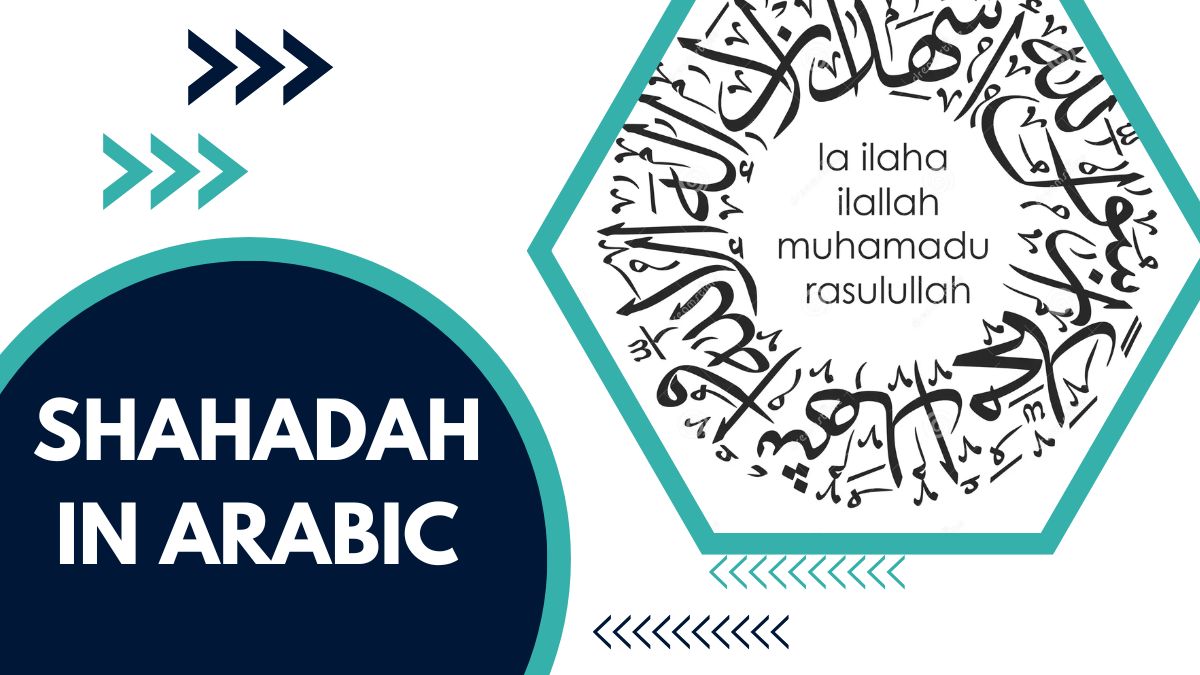
- The declaration of faith (Shahada)
Because these phrases repeat constantly, you naturally memorize them over time.
Another important point: you do not need modern spoken Arabic. Qur’anic Arabic is a distinct form that differs significantly from everyday Arabic.
Even native Arabic speakers must actively learn Qur’anic Arabic for correct recitation.
This means you are not at a disadvantage if you do not speak Arabic.
Millions of Muslims worldwide – including in Indonesia, Pakistan, and Germany – do not speak Arabic in daily life, yet pray correctly.
This shows clearly: it is not about fluency, but about focused learning.
A structured approach makes a huge difference here. This is exactly what Denk Arabisch is designed for—learning step by step only what you actually need. This is also the core idea behind Arabic Courses for German Speakers, where learning is simplified, practical, and focused on real needs.
This removes pressure and makes the process much easier.
Read also: The Arabic Consonants – The Ultimate Guide For Learners
Learn Arabic with Denk Arabisch Academy
Speak and understand Arabic through a clear and effective learning system
Try a Free TrialCan you pray in your own language?
A clear distinction must be made here:
The obligatory prayer (Salah) cannot be performed in your native language.
Personal supplication (Du’a) can be made in any language.
Salah follows a fixed structure transmitted from Prophet Muhammad (peace be upon him). It includes Qur’anic words that must be recited in Arabic.
Du’a, on the other hand, is something completely different – it is your personal communication with Allah, with no fixed format or language requirement.
You can:
- speak German or English
- express your own thoughts
- ask for help, forgiveness, or guidance
- speak freely from the heart
Allah understands all languages. He knows your thoughts, intentions, and even what you cannot express.
So while Salah has a fixed Arabic structure, your personal connection with Allah is completely flexible.
Many Muslims find this combination powerful: structure in prayer and freedom in personal supplication.
A common misconception is that Arabic is a barrier. In reality, it is a unifying element connecting millions of Muslims worldwide.
At the same time, your own language allows for deep emotional expression.
This balance is what makes Islamic worship unique.
Read also: Is Learning Arabic Mandatory In Islam? – The Guide For Muslims
Is Arabic mandatory in Islam or just recommended?
A basic level of Arabic is required – but only in a very limited sense.
However, you do not need to be fluent in Arabic to be a good Muslim.
This means:
- Your faith is not defined by language
- You do not need Arabic to become Muslim
- You only need enough Arabic to perform prayer correctly
- Everything beyond that is optional but beneficial
Islam is a universal religion. It is for all people – regardless of language, culture, or background.
That is why millions of Muslims worldwide practice their faith without speaking Arabic.
Still, Arabic holds special significance.
The Qur’an was revealed in Arabic, and its original meaning is fully preserved only in its Arabic form. Translations are helpful but not a replacement.
Arabic is also the language of classical Islamic scholarship. Understanding it opens deeper access to religious knowledge.
Most importantly, understanding what you say in prayer changes your experience completely.
You become more focused, aware, and emotionally connected.
Many Muslims report a deeper sense of spirituality (ruḥāniyya) once they understand Arabic.
Learning Arabic is therefore not just a requirement in a limited sense – it is also an opportunity for personal growth.
Read also: Arabic Learning Books
👉 Denk Arabisch focuses exactly on this: not turning you into a linguist, but helping you understand your prayer and connect more deeply. This is also the core idea behind the Arabic Vowels Course For Beginners, which is designed to make pronunciation and recitation simple, clear, and accessible from the very beginning.
Start now with Denk Arabisch – Learn Arabic for your prayer
If you want to perform your prayer with confidence and understanding, now is the right time to begin.
Many people delay learning because they think Arabic is too difficult. In reality, the problem is often not the language – but the approach.
With a clear and structured system, you can make real progress in a short time.
Our Courses Include:
- Arabic Courses for German Speakers
- Arabic Levels for German Speakers
- Arabic Dialect Courses for German Speakers
- Qur’an Learning Courses for German Speakers
- Islamic Studies Courses for German Speakers
- Courses for Muslim Kids for German Speakers
👉 With Denk Arabisch you get:
- A clear beginner-friendly learning plan
- Focus only on what you truly need for prayer
- Step-by-step guidance without overwhelm
- Content designed for German-speaking Muslims
You learn exactly what helps you pray correctly and consciously – nothing more, nothing less.
Imagine standing in prayer and understanding every word you say. Your focus increases, your connection strengthens, and your prayer gains a completely new meaning.
This state is achievable – often faster than you expect.
The most important step is simply to start.
Many learners report noticeable progress and a completely new feeling in their prayer within a short time.
If you want to not only perform your prayer but truly experience it, learning the Arabic basics is the key.
Pray Without Knowing Arabic Exercises
Exercise 1: Choose the correct answer
Which of the following best describes the language requirement for the obligatory prayer (Salah)?
Exercise 2: Match the phrase
Match the type of worship to its language requirement:
— Select an answer —
Must be performed in Arabic
Can be made in any language
— Select an answer —
Must be performed in Arabic
Can be made in any language
Exercise 3: True or False?
To perform the prayer correctly, you need to learn thousands of modern conversational Arabic words.
Exercise 4: Find the right advice
If you are a new Muslim or a beginner who doesn’t know Arabic yet, what should you do?
Exercise 5: Fill in the blank
While Salah has a fixed Arabic structure, personal (Du’a) can be made in any language.
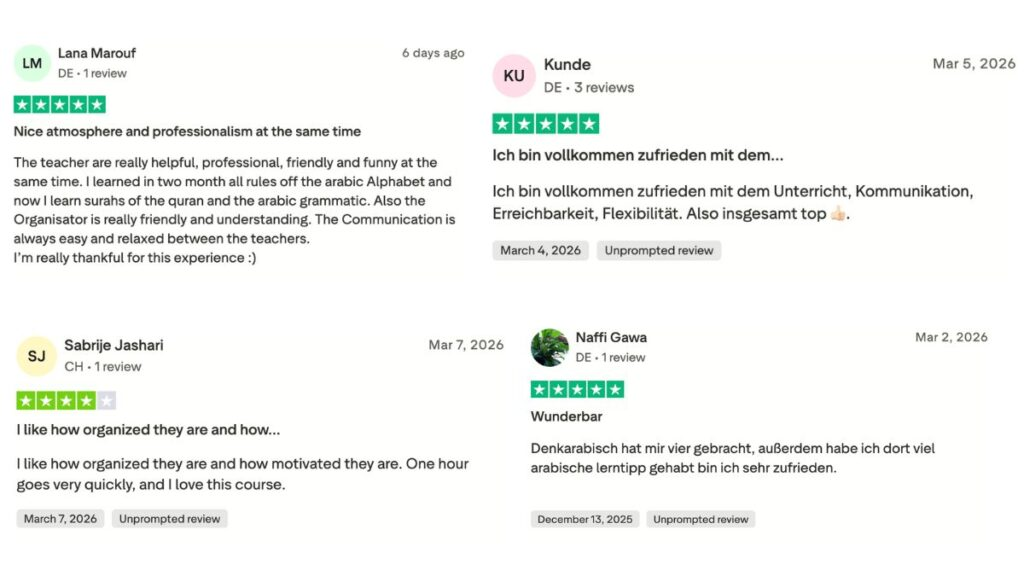
What Our Students Say About Denk Arabisch Academy
See what our students say about learning at Denk Arabisch Academy on Trustpilot. Read their experiences and check out more reviews to discover how our courses help improve Arabic.
Sign up for the best Arabic Lessons For German-Speaking Children! – Denk Arabisch
Learn Arabic with Denk Arabisch Academy
Speak and understand Arabic through a clear and effective learning system
Try a Free TrialConclusion
The key takeaway is clear: the obligatory prayer (Salah) follows a fixed Arabic structure that is practiced worldwide. Certain parts must be recited in Arabic because the Qur’an was revealed in this language.
At the same time, you do not need to be perfect or fully prepared before starting to pray. Islam encourages you to begin immediately and improve step by step.
For personal supplication (Du’a), you have complete freedom to speak in your own language.
In short: Arabic is required in a defined way for prayer, but it is not a barrier to entering Islam or starting your worship.
With the right approach, you learn exactly what you need without feeling overwhelmed.
And this is where the real journey begins: not perfection at the start, but continuous learning and growing understanding that deepens your prayer over time.
FAQS
Can you pray the obligatory Salah in English or your native language?
The obligatory prayer known as Salah must be performed in Arabic because the Qur’an was revealed in this language and its divine wording must be preserved in its original form. However, beginners can start praying immediately while learning the recitations step by step, and all personal supplications, known as Du’a, can be spoken entirely in your native language.
How many Arabic words do you need to learn to pray?
To perform the Islamic prayer correctly you only need to learn around 70 to 80 Arabic words. These consist of constantly repeating elements like Surah Al-Fatiha, short verses, and basic phrases such as Allahu Akbar, meaning you will naturally memorize them over time without ever needing to learn modern conversational Arabic.
Do you have to speak fluent Arabic to be a Muslim?
You do not need to speak or understand fluent Arabic to be a Muslim because Islam is a universal religion for people of all cultures and backgrounds. You are only required to learn a very limited amount of Arabic to perform your prayers correctly, while studying the language further is completely optional though highly recommended for deepening your spiritual focus.