Takeaway:
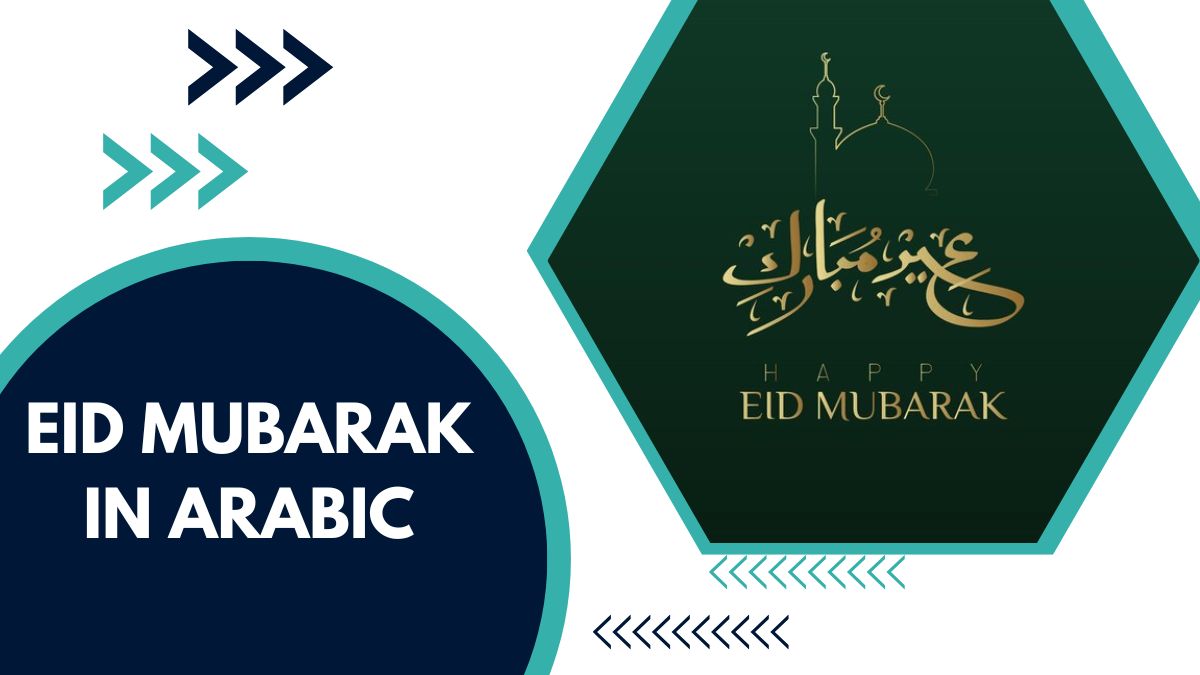
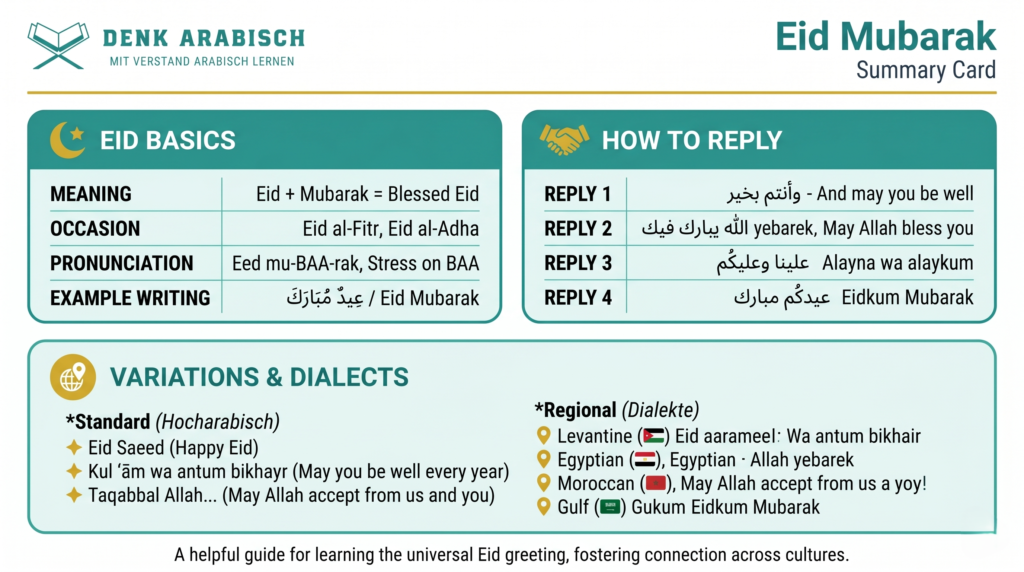
- “Eid Mubarak” (عيد مبارك) translates literally to “Blessed Festival.”
- Write it as عيد مبارك, and pronounce it “Eed mu-BAA-rak.”
- Respond with “Wa antum bikhair” (وأنتم بخير) or “Allah yebarek feek” (الله يبارك فيك).
- Other common greetings include “Eid Saeed” (Happy Eid), “Kul ‘ām wa antum bikhayr” (May you be well every year), and “Taqabbal Allah minna wa minkum” (May Allah accept from us and you).
- Dialects vary: Egyptians say “Kol sana wa enta tayeb,” Moroccans say “Mabrouk el Eid,” and Gulf Arabs often combine blessings.
- Address a group using the plural form “Eidkum Mubarak” (عيدكم مبارك).
- The greeting carries spiritual wishes for peace, forgiveness, acceptance of prayers, and happiness.
- Both “Eid Mubarak” and “Eid Saeed” are correct, with the former being more traditional.
- Use it from the first morning of Eid throughout the three or four days of celebration, in person, by message, or on social media.
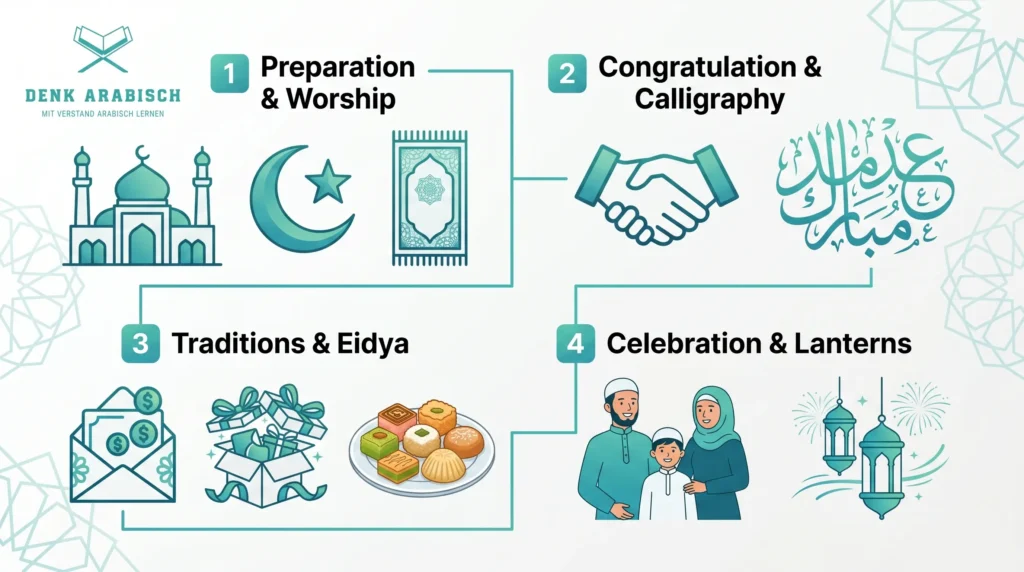
Eid is a time of profound joy, spiritual reflection, and community across the Muslim world. Whether it is Eid al-Fitr “عيد الفطر” (marking the end of Ramadan) or Eid al-Adha “عيد الأضحى” (the Festival of Sacrifice), the air is filled with the spirit of giving and connection. Central to this celebration is the exchange of heartfelt greetings.
While “Eid Mubarak” is the most globally recognized phrase, the Arabic language offers a rich tapestry of expressions that vary by region, dialect, and context. In this guide, we explore how to say Eid Mubarak in Arabic, its diverse regional variations, and how to respond like a native speaker.
Table of Contents
What Does Eid Mubarak in Arabic Mean?
The phrase Eid Mubarak in Arabic (عيد مبارك) literally means:
- Eid (عيد) = Festival or celebration
- Mubarak (مبارك) = Blessed
So, عيد مبارك = Blessed Eid
It is a simple yet powerful greeting used by Muslims worldwide during the two major Islamic holidays:
- Eid al-Fitr (عيد الفطر) – After Ramadan
- Eid al-Adha (عيد الأضحى) – After Hajj season
The phrase carries wishes of blessings, peace, and happiness for the person receiving it.
✨ At Denk Arabisch, we help you understand not just words, but the meaning behind them.
Ways to Say Eid Mubarak in Arabic?
Arabic is a rich language with many beautiful Eid greetings. Here are some common alternatives:
1. Eid Saeed (عيد سعيد)
Meaning: Happy Eid
2. Kul ‘ām wa antum bikhayr (كل عام وأنتم بخير)
Meaning: May you be well every year
3. Taqabbal Allah Minna Wa Minkum (تقبل الله منا ومنكم)
Meaning: May Allah accept from us and you
4. Eidkom Mubarak (عيدكم مبارك)
Meaning: Blessed Eid to all of you
5. Eid al-Fitr Mubarak (عيد الفطر مبارك)
Specific for Eid al-Fitr
6. Eid al-Adha Mubarak (عيد الأضحى مبارك)
Specific for Eid al-Adha
Each variation carries a slightly different tone but shares the same spirit of blessings and joy.
✨ Discover the richness of Arabic expressions with Denk Arabisch.
Eid Mubarak in Arabic Dialects
Across the Arab world, people use different dialects while still meaning the same greeting.
1. Egyptian Arabic
كل سنة وانت طيب
Meaning: May you be well every year
2. Levantine Arabic
كل عام وأنتم بخير
Meaning: May you be well every year
3. Gulf Arabic
عيدكم مبارك وكل عام وأنتم بخير
Meaning: Blessed Eid to you, and may you be well every year
4. Moroccan Arabic
مبروك العيد
Meaning: Happy Eid / Blessed Eid
5. Iraqi Arabic
عيدكم مبارك وإن شاء الله من العايدين
Meaning: Blessed Eid to you, and may God make you among those who celebrate it again
Even though pronunciation and wording differ, all dialects express the same heartfelt wishes.
How to Respond to Eid Mubarak in Arabic?
When someone says Eid Mubarak, it is polite to reply with a similar blessing.
Common responses include:
- وأنتم بخير (Wa antum bikhair) → And may you be well
- الله يبارك فيك (Allah yebarek feek) → May Allah bless you
- علينا وعليكم (Alayna wa alaykum) → Upon us and you
- كل عام وأنتم بخير → May you be well every year
Example conversation:
Person A: Eid Mubarak (عيد مبارك)
Person B: Wa antum bikhair (وأنتم بخير)
How to Write Eid Mubarak in Arabic?
The correct way to write Eid Mubarak in Arabic is:
عيد مبارك
This is the standard and most widely used form in all Arabic-speaking countries.
With vowel marks (for learners):
عِيد مُبَارَك
Both versions are correct, but the first one (without vowels) is more commonly used in everyday writing, social media posts, and messages.
✨ Master writing Arabic step by step with guided lessons at Denk Arabisch.
Learn Arabic with Denk Arabisch Academy
Speak and understand Arabic through a clear and effective learning system
Try a Free TrialWord Breakdown of Eid Mubarak
Understanding each word helps you remember the phrase easily:
1. Eid (عيد)
Means:
- Festival
- Celebration
- Holiday
2. Mubarak (مبارك)
Means:
- Blessed
- Auspicious
- Full of goodness
Combined meaning:
“A blessed celebration” or “Blessed Eid”
Read also: No Problem / You’re Welcome In Arabic – Full Guide With Dialects & Examples
How to Pronounce Eid Mubarak in Arabic?
Pronunciation is an important part of learning Eid Mubarak in Arabic correctly.
Simple pronunciation guide:
Eed Moo-baa-rak
Breakdown:
- Eid → “Eed” (like “feed” without “f”)
- Mu → “moo” (like moon)
- Baa → long “a” sound
- Rak → soft ending “rak”
Full pronunciation:
Eed mu-BAA-rak
👉 Tip: Stress the “BAA” part slightly for natural Arabic pronunciation.
When to Use Eid Mubarak in Arabic?
You can use Eid Mubarak in Arabic (عيد مبارك) in many situations:
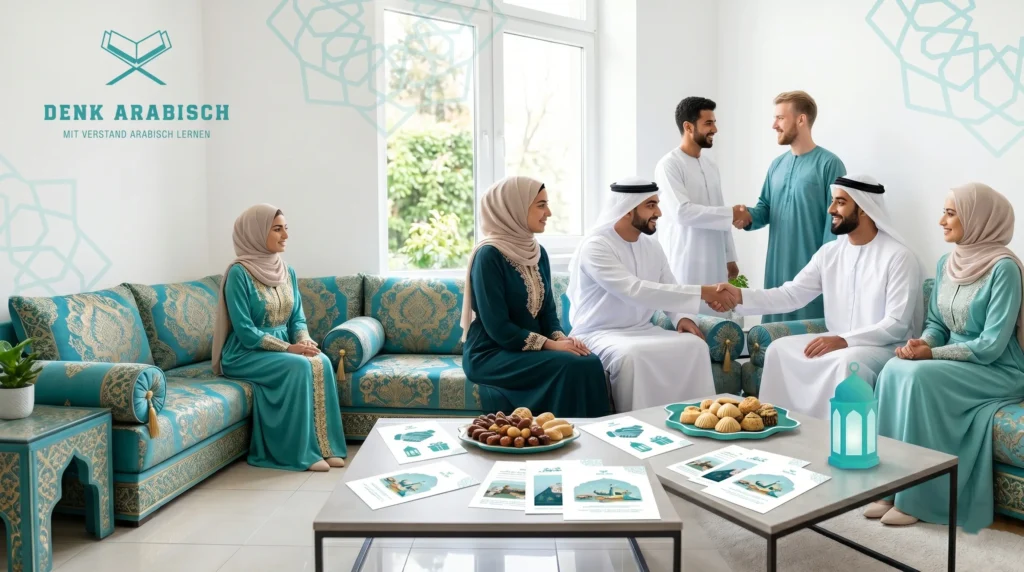
1. Greeting Family and Friends
During Eid visits or phone calls.
2. Social Media Posts
Instagram captions, Facebook posts, WhatsApp statuses.
3. Text Messages
Short and meaningful Eid wishes.
4. Greeting Cards
Formal and decorative Eid cards.
5. Workplace or Formal Settings
When wishing colleagues or clients.
It is a universal phrase that fits both formal and informal situations.
Religious Meaning Behind Eid Mubarak in Arabic
Eid Mubarak is more than just a greeting. It carries spiritual meaning in Islamic culture.
During Eid:
- Muslims thank Allah for blessings
- They give charity (Zakat al-Fitr)
- They pray Eid prayer
- They strengthen family bonds
So when someone says Eid Mubarak, they are also wishing:
- Peace
- Forgiveness
- Acceptance of prayers
- Happiness in this life and the next
Eid Mubarak vs Eid Saeed
Many learners confuse these two expressions.
Eid Mubarak (عيد مبارك)
- Means: Blessed Eid
- More traditional and widely used
Eid Saeed (عيد سعيد)
- Means: Happy Eid
- More modern and simple
Both are correct, and both are used across the Arab world.
Eid Mubarak in Arabic for Beginners
If you are just starting to learn Arabic, here is the easiest way to remember:
Step 1:
Write it: عيد مبارك
Step 2:
Say it: Eed Mubarak
Step 3:
Use it in a sentence:
- Eid Mubarak to you and your family
- عيد مبارك لكم ولعائلتكم
Read also: Iftar In Ramadan – The Complete Guide For Muslims
Exercises on Eid Mubarak in Arabic
Exercise 1: Regional Dialect Matching
Match the dialect-specific phrases for Eid blessings to their corresponding regions based on the guide:
— Select the correct region —
Egyptian Arabic Dialect
Moroccan Arabic Dialect
— Select the correct region —
Egyptian Arabic Dialect
Moroccan Arabic Dialect
Exercise 2: Identifying Authentic Eid Greetings & Etiquette
Click on the cards that correctly state the linguistic patterns or cultural etiquette guidelines outlined in this comprehensive guide:
To address an entire group or family simultaneously, use the plural suffix form “عيدكم مبارك” (Eidkum Mubarak).
Exchanging the phrase “Eid Mubarak” with non-Muslims is perfectly appropriate and seen as a respectful gesture.
The modern phrase “Eid Saeed” means “Blessed Eid,” whereas the traditional “Eid Mubarak” means “Happy Eid.”
Appropriate replies to Eid greetings include phrases like “وأنتم بخير” (Wa antum bikhair) or “الله يبارك فيك” (Allah yebarek feek).
Exercise 3: Word Breakdown Meanings
According to the structural word breakdown provided in the article, what is the literal translation of the word “Mubarak” (مبارك)?
Exercise 4: True or False?
The guide notes that the Eid greeting typically begins on the first morning of Eid immediately after the Eid prayer and continues throughout the celebrating days of the holiday.
Exercise 5: Literal Semantic Understanding
When combined together as a single traditional holiday greeting, the phrase “Eid Mubarak” (عيد مبارك) translates literally into English as “Blessed “.
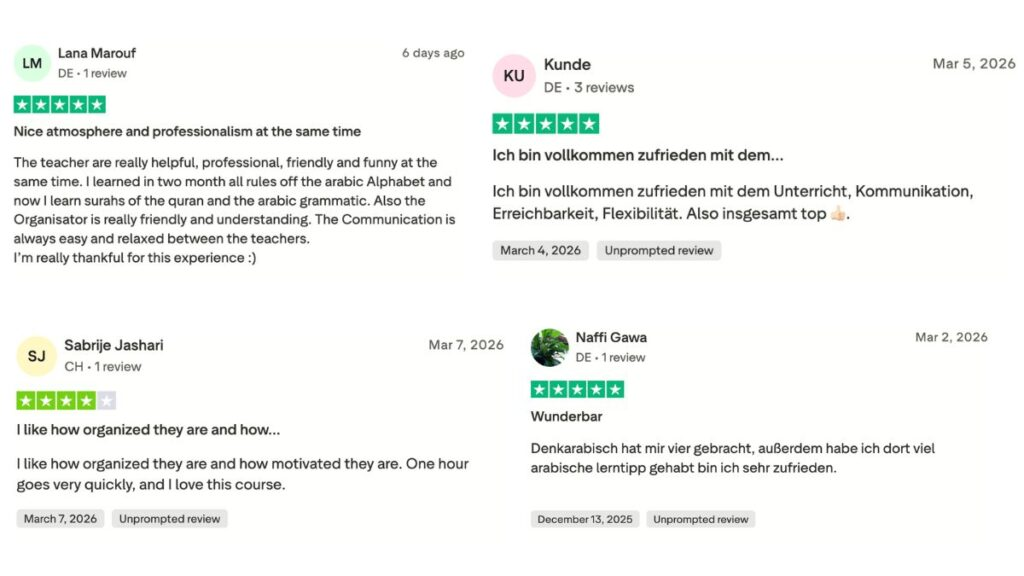
What Our Students Say About Denk Arabisch Academy?
See what our students say about learning at Denk Arabisch Academy on Trustpilot. Read their experiences and check out more reviews to discover how our courses help improve Arabic.
Learn Arabic with Denk Arabisch
If you enjoyed learning how to say Eid Mubarak in Arabic, imagine how much more you can achieve by truly understanding the language behind these beautiful expressions.
At Denk Arabisch, we don’t just teach vocabulary — we help you connect with the culture, people, and meaning behind the language with Arabic Courses.
Why choose Denk Arabisch?
- Learn real-life Arabic used in everyday conversations with Arabic Lessons
- Understand different dialects (Egyptian, Levantine, Gulf & more)
- Improve your pronunciation and confidence step by step
- Learn how to speak Arabic fluently
- Suitable for complete beginners and advanced learners
👉 Whether you’re learning Arabic for travel, communication, or personal growth, Denk Arabisch makes the journey simple and enjoyable.
Learn Arabic with Denk Arabisch Academy
Speak and understand Arabic through a clear and effective learning system
Try a Free TrialConclusion
Eid Mubarak in Arabic (عيد مبارك) is one of the most beautiful and widely used greetings in the world. It means “Blessed Eid” and is used during both Eid al-Fitr and Eid al-Adha.
In this guide, you learned:
- The meaning of Eid Mubarak in Arabic
- How to write and pronounce it correctly
- Different variations and dialects
- How to respond properly
- Cultural and religious significance
Whether you are sending a message, greeting a friend, or learning Arabic, Eid Mubarak is a simple phrase that carries deep meaning, warmth, and unity.
Here is the English version of the FAQs, keeping the professional and culturally insightful tone of your guide:
FAQs
1. Can I say “Eid Mubarak” to non-Muslims?
Yes, it is absolutely appropriate and is perceived as a respectful and friendly gesture. Many people exchange this greeting as a sign of cultural appreciation and kindness.
2. What is the difference between “Eid Mubarak” and “Eid Saeed”?
Both are correct. Eid Mubarak means “Blessed Eid” and is more traditional and deeply rooted. Eid Saeed means “Happy Eid” and is often used as a more modern, simpler alternative, especially on social media.
3. When exactly should I use the greeting?
The greeting typically begins on the first morning of Eid (after the Eid prayer) and continues throughout the three days of Eid al-Fitr or the four days of Eid al-Adha.
4. Do I use the same greeting for both Eids?
Yes, “Eid Mubarak” is universal. If you want to be more specific, you can say:
Eid al-Fitr Mubarak (after Ramadan)
Eid al-Adha Mubarak (during the Hajj season)
5. How do I write “Eid Mubarak” in a message to a group?
Use the plural form: عيدكم مبارك (Eidkum Mubarak). The suffix “-kum” at the end means “your” (plural), allowing you to address an entire group or family at once.