Takeaway:
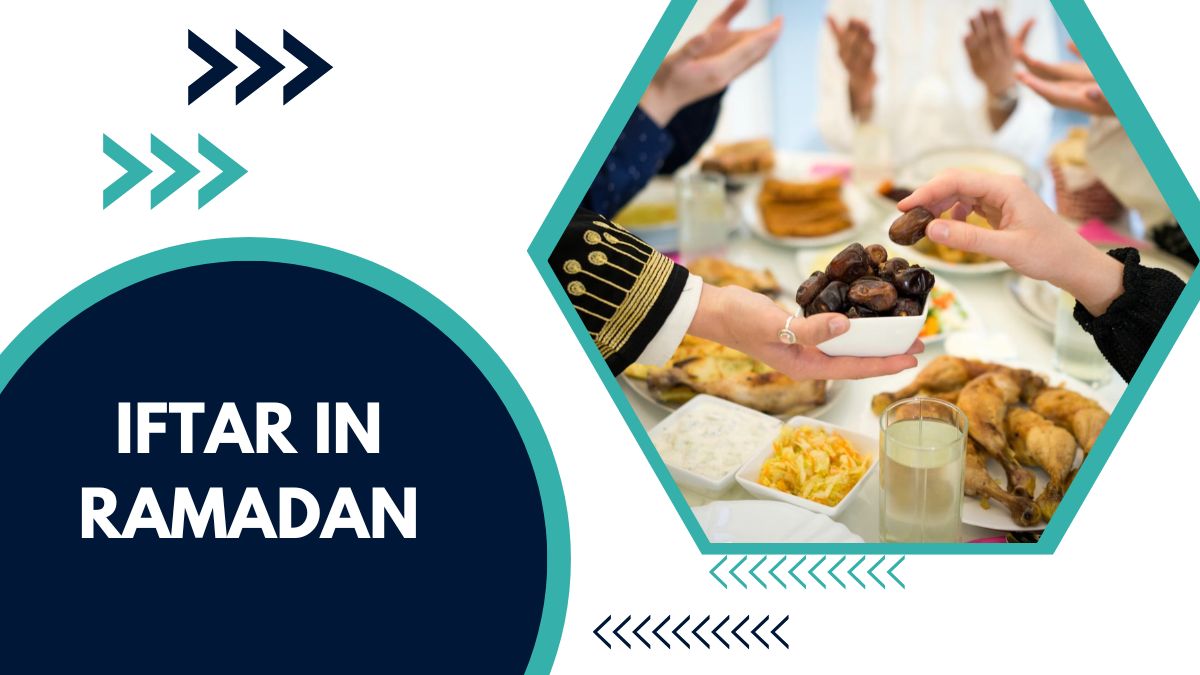
- Iftar is the sunset meal that ends the daily fast, symbolizing obedience to Allah, gratitude, and self-discipline.
- Break the fast immediately at Maghrib time; delaying is discouraged. Start with dates and water, then perform Maghrib prayer before the main meal.
- The moment of Iftar is one of the most accepted times for dua (supplication); reciting the Sunnah duas enhances spiritual connection.
- Follow the Prophet’s Sunnah: hasten to break the fast, eat lightly first, and prioritize worship over indulgence.
- Iftar unites families and communities, encourages charity, and strengthens bonds when food is shared.
- Eat mindfully: avoid overeating, fried and sugary foods; choose balanced meals with protein, fiber, and hydration to sustain energy.
- Common pitfalls to avoid: overindulgence, unnecessary delay of Iftar, focusing more on food than prayer, and skipping Maghrib prayer.
- Iftar is a daily spiritual victory—a reminder that patience and faith overcome physical desires, transforming the fast into a holistic act of worship.
Iftar is one of the most significant moments during the holy month of Ramadan. It marks the end of the daily fast and the transition from physical restraint to spiritual gratitude. Observed by Muslims worldwide, Iftar is not just about eating—it is a deeply meaningful act of worship, reflection, and community bonding.
Throughout Ramadan, Muslims fast from dawn until sunset, abstaining from food, drink, and other physical needs. Iftar is the blessed moment when the fast is broken, bringing both physical relief and spiritual fulfillment.
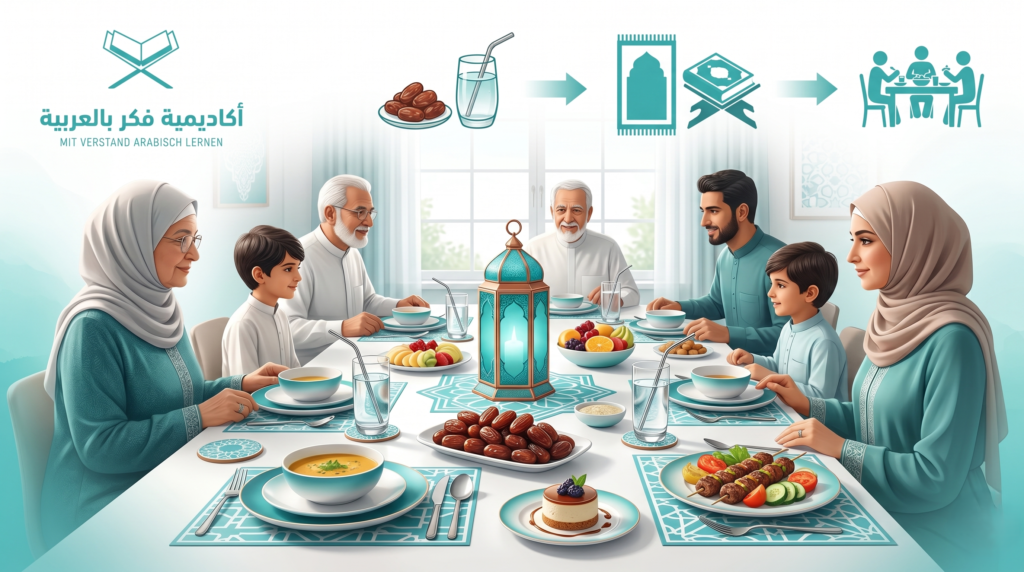
Table of Contents
What Is Iftar?
Iftar is the meal eaten at sunset to break the daily fast during Ramadan. The word “Iftar” comes from the Arabic root meaning “to break” or “to open,” referring to the opening of the fast.
However, Iftar is more than just a meal. It symbolizes:
- Obedience to Allah
- Gratitude for sustenance
- Patience and self-discipline
- Unity among family and community
It serves as a daily reminder that blessings come from Allah and that perseverance is always rewarded.
At Denk Arabisch, we believe true understanding of Islam begins with understanding its language. Go beyond practice—connect with meaning.
When Is Iftar Time?
A precise understanding of Iftar timing is essential to ensure the fast is completed correctly and in accordance with Islamic teachings.
1. Exact Timing of Iftar
Iftar begins immediately at sunset, the moment the sun disappears below the horizon. This time also marks the beginning of the Maghrib prayer.
Key points:
- Iftar must not be done before sunset
- Delaying Iftar unnecessarily is discouraged
- Daily timing changes depending on location and date
Muslims usually rely on prayer timetables, mosque announcements, or mobile apps to ensure accurate timing.
2. Iftar and Maghrib Prayer
The connection between Iftar and Maghrib is essential:
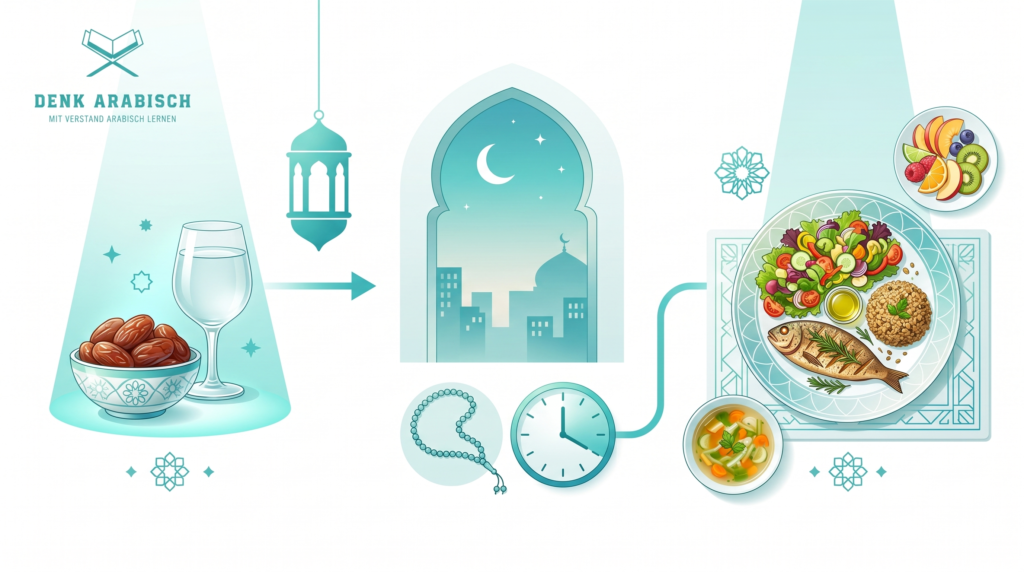
- First: Break the fast (usually with dates and water)
- Then: Perform the Maghrib prayer
This sequence follows the traditional practice and maintains a balance between physical nourishment and spiritual duties.
Importance of Iftar in Ramadan
Iftar holds deep spiritual value because it is directly tied to fasting, one of the core acts of worship in Islam.
1. Spiritual Benefits
- A moment when supplications (duas) are accepted
- A reward after a day of patience and discipline
- A reminder of reliance on Allah
2. Social Importance
- Brings families together daily
- Encourages charity and generosity
- Strengthens community bonds
Providing food for others at Iftar is considered a highly rewarding act, even if it is something simple like water or dates.
Every word in Islam carries depth. Learn Arabic the right way—with Denk Arabisch.
Sunnah Way to Break the Fast
Following the traditional method enhances both the spiritual and physical experience of Iftar.
Recommended Practice
- Break the fast with dates
- If unavailable, drink water
- Eat lightly before the main meal
This approach helps the body adjust gently after long hours of fasting.
Read also: No Problem / You’re Welcome In Arabic – Full Guide With Dialects & Examples
Dua (Supplication) at Iftar
The time of Iftar is one of the most powerful moments for making dua.
Common Duas
1.
“اللَّهُمَّ إِنِّي لَكَ صُمْتُ، وَبِكَ آمَنْتُ، وَعَلَى رِزْقِكَ أَفْطَرْتُ”
“O Allah, I fasted for You, I believe in You, and I break my fast with Your provision.”
Transliteration: Allahumma inni laka sumtu, wa bika aamantu, wa ‘ala rizqika aftartu.
2.
ذَهَبَ الظَّمَأُ، وَابْتَلَّتِ الْعُرُوقُ، وَثَبَتَ الأَجْرُ إِنْ شَاءَ اللَّهُ”
“The thirst has gone, the veins are moistened, and the reward is confirmed, if Allah wills.”
Transliteration: Dhahaba az-zama’u, wabtallatil-‘urooqu, wa thabatal-ajru in sha’ Allah.
These supplications reflect gratitude, faith, and reliance on Allah.
Learn Arabic with Denk Arabisch Academy
Speak and understand Arabic through a clear and effective learning system
Join nowIftar and Community Life
Iftar is not only an individual act but a communal experience.
Community Aspects
- Families gather daily at the table
- Mosques host large Iftar gatherings
- Charity meals are organized for the needy
This fosters:
- Unity
- Compassion
- Generosity
Sharing food during Iftar strengthens relationships and promotes kindness.
Language connects people. Denk Arabisch connects you to a global Muslim community.
Healthy Iftar: How to Break Fast Wisely
After long hours without food and water, it is important to eat mindfully.
Healthy Tips
- Start with water and dates
- Avoid overeating
- Include balanced meals (protein, fruits, vegetables)
- Limit fried and sugary foods
A healthy Iftar helps maintain energy for night prayers and the next day’s fast.
Common Mistakes to Avoid
Many people unintentionally reduce the spiritual value of Iftar through certain habits:
- Overeating or excessive feasting
- Delaying Iftar without reason
- Focusing more on food than worship
- Skipping prayer due to meal preparation
Ramadan encourages moderation, not indulgence.
Read also: Eid Mubarak In Arabic – A Complete Guide
Popular Iftar Foods
Iftar meals vary across cultures but often include:
- Dates (traditional starter)
- Soups and light appetizers
- Rice dishes like biryani
- Samosas and pastries
- Fruits and refreshing drinks
The key is balance—nourishing both body and soul.
Iftar vs Suhoor
Both meals are essential but serve different purposes:
| Feature | Iftar | Suhoor |
| Timing | At Sunset (Maghrib call to prayer) | Before Dawn (Before Fajr prayer) |
| Primary Purpose | To break the fast and replenish the body | To prepare for the fast and sustain energy |
| Spiritual Focus | Gratitude and the joy of completing the fast | Intention (Niyyah) and seeking blessings (Barakah) |
| Ideal Food Types | Quick energy (Dates, water, soups, hydration) | Slow-digesting foods (Proteins, fiber, complex carbs) |
| Physical Benefit | Restores blood sugar and rehydrates the system | Prevents fatigue and reduces thirst during the day |
Exercises for Iftar in Ramadan
1. Multiple Choice
According to the guide, what is the recommended traditional sequence for breaking the fast at sunset?
2. True or False
Unnecessarily delaying the Iftar meal past the exact sunset time is highly encouraged in Islamic tradition to maximize spiritual rewards.
3. Matching Exercise
Match the specific Ramadan meal with its primary spiritual and nutritional characteristics based on the guide’s comparison table:
Choose…
Eaten before dawn, emphasizes intention (Niyyah), and relies on slow-digesting foods.
Eaten at sunset, emphasizes gratitude for completing the fast, and relies on quick energy.
Choose…
Eaten before dawn, emphasizes intention (Niyyah), and relies on slow-digesting foods.
Eaten at sunset, emphasizes gratitude for completing the fast, and relies on quick energy.
4. Fill in the Blank
If you genuinely forget that you are fasting and accidentally eat or drink before sunset, your fast remains and you should continue fasting until Maghrib.
5. Healthy Habits and Pitfalls
Which of the following is highlighted as a common pitfall that reduces the spiritual value of Iftar during Ramadan?
What Our Students Say About Denk Arabisch Academy
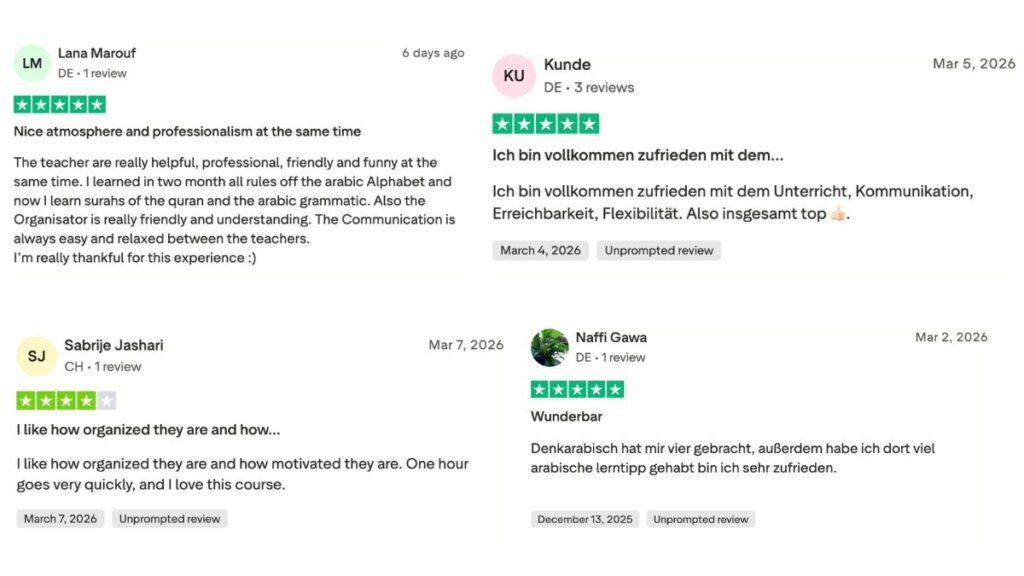
See what our students say about learning at Denk Arabisch Academy on Trustpilot. Read their experiences and check out more reviews to discover how our courses help improve Arabic.
This Ramadan, Don’t Just Fast—Transform.
If you truly want to:
- Understand the Qur’an in its original language
- Feel every dua you make
- Connect deeply with your faith
- Stop relying on translations
Then it’s time to take action.
Our Courses Include:
- Arabic Courses for German Speakers
- Arabic Levels for German Speakers
- Arabic Dialect Courses for German Speakers
- Qur’an Learning Courses for German Speakers
- Islamic Studies Courses for German Speakers
- Courses for Muslim Kids for German Speakers
Join Denk Arabisch today and start learning Arabic in a way that is:
- Simple
- Practical
- Spiritually powerful
Whether you’re a complete beginner or looking to deepen your knowledge—this is your moment.
Ramadan is limited. The opportunity is now.
Enroll now with Denk Arabisch and change the way you experience Islam—forever.
Learn Arabic with Denk Arabisch Academy
Speak and understand Arabic through a clear and effective learning system
Join nowConclusion
Iftar is far more than the conclusion of a day without food; it is a profound spiritual reset that balances physical discipline with divine mercy. It serves as a daily victory for the believer, proving that through patience and faith, one can overcome worldly desires.
By focusing on the Sunnah—breaking the fast promptly, choosing nourishing foods, and prioritizing prayer—Muslims can ensure that the health benefits of fasting are preserved alongside the spiritual rewards. Whether shared in a quiet home or a bustling community mosque, the act of Iftar reinforces the core values of Islam: gratitude, moderation, and compassion for others.
FAQs
As the most anticipated moment of the day during Ramadan, many have questions regarding the rules and traditions of Iftar. Here are the most common queries answered:
1. What time should I break my fast?
You should break your fast exactly at sunset. This coincides with the start of the Maghrib prayer. It is recommended to check a reliable local prayer timetable or wait for the Adhan (call to prayer) from a nearby mosque.
2. Is it compulsory to break the fast with dates?
No, it is not compulsory, but it is Sunnah (the practice of the Prophet Muhammad, PBUH). Dates are scientifically proven to provide a quick source of energy and fiber. If dates are not available, breaking the fast with water or any Halal food is perfectly acceptable.
3. What happens if I accidentally eat or drink before sunset?
If you eat or drink by genuine mistake (forgetting that you were fasting), your fast is still valid and you should continue fasting until sunset. However, if you intentionally break the fast before the sunset time, the fast is void and must be made up later.
4. Can I delay Iftar if I am busy?
While the fast remains valid if you delay eating, it is strongly discouraged. The Prophet (PBUH) said: “The people will continue to be in good condition as long as they hasten the Iftar.” It is best to break the fast with at least a sip of water as soon as the sun sets.
5. Is it true that Duas are always accepted at Iftar?
Islamic teachings emphasize that the time of Iftar is one of the most blessed moments for Dua (supplication). It is highly encouraged to spend the few minutes before eating asking Allah for forgiveness and blessings, as these prayers are rarely rejected.
6. Can I pray Maghrib before eating Iftar?
The recommended practice is to break the fast lightly first (with dates and water), perform the Maghrib prayer, and then eat the full meal. This follows the Sunnah and prevents you from feeling too heavy or sluggish during your prayer.
7. Is it okay to have a very simple Iftar?
Yes! Simplicity is in the spirit of Ramadan. While many cultures prepare elaborate feasts, a simple meal of soup, bread, or fruit is spiritually rewarding. The focus should be on gratitude and moderation rather than indulgence.