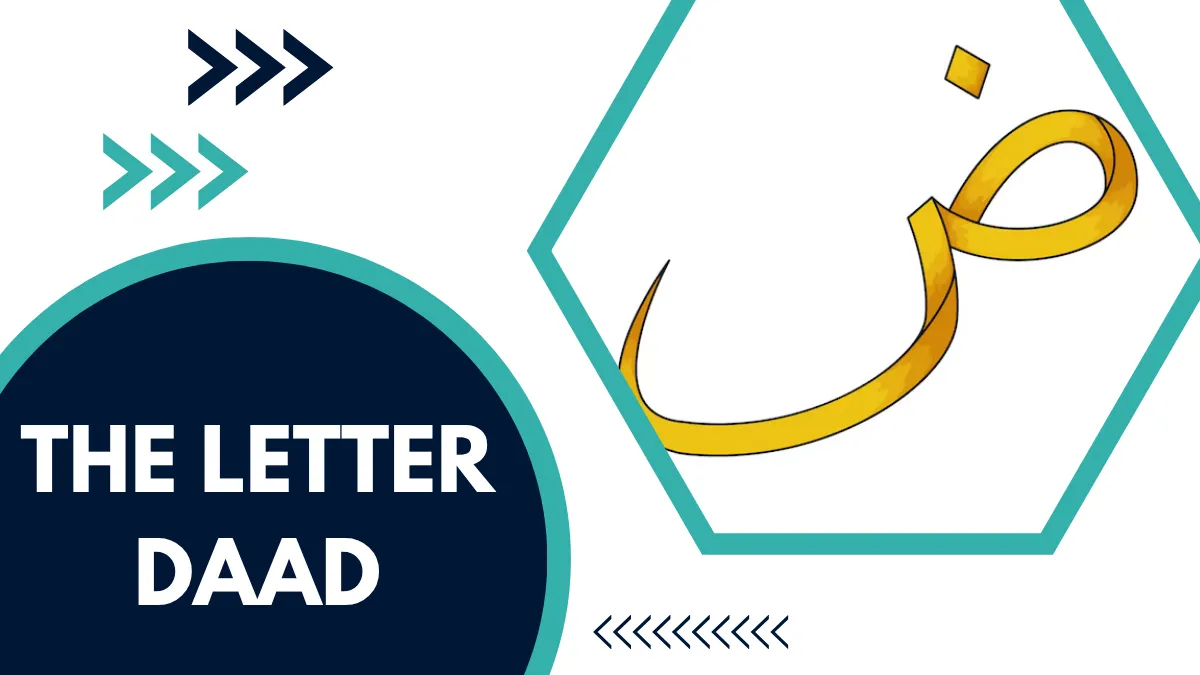
The Letter Daad (ض) is the 15th letter of the Arabic alphabet. You make it with the side of your tongue against the upper molars, while the back of the tongue lifts toward the palate.
In today’s pronunciation, linguists describe it as a voiced emphatic stop, written [dˤ] in IPA, while classical Tajweed describes a softer, flowing sound along the side of the tongue. Arabic is even nicknamed لُغَةُ الضَّادِ (lughat aḍ-ḍād), “the language of Ḍād”.
This sound doesn’t exist in German, but you can get close. Start from the d in “Dom” or “dunkel”, then make it darker, heavier and deeper in the mouth. This guide shows you exactly how.
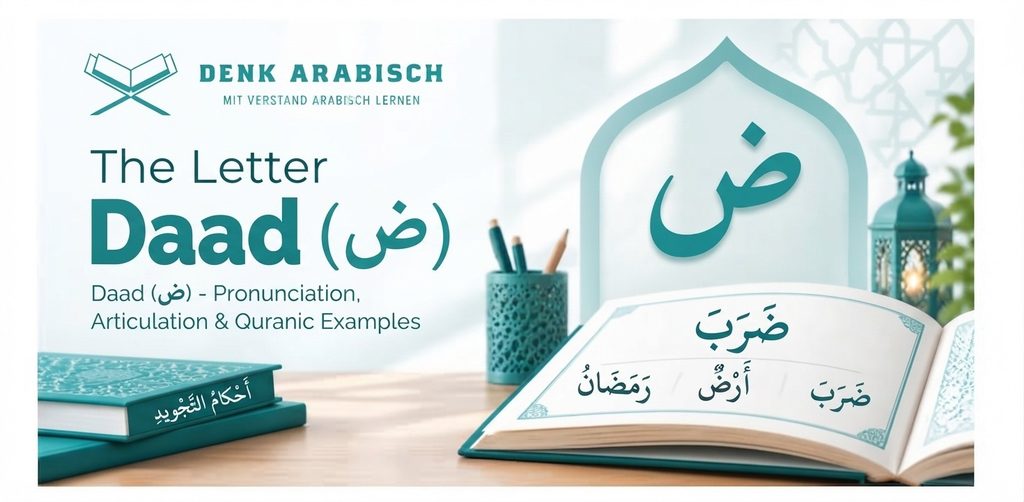
This guide covers everything you need to know about Daad:
- How to pronounce it
- How to write its four forms
- How it works with vowels
- Its Tajweed rule
- Key words and roots
Short exercises at the end let you check what you learned.
These ten facts show you the identity of Daad at a glance, from its sound and position to the way it connects in writing.
| Fact | Daad (ض) |
| Name | ضَادٌ (Ḍād) |
| Sound | [dˤ], heavy and voiced in today’s pronunciation. German: no equivalent, closest is a dark, heavy “d” as in “Dom” |
| Position in the alphabet | 15th letter |
| Abjad value | 26th in Abjad order, value 800 |
| Transliteration | Common: Daad or Dad. DIN 31635: ḍ. Other variant: dhad. Arabizi: 9′ (sometimes plain d) |
| Point of articulation | Side of the tongue and the upper molars (حَافَّةُ اللِّسَانِ) |
| Sun or Moon letter | Sun letter |
| Heavy or light | Heavy (mufakhkham) |
| Dots | One dot above |
| Connection | Connects to the next letter, so it has four forms |
Table of Contents
Daad’s Place in the Arabic Alphabet & the Abjad Order
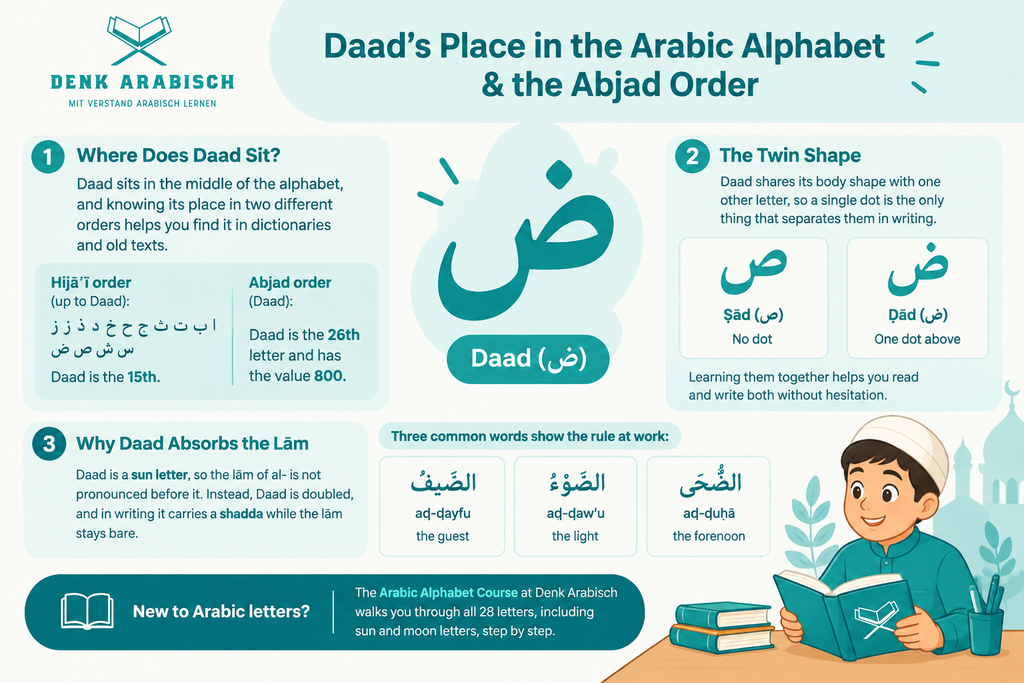
Daad sits in the middle of the alphabet, and knowing its place in two different orders helps you find it in dictionaries and old texts.
In the standard hijāʾī order, the letters up to Daad are: ا ب ت ث ج ح خ د ذ ر ز س ش ص ض. Daad is the 15th.
In the older Abjad order, Daad is the 26th letter and has the value 800. This order still matters because letters were used as numbers in dates on manuscripts and inscriptions.
Read How Many Letters in Arabic? to learn about the number of Arabic letters and understand the basics of the Arabic writing system.
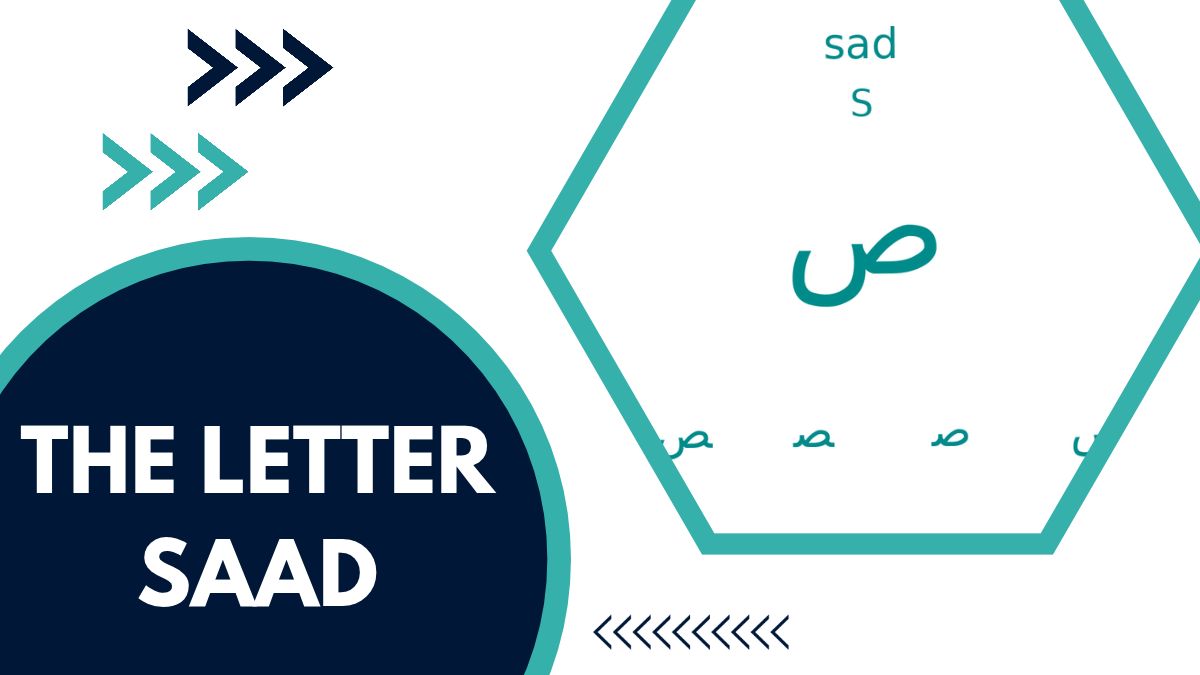
The Twin Shape: Daad (ض) and Ṣād (ص)
Daad shares its body shape with one other letter, so a single dot is the only thing that separates them in writing.
- ص (Ṣād): no dot
- ض (Ḍād): one dot above
Learning them together helps you read and write both without hesitation.
Why Daad Absorbs the Lām: The Sun Letter Rule
Daad is a sun letter, so the lām of al- is not pronounced before it. Instead, Daad is doubled, and in writing it carries a shadda while the lām stays bare.
Three common words show the rule at work:
- الضَّيْفُ (aḍ-ḍayfu): the guest
- الضَّوْءُ (aḍ-ḍawʾu): the light
- الضُّحَى (aḍ-ḍuḥā): the forenoon
New to Arabic letters? The Arabic Alphabet Course at Denk Arabisch walks you through all 28 letters, including sun and moon letters, step by step.
Where Daad Is Made: Makhraj and Tajweed Basics
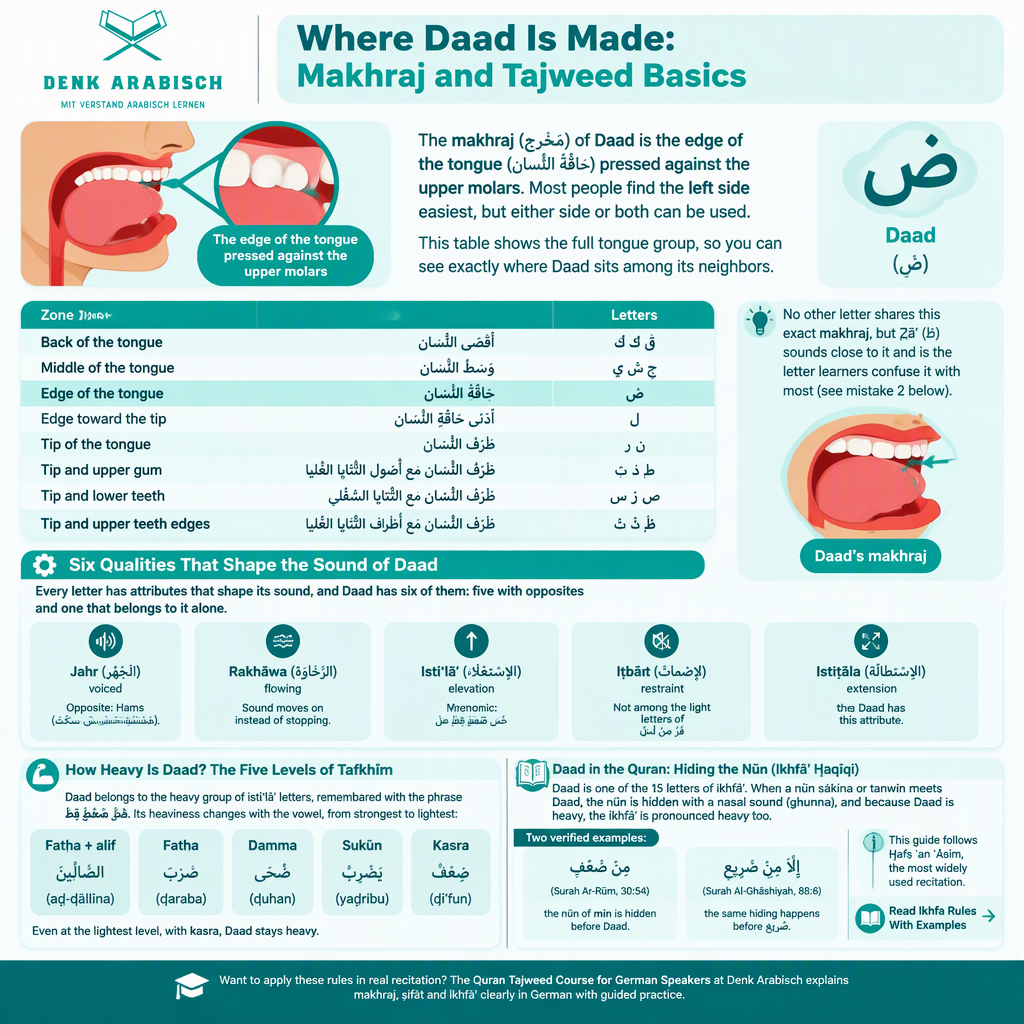
The makhraj (مَخْرَج) of Daad is the edge of the tongue (حَافَّةُ اللِّسَانِ) pressed against the upper molars. Most people find the left side easiest, but either side or both can be used.
This table shows the full tongue group, so you can see exactly where Daad sits among its neighbors.
| Zone | Arabic | Letters |
| Back of the tongue | أَقْصَى اللِّسَانِ | ق ك |
| Middle of the tongue | وَسَطُ اللِّسَانِ | ج ش ي |
| Edge of the tongue | حَافَّةُ اللِّسَانِ | ض |
| Edge toward the tip | أَدْنَى حَافَّةِ اللِّسَانِ | ل |
| Tip of the tongue | طَرَفُ اللِّسَانِ | ن ر |
| Tip and upper gum | طَرَفُ اللِّسَانِ مَعَ أُصُولِ الثَّنَايَا الْعُلْيَا | ط د ت |
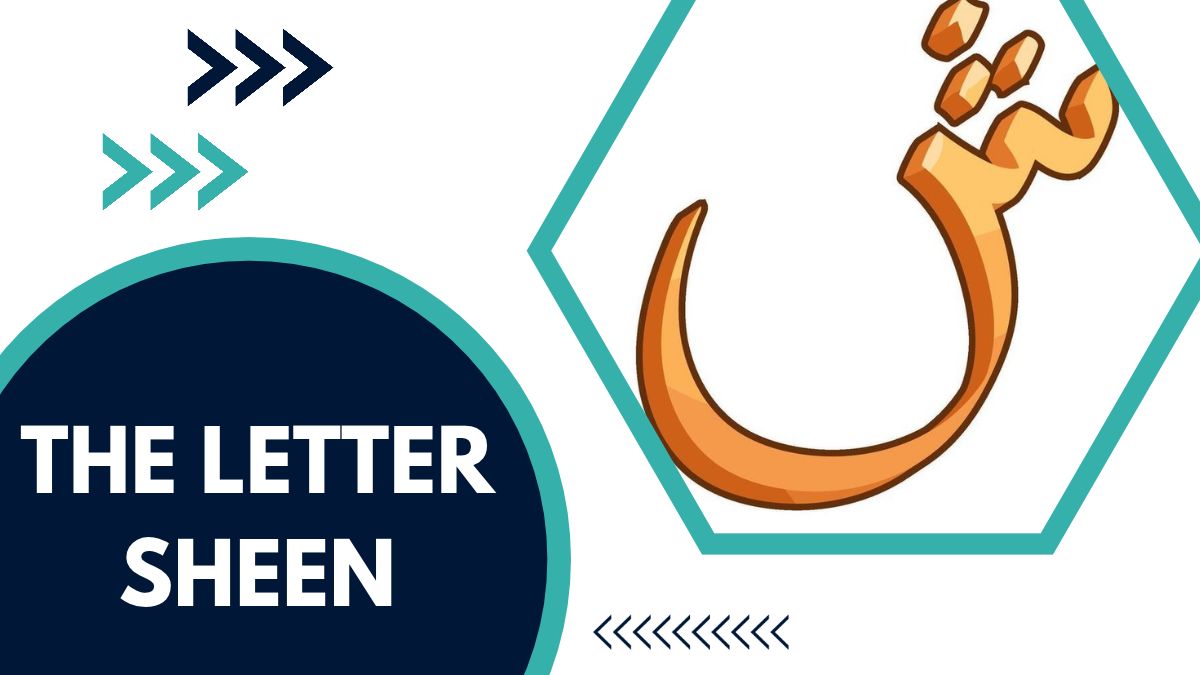
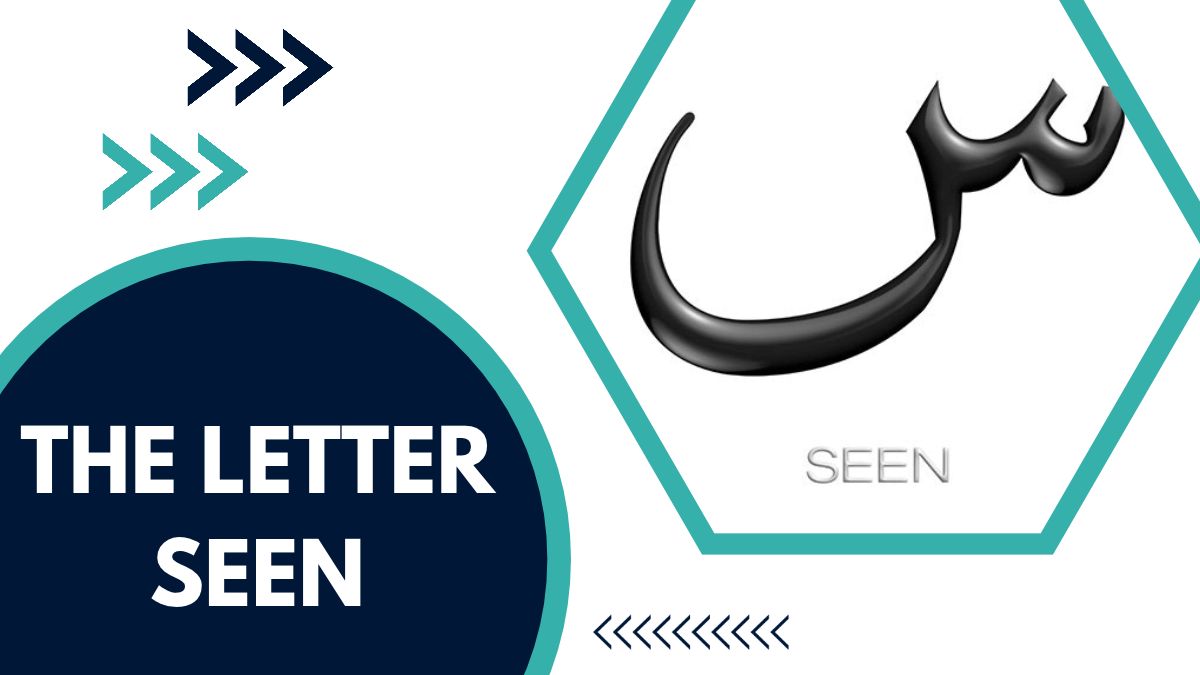
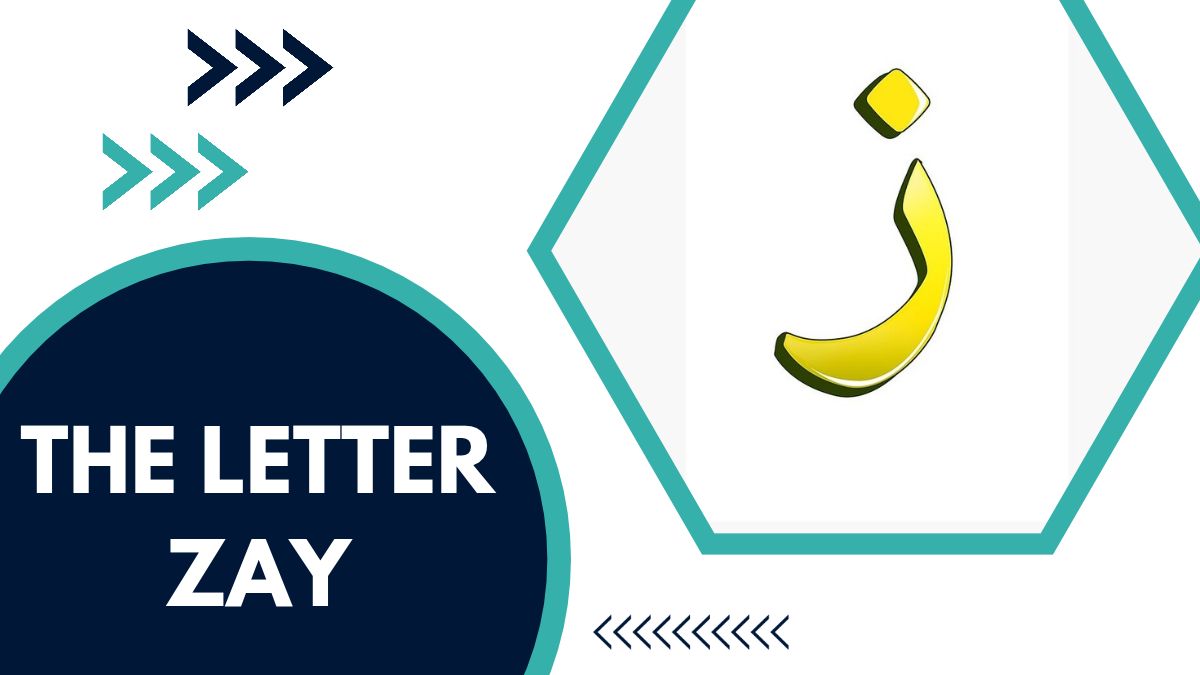
| Tip and lower teeth | طَرَفُ اللِّسَانِ مَعَ الثَّنَايَا السُّفْلَى | ص ز س |
| Tip and upper teeth edges | طَرَفُ اللِّسَانِ مَعَ أَطْرَافِ الثَّنَايَا الْعُلْيَا | ظ ذ ث |
No other letter shares this exact makhraj, but Ẓāʾ (ظ) sounds close to it and is the letter learners confuse it with most (see mistake 2 below).
Six Qualities That Shape the Sound of Daad
Every letter has attributes that shape its sound, and Daad has six of them: five with opposites and one that belongs to it alone.
- Jahr (الْجَهْر), voiced: the voice carries and the breath is held back. Its opposite, hams, belongs to فَحَثَّهُ شَخْصٌ سَكَتَ.
- Rakhāwa (الرَّخَاوَة), flowing: the sound moves on instead of stopping completely.
- Istiʿlāʾ (الِاسْتِعْلَاء), elevation: the back of the tongue rises toward the palate. Mnemonic: خُصَّ ضَغْطٍ قِظْ.
- Iṭbāq (الْإِطْبَاق), covering: the tongue covers the palate, as in ص ض ط ظ.
- Iṣmāt (الْإِصْمَات), restraint: the letter is not among the light letters of فَرَّ مِنْ لُبّ.
- Istiṭāla (الِاسْتِطَالَة), extension: the sound stretches along the side of the tongue. Only Daad has this attribute.
How Heavy Is Daad? The Five Levels of Tafkhīm
Daad belongs to the heavy group of istiʿlāʾ letters, remembered with the phrase خُصَّ ضَغْطٍ قِظْ. Its heaviness changes with the vowel, from strongest to lightest:
- Fatḥa followed by alif: الضَّالِّينَ (aḍ-ḍāllīna)
- Fatḥa: ضَرَبَ (ḍaraba)
- Ḍamma: ضُحًى (ḍuḥan)
- Sukūn: يَضْرِبُ (yaḍribu)
- Kasra: ضِعْفٌ (ḍiʿfun)
Even at the lightest level, with kasra, Daad stays heavy.
Daad in the Quran: Hiding the Nūn (Ikhfāʾ Ḥaqīqī)
Daad is one of the 15 letters of ikhfāʾ. When a nūn sākina or tanwīn meets Daad, the nūn is hidden with a nasal sound (ghunna), and because Daad is heavy, the ikhfāʾ is pronounced heavy too.
Two examples from the Quran show the rule:
- مِنْ ضَعْفٍ (Surah Ar-Rūm, 30:54): the nūn of min is hidden before Daad.
- إِلَّا مِنْ ضَرِيعٍ (Surah Al-Ghāshiyah, 88:6): the same hiding happens before ضَرِيعٍ.
This guide follows Ḥafṣ ʿan ʿĀṣim, the most widely used recitation.
Read Ikhfa Rules With Examples to understand the rules of Ikhfa with clear examples and apply them confidently while reciting the Quran.
Want to apply these rules in real recitation? The Quran Tajweed Course for German Speakers at Denk Arabisch explains makhraj, ṣifāt and ikhfāʾ clearly in German with guided practice.
Saying Daad Out Loud
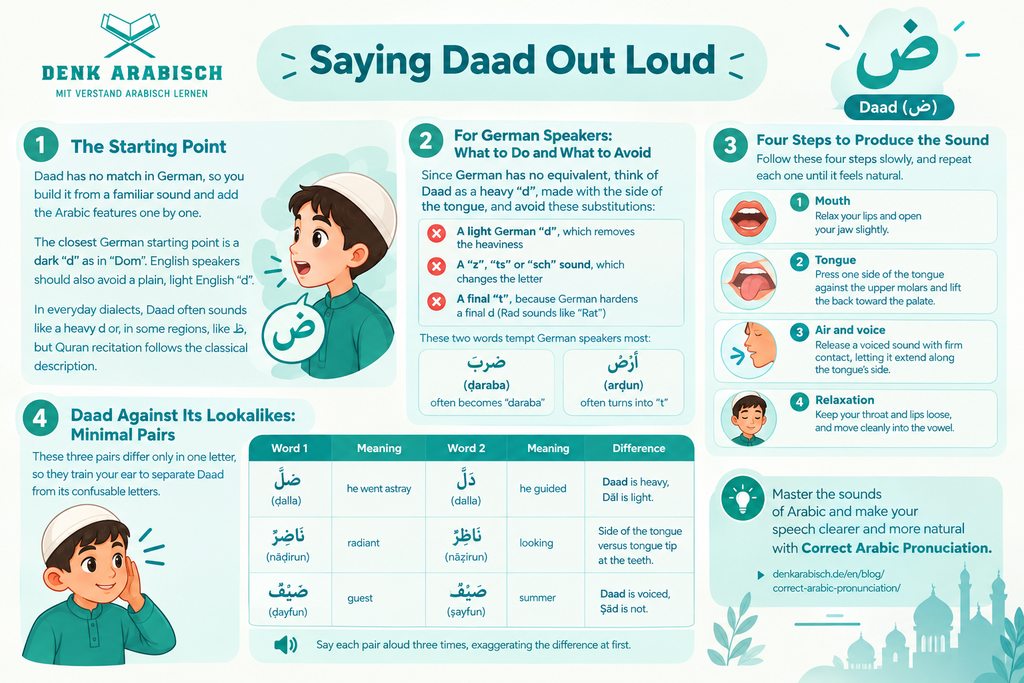
Daad has no match in German, so you build it from a familiar sound and add the Arabic features one by one.
The closest German starting point is a dark “d” as in “Dom”. English speakers should also avoid a plain, light English “d”. In everyday dialects, Daad often sounds like a heavy d or, in some regions, like ظ, but Quran recitation follows the classical description.
For German Speakers: What to Do and What to Avoid
Since German has no equivalent, think of Daad as a heavy “d” made with the side of the tongue, and avoid these substitutions:
- A light German “d”, which removes the heaviness.
- A “z”, “ts” or “sch” sound, which changes the letter.
- A final “t”, because German hardens a final d (Rad sounds like “Rat”).
These two words tempt German speakers most: ضَرَبَ (ḍaraba), which often becomes “daraba”, and أَرْضٌ (arḍun), whose final sound often turns into “t”.
Four Steps to Produce the Sound
Follow these four steps slowly, and repeat each one until it feels natural.
- Mouth: relax your lips and open your jaw slightly.
- Tongue: press one side of the tongue against the upper molars and lift the back toward the palate.
- Air and voice: release a voiced sound with firm contact, letting it extend along the tongue’s side.
- Relaxation: keep your throat and lips loose, and move cleanly into the vowel.
Daad Against Its Lookalikes: Minimal Pairs
These three pairs differ only in one letter, so they train your ear to separate Daad from its confusable letters.
| Word 1 | Meaning | Word 2 | Meaning | Difference |
| ضَلَّ (ḍalla) | he went astray | دَلَّ (dalla) | he guided | Daad is heavy, Dāl is light |
| نَاضِرٌ (nāḍirun) | radiant | نَاظِرٌ (nāẓirun) | looking | Side of the tongue versus tongue tip at the teeth |
| ضَيْفٌ (ḍayfun) | guest | صَيْفٌ (ṣayfun) | summer | Daad is voiced, Ṣād is not |
Say each pair aloud three times, exaggerating the difference at first.
Master the sounds of Arabic and make your speech clearer and more natural with Correct Arabic Pronunciation.
Writing Daad by Hand: Its Four Shapes
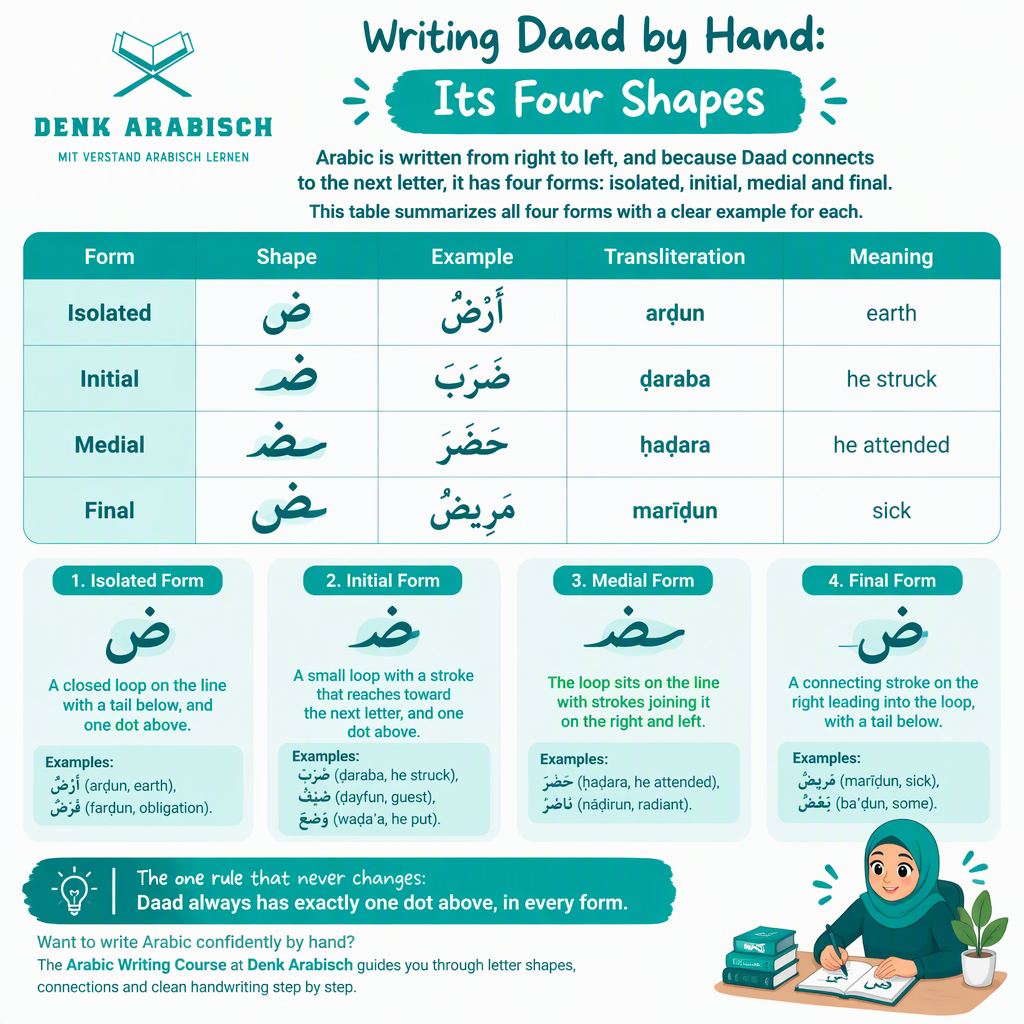
Arabic is written from right to left, and because Daad connects to the next letter, it has four forms: isolated, initial, medial and final.
This table summarizes all four forms with a clear example for each:
| Form | Shape | Example | Transliteration | Meaning |
| Isolated | ض | أَرْضٌ | arḍun | earth |
| Initial | ضـ | ضَرَبَ | ḍaraba | he struck |
| Medial | ـضـ | حَضَرَ | ḥaḍara | he attended |
| Final | ـض | مَرِيضٌ | marīḍun | sick |
1. Isolated Form (ض)
The isolated form is used when Daad stands alone, or when the letter before it does not connect, as ر does in أَرْضٌ.
Shape: a closed loop on the line with a tail below, and one dot above.
Examples: أَرْضٌ (arḍun, earth), فَرْضٌ (farḍun, obligation).
2. Initial Form (ضـ)
The initial form starts a word, or follows a non-connecting letter such as و.
Shape: a small loop with a stroke that reaches toward the next letter, and one dot above.
Examples: ضَرَبَ (ḍaraba, he struck), ضَيْفٌ (ḍayfun, guest), وَضَعَ (waḍaʿa, he put).
3. Medial Form (ـضـ)
The medial form sits between two letters, connected on both sides.
Shape: the loop sits on the line with strokes joining it on the right and left.
Examples: حَضَرَ (ḥaḍara, he attended), يَضْرِبُ (yaḍribu, he strikes).
4. Final Form (ـض)
The final form ends a word and connects to the letter before it.
Shape: a connecting stroke on the right leading into the loop, with a tail below.
Examples: مَرِيضٌ (marīḍun, sick), بَعْضٌ (baʿḍun, some).
The one rule that never changes: Daad always has exactly one dot above, in every form.
Learn Arabic with Denk Arabisch Academy
Speak and understand Arabic through a clear and effective learning system
Try a Free Trial5. The German Trap: A Final “t” ”
German hardens a final d into t, so Rad sounds like “Rat”. Carried into Arabic, أَرْضٌ (arḍun) ends in a “t” sound.
Test: put your fingers on your throat and say أَرْضٌ. The vibration must last to the very end of the word.
Want to write Arabic confidently by hand? The Arabic Writing Course at Denk Arabisch guides you through letter shapes, connections and clean handwriting step by step.
Pairing Daad with Vowel Sounds
Because Daad is heavy, each vowel after it sounds darker and fuller than after a light letter, so practice all of them.
The Short Vowels & Sukūn
This table shows how each short vowel mark combines with Daad, with one common word for each.
| Mark | Name | Sound | Example | Meaning |
| ضَ | Fatḥa | ḍa | ضَرَبَ (ḍaraba) | he struck |
| ضُ | Ḍamma | ḍu | ضُحًى (ḍuḥan) | forenoon |
| ضِ | Kasra | ḍi | ضِعْفٌ (ḍiʿfun) | double |
| ضْ | Sukūn | ḍ | أَرْضٌ (arḍun) | earth |
Stretching the Sound: Long Vowels
Long vowels stretch the sound for two counts, and Daad keeps its heaviness throughout.
| Combination | Sound | Example | Meaning |
| ضَا | ḍā | ضَارٌّ (ḍārrun) | harmful |
| ضُو | ḍū | الْمَغْضُوبِ (al-maghḍūbi) | the one who earned anger |
| ضِي | ḍī | ضِيَاءٌ (ḍiyāʾun) | light |
Daad also forms diphthongs: ضَوْءٌ (ḍawʾun, light) with aw and ضَيْفٌ (ḍayfun, guest) with ay.
Doubling Daad: The Shadda
Shadda doubles the letter, so you hold Daad firmly for a moment before releasing it. Three examples:
الضَّالِّينَ (aḍ-ḍāllīna): those who went astray
فَضَّلَ (faḍḍala): he preferred
عَضَّ (ʿaḍḍa): he bit
Three Roots to Build Your Daad Vocabulary
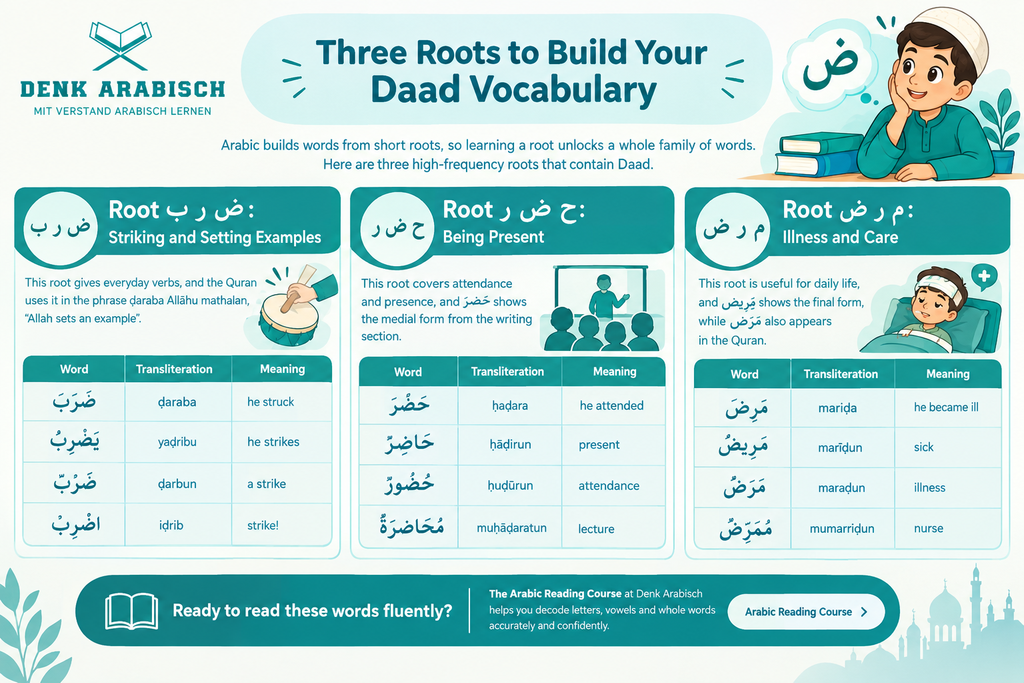
Arabic builds most of its words from three-letter roots, so learning a root unlocks a whole family of words. Here are three high-frequency roots that contain Daad.
Root ض ر ب: Striking and Setting Examples
This root gives everyday verbs, and the Quran uses it in the phrase ḍaraba Allāhu mathalan, “Allah sets an example”.
| Word | Transliteration | Meaning |
| ضَرَبَ | ḍaraba | he struck |
| يَضْرِبُ | yaḍribu | he strikes |
| ضَرْبٌ | ḍarbun | a strike |
| اضْرِبْ | iḍrib | strike! |
Root ح ض ر: Being Present
This root covers attendance and presence, and حَضَرَ shows the medial form from the writing section.
| Word | Transliteration | Meaning |
| حَضَرَ | ḥaḍara | he attended |
| حَاضِرٌ | ḥāḍirun | present |
| حُضُورٌ | ḥuḍūrun | attendance |
| مُحَاضَرَةٌ | muḥāḍaratun | lecture |
Root م ر ض: Illness and Care
This root is useful for daily life, and مَرِيضٌ shows the final form, while مَرَضٌ also appears in the Quran.
| Word | Transliteration | Meaning |
| مَرِضَ | mariḍa | he became ill |
| مَرِيضٌ | marīḍun | sick |
| مَرَضٌ | maraḍun | illness |
| مُمَرِّضٌ | mumarriḍun | nurse |
Ready to read these words fluently? The Arabic Reading Course at Denk Arabisch helps you decode letters, vowels and whole words accurately and confidently.
Daad in Everyday Words
This table shows Daad at the beginning, middle and end of words, all with full vowel marks.
| Position | Arabic Word | Transliteration | Meaning |
| Beginning | ضَرَبَ | ḍaraba | he struck |
| Middle | حَضَرَ | ḥaḍara | he attended |
| End | أَرْضٌ | arḍun | earth |
Daad in Short, Simple Sentences
These three short sentences use words from the previous table, so you can see Daad in simple, real Arabic.
| Arabic Sentence | Transliteration | Meaning |
| حَضَرَ الضَّيْفُ إِلَى الْبَيْتِ. | Ḥaḍara aḍ-ḍayfu ilā l-bayti. | The guest came to the house. |
| الْوَلَدُ مَرِيضٌ الْيَوْمَ. | Al-waladu marīḍun al-yawma. | The boy is sick today. |
| ضَرَبَ الْوَلَدُ الْكُرَةَ. | Ḍaraba l-waladu l-kurata. | The boy hit the ball. |
Read Daily Arabic Phrases and discover useful Arabic expressions you can easily use in real-life conversations.
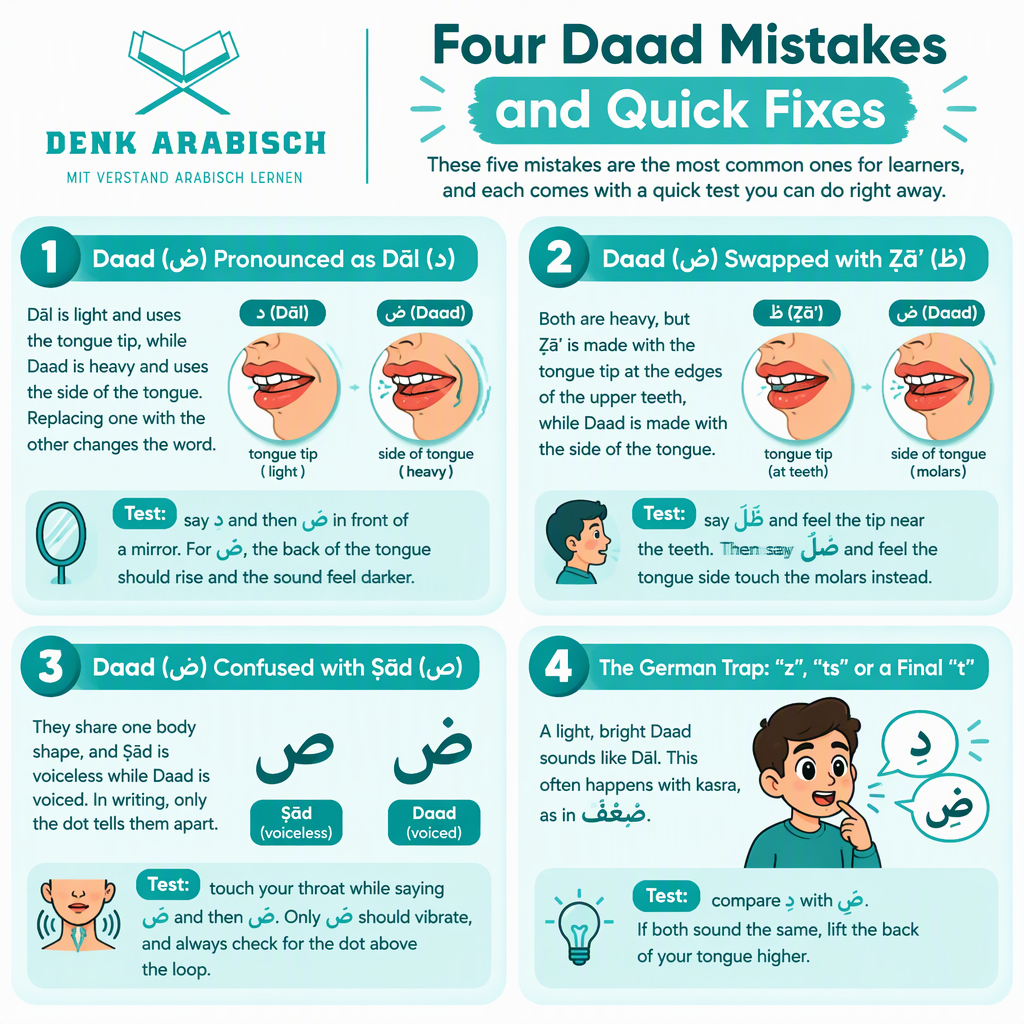
Four Daad Mistakes and Quick Fixes
These five mistakes are the most common ones for learners, and each comes with a quick test you can do right away.
1. Daad (ض) Pronounced as Dāl (د)
Dāl is light and uses the tongue tip, while Daad is heavy and uses the side of the tongue. Replacing one with the other changes the word.
Test: say دَ and then ضَ in front of a mirror. For ضَ, the back of the tongue should rise and the sound should feel darker.
2. Daad (ض) Swapped with Ẓāʾ (ظ)
Both are heavy, but Ẓāʾ is made with the tongue tip at the edges of the upper teeth, while Daad is made with the side of the tongue.
Test: say ظَلَّ and feel the tip near the teeth. Then say ضَلَّ and feel the tongue side touch the molars instead.
3. Daad (ض) Confused with Ṣād (ص)
They share one body shape, and Ṣād is voiceless while Daad is voiced. In writing, only the dot tells them apart.
Test: touch your throat while saying صَ and then ضَ. Only ضَ should vibrate, and always check for the dot above the loop.
4. The German Trap: “z”, “ts” or a Final “t”
A light, bright Daad sounds like Dāl. This often happens with kasra, as in ضِعْفٌ.
Test: compare دِ with ضِ. If both sound the same, lift the back of your tongue higher.
Practice Time: Check What You Know About Daad
These five exercises use only words from this guide, so you can check your progress right away.
Exercise 1: Choose the Right Answer
What is the point of articulation of Daad?
a) Tip of the tongue and upper teeth b) Side of the tongue and upper molars c) The throat
Answer: b.
Exercise 2: Match the Words
Match each word with its meaning: ضَرَبَ, أَرْضٌ, مَرِيضٌ, بَعْضٌ with: sick, some, earth, he struck.
Answers: ضَرَبَ = he struck, أَرْضٌ = earth, مَرِيضٌ = sick, بَعْضٌ = some.
Exercise 3: Write It Yourself
Write Daad in its four forms: ض, ضـ, ـضـ, ـض. Then write حَضَرَ and مَرِيضٌ with all vowel marks.
Exercise 4: Right or Wrong?
- Daad is a moon letter.
- Daad has one dot above.
- Daad and Ẓāʾ share the same makhraj.
- Daad stays heavy even with kasra.
Answers: 1 False, 2 True, 3 False, 4 True.
Exercise 5: Spot the Daad
Which words contain Daad? أَرْضٌ، صَيْفٌ، حَضَرَ، دَلَّ، مَرِيضٌ
Answer: أَرْضٌ، حَضَرَ، مَرِيضٌ.
What Our Students Say About Denk Arabisch Academy
See what our students say about learning at Denk Arabisch Academy on Trustpilot. Read their experiences and check out more reviews to discover how our courses help improve Arabic.

Keep Going with Daad and Beyond at Denk Arabisch
Daad is one of 28 letters, and a clear structure turns each new sound into a small, manageable step. Denk Arabisch is built for German-speaking learners and explains Arabic through German.
Here is what you get:
- Structured online lessons that build skills step by step
- Clear explanations in German
- Guided practice and individual learning support
- Courses for different levels and goals, for children and adults
See what students and parents say about Denk Arabisch on Trustpilot
Learn Arabic with Denk Arabisch Academy
Speak and understand Arabic through a clear and effective learning system
Try a Free TrialChoose Your Specialized Course:
- Arabic Course For Beginners
- Arabic Alphabet Course
- Arabic Reading Course
- Arabic Writing Course
- Arabic Speaking Course
- Quranic Arabic Course for German Speakers
- Quran Tajweed Course for German Speakers
Book a free trial at Denk Arabisch and find the course that fits you.

Conclusion
The Letter Daad (ض) is one of the most distinctive sounds in Arabic, and with the right steps you can learn it. Here are the three key takeaways:
- Sound: a heavy, voiced sound made with the side of the tongue and the upper molars.
- Writing: four forms, always with one dot above.
- Recognition: a sun letter, heavy, and different from د, ظ and ص.
Practice the sound slowly, write all four forms by hand, compare Daad with its confusable letters, and read the roots ض ر ب, ح ض ر and م ر ض aloud.
With patience and regular practice, Daad will soon feel natural. Book a free trial lesson at Denk Arabisch and take your next step with confidence.
FAQs
These five questions answer what learners ask most about Daad.
1. What is the difference between Daad (ض) and Ẓāʾ (ظ)?
Daad is made with the side of the tongue and the upper molars. Ẓāʾ is made with the tongue tip at the edges of the upper teeth.
2. What is the difference between Daad (ض) and Dāl (د)?
Dāl is light and made with the tongue tip. Daad is heavy and made with the side of the tongue.
3. Is Daad a sun letter or a moon letter?
Daad is a sun letter. The lām of al- is not pronounced and Daad is doubled, as in الضَّيْفُ.
4. Is Daad heavy or light?
Daad is always heavy. It is strongest with fatḥa and alif, and still heavy with kasra.
5. Which Tajweed rule does Daad trigger?
When a nūn sākina or tanwīn meets Daad, ikhfāʾ ḥaqīqī applies, as in مِنْ ضَعْفٍ. The nūn is hidden with a heavy nasal sound.