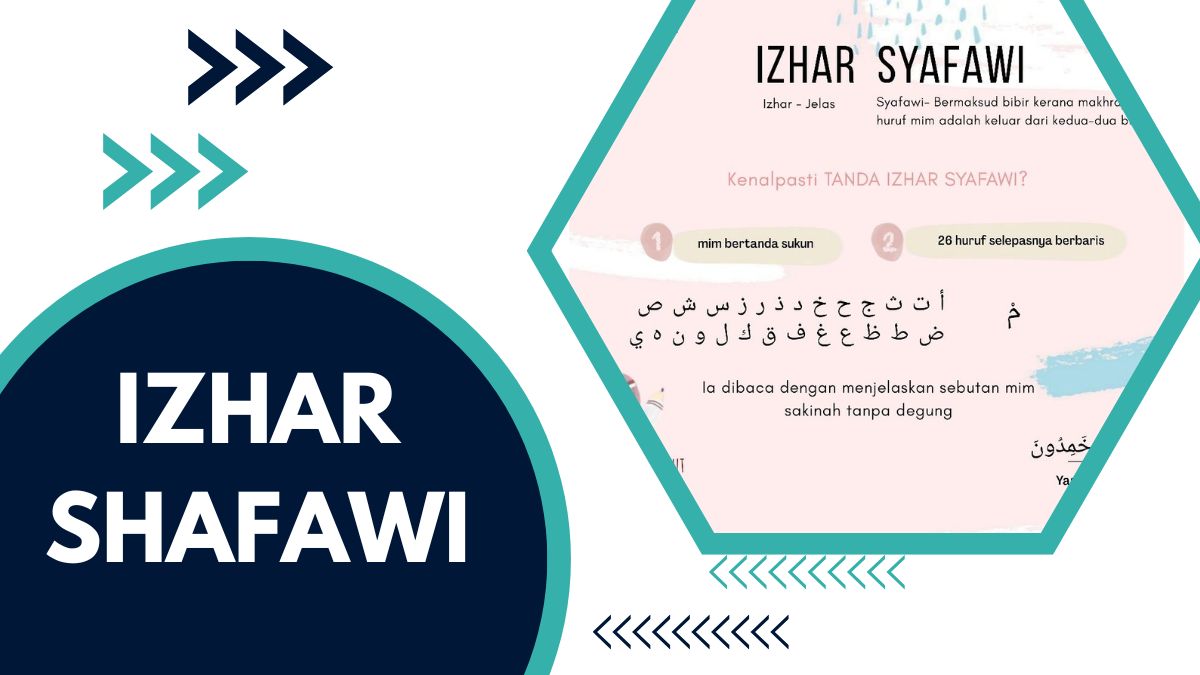
Learning Tajweed is an essential step for every Muslim who wants to recite the Holy Qur’an correctly, clearly, and beautifully. Tajweed rules preserve the exact pronunciation of Quranic words as they were revealed to Prophet Muhammad ﷺ.
Among these important rules, Izhar Shafawi is one of the key concepts related to proper pronunciation of the letter Meem (م). It is a simple yet important rule that helps beginners improve clarity and fluency in Qur’an recitation.
Understanding Izhar Shafawi helps readers pronounce Meem Sakinah (مْ) correctly without merging or hiding its sound. Mastering this rule improves Tajweed accuracy, strengthens Arabic pronunciation, and makes recitation smoother and more precise.
In this article, we will explain everything you need to know about Izhar Shafawi, including its definition, letters, pronunciation rules, examples from the Qur’an, common mistakes, and its difference from other Tajweed rules.
Table of Contents
What Is Izhar Shafawi?
Izhar Shafawi is a Tajweed rule that applies when a Meem Sakinah (مْ) is followed by any letter except Meem (م) or Baa (ب). In this case, the Meem must be pronounced clearly and distinctly without merging or nasal concealment.
The word “Izhar” means clarity or making something clear, while “Shafawi” comes from Shafah, meaning lips. This is because the letter Meem is articulated using the lips.
Therefore, Izhar Shafawi refers to the clear pronunciation of Meem Sakinah from the lips without merging or hiding the sound.
When applying this rule, the reciter should pronounce the Meem fully and clearly, ensuring the sound is not stretched, hidden, or merged into the next letter.
Izhar Shafawi is considered one of the easier Tajweed rules because it has only one letter involved (Meem Sakinah), making it simple for beginners to recognize and apply.
Perfect your pronunciation and recitation beautifully with the Quran Tajweed Course guided by expert teachers.
Why Is Izhar Shafawi Important?
Izhar Shafawi is important because it ensures the correct pronunciation of Qur’anic words and preserves the beauty and clarity of recitation. Ignoring Tajweed rules can lead to unclear pronunciation, which may affect the fluency, rhythm, and accuracy of reading the Qur’an.
Since Tajweed is about preserving how the Qur’an was revealed, even small pronunciation mistakes can change the quality of recitation.
This rule helps learners understand how to pronounce Meem Sakinah (مْ) correctly in different contexts, making it easier to avoid common pronunciation mistakes such as hiding the sound, overemphasizing it, or merging it incorrectly with other letters.
With practice, learners become more aware of how their lips should move and how the sound should be released clearly.
Benefits of Learning Izhar Shafawi
- Improving Qur’an recitation clarity
- Enhancing Arabic pronunciation skills
- Strengthening Tajweed foundation
- Preventing pronunciation mistakes
- Making recitation smoother and more beautiful
- Building confidence in reading the Qur’an
For beginners, Izhar Shafawi is usually introduced early because it is simple, consistent, and easy to apply. Unlike more complex Tajweed rules, it relies on clear pronunciation rather than multiple conditions, which makes it a strong starting point for mastering Qur’anic recitation.
Experience the spiritual beauty of the Quran with the Quran Recitation Course at Denk Arabisch that enhances clarity and voice.
The Rule of Izhar Shafawi
Izhar Shafawi applies in a very specific and easy-to-remember case:
👉 When Meem Sakinah (مْ) is followed by any letter except Meem (م) or Baa (ب)
This means that the Meem sound is always pronounced clearly and independently in all situations except these two special cases.
If we break it down simply:
- Meem (م) → Idgham Shafawi
The two Meems merge together with a strong nasal sound (ghunnah), creating a smooth connection between them. - Baa (ب) → Ikhfa Shafawi
The Meem sound is hidden slightly, with a light nasal sound while the lips prepare for the Baa pronunciation. - All other letters → Izhar Shafawi
The Meem Sakinah is pronounced clearly and distinctly from the lips without merging or hiding.
In Izhar Shafawi, the pronunciation should always be:
clear, short, and fully articulated using the lips, without any blending into the next letter. The transition between the Meem and the following letter should feel natural and smooth, but each sound remains separate.
A helpful way to remember this rule is:
👉 “Meem is clear everywhere except before Meem and Baa.”
With regular practice, learners begin to recognize this pattern automatically while reading the Qur’an, making their recitation more accurate, confident, and fluent.
Start your journey to fluency in reading with confidence using the Quran Reading Course designed for all levels.
How to Pronounce Izhar Shafawi Correctly?
When applying Izhar Shafawi, the goal is to pronounce the Meem Sakinah clearly using the lips without merging or nasalizing the sound.
The pronunciation should be simple, clean, and direct.
Steps to Apply Izhar Shafawi Correctly
1. Pronounce the Meem Clearly
The Meem Sakinah must be fully pronounced using the lips.
Example:
مْنَ النَّاسِ
from the people
Transliteration: Min an-nās
Here, the Meem is pronounced clearly before moving to the next letter.
2. Do Not Merge the Sound
Unlike other rules, Izhar Shafawi does not allow merging the Meem into the following letter. Each sound should remain separate and clear.
3. Avoid Excessive Ghunnah (Nasal Sound)
A very light natural nasal tone may exist because Meem has ghunnah, but it should not be exaggerated or prolonged.
4. Maintain Smooth Flow
After pronouncing the Meem clearly, continue to the next letter smoothly without breaking the flow of recitation.
Important Tip
The best way to master Izhar Shafawi is slow and consistent practice. Focus on clarity first, then speed will improve naturally over time.
The pronunciation should always sound:
- Clear
- Natural
- Distinct
- Smooth
- Free from merging
Examples of Izhar Shafawi in the Quran
Here are some common examples from the Qur’an:
Example 1: Meem Sakinah + Faa (ف)
هُمْ فِي الْجَنَّةِ
They are in Paradise
Here, The Meem Sakinah (مْ) in “Hum” is followed by the letter Fā (ف) Since the next letter is not Bā (ب) or Mīm (م) → this is Izhar Shafawi
Transliteration: Hum fī al-jannah
Example 2: Meem Sakinah + Noon (ن)
هُمْ نَاسٌ
They are people
Transliteration: Hum nās
The Meem is pronounced clearly before the Noon.
Example 3: Meem Sakinah + Lam (ل)
عَلَيْهِمْ لَا
Upon them, not…
Transliteration: ‘Alayhim lā
The Meem is pronounced clearly before Lam.
Example 4: Meem Sakinah + Seen (س)
هُمْ سَابِقُونَ
They are the foremost
Transliteration: Hum sābiqūn
Clear pronunciation of Meem before Seen.
Key Rule in All Examples
👉 The Meem Sakinah (مْ) is always pronounced clearly, fully, and independently without merging, hiding, or changing its sound unless it is followed by one of two specific letters: Meem (م) or Baa (ب).
This means the default rule in Qur’an recitation is clarity (Izhar Shafawi). The Meem sound should come out naturally from the lips, with a short and clean pronunciation, making it easy to hear and distinguish before moving to the next letter.
Unlock your connection with the Quran through Quran Memorization Course and build lifelong retention with ease.
Learn the Quran with Denk Arabisch Academy
Master reading and understanding the Quran through structured and supportive learning
Try a Free TrialEasy Way to Memorize Izhar Shafawi Rule
👉 A very easy way to remember Izhar Shafawi is:
“Meem is clear except before Meem and Baa.”
This short sentence captures the entire rule in a simple and memorable way, making it easier for beginners to apply while reading the Qur’an.
You can also break it down into a quick memorization pattern:
- Clear always → The Meem Sakinah (مْ) is normally pronounced clearly in all situations
- Exception 1: م + م = Idgham Shafawi → The two Meems merge together smoothly with a strong ghunnah (nasal sound)
- Exception 2: م + ب = Ikhfa Shafawi → The Meem is slightly hidden with a light nasal sound before pronouncing Baa
- Everything else outside these two cases follows: 👉 Full clarity and distinct pronunciation (Izhar Shafawi)
To master this rule, repetition is very important. The more you practice reading Qur’anic verses and noticing Meem Sakinah in different words, the faster your brain and tongue will automatically recognize when to apply clarity, merging, or hiding.
With consistent practice, this rule becomes natural, and your recitation becomes smoother, more accurate, and more confident.
Read also: Izhar Mutlaq – The Comprehensive Guide For Muslims
How to Practice Izhar Shafawi Easily?
Practicing Izhar Shafawi regularly is the key to mastering it in Qur’an recitation. Since this rule is based on clear pronunciation of Meem Sakinah (مْ), consistent training helps your tongue and ears recognize it naturally over time.
1. Read Slowly and Focus on Clarity
Slow reading is one of the most effective ways to learn Tajweed. When you read slowly, you can clearly notice where Meem Sakinah appears and what letter follows it.
This helps you:
- Pronounce the Meem correctly from the lips
- Avoid rushing into the next letter
- Apply Izhar with full clarity
With time, accuracy improves first, and speed comes naturally later.
2. Highlight Rules in the Mushaf
Using a color-coded Mushaf or marking your Qur’an is very helpful. You can highlight Meem Sakinah (مْ) occurrences so you can easily recognize where Izhar Shafawi applies.
This visual method helps your brain:
- Quickly identify patterns
- Differentiate between Izhar, Ikhfa, and Idgham
- Build automatic recognition during recitation
3. Listen to Skilled Reciters
Listening to expert reciters is one of the fastest ways to improve Tajweed naturally. Pay attention to how they pronounce Meem Sakinah clearly.
Recommended reciters include:
- Sheikh Al-Husary
- Sheikh Mishary Rashid Alafasy
Try to imitate their clarity, rhythm, and precision while reading.
4. Record Your Recitation
Recording your voice is a powerful self-correction tool. When you listen back, you can easily notice mistakes such as:
- Weak or unclear Meem pronunciation
- Incorrect merging of sounds
- Overuse of nasal sound (ghunnah)
This helps you improve step by step and track your progress over time.
5. Repeat Daily
Repetition is one of the most important learning techniques in Tajweed. The more you repeat verses containing Meem Sakinah, the more natural the rule becomes.
Daily practice helps you:
- Strengthen pronunciation memory
- Improve fluency and confidence
- Reduce mistakes automatically over time
Even a few minutes of daily repetition can make a big difference.
Common Mistakes in Izhar Shafawi
Here are Some Common Mistakes:
1. Hiding the Meem Sound
Some learners weaken the Meem, making it unclear.
2. Adding Extra Ghunnah
Over-nasalization is a common mistake.
3. Incorrect Merging
Some students mistakenly apply Idgham where Izhar is required.
4. Weak Lip Pronunciation
Since Meem is a lip letter, weak articulation affects clarity.
Read also: Arabic Vs Quranic Arabic For Children – The Guide For Muslims
Learn Arabic & Qur’an the Right Way with Denk Arabisch
Stop wasting time with random videos and confusing explanations. If you want real progress in Arabic and Qur’an recitation, you need a structured system—and that’s exactly what Denk Arabisch offers.
At Denk Arabisch, we help you:
- Read Arabic fluently from scratch
- Apply Tajweed rules correctly from day one
- Improve your Qur’an recitation with confidence
- Learn through expert, certified teachers
Our Quran Courses
- Don’t settle for average; our Quran Tajweed Course provides elite training that transforms your child’s recitation into a masterpiece of precision.
- Struggling to read creates a barrier to faith; break that barrier today with a Quran Reading Course designed for rapid fluency and total confidence.
- Your child’s voice is a gift—don’t waste it. Our Quran Recitation Course is the ultimate investment that will make your child proud of their recitation for a lifetime.
- Don’t let another year pass by; enrolling in our Quran Memorization Course right now is the best way to ensure your child completes their Hifz before life gets too busy.
This is not just learning—it’s a real transformation in your recitation and understanding of the Qur’an.

But seats are limited to ensure quality teaching and personal attention.
👉 Join Denk Arabisch now and start learning the right way before enrollment closes.
Learn the Quran with Denk Arabisch Academy
Master reading and understanding the Quran through structured and supportive learning
Try a Free TrialConclusion
Izhar Shafawi is one of the fundamental Tajweed rules that ensures the clear and precise pronunciation of Meem Sakinah (مْ). It applies when the Meem Sakinah is followed by any letter except Meem (م) or Baa (ب), making clarity the default rule in most cases.
When this rule is applied correctly, the Meem sound is pronounced fully from the lips without merging, hiding, or excessive nasalization. This helps maintain the natural flow of Qur’anic recitation while keeping every letter distinct and easy to hear. It also reflects the importance of Tajweed in preserving the exact way the Qur’an was revealed.
By mastering Izhar Shafawi, Muslims can significantly improve their Qur’an recitation by enhancing clarity, strengthening pronunciation skills, and developing a better understanding of Arabic articulation. Over time, it helps the reciter become more confident, accurate, and fluent, especially when reading longer verses.
This rule also plays an important role in preserving the beauty and rhythm of Allah’s words. Clear pronunciation ensures that meanings remain accurate and that the recitation sounds smooth and pleasing to the ear, which is an important aspect of spiritual connection during reading.
FAQs
1. Is Izhar Shafawi easy to learn?
Yes, it is one of the easiest Tajweed rules.
2. How many letters affect Izhar Shafawi?
Practically all letters except Meem (م) and Baa (ب).
3. Does Izhar Shafawi have ghunnah?
Only a light natural Meem sound, not prolonged ghunnah.
4. Why is it called Shafawi?
Because it is pronounced using the lips (Shafah).